A second radio, hidden in plain sight
Most people buying wireless headphones still think Bluetooth is the only thing happening inside. They pair, music plays, the battery runs down, pair again. Maybe one day they notice a tiny LE Audio toggle in an app and shrug.
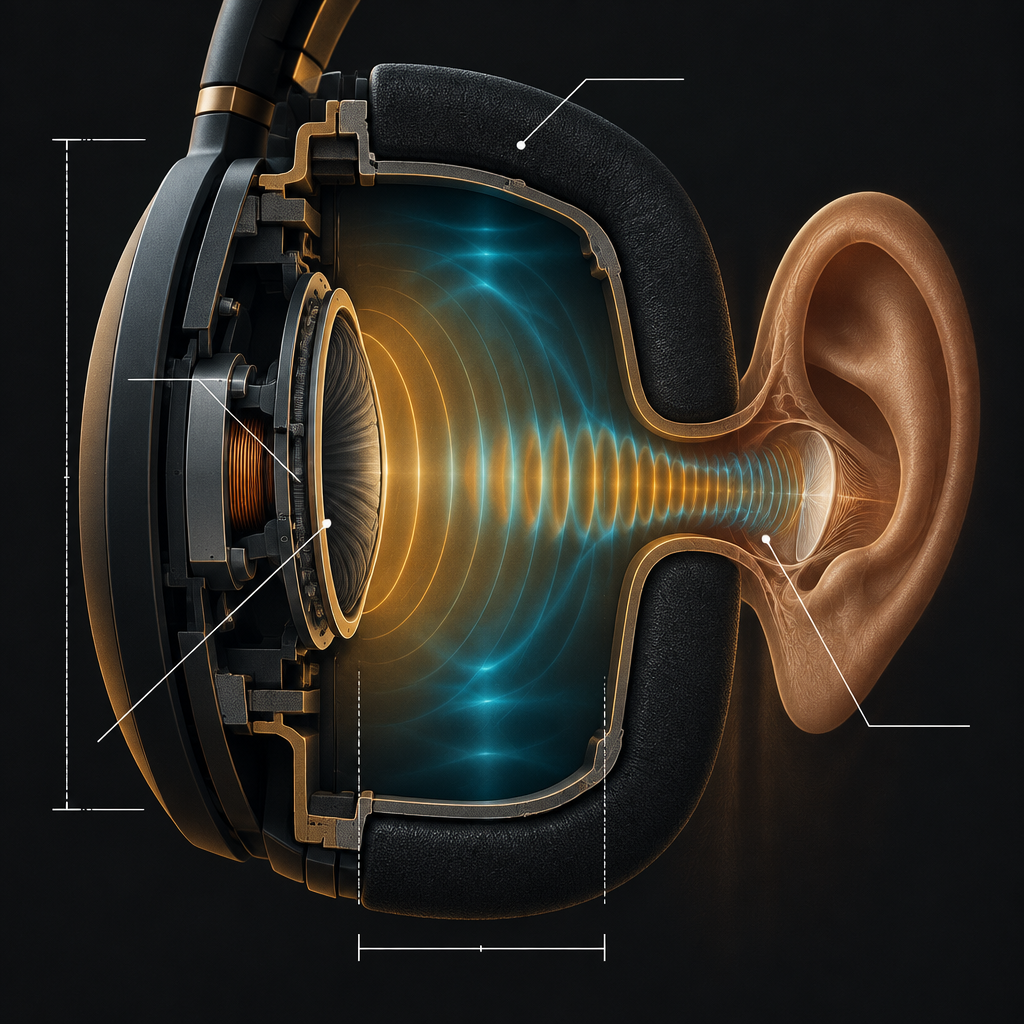
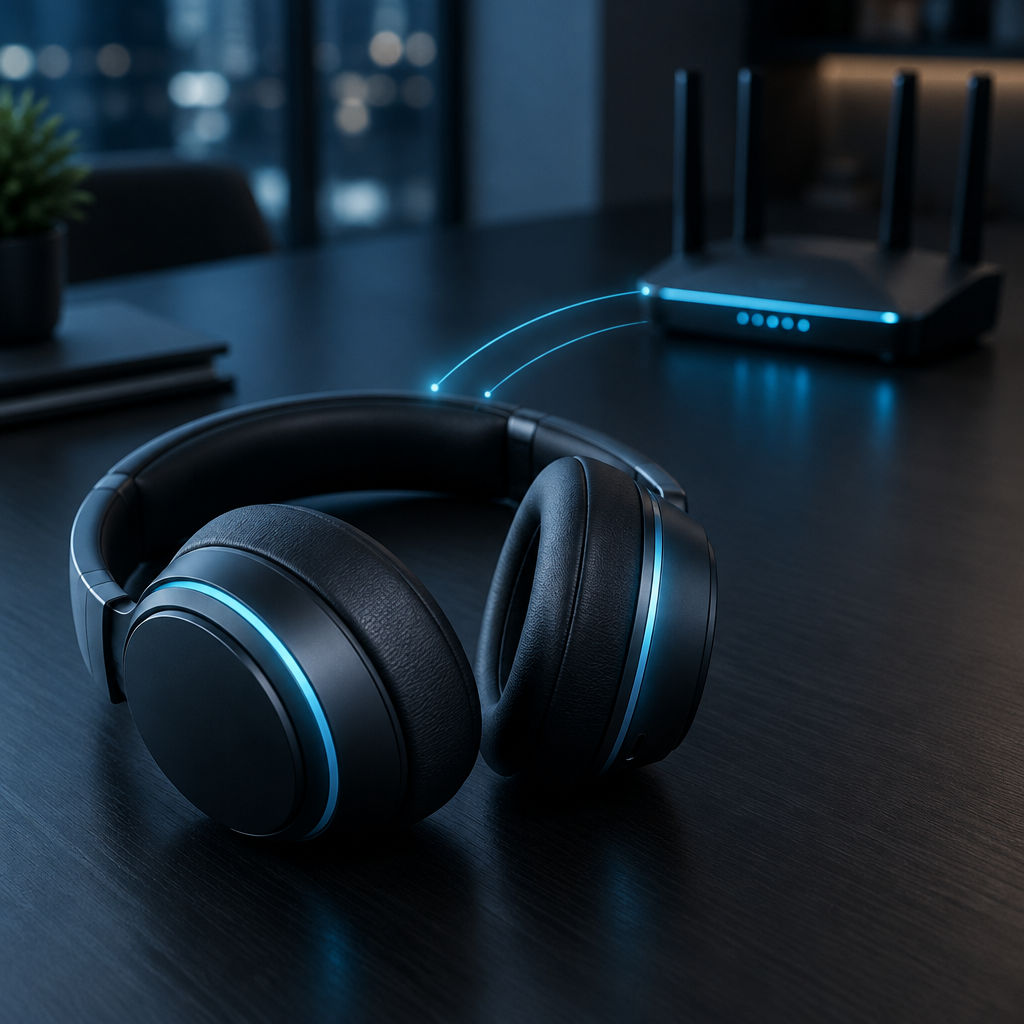
Behind that toggle, headphones shipping with Qualcomm's S7 Pro or the brand new Snapdragon Sound Elite Gen 2 silicon are quietly running two radios in parallel: a Bluetooth Low Energy radio for the moments when range and battery matter most, and a micro-power Wi-Fi radio that can take over the stream when the bits get heavy. Qualcomm calls this Expanded Personal Area Network, or XPAN, and it has one design rule above all others: the user should never notice the switch.
That is the hard part. Switching audio transports mid-song, done naively, produces an audible click, a half-second dropout, or a decoder buffer mismatch. XPAN's achievement is not that it adds Wi-Fi; it's that the handoff can happen on a crowded train without you hearing it.
How XPAN actually switches transports
The mental model Qualcomm engineers like is a triangle: audio quality, latency, and link reliability. You cannot improve one without trading another. High-bitrate lossless demands a fat pipe and stable interference. Low latency demands short buffers and tight schedules. Resilience in a hostile radio environment demands headroom and retransmissions, which costs battery.
At any given moment, XPAN is monitoring link conditions on both radios and choosing the one that produces the smallest hit to the triangle you currently care about. Walking through a crowded airport with packets colliding at every angle? Stay on Bluetooth's narrow channel and scale the bitrate down to keep dropouts at zero. Sitting at home with your router 30 feet away and clear line of sight? Hand the stream to Wi-Fi and let aptX Adaptive climb into multiple-megabit territory.
The codec does not change transports when the audio does. The same aptX Adaptive encoder that already understood the Bluetooth link budget is taught to understand the Wi-Fi link budget as well. The decoder on the headphone side is not told to flush its buffer and start over. The adaptive algorithm continues over the wider pipe, and the decoder plays whatever it already has while new frames arrive faster than before. The transition is architectural, with no transport swap seam.
If link conditions degrade and Wi-Fi stops being viable, XPAN can route through the router one moment, fall back to Wi-Fi Direct, the peer-to-peer mode where your phone and headphones talk directly, and finally drop back to the Bluetooth radio still holding the connection alive. A dropped Wi-Fi stream just narrows the bandwidth.
The bitrate levers, top to bottom
The most under-discussed part of XPAN is its bitrate scaling. A Bluetooth-only aptX Adaptive stream maxes out somewhere around 400 kilobits per second. That is a ceiling set by the radio itself. Over XPAN's micro-power Wi-Fi, the same adaptive codec scales all the way up to many megabits per second, with no audible discontinuity at any point in the journey.
XPAN's design regime anticipates users moving between environments. A train station in Shanghai, where everyone has a mobile hotspot, is the opposite of a quiet living room. The adaptive stack is supposed to scale gracefully, not fall off a cliff. If you start with 24-bit/192kHz lossless and walk into a radio dead zone, the codec scales down to a couple hundred kilobits per second and keeps playing. You do not hear a pop. You do not hear a skip. The bitrate drops, the audio quality narrows, the experience continues.
This is a meaningful upgrade over classic high-resolution Bluetooth codecs like LDAC, which negotiate a fixed bitrate up front. LDAC has a 330 kbps mode, a 660 kbps mode, and a 990 kbps mode. Each is a step, not a slope. When the link cannot hold the negotiated step, you get dropouts, not graceful degradation.
Battery: the question everyone asks first
The single reason we have not seen Wi-Fi audio in mainstream headphones before is power. Wi-Fi is expensive. The reason Bluetooth has dominated personal audio for two decades is that the low-energy radio can do its work at single-digit milliwatts. Wi-Fi, traditionally, cannot.
Qualcomm's answer is micro-power Wi-Fi: a custom radio IP block designed specifically for the payload and duty cycle of audio streaming. The company claims that when you stream 24-bit/96kHz lossless audio over XPAN Wi-Fi, the power draw is comparable to streaming 96kHz lossy audio over conventional Bluetooth. That is not a small claim. It means there is no longer a battery tax for going to a wider pipe, at least not in the regime Qualcomm has profiled. The S7 Pro's Wi-Fi radio also supports idle listening at a power level Qualcomm measures in milliwatts, which is what lets headphones wait for an incoming audio stream without draining themselves overnight.
The new Snapdragon Sound Elite Gen 2, announced September 23, 2026, pushes this further. Qualcomm claims up to 40 percent lower power consumption in a specified Wi-Fi-connected idle test compared to its earlier S7 Gen 1 platform. Those are company comparisons, not retail promises. The trajectory is clear: Wi-Fi audio is moving from the question of how you would ever power it to a logged measurement of idle current.
The IP address changes everything
There is one XPAN feature that reviewers routinely gloss over because it sounds boring: once your headphones are on Wi-Fi, they get an IP address. Bluetooth has no IP story. To the internet, your headphones do not exist. They are an audio sink attached to a phone that handles every network conversation on their behalf.
With XPAN, headphones are on the network independently. That simple fact unlocks behaviors Spotify Connect and Tidal Connect users already know well, but it does so without a separate app or pairing process. The headphones can stream directly from a cloud service, routed through your home router, with the phone playing no part. More importantly, the onboard AI on the Snapdragon Sound Elite Gen 2 platform can reach cloud models directly, not through the phone. Translation, contextual assistance, and semantic audio processing can live partly in the headset and partly in the cloud, with the headset deciding which side of the link handles each request.
This is a quiet repositioning. Headphones are becoming audio wearables with their own network identity, and the phone becomes one of several possible sources, not the only bridge to the rest of computing.
What is actually shipping, and the catch
The first consumer product to ship with XPAN was not a pair of headphones. It was the Xiaomi Buds 5 Pro Wi-Fi version, which pairs the Qualcomm S7 Pro chip with Xiaomi's 15 and 15 Ultra phones. Reviewers confirmed the lossless audio experience is real: 24-bit/96kHz playback over the XPAN link, with the phone serving as audio source but staying out of the network path. The catch is the hardware handshake, and it is non-negotiable. You need a Xiaomi phone with Snapdragon Sound support to make XPAN engage. A Galaxy phone paired to the same buds will not enter the XPAN path. The buds drop back to conventional Bluetooth.
That hardware handshake, familiar to anyone who has tried to make aptX Lossless work between a Sony Walkman and a Bluetooth amp from another manufacturer, remains the gating problem for XPAN adoption. Both the source and the headphones need Qualcomm silicon supporting XPAN, and both need firmware exposing the XPAN mode. A typical Android phone bought in 2024 will not have it. A Snapdragon Sound-branded phone bought in 2026 might.
Snapdragon Sound Elite Gen 2 is Qualcomm's clearest signal yet that XPAN's days as an obscure demo are ending. The platform explicitly targets headphones alongside earbuds, open-ear hybrid designs, audio glasses, and even camera-equipped earables. Reference designs are shipping to OEMs. Major partners including Google, Microsoft, HP, Lenovo, and Meta were named at the Summit. Cleer showed an early concept blending audio, vision, and AI on the platform. No retail headphone line-up has been announced yet, but the platform's specifications make clear that XPAN-enabled headphones are a manufacturing decision away, not a research question.
What headphone buyers should do now
If you own an XPAN-capable source device, the experience is real and worth pursuing. Lossless over Wi-Fi through headphones is the first wireless audio path that can credibly match what audiophiles have been getting from wired headphones for decades. Qualcomm's sub-20 millisecond latency claim for XPAN gaming audio puts it below the 40 to 50 millisecond regime even great Bluetooth can achieve, making wireless headphones genuinely competitive with dongle-equipped options for the first time.
If you do not own XPAN-capable hardware yet, treat the technology as something you can plan around rather than something you can buy tomorrow. Qualcomm's cadence, the release of Snapdragon Sound Elite Gen 2 with explicit headphone support, suggests that the first XPAN-equipped headphones will land within the next hardware generation. Until then, the Xiaomi Buds 5 Pro Wi-Fi is the cheapest way to hear what the technology actually sounds like in a consumer product. It is still a pair of earbuds, not headphones. But listening to lossless 24-bit/96kHz audio stream from a phone untouched by the songs playing through your ears, with no Bluetooth in the path, is a useful preview of the next year of headphone audio.
Watch for Snapdragon Sound branding on upcoming headphone boxes, and specifically the phrase XPAN supported. That is the signal that the second radio has arrived in a pair of headphones, not just a pair of earbuds. The technology is real. The handoffs are silent. The hardware that puts it on your head is coming.