For decades, the planar magnetic driver sat behind a velvet rope. You could find it inside $4,000 reference headphones bolted to studio equipment, or draped over the heads of people who could tell you the difference between 96kHz and 192kHz sampling rates. What you could not find was a planar magnetic headphone running on Bluetooth. The wire was non-negotiable.
That is no longer true.
Audeze shipped the Maxwell, a wireless gaming headset with planar magnetic drivers, and then followed it with the Maxwell 2 at CES 2026. HiFiMan built the Ananda BT, a Bluetooth planar magnetic that pushes 24-bit audio over the air. Edifier released the Stax Spirit S5, which the company describes, with some understatement, as "a very good headphone in the BT market." What these products share is something that would have seemed oxymoronic five years ago: planar magnetic technology running on a battery.
Why Planar Magnetic Was Hard To Wireless-ify
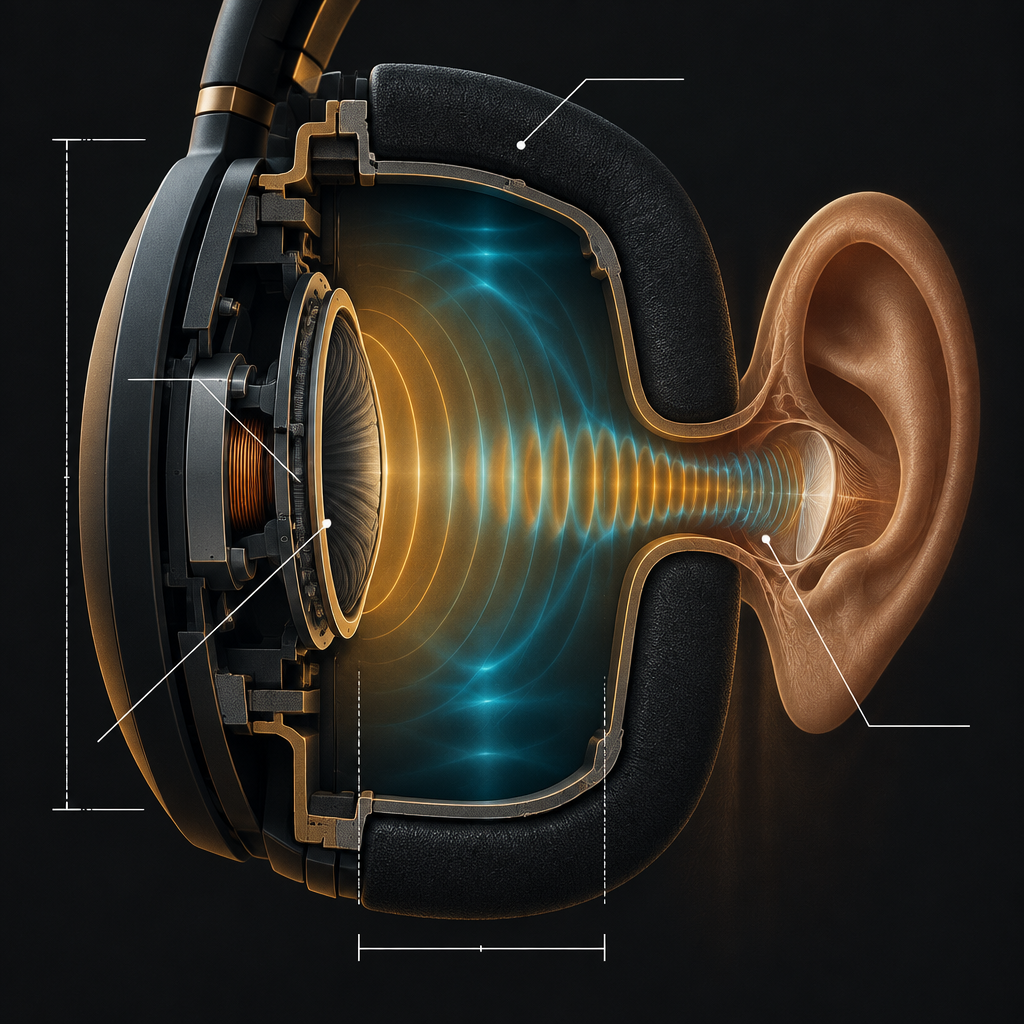
To understand the achievement, you need to understand the problem. A dynamic driver, the kind inside 95 percent of headphones on the planet, works like a tiny loudspeaker. A voice coil sits at the center of a cone. Current flows through the coil, the coil pushes against a magnet, and the cone moves. Simple, cheap, efficient. A few milliwatts will get you to listening volume.
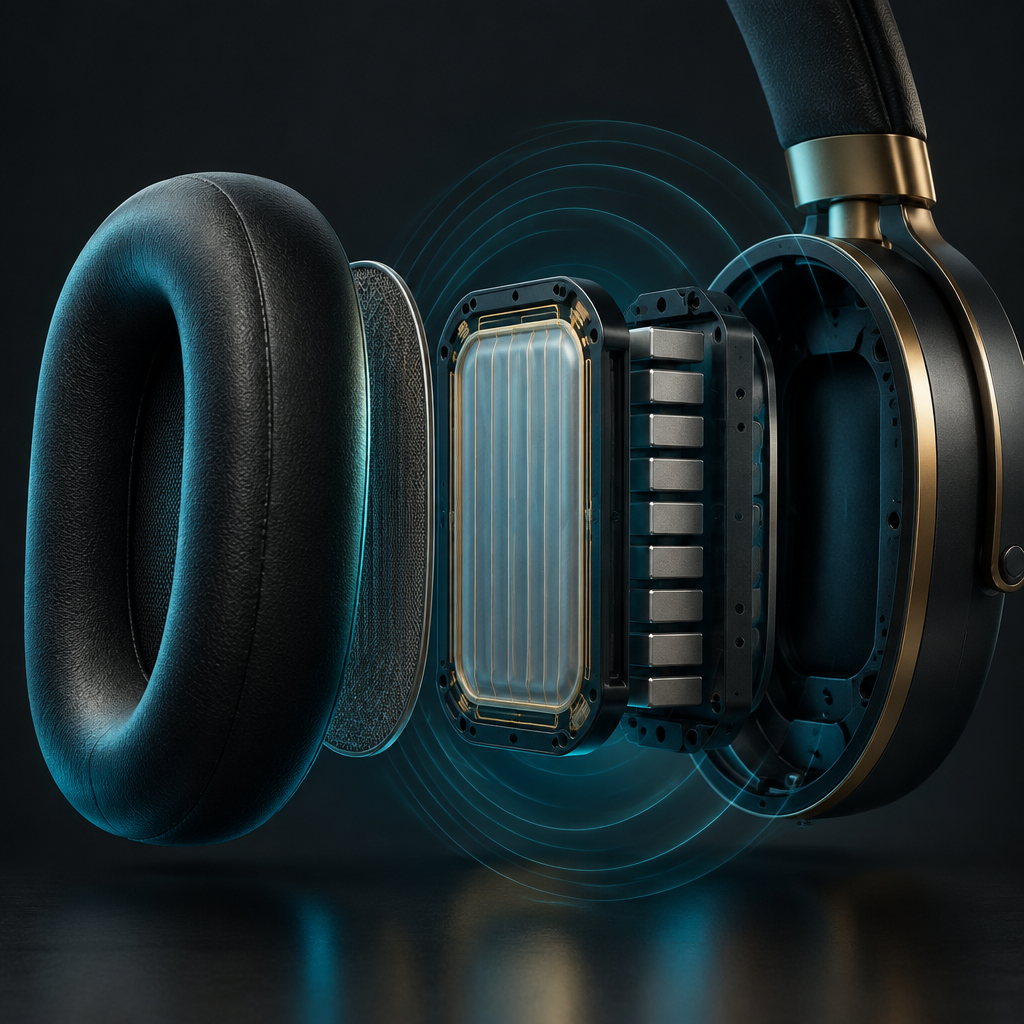
Planar magnetic drivers work on a completely different principle. Instead of a cone driven from its center, they use a flat, ultra-thin diaphragm suspended between arrays of magnets. Etched onto that diaphragm are microscopic conductive traces, essentially a circuit pattern laid flat. When current flows through those traces, the magnetic field pushes and pulls the entire diaphragm surface simultaneously. Every point on the membrane moves in unison.
This uniform motion is the whole point. Because the driving force is distributed across the entire diaphragm rather than concentrated at the center, breakup modes are drastically reduced. The diaphragm behaves more like a perfect piston. Distortion stays low even at high volumes. Bass reproduction is effortless because the large surface area can displace significant air volume without the extreme excursion that dynamic drivers require.
The catch? Power. Those conductive traces present a low impedance load, often around 20 to 32 ohms, but with low sensitivity. Planar magnetic headphones typically need more current to reach the same SPL as a dynamic counterpart. Drive them from a phone headphone jack and you might get sound, but it will be anemic, missing the dynamics and transient snap that make the technology worth owning in the first place. Serious planar magnetics traditionally wanted a dedicated amplifier capable of delivering hundreds of milliwatts. Wiring that kind of amplification into a battery-powered Bluetooth headphone was the engineering puzzle nobody wanted to solve.
There was also the matter of driver weight. Planar magnetic assemblies tend to be heavier than dynamic drivers because they require large magnet arrays on both sides of the diaphragm. Audeze's Maxwell 2 uses 90mm planar drivers, which are substantial. HiFiMan's Ananda BT tips the scales at 406 grams. For comparison, a Sony WH-1000XM5 weighs 250 grams. Comfort over long listening sessions was a genuine concern, and it required redesigning headband weight distribution, earcup geometry, and clamping force to accommodate the extra mass without creating fatigue.
The Magnet Problem and the Fluxor Solution
The first breakthrough was not in Bluetooth. It was in magnets.
Audeze's Fluxor technology packs more magnetic flux density into the driver without adding weight or physical volume. Fluxor magnet arrays use Neodymium N50 magnets arranged in a configuration that focuses magnetic energy onto the diaphragm traces with greater efficiency. The LCD-MX4, for instance, concentrates 1.5 Tesla of flux onto a 20-ohm diaphragm. More flux means more driving force per milliamp of current. More force per milliamp means the driver needs less power to reach a given volume.
HiFiMan took a related approach with what they call Stealth Magnets. The magnet shape itself is designed to be acoustically transparent, reducing wave diffraction turbulence behind the diaphragm. The result is a driver that is both more efficient and cleaner sounding, because the magnets are no longer interfering with the sound waves the diaphragm produces.
These magnet innovations mattered enormously for wireless. If you can get 10 percent more acoustic output for the same electrical input, you have just extended battery life, reduced heat, and shrunk the amplifier requirements. Planar magnetic was never fundamentally impossible to wireless-ify. It was just inefficient enough that nobody wanted to deal with the battery math.
Built-In Amplification: The Real Trick
The Maxwell 2 and Ananda BT solve the power problem the same way: they build the amplifier into the headphones. This sounds obvious, but the execution is subtle.
Inside the Maxwell 2, Audeze pairs their 90mm planar magnetic drivers with a custom amplification stage designed specifically for the low-impedance, high-current load that planar magnetics present. Standard Bluetooth headphone amps are tuned for dynamic drivers, which have higher impedance and lower current requirements. They would clip, distort, or simply fail to drive a planar magnetic diaphragm to adequate volume. Audeze's solution is a dedicated amp architecture that can deliver the current the traces demand without burning through the battery in two hours.
The Maxwell 2 reportedly achieves 80 hours of continuous playback. That number is staggering for a planar magnetic wireless headphone. The original Maxwell already impressed at 80 hours, and the Maxwell 2 maintains that figure while adding Audeze's new SLAM technology, which the company claims improves spatial cues and delivers punchier bass. SLAM, which stands for Structural Loudness Amplitude Modification, appears to work by optimizing how the driver excites the headphone enclosure at low frequencies. The result is a fuller low-end response without requiring additional power, which matters enormously in a battery-constrained design.
HiFiMan's Ananda BT takes a different route. Instead of relying solely on Bluetooth's bandwidth, it incorporates a discrete R2R DAC, which is resistor-ladder digital-to-analog conversion, built directly into the earcup. The headphone can accept 24-bit/192kHz audio over USB or 24-bit/96kHz over a high-bandwidth Bluetooth connection. The R2R architecture is notable because most wireless headphones use delta-sigma DACs, which are more power-efficient but introduce quantization noise that some listeners find fatiguing. HiFiMan bet that audiophiles willing to spend $1,000 on wireless headphones would notice the difference. Reviewers largely agreed they were right.
The Sound: Does It Actually Matter?
Here is the uncomfortable question. Does planar magnetic technology actually sound better in a wireless headphone, or is it marketing? The answer is nuanced.
Planar magnetic drivers exhibit measurably lower distortion than dynamic drivers, particularly at higher sound pressure levels. They also maintain more consistent frequency response across the audible band because the uniform diaphragm motion avoids the resonant peaks and dips that plague cone drivers. In a wired context, with a quality amplifier, these advantages are clearly audible to trained listeners.
In a wireless context, the signal chain is longer. Your audio goes through codec compression, Bluetooth transmission, an internal DAC, an internal amplifier, and then the driver. Each stage introduces its own artifacts. The question becomes whether the driver's inherent advantages survive that chain. The evidence suggests they do, but with caveats.
The Edifier Stax Spirit S5, reviewed extensively by Headfonia and SoundStage Solo, demonstrates balanced mids and treble with solid bass, but lacks the deep sub-bass extension that planar magnetics are known for in their wired form. The Ananda BT fares better, with reviewers noting it gets remarkably loud for a Bluetooth headphone, exceeding 110 dB at the ear, while maintaining the transient speed and resolution that define the planar magnetic sound signature.
The Maxwell 2, designed for gaming rather than pure audiophile listening, leverages the planar magnetic's low distortion for spatial accuracy. Games like Counter-Strike 2 and Valorant demand precise positional audio, and the uniform diaphragm motion provides cleaner transients, which translates to better directional cues. The SLAM technology's bass enhancement gives explosions and low-frequency effects more weight without muddying the midrange where footstep audio and dialogue live.
What Comes Next
The wireless planar magnetic category is still small. Audeze, HiFiMan, and Edifier are essentially the only companies competing in it, and prices range from $299 for the Maxwell 2 to $1,000 for the Ananda BT. But the trajectory is clear. As Bluetooth LE Audio matures and codec bandwidth improves, the gap between wired and wireless planar magnetic performance will narrow. The power efficiency innovations from Fluxor and Stealth Magnet designs will filter down to more affordable models. The built-in amplification architectures will become standardized.
The more interesting question is whether planar magnetic will eventually replace dynamic drivers in mainstream wireless headphones entirely. That seems unlikely in the short term. Dynamic drivers remain cheaper, more power-efficient, and easier to manufacture at scale. But for the premium tier, where sound quality is the primary selling point, planar magnetic offers a genuine, measurable advantage that companies can market on technical merit rather than vaporware features.
The wire is gone. The velvet rope is coming down.