Bluetooth has become remarkably good at moving music from a phone to a pair of headphones. It can carry high-quality stereo audio, survive a crowded coffee shop, and hand a connection from one device to another without demanding a networking degree from the person wearing it.
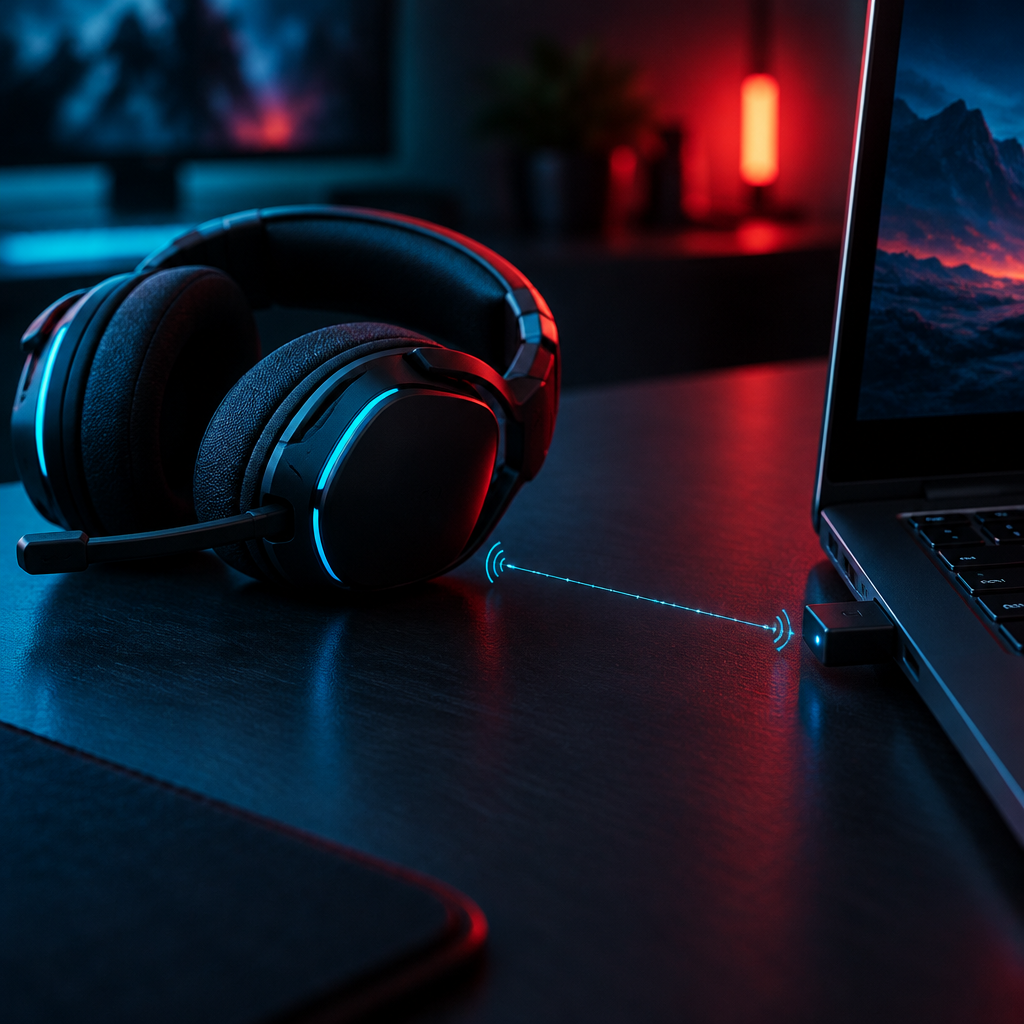
Then you sit down to play a competitive game and the headphones come with a tiny USB dongle.
That dongle looks like an admission of defeat. It is not. In many gaming headsets, the dedicated 2.4 GHz link exists because the product is solving a different problem from ordinary Bluetooth audio. Music can tolerate a little buffering. A gunshot that arrives after the animation, or a teammate's call that reaches you late, feels broken immediately.
Latency Is a Chain, Not a Single Number
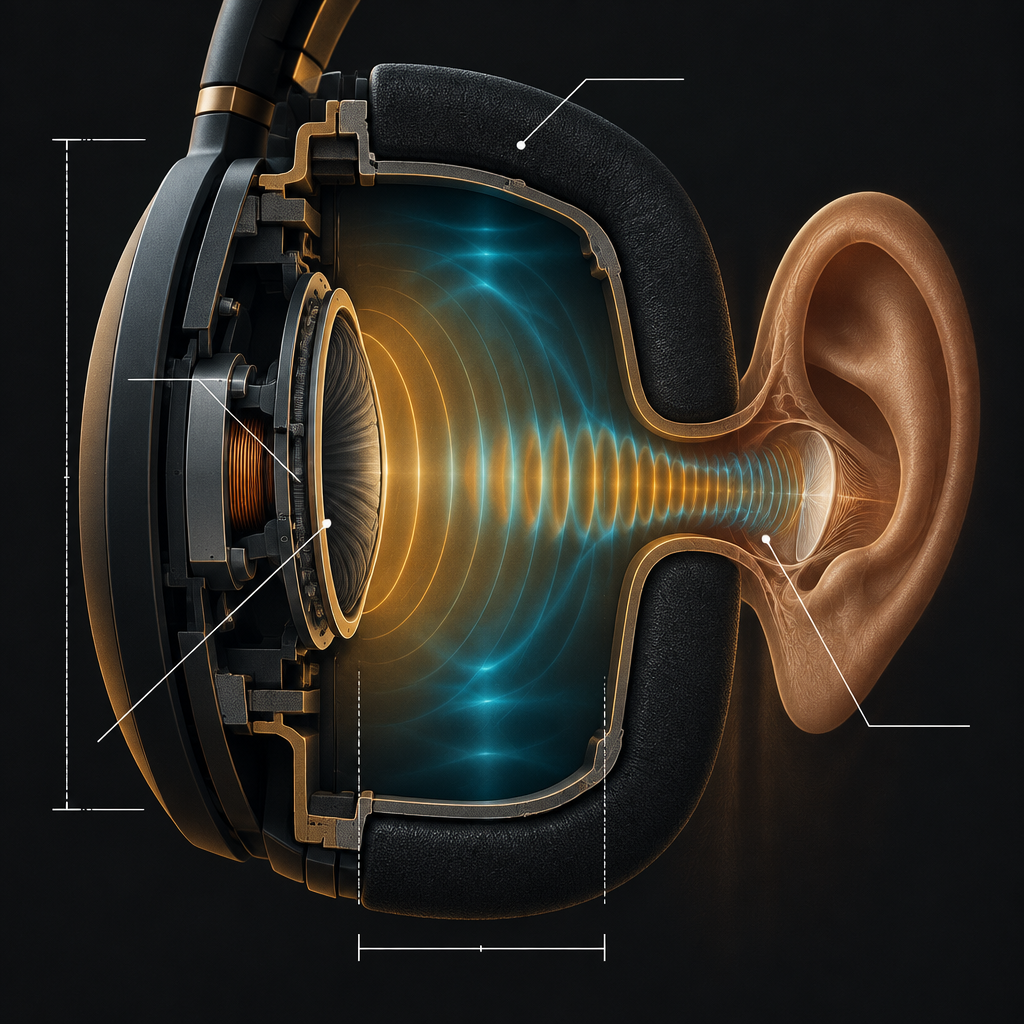
When people say a wireless headset has 20 milliseconds of latency, they are usually compressing a long pipeline into one tidy figure. The real path begins when a game engine renders an audio event. The operating system mixes it. A driver packages the samples. A wireless radio transmits them. The headset receives, buffers, decodes, converts, amplifies, and finally moves a diaphragm.
Every stage adds time. The number that matters to a player is end-to-end latency, the interval between an event in the game and the sound reaching the ear. A codec can be fast while the operating system adds a large scheduling delay. A radio can be quick while the headset uses a generous buffer to protect against interference. The advertised wireless technology is only one piece of the answer.
There is also a perceptual threshold, but it is not a universal cliff. A rhythm game exposes timing errors more aggressively than a strategy title. A cinematic adventure can hide a few extra milliseconds inside camera motion and reverberation. A competitive shooter cannot hide a footstep that arrives after the opponent has already crossed the doorway.
Why Classic Bluetooth Takes the Scenic Route
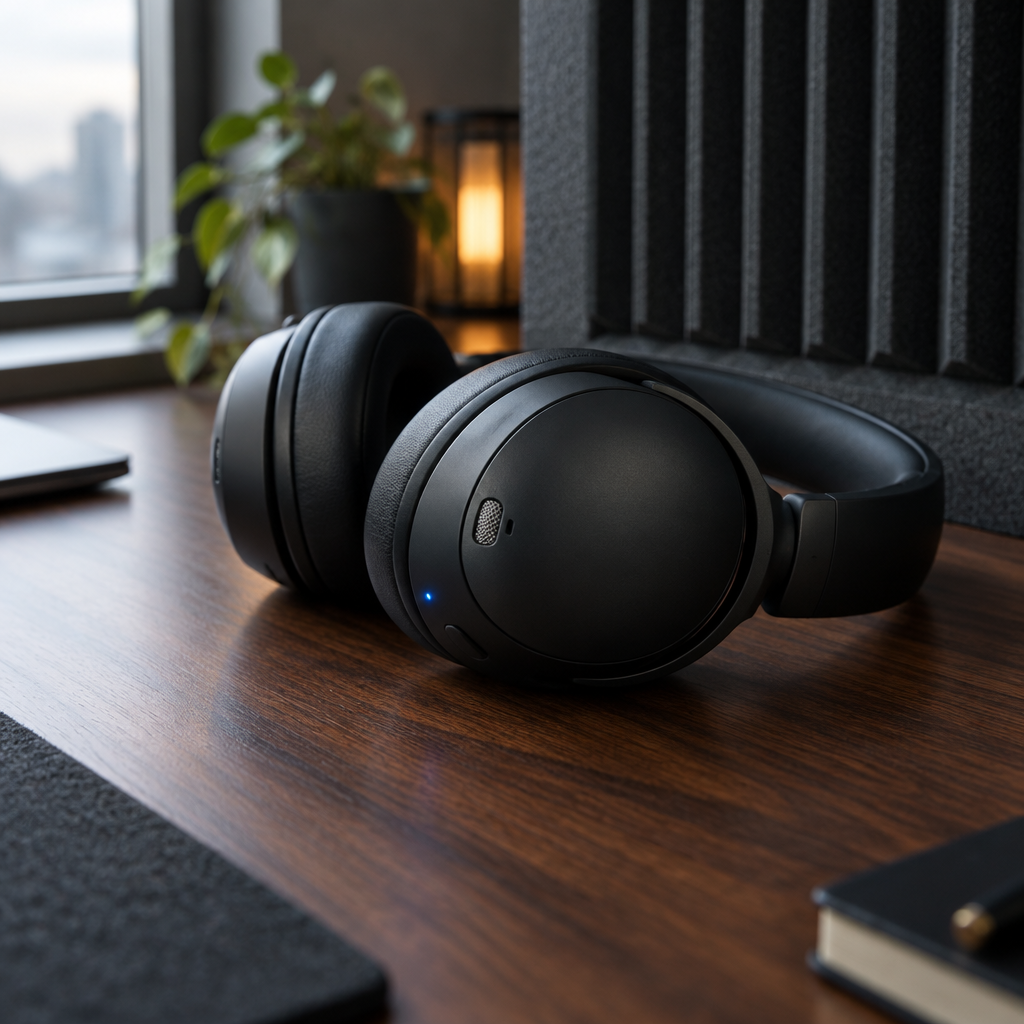
Most traditional Bluetooth headphone connections use the A2DP profile. The source sends compressed audio, commonly through SBC, AAC, or another codec, and the headphone decodes it. The system is designed for reliable consumer playback, not for a fixed, ultra-short path between a game engine and a driver.
Buffering is the key tradeoff. The receiver keeps a small reservoir of audio samples so that a brief radio interruption does not become an audible dropout. A larger reservoir improves continuity, but it also means the sound you hear represents the past. In a podcast, that delay is irrelevant. In a game, it can make dialogue feel detached from a character's mouth and effects feel disconnected from impact.
Bluetooth's other complication is the microphone. A headset may sound excellent while receiving stereo audio, then switch into a narrowband hands-free mode when its microphone is activated. On a computer, that profile change can reduce fidelity, alter latency, and create a different signal path at exactly the moment a player joins voice chat.
Modern operating systems have improved this behavior, and Bluetooth LE Audio offers a more flexible architecture. Still, support is not just a property of the headset. The computer, radio hardware, drivers, operating system, codec implementation, and game all have to cooperate. If one link in that chain falls back to an older profile, the user experiences the fallback, not the promise on the box.
The Dongle Controls More of the System
A dedicated gaming dongle often uses a vendor-specific 2.4 GHz protocol. It may still share spectrum with Wi-Fi and other devices, but it can be designed around one job: move synchronized game audio and microphone data between a known transmitter and a known headset.
That narrower mission removes some negotiation. The dongle can present itself to the computer as a simple USB audio device. The headset can use a radio schedule tuned for the product. The manufacturer can choose packet sizes, retransmission rules, channel hopping behavior, and buffering targets without fitting inside every general-purpose Bluetooth requirement.
That does not make the connection magically immune to interference. The 2.4 GHz band is busy. Wi-Fi routers, wireless mice, keyboards, game controllers, and neighboring headsets all compete for airtime. A good dongle system manages that competition with frequency hopping, link monitoring, error correction, and a receiver placed close to the player rather than buried behind a desktop computer.
The last detail is easy to underestimate. Radio performance depends on antenna position, obstruction, polarization, and the human body. A USB extension cable that moves the dongle onto a desk can produce a larger practical improvement than a more impressive number in a product specification.
Retransmission Is a Delicate Bargain
Wireless designers have two bad outcomes to avoid. Let a damaged packet disappear and the player hears a click, gap, or burst of distortion. Retransmit every damaged packet and the receiver may have to wait, increasing latency or forcing the buffer to grow.
Gaming links usually make an aggressive choice. They protect the most important data, keep buffers tight, and accept that a rare lost packet may be less annoying than a constant delay. Some systems use forward error correction, adding enough redundant information that the receiver can reconstruct missing pieces without asking for another transmission. Others use selective retransmission, but only when the timing budget makes it worthwhile.
Audio itself can also be prioritized. A headset may treat voice chat and game effects differently, or allocate radio time between downlink audio and the microphone based on current activity. This is why a product can remain intelligible during a weak signal without sounding exactly the same under every condition. The system is continuously deciding what kind of imperfection the listener will notice least.
LE Audio Changes the Possibilities, Not the Laws of Physics
Bluetooth LE Audio brings a newer transport and the LC3 codec, with tools for efficient, synchronized audio streams and improved multi-device behavior. It is a meaningful step beyond the old Bluetooth audio model. It is not a universal low-latency switch.
Latency still depends on the chosen frame duration, the number of frames buffered, the scheduling interval, the host operating system, and the receiver's implementation. A short codec frame can reduce algorithmic delay, but it also creates more packets and more opportunities for scheduling overhead. A robust product has to balance responsiveness against battery life, radio reliability, and sound quality.
LE Audio may eventually make standard Bluetooth more attractive for gaming, especially as computers and consoles expose better support. The useful question is not whether LE Audio is modern. It is whether the complete device pair can maintain a predictable end-to-end budget while the microphone is active, the radio is busy, and the player moves around the room.
Voice Chat Makes Everything Harder
A gaming headset is not merely a stereo receiver. It is also a two-way radio endpoint. The microphone has to capture speech, convert it, package it, transmit it, and reach the game's voice stack. At the same time, incoming audio is competing for the same wireless airtime.
Echo cancellation and sidetone add another layer. Sidetone lets the player hear a controlled amount of their own voice, which reduces the strange sealed-off feeling of closed headphones. If it is generated in the headset, it can feel immediate. If it is routed through the computer and returned over the wireless link, it can become delayed enough to sound like somebody else is whispering after every word.
Microphone quality also exposes the difference between a purpose-built link and a generic profile. A manufacturer can tune the dongle system for a wider voice bandwidth, better noise handling, or a separate control path for mute status and monitoring. Bluetooth is gaining better options, but compatibility remains a system-level problem.
Why Consoles Keep the Dongle Relevant
On a phone, Bluetooth's convenience wins because the operating system owns the whole experience. Consoles are more restrictive. A platform holder may support Bluetooth for controllers or accessories without exposing a general Bluetooth audio path to every headset. USB audio is easier to certify and easier to keep consistent across games.
The dongle becomes a compatibility bridge. The console sees a USB sound device. The headset sees its dedicated radio. The user gets wireless audio without requiring the console to understand every codec, profile, microphone mode, and pairing procedure on the market.
This is not elegant, but it is practical. A tiny accessory can hide a complicated negotiation from the platform and preserve the same feature set across a PC, a console, and sometimes a handheld. The price is one more thing to lose in a backpack.
What Buyers Should Actually Measure
Look for independent end-to-end latency measurements, not only a claim that the headset uses 2.4 GHz or Bluetooth LE Audio. Ask whether the tested number includes the microphone, whether the connection changes modes during voice chat, and whether the dongle supports the console or computer you intend to use.
Check simultaneous Bluetooth behavior too. Some headsets let the dedicated link carry game audio while Bluetooth handles a phone call. That feature can be useful, but it may introduce mixing limits, battery drain, or a different control scheme. A product that supports two radios is not automatically a product that handles two conversations gracefully.
Finally, test the physical setup. Put the dongle in front of the player. Keep it away from a metal PC chassis and crowded USB 3.0 ports when possible. Update firmware. Disable audio enhancements that add processing delay. Wireless performance is an ecosystem, and the least glamorous part of it can decide whether the headset feels instant or vaguely haunted.
The Dongle Is Not a Failure
Bluetooth is the better answer when the priority is universality. It works across phones, tablets, and laptops, and it avoids carrying a proprietary transmitter. A dedicated dongle is the better answer when the priority is a controlled latency budget, reliable two-way audio, and predictable console support.
The interesting future is not one technology replacing the other. It is headphones that treat both radios as tools. Bluetooth can handle the phone, music, and ordinary calls. The dedicated link can handle the game. Software can decide how the streams coexist without forcing the player to think about profiles or packet schedules.
That little USB stick is not evidence that wireless audio has failed to mature. It is evidence that gaming asks a harder question than, “Can you hear the sound?” It asks whether the sound arrives at the exact moment the world on screen says it should. For competitive headphones, timing is not a feature beside audio quality. Timing is part of audio quality.