The noise around your ears determines what you hear. In 2026, that's truer than ever, and the difference between two types of noise reduction has become the deciding factor for serious listeners. Most people assume active noise cancellation (ANC) is the answer to silence. But passive noise isolation, the humble foundation built into every good wireless headphone, often delivers more genuine acoustic benefit than any chip or algorithm. Understanding the difference changes how you shop, listen, and experience the audio landscape.
What Passive Isolation Actually Does
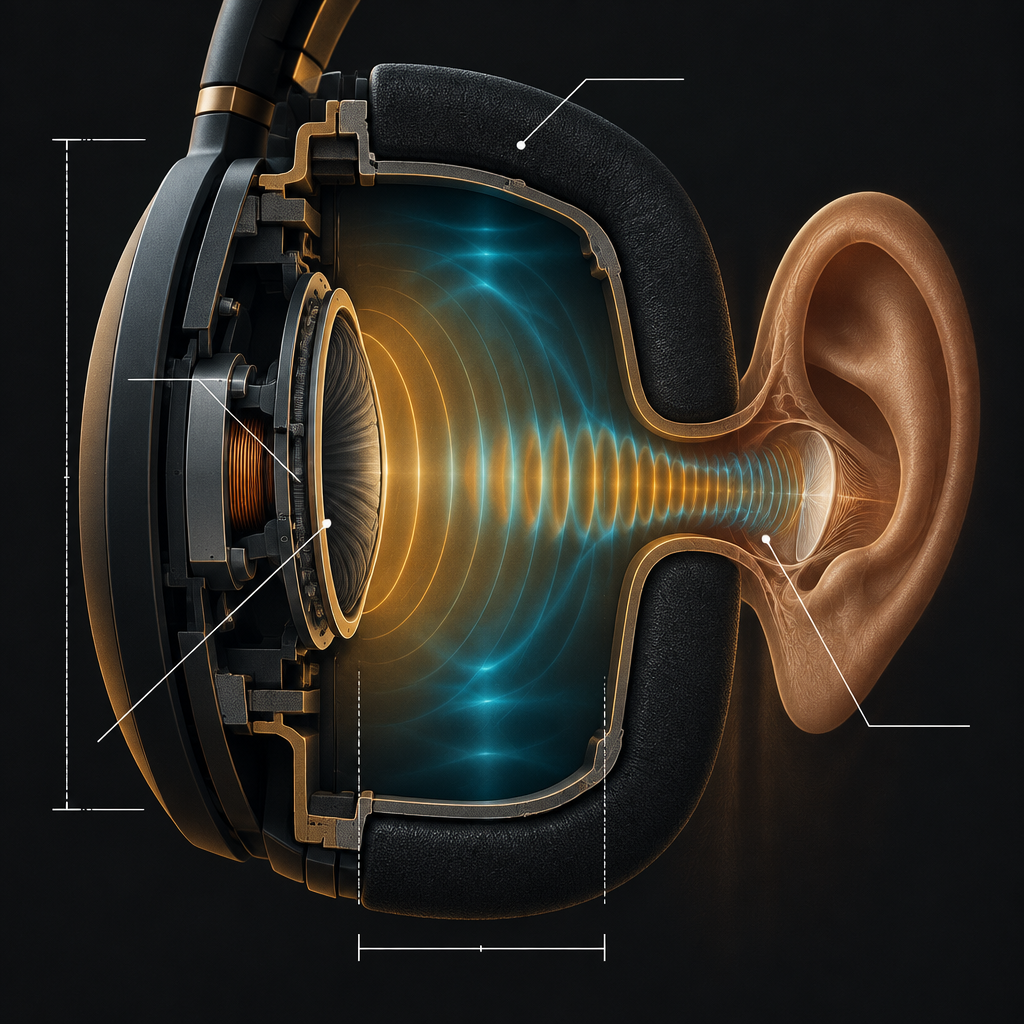
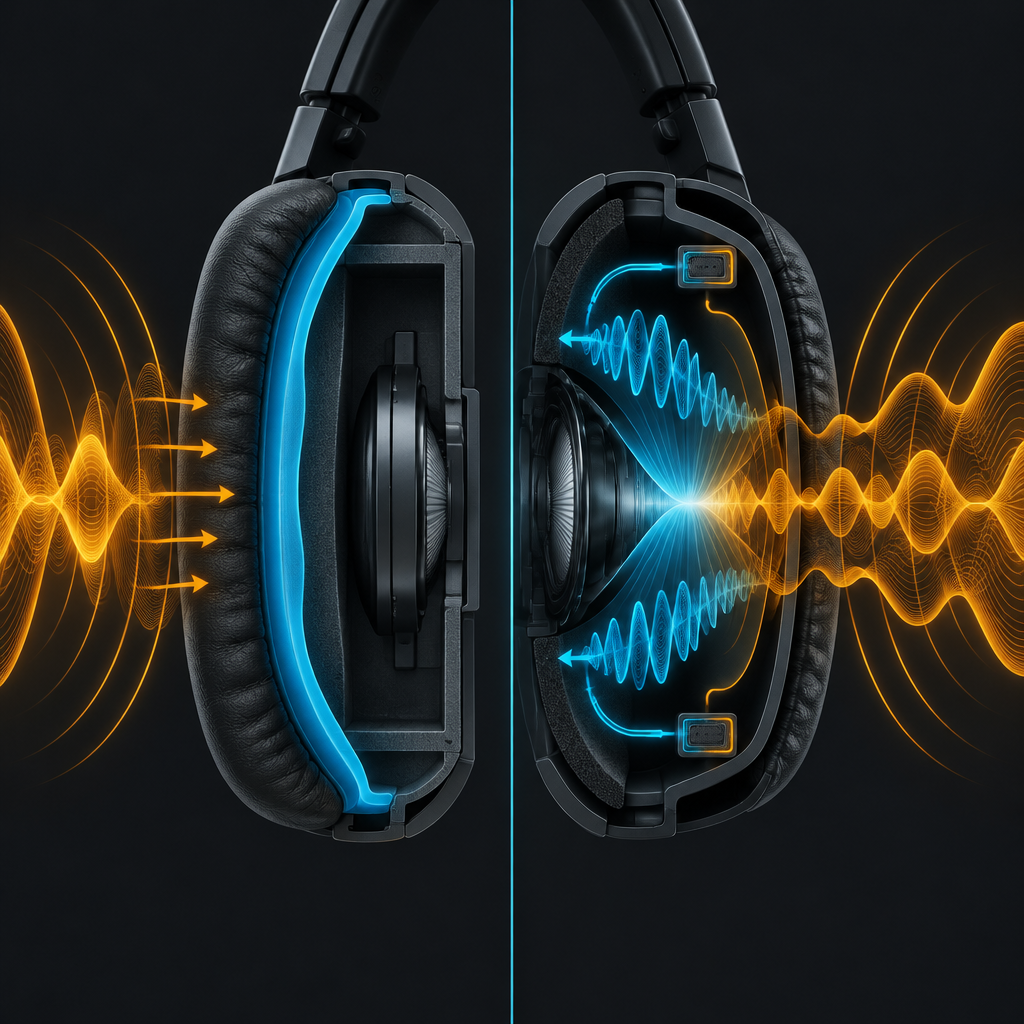
Passive noise isolation is mechanical. It is the seal. When you place a headphone driver against your ear, sound energy from outside has to compete with sound energy from inside. If the fit is tight, if the materials are dense and the geometry is right, external noise simply cannot reach the eardrum as easily. It bounces off the ear cup, gets absorbed by foam, or never reaches the transducer at all.
This is not a new concept. Closed-back headphone designs have relied on passive isolation for decades. But modern materials have made it far more sophisticated. Memory foam ear pads mold to individual ear shapes. Sealed ear cup designs with over-ear clamping forces create acoustic chambers. Some headphones now feature replaceable passive isolation tips in three or four sizes, allowing users to find the exact seal that works for their specific ear anatomy.
The result is straightforward: a well-sealed headphone can reduce environmental noise by 10 to 20 decibels passively. That is not theoretical. That is measured isolation, acoustic data, the kind that headphone engineers publish in technical specifications. For comparison, active noise cancellation typically adds another 5 to 15 decibels of attenuation on top of whatever passive isolation is already present.
Do the math. If passive isolation removes 15 decibels of traffic noise, and ANC adds another 10 decibels, you are getting a 25-decibel reduction total. But if you start with poor passive isolation, ANC has less to work with. It becomes a patch on a leaky roof.
Why ANC Alone Is Not Enough
Active noise cancellation works by detecting incoming sound waves through microphones, generating an inverse waveform, and playing it back through the drivers. In theory, the two waves cancel out. In practice, ANC is excellent at low-frequency rumble (airplane engines, HVAC systems, traffic hum at 100 Hz and below) and much less effective at mid and high frequencies (conversation, car horns, keyboard clicks).
There is a reason airplane passengers love noise-canceling headphones. The constant 100 Hz drone of jet engines is exactly what ANC was designed to kill. But if you are in a coffee shop, surrounded by unpredictable voice chatter jumping between 200 Hz and 3,000 Hz, ANC alone will not silence the world. It will merely reduce the volume a bit. The human brain still perceives speech clearly because speech is fundamentally difficult for digital ANC to model in real-time.
Worse, ANC requires power. A single charge on some wireless headphones lasts 30 hours with ANC off, but drops to 8 hours with ANC on. That is a massive battery hit. And ANC introduces latency, occasionally audible artifacts, and a sensation that some users describe as "pressure in the ears" when the system is fighting hard against environmental sound.
Passive isolation has no battery cost. It works at all frequencies equally. It is always on. And when the seal is good, it removes the sound before it reaches the driver, making the headphone's job easier.
The Isolation Hierarchy: What Actually Matters
Not all passive isolation is the same. Here is what engineers care about:
Ear Pad Material and Fit: Memory foam is the current standard, but not all memory foam is equal. Density, thickness, and the underlying plastic cup geometry determine how much sound is blocked. A poorly fitting pad on an excellent headphone wastes most of its isolation potential. This is why premium headphones ship with multiple tip sizes or multiple ear pad options. The Sennheiser Momentum 4 Wireless, for example, includes three different pad sizes and maintains excellent isolation across the board. The Sony WH-1000XM5 engineers the ear cup shape to match average ear anatomy, accepting that no single design works for everyone but optimizing for the most common profile.
Over-Ear Design vs On-Ear vs In-Ear: Over-ear headphones naturally offer more passive isolation than on-ear models because they cover the entire ear. In-ear headphones (true wireless earbuds) depend entirely on a tight seal in the ear canal. A good seal can deliver 20+ decibels of isolation. A poor seal delivers almost nothing. This is why fit matters more for earbuds than for over-ear headphones.
Cabinet Resonance: The internal volume of the headphone cup affects which frequencies are attenuated most effectively. Larger cups naturally isolate lower frequencies better. Smaller, sealed cups can be tuned to isolate specific frequency ranges. Bose has engineered its headphones around this principle for years, using the internal air volume as an acoustic filter that works alongside ANC.
Microphone Placement for ANC: If you have microphones for active noise cancellation, their position matters. Microphones placed on the outside of the ear cup hear environmental noise first, giving the ANC algorithm more time to react. Microphones on the inside might hear the music you are playing, creating feedback loops. The best ANC headphones use multiple microphones in specific positions, each feeding the ANC processor with slightly different audio data. This multi-mic approach helps the algorithm distinguish between external noise and the music you want to hear.
The 2026 Trend: Hybrid Isolation
The smartest headphone designers in 2026 are not choosing between passive and active. They are optimizing both simultaneously. Sony, Bose, Apple, and the better audiophile brands (Sennheiser, Audeze, Final Audio) all publish passive isolation specs alongside their ANC performance claims. They are acknowledging publicly that the foundation matters.
Bose's latest research shows that users perceive a 10-decibel increase in isolation as approximately twice as quiet. Whether that comes from passive isolation or ANC is, from the listener's perspective, irrelevant. But from an engineering perspective, it is far more efficient to solve 70 percent of the problem passively and let ANC handle the last 30 percent than to rely on ANC for the heavy lifting.
This shift has changed headphone design. Ear cups are getting larger on some models to increase passive isolation volume. Ear pads are getting thicker and higher-quality. Some companies are experimenting with materials that absorb sound rather than simply blocking it. Dynaudio's recent wireless headphone prototype uses a specialized foam that absorbs mid-range frequencies more effectively than traditional closed-back designs. Nothing is perfect, but the trend toward better passive isolation first, then ANC second, is unmistakable.
What This Means for Your Next Purchase
When you shop for wireless headphones in 2026, check the passive isolation first. Look for headphones that ship with multiple ear pad sizes. Read reviews that specifically test isolation without ANC enabled. Ask about the material composition and internal volume of the ear cups.
Then evaluate ANC as a bonus feature, not the main attraction. If the passive isolation is solid and the ANC is competent, you have a winner. If the passive isolation is poor and the company is leaning heavily on ANC marketing, you are buying a compromise.
For travelers and office workers, this is crucial. Airplane cabin pressure and wind noise are low-frequency problems that ANC solves well. But for public transit, coffee shops, and open offices, passive isolation is your best friend. A well-sealed headphone with modest ANC will often outperform a poorly sealed headphone with premium ANC.
The physics have not changed. The technology has simply matured to the point where companies can no longer hide behind marketing. Passive isolation, the acoustic foundation of every headphone ever made, is finally getting the engineering attention it deserves. And your ears are better for it.