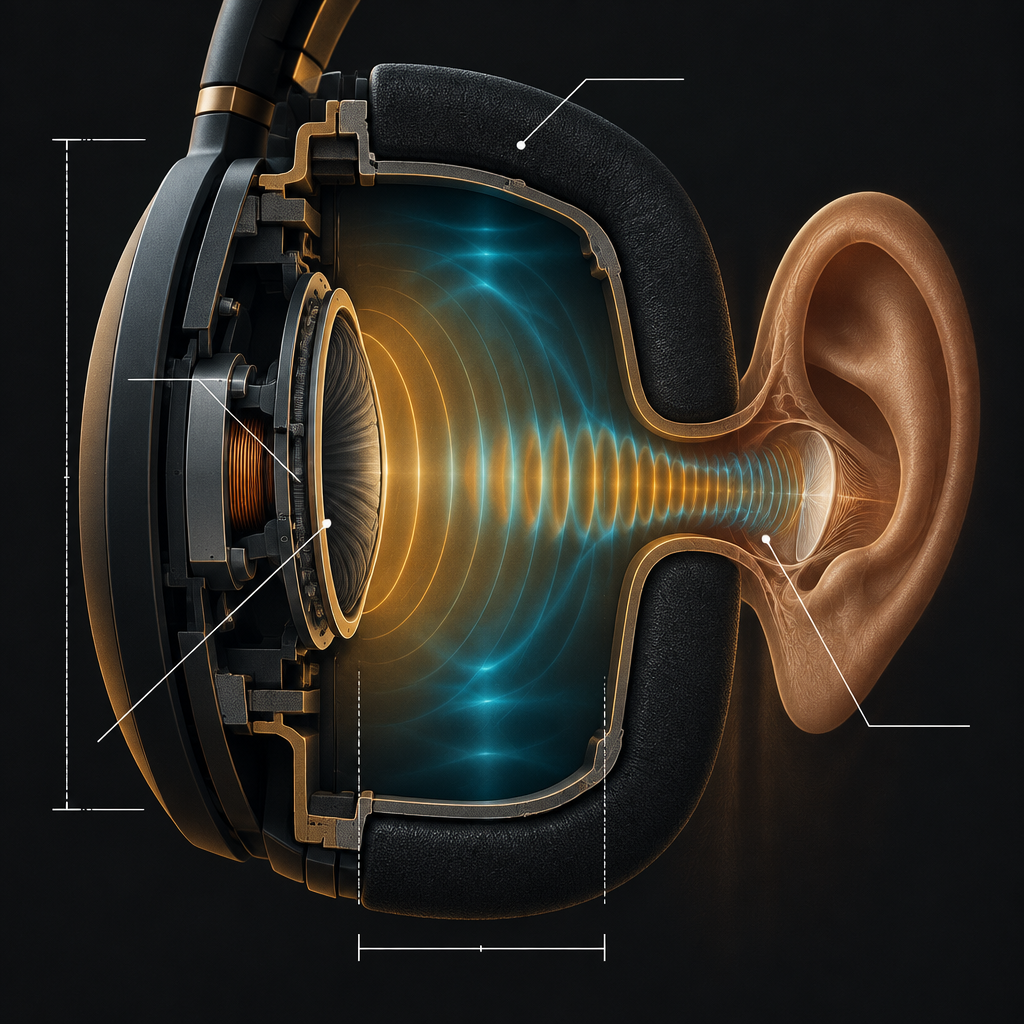
The headphone driver has been, for most of audio history, a remarkably stubborn piece of engineering. Dynamic drivers trace their basic architecture back to the telephone receiver of the 1870s: a magnet, a voice coil, a diaphragm. Planar magnetics refine that recipe, balanced armatures miniaturize it, and electrostatics take it to its logical extreme. But all of them share a common ancestor, and all of them move air the same fundamental way. A physical diaphragm, suspended in a magnetic field, pushes air molecules around.
MEMS drivers do not. And that difference, which sounds academic on paper, is turning out to matter a great deal for what headphones can actually do in 2026.

What a MEMS Driver Actually Is
MEMS stands for micro-electromechanical systems. The term describes any tiny device that combines electrical and mechanical components on a single silicon chip. The accelerometer in your phone that knows when you have rotated the screen is MEMS. The pressure sensor in your car tire monitoring system is MEMS. The tiny micromirrors that steer light in a DLP projector are MEMS arrays. And now, the thing generating sound in a growing number of audio products is MEMS too.
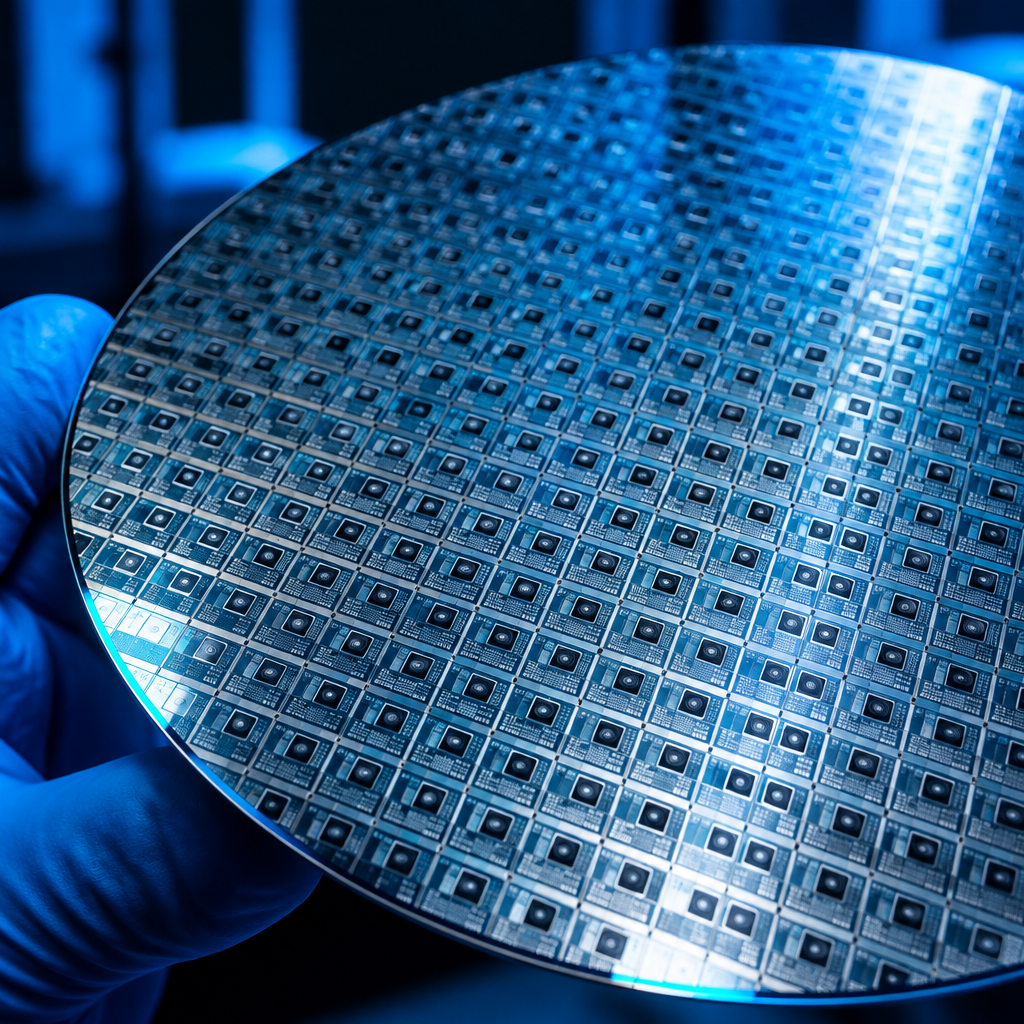
A MEMS speaker driver is fundamentally a silicon chip with a piezoelectric layer deposited on top. Apply a voltage, and the piezoelectric material deforms. Modulate that voltage at audio frequencies, and the chip vibrates. Vibrate fast enough and with enough displacement, and it moves air. That moving air is sound. No magnets. No voice coils. No mylar diaphragms glued to metal frames by human hands under a microscope. Just a silicon wafer, etched and doped in a semiconductor fabrication plant, emerging by the thousand from processes that produce microchips, not loudspeakers.
The company that has pushed this technology furthest into consumer audio is xMEMS Labs, a California-based semiconductor firm founded in 2018. Their first commercial speaker, called Cowell, shipped in 2023 inside the Creative Aurvana Ace true wireless earbuds. Since then the product line has expanded: Montara for higher output, Cypress for ultrasonic-based amplitude modulation that increases bass displacement, and Sycamore, announced at CES 2026, purpose-built for the open-ear and smart glasses form factor where traditional dynamic drivers struggle with physical depth constraints.
Why the Architecture Matters
The advantages are not subtle marketing claims. They are physical consequences of how the driver is built.
Speed comes first. A MEMS driver diaphragm is microscopic compared to a traditional dynamic driver, and it is made of silicon, which is orders of magnitude stiffer than the polymer films used in conventional headphone diaphragms. The result is a driver that starts and stops almost instantly. Rise times in the single-digit microseconds. Ringing and modal breakup, the resonant artifacts that color every dynamic driver to some degree, are dramatically reduced because the structure is so rigid that its breakup modes are pushed far above the audible band. The practical effect is transient response that electrostatics can only dream about, from a chip the size of a grain of rice.
Phase coherence is another. In a multi-driver IEM, getting the crossover between a dynamic woofer and a balanced armature tweeter to sum correctly at the eardrum is a dark art involving acoustic tubes, damping filters, and hope. MEMS drivers, because they are fabricated with semiconductor precision, are phase-matched at the wafer level. You can put two, three, four of them in an enclosure and know that their outputs will combine coherently without the trial-and-error tuning that dominates conventional multi-driver design. This matters less for single-driver configurations but becomes decisive in the high-end in-ear monitors and hearing-assistance devices where precise frequency response shaping is non-negotiable.
Durability rounds out the hardware argument. Drop a balanced armature IEM onto concrete and you may spend the rest of the day wondering whether that channel imbalance was there before or not. MEMS drivers are silicon chips, manufactured to the same reliability standards as automotive sensors. They survive drops, temperature swings, and humidity in ways that conventional micro-speakers, with their adhesives and suspensions and hair-thin coil wires, simply cannot match. xMEMS rates its drivers for IP58 water and dust resistance at the component level, which is a specification no dynamic micro-driver in a TWS earbud has ever achieved on its own.
The Bass Problem and How It Got Solved
For the first few years of MEMS speaker development, every conversation about the technology ended at the same place: great treble, impressive midrange, bass that simply was not there. The physics were inescapable. A MEMS diaphragm displaces a tiny volume of air because it is, itself, tiny. Generating 20 Hz at audible levels requires moving a meaningful amount of air, and a chip-scale actuator cannot do that by itself in a sealed ear canal, let alone in an over-ear headphone cup with liters of air volume to pressurize.
The Cypress driver, announced in late 2024 and reaching products through 2025 and 2026, solved this with a genuinely clever detour around the physics. Instead of trying to move more air directly, Cypress uses an ultrasonic carrier wave. The driver modulates amplitude at, say, 98 kHz, which is well above human hearing. The demodulation happens in the air itself. Nonlinear acoustic effects in the confined volume of an ear canal or headphone chamber convert that ultrasonic carrier into audible bass, a process called parametric array demodulation. The result is bass that the physical dimensions of the driver should not be able to produce. It is not magic. It is exploiting the same physics that allows ultrasonic sonar beams to generate audible sound underwater, just miniaturized to the space between a headphone driver and your eardrum.
The power cost is real. MEMS drivers require a bias voltage in the range of 10 to 15 volts, and the piezoelectric actuation is less efficient than electromagnetic transduction at low frequencies. Dedicated amplifier chips, like the xMEMS Aptos piezo driver IC, handle the voltage conversion and signal processing. These chips add cost and board space. But they are integrated into the same semiconductor supply chain that produces the drivers themselves, which means scalability. A dynamic driver assembly requires magnets (rare earth supply chain concerns), voice coils (copper pricing), diaphragms (petroleum-derived films), and skilled labor for assembly. A MEMS driver is a chip, and chips get cheaper at scale in ways that mechanical assemblies do not.
From Earpieces to Over-Ear: The 2026 Crossover
The first wave of MEMS audio products, spanning roughly 2023 through 2025, was entirely in the true wireless earbud space. Creative, Noble Audio, and a handful of smaller brands shipped TWS models with xMEMS drivers handling the treble and upper midrange, paired with conventional dynamic drivers for bass. These early products demonstrated that the technology worked in real consumer devices, not just in lab demos, but they also reinforced the hybrid model. MEMS for speed and clarity, dynamic for bass weight. Nobody was shipping a pure-MEMS earbud that could compete on low-end extension, and nobody was putting MEMS in over-ear headphones at all.
That changed in 2026. At CES in January, multiple manufacturers showed prototypes of over-ear headphones using MEMS driver arrays. The approach was consistent across brands: an array of multiple MEMS drivers per ear cup, each handling a portion of the frequency spectrum, summing their outputs acoustically rather than electrically. Think of it as a phased array, not a single driver. The total radiating area of a dozen MEMS drivers is still small compared to a 40mm dynamic diaphragm, but the coherence advantage means the output sums constructively across most of the band. And with Cypress-class drivers handling the low end through ultrasonic demodulation, the bass deficit that defined earlier MEMS designs was no longer a fatal limitation.
Sony, at its own developer event in March 2026, demonstrated a reference design over-ear headphone with an array of 16 MEMS drivers per cup, driven by a custom DSP engine that handled crossover, phase alignment, and the parametric bass synthesis in real time. It was a technology demo, not a product announcement, but Sony does not build reference designs for fun. The signal was clear: MEMS is coming for the premium headphone segment, and it is coming faster than most industry observers predicted two years ago.
What This Means for the Headphones You Actually Buy
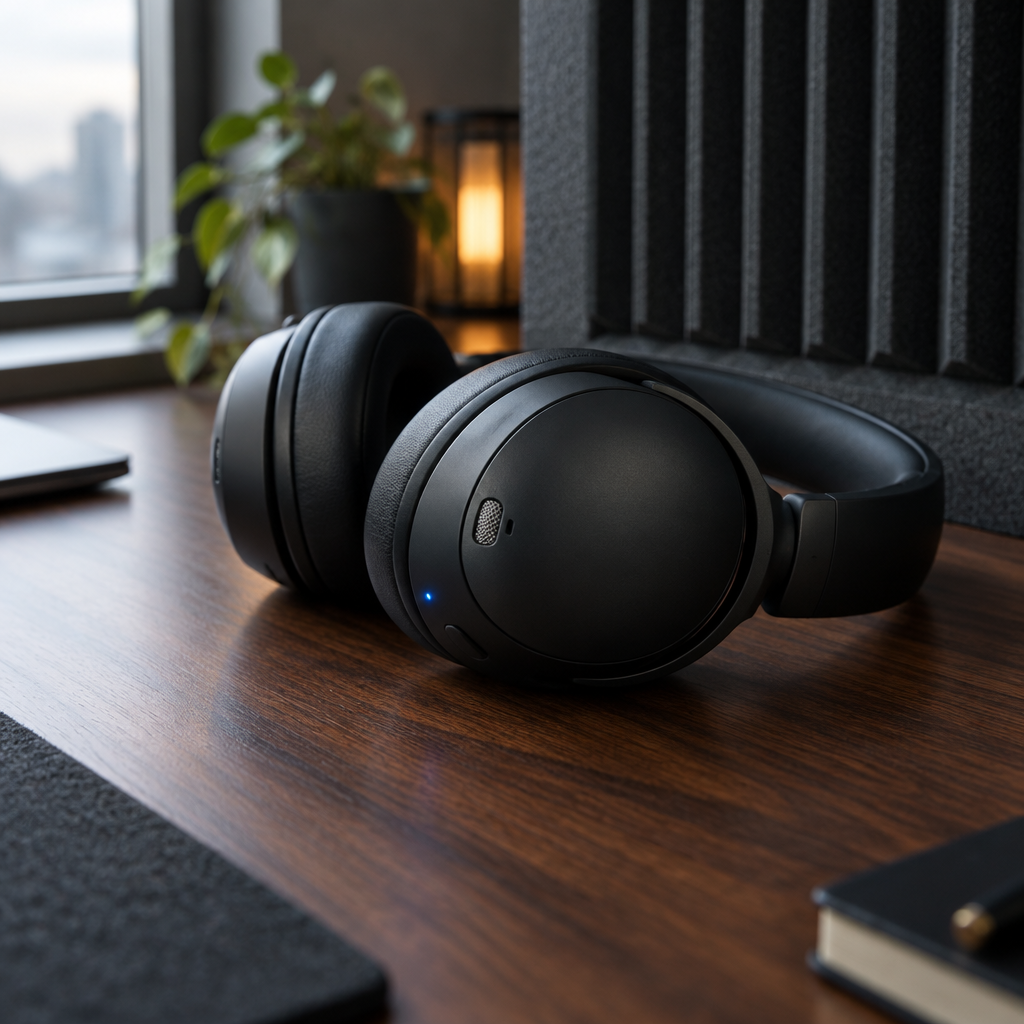
The honest answer in mid-2026 is that MEMS over-ear headphones are still a near-future proposition, not a shelf product. You cannot walk into a Best Buy today and buy a pair of Sony WH-1000XM-series headphones with MEMS drivers. The first consumer over-ear models will likely appear in the 00 to 00 range, positioned above dynamic flagships and competing with planar magnetics on detail retrieval rather than raw bass impact. Early adopters will pay for clarity, not for thump.
The more immediate impact is in the true wireless space, where MEMS hybrids are becoming the architecture of choice for premium earbuds above the 00 mark. The combination of a MEMS tweeter and a dynamic woofer, managed by a DSP crossover with FIR filters for phase correction, delivers a level of treble extension and transient precision that all-dynamic TWS designs, even very good ones, cannot match. The gap is audible. Cymbal decay, string harmonics, the initial attack of a snare drum; these are the things that separate very good earbuds from genuinely excellent ones, and MEMS is widening that gap.
There is a manufacturing story here too. Dynamic drivers for premium audio are produced in relatively small volumes, often with significant hand assembly, which creates unit-to-unit variation that manufacturers manage through driver matching. MEMS drivers, produced on 200mm silicon wafers in standard semiconductor fabs, exhibit variation measured in parts per million. Channel matching, a persistent headache for high-end IEM manufacturers, becomes a solved problem at the fabrication level. That matters for spatial audio, where precise interaural level and phase matching is critical to convincing binaural rendering.
The Magnetic Elephant in the Room
Every dynamic and planar magnetic driver generates a magnetic field. It has to. That is how the Lorentz force works. For most headphones, in most use cases, this is irrelevant. But there are edge cases where it matters, and those edge cases are multiplying. Hearing aids and hearables increasingly coexist with headphones in the same ears. MRI-compatible audio devices are a niche but growing medical need. And as wearables proliferate across the body, the electromagnetic interference footprint of every component becomes a system-level concern.
MEMS drivers generate no magnetic field. Period. The piezoelectric effect is purely electric field based. This makes them inherently compatible with magnetically sensitive environments and eliminates the need for magnetic shielding in the driver assembly. For most consumers this is a specification they will never think about, but for product designers integrating audio into increasingly complex wearable ecosystems, it is a genuine liberation.
Where We Stand in July 2026
The MEMS headphone driver is following a trajectory familiar from other semiconductor disruptions. It started in the niche where its advantages were overwhelming and its limitations were acceptable (TWS tweeters). It solved its biggest limitation (bass) through clever physics rather than brute force. It is now showing up in reference designs for the next product tier up (over-ear headphones). The pattern looks less like a gradual evolution and more like the classic S-curve of technology adoption, where the steep part happens fast once the enabling problems are solved.
Does this mean dynamic drivers are obsolete? No, and they will not be for a very long time. A 50mm dynamic driver with a well-engineered magnet structure and diaphragm can move air in ways that no current MEMS array can match for sheer physical impact. The leading edge of bass reproduction is still firmly in dynamic territory, and for the subset of listeners who prioritize low-end authority above all else, dynamic drivers remain the correct tool for the job.
But the headphone market is fragmenting, and the fragmentation favors MEMS. Gaming headsets want speed and directional precision. Spatial audio wants phase coherence. Hearing assistance wants durability and magnetic compatibility. Premium TWS wants treble extension that balanced armatures cannot deliver at scale. In every one of those categories, the physics tilts toward silicon. The dynamic driver is not dying. It is just no longer the only answer that makes engineering sense. And that shift, once it reaches the over-ear segment in volume, will be the most consequential change in headphone transducer architecture since the moving coil driver was invented. Not bad for a chip the size of a grain of rice.