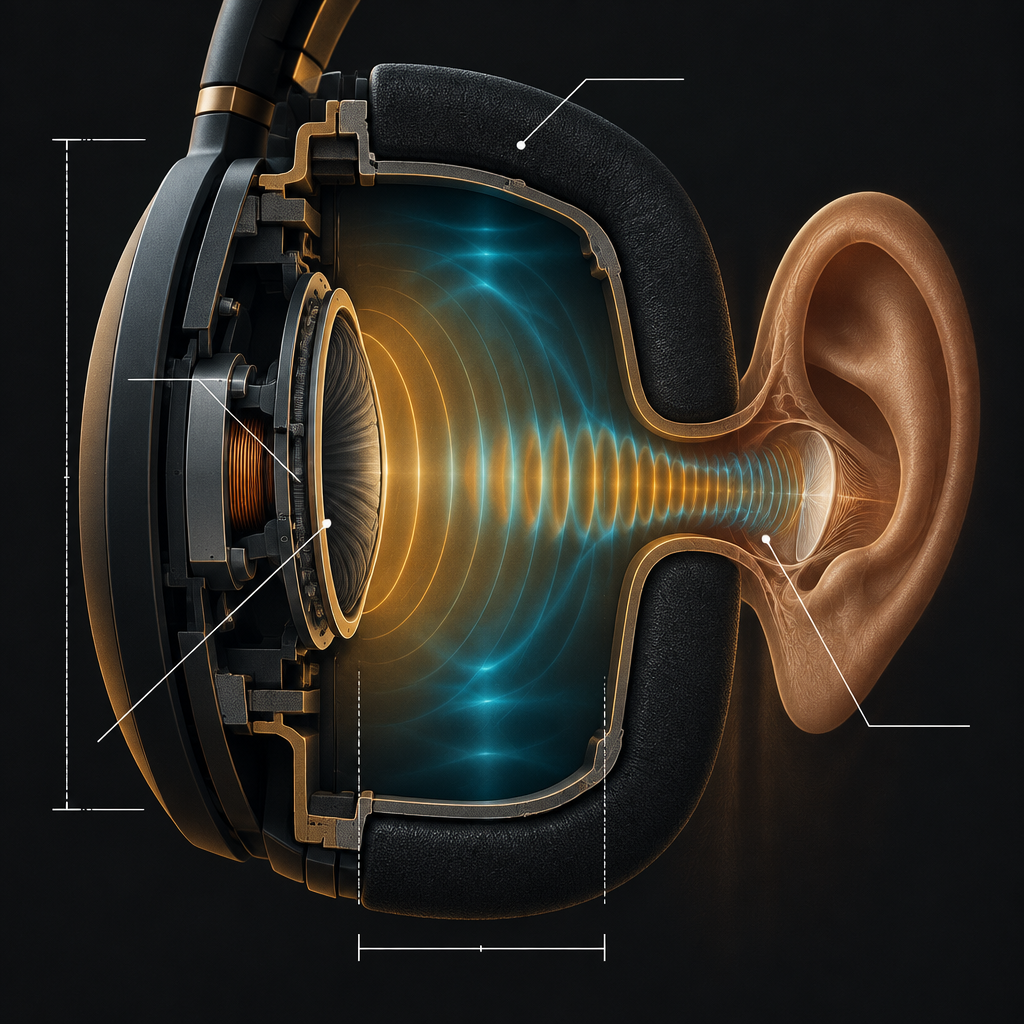
The headphone driver in your ears right now probably works the same way speakers have worked for roughly a hundred years. A coil of copper wire sits inside a magnetic field. An electrical audio signal courses through that coil. The coil pushes and pulls a diaphragm. The diaphragm shoves air into your ear canal. That is it. That is the entire invention, give or take a century of incremental refinement.
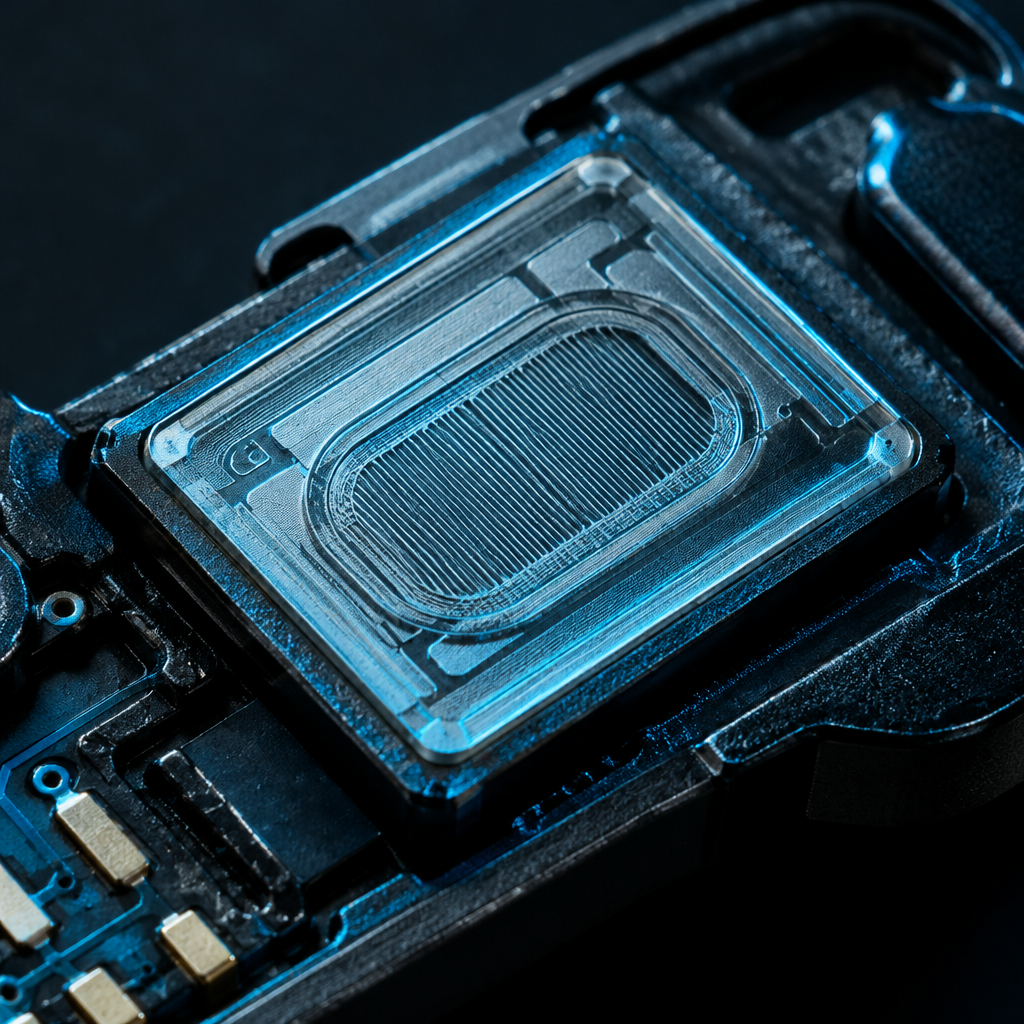
Now imagine replacing every moving part of that system with a sliver of silicon no bigger than a fingernail. No copper coil. No magnet. No suspension spiders or voice coil formers. Just a piezoelectric membrane etched at the nanometer scale, vibrating with a precision that traditional drivers physically cannot match. This is the promise of MEMS micro-speakers, and after years of laboratory development, they are landing in actual headphones.
What MEMS Actually Means in a Speaker
MEMS stands for microelectromechanical systems. If you have used a smartphone microphone, an accelerometer, or a gyroscope, you have already relied on MEMS devices without knowing it. The technology carves microscopic mechanical structures onto silicon wafers using the same photolithography processes that build computer chips. Apply that to audio transducers and you get something remarkable: a speaker manufactured with semiconductor precision.
The key departure from conventional drivers is the actuation mechanism. Traditional dynamic drivers use electromagnetic force. A coil receives an audio signal, interacts with a permanent magnet, and drives the diaphragm from a single concentrated point at its center. MEMS speakers, by contrast, use the inverse piezoelectric effect. When voltage is applied across a piezoelectric material, the material physically deforms. It contracts or expands in response to the electrical signal. That deformation drives an integrated silicon membrane, which moves air and produces sound.
This is not a subtle difference. The entire physics of sound generation changes. You are no longer pushing from one spot and hoping the diaphragm behaves uniformly. You are distributing the driving force across nearly the entire membrane surface.
The Distributed Piezo Drive Advantage
Here is where MEMS speakers get genuinely interesting from an engineering standpoint, and where companies like xMEMS Labs have staked their intellectual property claims.
In a traditional dynamic driver, the voice coil attaches to the diaphragm at a narrow ring near its center. When the coil pushes, that force radiates outward through the diaphragm material. At low volumes and modest frequencies, the diaphragm moves as a single piston. Push the volume up or climb into higher frequencies, though, and the diaphragm stops behaving as a rigid surface. Different areas of the membrane start moving at slightly different times. Engineers call this speaker break-up, and it is the source of much of the distortion you hear when a driver is pushed past its comfort zone.
MEMS speakers attack this problem structurally. Because the piezoelectric layer is deposited across almost the entire diaphragm surface, the driving force is distributed rather than concentrated. Nearly 100% of the membrane is actively supported and driven. The result is a diaphragm that stays linear and uniform during sound reproduction, which translates to measurably lower distortion and cleaner transient response.
There is also a phase consistency benefit that audiophiles will appreciate. With distributed actuation, the piezo layer and the diaphragm overlap almost perfectly in spatial terms. The driving force and the radiating surface are essentially the same object. This eliminates the random phase shifts that occur in coil-driven speakers, where the mechanical energy has to travel from the coil attachment point outward through the diaphragm material before becoming acoustic energy. MEMS drivers maintain precise phase characteristics across the frequency spectrum, which contributes to a sense of spatial accuracy that is difficult to replicate with traditional architectures.
Wider Bandwidth from Multiple Resonances
Another structural advantage flows from the distributed drive. Traditional coil-based speakers are typically designed around a single mechanical resonance point. Above that resonance, sound pressure level drops off. Engineers use cones, domes, and waveguides to manage this, but the fundamental limitation remains: one drive mechanism, one resonance, one roll-off curve.
MEMS speakers can be engineered with multiple resonances because the distributed piezo architecture supports more complex mechanical behavior without sacrificing uniformity. This widens the usable acoustic bandwidth significantly. In practical terms, it means a single MEMS driver can reproduce a broader range of frequencies cleanly than a comparably sized dynamic driver. For headphones, where space and weight are at a premium, that is not a trivial advantage.
Manufacturing Consistency: The Semiconductor Edge
Headphone enthusiasts have long obsessed over driver matching. Even high-end manufacturers struggle to produce pairs of dynamic drivers that measure identically. Variations in coil winding tension, diaphragm thickness, adhesive application, and magnet strength all introduce unit-to-unit variation. Quality control catches the worst offenders, but perfect left-to-right matching is an aspiration, not a guarantee.
MEMS speakers are fabricated on silicon wafers using photolithography. Every driver on a wafer is produced from the same mask, the same etch steps, the same deposition processes. The dimensional tolerances are measured in nanometers, not millimeters. This means driver matching becomes a function of semiconductor process variation, which is extraordinarily tight compared to mechanical assembly. Two MEMS drivers from the same wafer are, for practical purposes, identical.
For headphone manufacturers, this has implications beyond marketing. Consistent drivers simplify crossover design, reduce the need for hand-selection during assembly, and lower the cost of achieving tight stereo imaging. It also makes quality assurance more predictable. You are inspecting chips, not hand-assembled mechanical systems.
From Earbuds to Over-Ear: The 2026 Inflection Point
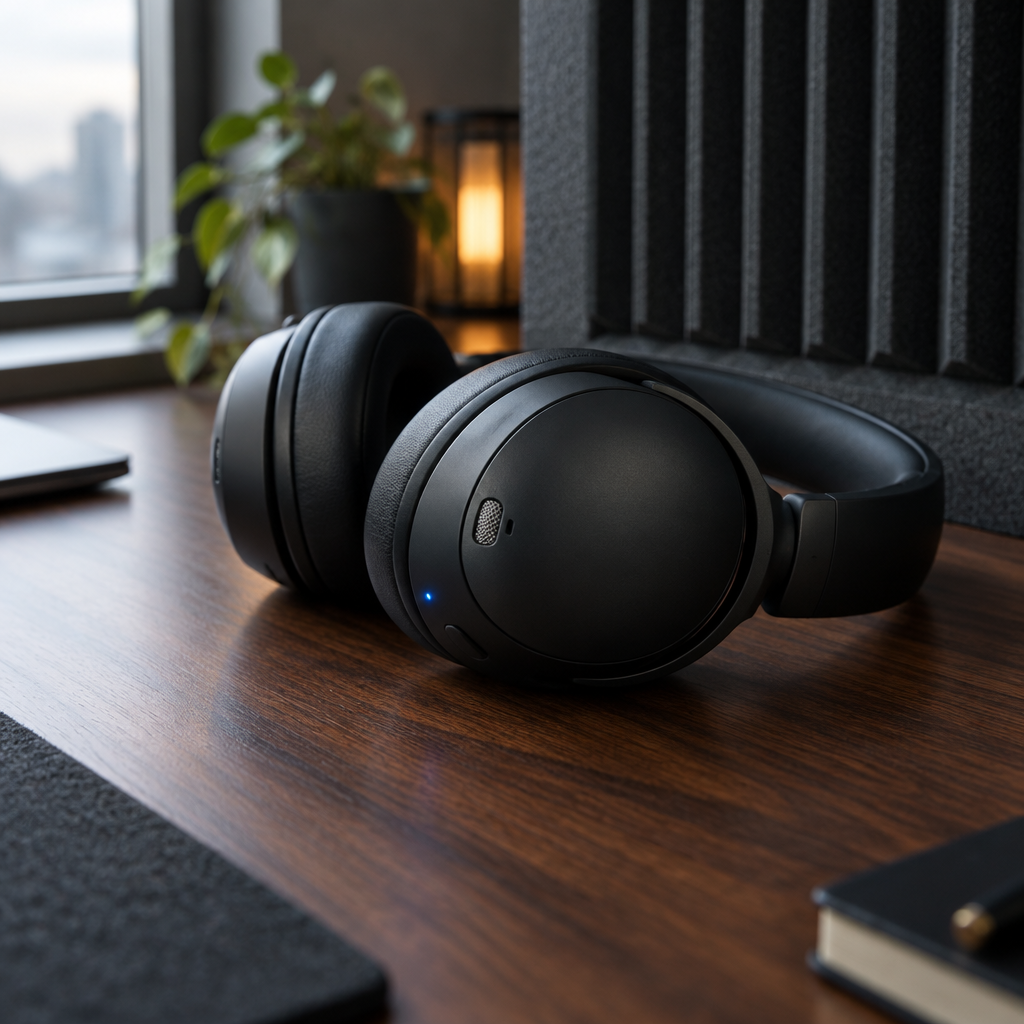
MEMS micro-speakers first appeared in true wireless earbuds, where their compact size and low power consumption were immediate advantages. At CES 2026, xMEMS showcased its Sycamore MEMS loudspeaker technology alongside micro-cooling innovations, signaling a push toward larger form factors. The company demonstrated two-way over-ear headphone reference designs built around MEMS drivers, using the silicon speakers for high-frequency reproduction in a hybrid configuration with traditional low-frequency drivers.
This hybrid approach is pragmatic. MEMS speakers excel at midrange and treble reproduction where their speed, phase consistency, and distortion advantages are most audible. Bass reproduction remains challenging for micro-speakers of any architecture because moving enough air at low frequencies requires diaphragm excursion that is physically demanding at micro scale. Pairing a MEMS tweeter with a conventional woofer gives manufacturers the best of both worlds: the precision of silicon where it matters most, and the air-moving capability of traditional drivers where brute force is still needed.
Other players are moving too. USound and TDK have been developing piezoelectric MEMS speaker technologies aimed at personal audio. Creative Labs and Noble Audio have already shipped true wireless products incorporating solid-state MEMS micro-speakers. The technology is no longer a trade-show curiosity. It is in consumer hardware.
Speed, Transients, and the Sound of Silicon
Beyond the measurable advantages, there is a subjective quality that listeners and reviewers consistently report when hearing MEMS drivers for the first time. The transient response is unnervingly fast. A cymbal strike starts and stops with a precision that sounds almost digital. Vocal sibilance is clean without being harsh. The silence between notes is, well, genuinely silent.
This makes physical sense. A piezoelectric membrane has no voice coil mass, no suspension spider, no mechanical inertia to overcome. When the signal stops, the membrane stops. Traditional dynamic drivers have what engineers call spring and suspension recovery. The diaphragm and its suspension system continue to oscillate slightly after the driving signal ceases, producing a faint trail of resonant energy that colors the sound. MEMS speakers eliminate this entirely. The result is the most accurate time-domain music reproduction currently available in a personal audio transducer, according to xMEMS, and the claim is difficult to argue against on physical grounds.
The Roadblocks Still Standing
None of this means dynamic drivers are going away tomorrow. MEMS speakers face real challenges. Maximum sound pressure level at low frequencies remains the most stubborn. Silicon membranes are rigid and precise, but they are also small, and bass requires moving large volumes of air. Hybrid designs solve this partially, but a pure MEMS over-ear headphone with authoritative sub-bass does not exist yet.
Cost is another factor. Semiconductor fabrication requires enormous capital investment. While per-unit costs decrease at scale, the upfront expense is far higher than winding copper coils and stamping diaphragms. For budget and mid-range headphones, dynamic drivers will remain the economically rational choice for years.
Finally, the audio industry is conservative. Audiophiles love new technology in principle and distrust it in practice. Planar magnetic drivers, electrostatic drivers, and balanced armatures all went through years of skepticism before gaining acceptance. MEMS speakers will face the same gauntlet.
Why It Matters
The headphone industry has spent decades refining a single fundamental technology. Dynamic drivers are better than they have ever been, but they are still, at their core, a coil pushing a cone. MEMS speakers represent a genuine paradigm shift: applying semiconductor manufacturing to acoustic transduction, the same way the industry already did with microphones, accelerometers, and gyroscopes.
If the trajectory holds, the headphones you buy in five years may contain drivers etched from silicon wafers, produced with chip-level precision, and matched so tightly that stereo imaging becomes a solved problem rather than an aspiration. The century of the voice coil might not be over yet, but its successor is making noise.