The Codec Wars: Understanding Hi-Res Bluetooth Audio
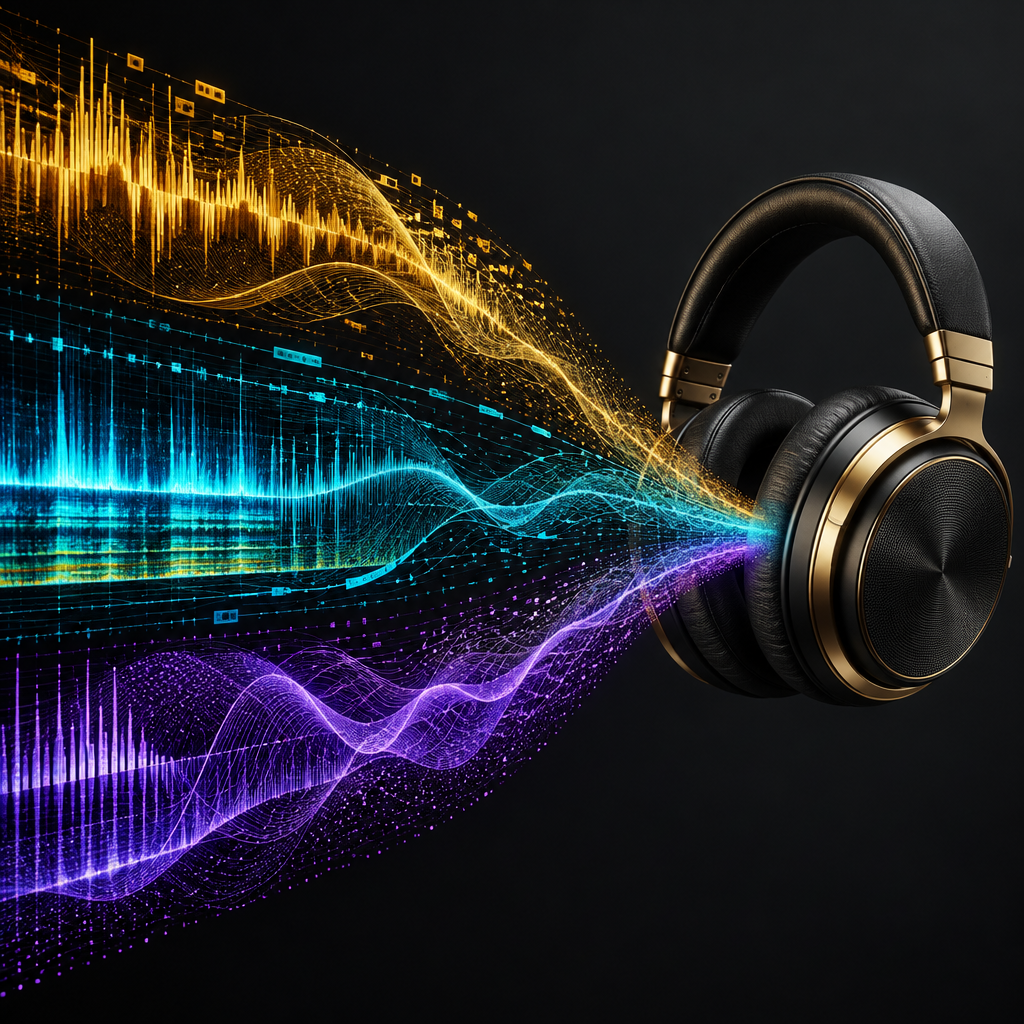
For years, wireless audio enthusiasts accepted a compromise. Bluetooth meant convenience but sacrificed fidelity. You could pick comfort or quality, rarely both. Then came LDAC, aptX Lossless, and LHDC: three competing technologies promising to obliterate that false choice, each claiming the crown of wireless audio supremacy.
The difference matters more than you might think. A codec is essentially a compression algorithm; how it encodes and decodes audio directly shapes what reaches your ears. We're not talking about subtle differences in frequency response or imperceptible improvements in signal-to-noise ratios. We're talking about genuinely audible distinctions that separate mediocre wireless listening from something approaching studio-grade fidelity.
LDAC: Sony's Aging Champion
LDAC emerged in 2015 when Sony realized the headphone industry needed disruption. Operating at bitrates up to 990 kbps, roughly triple standard Bluetooth's capabilities, LDAC fundamentally changed expectations around wireless audio. It's royalty-free, openly licensed, and has become the de facto standard for serious listeners.
Here's the technical reality: LDAC uses adaptive bitrate allocation. Your music player assesses connection quality in real time and adjusts transmission rates accordingly. Weak signal? It drops to 660 kbps. Clear path? Jump to 990 kbps. This intelligence prevented the choppy dropouts that plagued early high-bitrate experiments.
The catch? LDAC requires computational overhead. Older flagship headphones supporting LDAC often drain batteries faster than aptX variants, a trade-off many serious listeners accept without hesitation. Battery drain of 5-10 percent per session simply feels worth the audio gains when you're accustomed to hearing cymbal shimmer and vocal texture at wireless distances.
aptX Lossless: Qualcomm's Precision Play
Qualcomm entered the hi-res wireless space differently. Rather than competing on bitrate maximization, they engineered aptX Lossless for audio fidelity at moderate data rates. This codec promises true lossless transmission, meaning zero data loss from source to receiver, at substantially lower power consumption than LDAC.
The appeal resonates with a specific listener demographic: those who'd rather have consistent, reliable hi-res performance without battery anxiety. aptX Lossless maintains quality across varying connection distances better than LDAC, a genuine advantage in real-world environments. Your bedroom offers different RF conditions than your commute; aptX Lossless adapts with less dramatic bitrate fluctuation.
Technical specifications reveal aptX's engineering philosophy. Operating at around 1.2 Mbps, it actually requires higher bandwidth than LDAC, yet manages power consumption through smarter encoding efficiency. The mathematics work differently; aptX Lossless achieves similar fidelity through precision rather than raw bitrate.
LHDC: The Challenger with Aggressive Ambitions
LHDC arrived from Savitech with revolutionary claims. At bitrates reaching 1.2 Mbps in standard form, and 1.6 Mbps in enhanced configurations, LHDC promised to deliver hi-res audio matching studio monitoring standards. Unlike its competitors, LHDC specifically targets Asian markets where hi-res certification carries genuine commercial weight.
The implementation fascinates from an engineering standpoint. LHDC employs frame-based coding with granular control over bit allocation. Rather than treating audio uniformly, it assigns more bandwidth to frequencies where human ears demonstrate greater sensitivity. Bass frequencies require less precision than midrange vocals; LHDC exploits this perceptual asymmetry to maximum efficiency.
Market penetration remains uneven. Chinese manufacturers enthusiastically adopted LHDC; Western audio companies view it with skepticism. This fragmentation actually matters for consumers. A LHDC headphone purchased in Singapore might underperform with a European smartphone that doesn't natively support the codec.
The Real-World Experience: Which Actually Sounds Better?
Here's where objective specifications meet subjective reality. Under controlled conditions with high-quality source material, distinguishing between these codecs requires trained ears and careful listening sessions. A casual listener switching between LDAC and aptX Lossless might struggle to identify meaningful differences on first encounter.
Extended listening reveals subtler variations. LDAC tends toward slightly warmer tonality, a characteristic that some attribute to its adaptive nature rather than inherent codec design. aptX Lossless delivers leaner, more precise imaging, particularly noticeable in orchestral recordings where spatial placement becomes crucial. LHDC occupies middle ground, offering aggressive fidelity without the warmth signature of LDAC.
Device compatibility ultimately influences your codec experience as much as the codec itself. A smartphone capable of LDAC paired with premium monitoring headphones yields superior performance to budget LDAC gear on compromised source equipment. This reality frustrates enthusiasts seeking universal answers, yet it reflects how audio reproduction actually functions.
Choosing Your Codec: A Practical Framework
LDAC remains the safest choice for cross-platform compatibility. Virtually every flagship Android smartphone supports LDAC; iOS support exists through select wireless models. Your legacy devices probably won't support alternatives.
aptX Lossless appeals to listeners who value consistent performance and extended battery life. If you're consuming podcasts, audiobooks, or casual streaming, its advantages over LDAC become negligible. Serious music enthusiasts notice the difference; casual listeners experience imperceptible improvements for real battery cost.
LHDC warrants consideration primarily if you use Asian-manufactured devices or possess specific headphones optimized for this codec. Retrofitting existing equipment to LHDC compatibility rarely makes financial sense given the modest performance gains.
The Future: Where Bluetooth Audio Heads Next
Bluetooth 5.4 and upcoming iterations promise further codec innovation. Qualcomm continues developing aptX variants; Sony maintains LDAC development; Savitech pushes LHDC boundaries. Rather than converging toward a single standard, the market seems committed to supporting multiple high-bitrate options simultaneously.
This fragmentation frustrates consumers seeking simplicity but reflects healthy technological competition. Each codec attracts dedicated engineering talent; each approach reveals different optimization priorities. The enthusiast who demands aptX Lossless consistency differs fundamentally from the critical listener who values LDAC warmth.
The real victory comes from recognizing that Bluetooth audio has matured beyond fundamental compromises. Whether you choose LDAC, aptX Lossless, or LHDC, you're committing to genuinely high-fidelity wireless audio. The differences matter less than choosing any of these standards over ancient SBC compression.
Final Thoughts
Hi-res Bluetooth audio remains genuinely exciting territory. These three codecs represent years of collective engineering toward a single goal: delivering studio-quality audio wirelessly. Your specific choice depends on your devices, listening habits, and tolerance for technical complexity. Whatever you choose, you're gaining access to wireless audio reproduction that would have seemed impossible a decade ago.