The chip that used to just move audio now thinks
For two decades, the silicon inside your wireless headphones had one job: shuttle audio from your phone to your ears without embarrassing itself. It ran a codec. It managed a Bluetooth link. It powered a feedback loop for noise cancellation that was, at its architectural core, a signal-processing algorithm from the 1990s wearing a smaller battery.
That chip now has a brain.
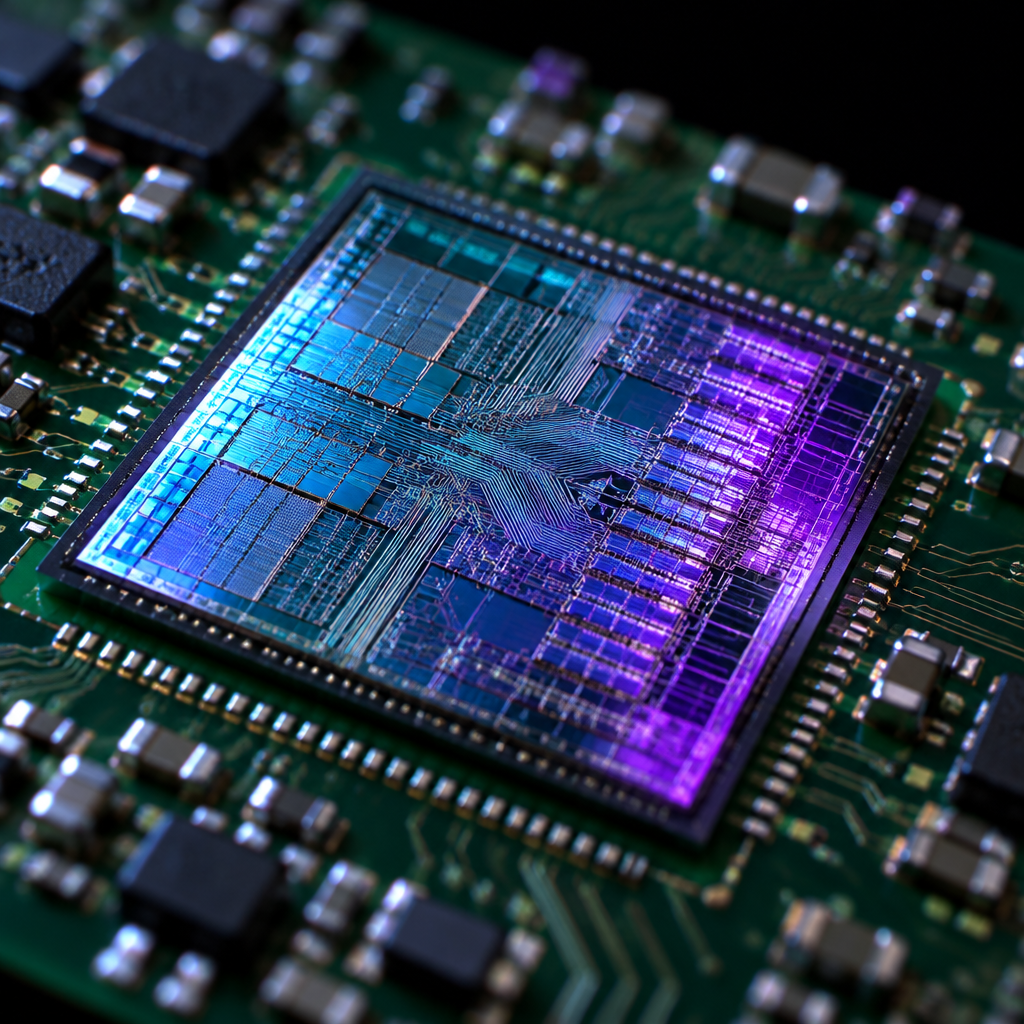
The latest generation of Bluetooth audio silicon shipping in premium headphones contains a dedicated neural processing unit. Not a general-purpose CPU performing AI inference as an afterthought. A physical block of silicon engineered to run neural networks in parallel with the audio DSPs, the codec pipeline, and the Bluetooth radio, all inside a package small enough to sit in the hinge of an over-ear cup. Qualcomm put one there with the Snapdragon Sound Elite Gen 2. Airoha put one there with the AB1595. Apple has been shipping one since the H2 chip. The headphone is becoming an AI device, and the Bluetooth audio chip is where the transformation is happening.
The eNPU: Qualcomm's neural bet
Qualcomm announced the Snapdragon Sound Elite Gen 2 on September 23, 2026, at its Snapdragon Summit in Maui. The headline figure: 128 GOPS of AI acceleration, double the on-device AI throughput of its S7 Gen 1 predecessor. That predecessor was already a generational leap. Qualcomm claims it delivered nearly 100 times more on-device AI than the generations before it. The Elite Gen 2 doubles it again.
The architecture tells a more interesting story than the benchmark. The chip runs an ARM Cortex-M55 at 300 MHz as its main CPU, a second Cortex-M55 at 500 MHz as the main DSP, two Tensilica HiFi 5 offload DSPs at 500 MHz each, a HiFi 3 low-latency DSP at 250 MHz, and the eNPU 6 accelerator. Five processors. Six if you count the neural unit. Qualcomm calls the overall framework the Kymera Multi-Core Audio Architecture, and its design philosophy is specific: AI workloads should run concurrently with audio and voice processing, not as a privileged task that preempts the audio stream.
The eNPU delivers 256 MACs per cycle at 250 MHz. That is not phone-class AI performance. An iPhone's Neural Engine runs at 35 TOPS, roughly 350 times more. But the constraint in a headphone is not peak throughput. It is the milliwatt budget. The chip runs on a battery that might hold 500 milliamp-hours. The eNPU's job is to perform useful neural inference inside that budget, continuously, for hours, without the user noticing the drain.
Qualcomm's power claim deserves scrutiny. The company says the Elite Gen 2 draws 0.6 milliamps in a Wi-Fi-connected idle state, compared to 1.0 milliamps for the S7 Gen 1. That is a 40 percent reduction. The comparison is idle, not active inference. The 3 milliamp base and 4 milliamp music streaming figures are identical between Gen 1 and Gen 2 on Qualcomm's own product pages. The AI throughput doubled. The power floor dropped. The steady-state audio draw did not move. That is an engineering achievement, not a marketing flourish.
Airoha's answer: Cadence silicon inside a MediaTek chip
Sony's WH-1000XM6, the headphones that set the 2026 flagship benchmark, does not use a Qualcomm chip. It uses the Airoha AB1595, built by Airoha Technology, a MediaTek subsidiary. Airoha took a different architectural path to the same destination.
The AB1595 runs an ARM Cortex-M33F at 240 MHz, a slower main CPU than Qualcomm's M55. It has two Hi-Fi 5s DSPs at 480 MHz and a proprietary processor Airoha calls AiroHAP, about which the company has published almost nothing. The neural accelerator is the Cadence NNE110, licensed from Cadence Design Systems. Cadence's own documentation puts the NNE110 between 64 and 256 GOPS depending on configuration, which means Airoha's implementation could match or exceed Qualcomm's 128 GOPS. Airoha has not disclosed their specific number.
The AB1595 is built on a 12 nanometer process node. Qualcomm has not disclosed the node for the Sound Elite Gen 2. In a headphone chip, the manufacturing node matters because it determines how much processing fits inside the thermal envelope of a device pressed against skin. More processing means better AI. Better AI means smarter noise cancellation, sharper voice isolation, richer environmental awareness. The node is the geological layer under all of it.
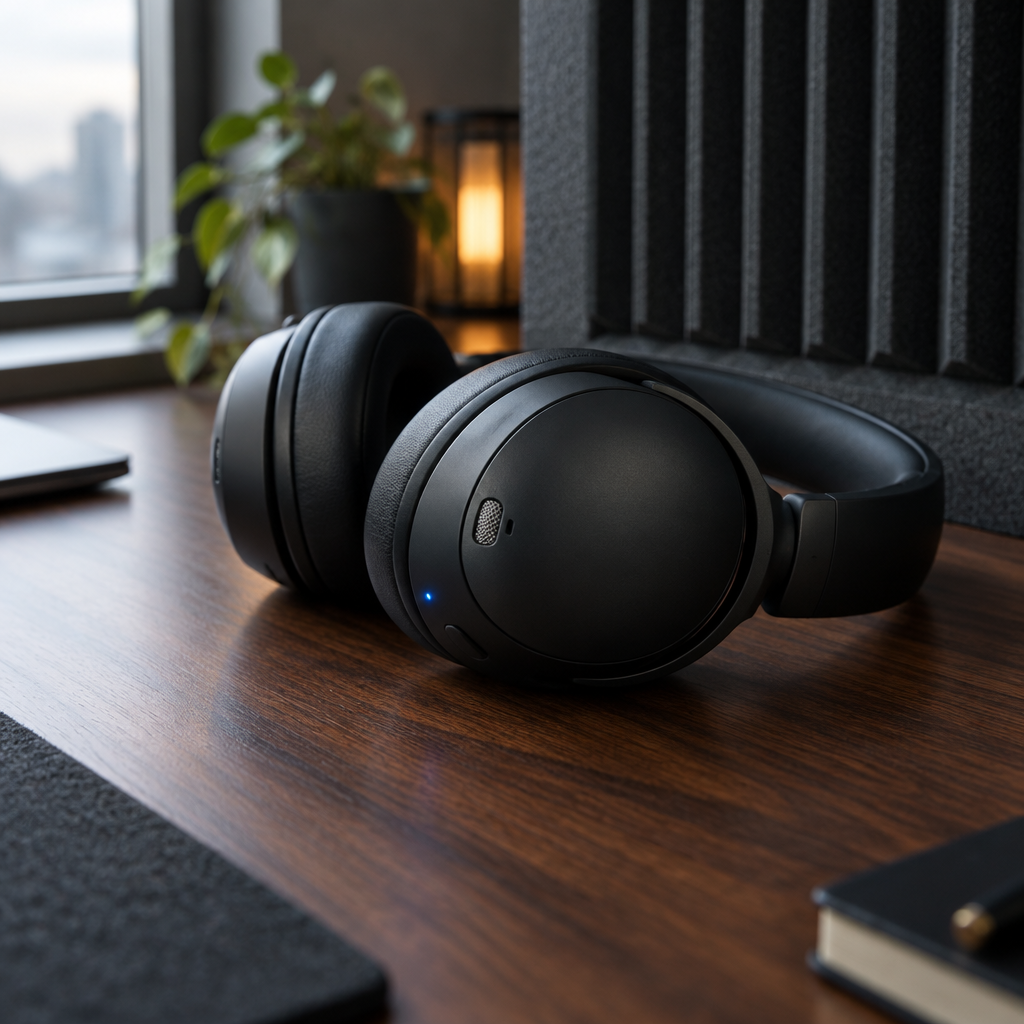
Sony pairs the AB1595 with its own QN3 HD noise-cancelling processor and a 12-microphone array. The QN3 runs what Sony calls a Predictive Noise Shaper, a system that uses advanced D/A conversion to anticipate the incoming noise waveform before it fully arrives. The Airoha chip handles the Bluetooth link, the AI noise reduction, and the beamforming for calls. Sony's QN3 handles the cancellation math. This division of labor between a dedicated ANC processor and a Bluetooth SoC with an NPU is an architectural choice Qualcomm, with its monolithic approach, deliberately does not make.
Apple's H2: the sealed vertical stack
Apple's H2 chip, which powers the AirPods Max 2 and the AirPods Pro 3, takes a third path. Apple does not disclose GOPS, MACs per cycle, clock speeds, or process node. What Apple does disclose is behavior. The AirPods Max 2 delivers 1.5 times the noise cancellation of the original AirPods Max. It runs Adaptive Audio, which dynamically blends transparency and noise cancellation based on continuous environmental classification. It runs Conversation Awareness, which detects when the wearer starts speaking and lowers the volume. It runs Live Translation, processing speech in real time through Apple's Neural Engine. It runs Voice Isolation, using on-device machine learning to separate the wearer's voice from background noise during phone calls.
Apple's structural advantage is vertical integration. The H2 chip, iOS, and the Neural Engine in the paired iPhone are all designed by the same company. When the AirPods need more compute than the H2 can provide, the work moves to the phone. When the phone needs more, it moves to the cloud. Qualcomm's hybrid AI architecture attempts the same flow with the Sound Elite Gen 2, XPAN Wi-Fi, and the Snapdragon Sound Apps and Agents ecosystem, but Qualcomm does not control the phone's operating system. Apple does. That control lets Apple make tradeoffs Qualcomm cannot.
What the NPU actually does inside your headphones
The neural processing unit in a headphone chip serves four categories of task, each with different latency and persistence demands.
Adaptive noise cancellation is the most mature. The fifth-generation Qualcomm Adaptive ANC on the Sound Elite Gen 2 uses machine learning to model the acoustic environment and adjust filter parameters continuously. Traditional ANC applies fixed filters optimized for a static noise profile. Neural ANC distinguishes between the low rumble of an aircraft engine, the midrange clatter of a coffee shop, and the sharp transient of a door slamming, then applies different cancellation strategies to each. Airoha's AI noise reduction and Sony's QN3 Predictive Noise Shaper do similar work from different architectural positions.
Voice isolation is the second category. The QCY H3S, a $49.99 budget over-ear headphone, uses a seven-microphone array with a DNN algorithm to separate the wearer's voice from wind and crowd noise during calls. A fifty-dollar headphone running a deep neural network for voice isolation would have been inconceivable three years ago. The NPU makes it possible because the inference happens on the chip, with no cloud round trip, no network latency, and no per-call processing cost.
Environmental awareness is the third. Adaptive Audio on the AirPods Max 2, the contextual assistance features on the Snapdragon Sound Elite Gen 2, and the emerging class of always-listening headphone functions all require continuous acoustic scene classification. The headphone needs to identify its environment in real time: street, office, home, gym, train platform. That classification drives behavior changes the user should never have to request manually.
The fourth category is still in the research lab. University of Washington researchers led by Shyam Gollakota have spent three years demonstrating what headphones can do when they have enough AI compute. Their Semantic Hearing system, presented at UIST 2023, let users select which sounds to let through from twenty classes: sirens, bird chirps, speech, vacuum cleaners, baby cries. Their Target Speech Hearing system, published at EMNLP 2025, goes further. Two AI models work in sequence. The first tracks the turn-taking rhythm of conversation to identify who the wearer is listening to, using two to four seconds of audio. The second isolates those voices and plays cleaned-up audio with no perceptible lag. Eleven test participants rated the filtered audio more than twice as favorably as the unfiltered baseline.
Gollakota's team says the system needs to be miniaturized onto a chip before it can ship in a product. That chip is being built right now. It is the eNPU, the NNE110, the Neural Engine. The research is pointing at the silicon, and the silicon is arriving on schedule.
The constraint nobody mentions
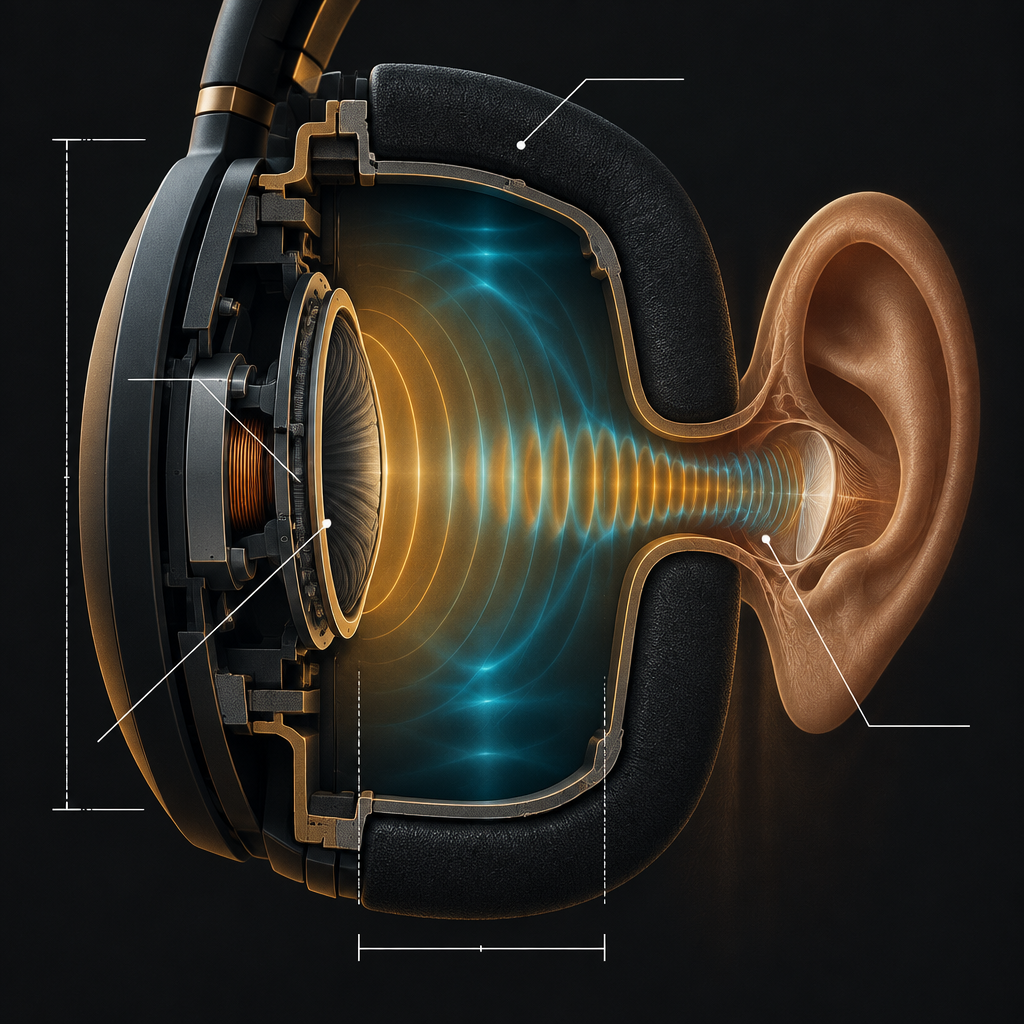
Heat. A headphone chip running five processors and a neural accelerator inside a package measuring 6.85 by 4.85 millimeters gets warm. The ear cup is a sealed plastic shell pressed against skin. There is no fan. There is no heatsink. There is a battery getting warm on one side and a chip getting warm on the other, with a pad of memory foam between them.
Qualcomm's 30 percent footprint reduction and 40 percent power reduction are not just about extending battery life. They are about keeping the headphone comfortable on a head. More AI compute in a smaller package at lower power means the headphone can run neural networks continuously without the ear cup becoming unpleasant. That thermal ceiling, not the GOPS number on a spec sheet, is the real limit on how much AI a headphone can deploy.
What headphone buyers should understand
The chip inside your headphones matters more than the marketing suggests. A headphone with a dedicated NPU can run adaptive noise cancellation that genuinely adapts, voice isolation that functions in a wind tunnel, and environmental awareness that responds before you ask. A headphone without one cannot, regardless of how many microphones the spec sheet counts.
The three architectures in the market take different routes. Qualcomm's monolithic approach puts everything on one chip. Sony's dual-chip design separates ANC and Bluetooth. Apple's vertical integration lets the phone carry the load when the earpiece runs out of headroom. Each involves tradeoffs in latency, battery life, and feature depth. The one thing they share: all of them now include silicon designed to run neural networks. The headphone has stopped being a passive audio endpoint. It has started being a computer you wear on your ears.