The Headphone That Refuses to Close
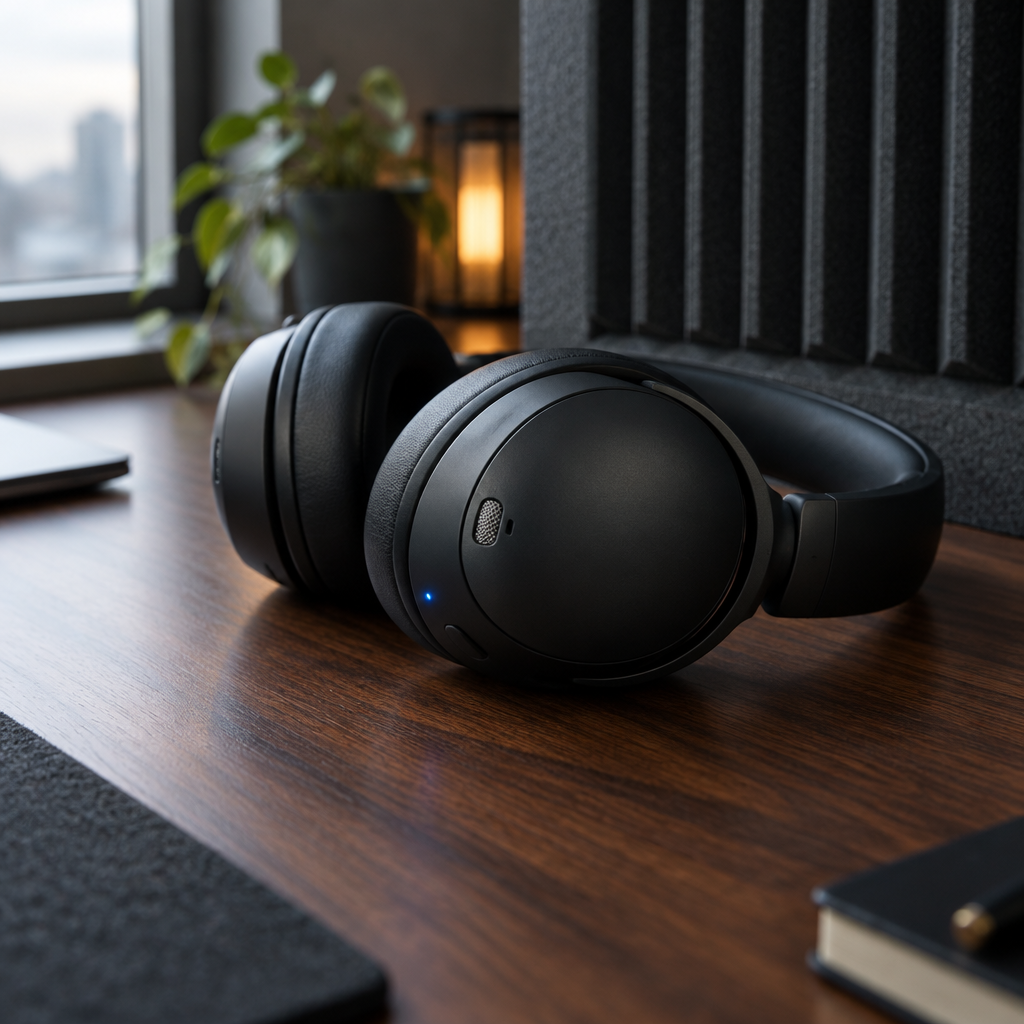
Audio-Technica just shipped a contradiction. The ATH-AL5NC is a wireless open-back headphone with active noise cancellation, a $279 device with 53mm drivers, a mesh grille where a sealed wall should be, and battery claims the company states with a straight face: up to 75 hours with Bluetooth on and noise cancelling off, closer to 50 once the cancellation DSP wakes up. If you have followed headphone engineering for any length of time, your first reaction is that this design should not work.
Open-back means the earcup has holes in it. On purpose. The rear of the driver vents into the room instead of bouncing off a plastic shell, and the escaping wave prevents the trapped resonance that gives closed cups their boxy, pressurized coloration. This is why nearly every studio reference headphone of the past four decades, the Sennheiser HD 600 series, the Beyerdynamic DT 880, the AKG K240 lineage, wears its grilles proudly. The design buys naturalness. It pays with isolation, because a cup full of holes blocks approximately nothing.
Wireless headphones never had that option. A sealed cup holds the battery, the amplifier, and the antenna in a tidy pressure vessel, and it gives active noise cancellation something to push against. So the entire wireless over-ear market standardized on closed backs. Audio-Technica broke ranks in the autumn of 2026, and two other new releases, from Philips and Nothing, reveal that the whole industry is quietly renegotiating the same contract: the one between ANC and the perfect seal.
Why Cancellation Always Wanted a Lid
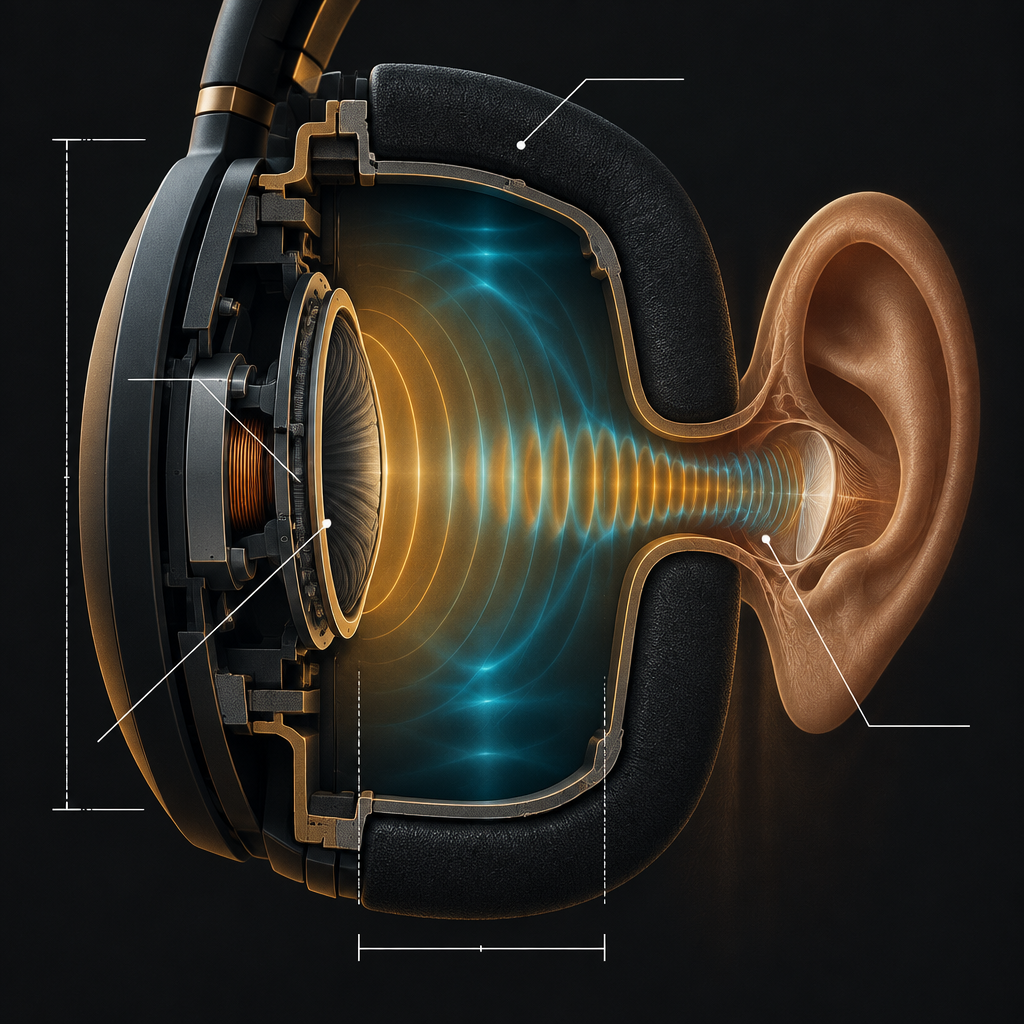
The physics is old. Headphone ANC descends from Paul Lueg's 1936 patent, and every modern design reduces to two architectures. Feedforward puts a microphone on the outside of the cup. The mic hears noise before you do, a processor estimates how that noise will arrive at your eardrum, and the driver plays an inverted copy timed to meet the original wave crest for trough. Feedback puts the microphone inside, next to your ear, and asks a different question: what actually arrived? Whatever the error is, the driver corrects it on the next cycle.
Both architectures lean on the seal. In a feedback design, the sealed cavity behaves like a tiny pressure vessel, and the controller sees a well-behaved, repeatable system: push the driver, pressure rises predictably. Vent the vessel and the system turns sloppy. The loop's carefully chosen gain margin collapses, and an aggressive feedback filter driven past its stability limit does the one thing feedback systems are famous for. It howls.
Feedforward has the opposite disease. The outside microphone never hears your eardrum; the processor works from a stored estimate of the path between them, and that path runs straight through the acoustic impedance of the earpad seal. Foam that compresses differently on Tuesday than it did on Monday, a pair of glasses, a strand of hair, a jaw that drops when you doze on a train: each one rewrites the path, and the anti-noise arrives with the wrong amplitude, the wrong phase, or both. The cancellation you paid for degrades into noise-shaped mush, and the bass goes first, because a broken seal vents low-frequency pressure the way a cracked window vents heat.
The Frequency Ceiling Nobody Escapes
There is a hard limit above which none of this matters, and it comes from arithmetic. Sound moves at roughly 343 meters per second. At 100 Hz the wavelength is 3.4 meters, enormous compared to an earcup, so the pressure is essentially uniform across the whole cavity; one driver, one correction, done. At 1 kHz the wavelength shrinks to 34 centimeters, about the size of the cup itself. Phase now varies from one point on your pinna to another, a single-point correction cannot be right everywhere at once, and the math stops cooperating.
Above that line, every headphone on earth hands the job to passive isolation: foam, clamping force, and a sealed shell, which together deliver 20 to 40 dB of attenuation in the frequencies where ANC gives up. The sealed cup is not just a battery box. It is the high-frequency division of labor.
An open-back abandons that division entirely. Zero passive attenuation, by design, forever. So whatever the ATH-AL5NC's cancellation is doing, physics constrains it tightly: it must be a feedforward or gently hybrid filter aimed at the low hundreds of hertz, modest in depth, honest about being a rumble reducer for living rooms and gaming chairs rather than a cabin-quieting system for seat 23B. Audio-Technica has not published a block diagram. The battery numbers tell the story anyway. The gap between 75 hours and 50 is the DSP budget, and it is a small one next to the multi-microphone flagships, which is exactly what you would expect from a narrowband filter rather than a full hybrid stack.
Philips Turns the Leak Into a Signal
Philips took the opposite lesson from the same physics. The Fidelio L5, fresh this season at £179.99 with Bluetooth 6.0 and 60 hours of playback, includes a leakage detection mode. The headphones sense when the seal between your ears and the earcups is not quite aligned, then adapt the cancellation filter to match.
That is a quietly sophisticated move. The traditional industry answer to seal variation has been denial: assume a nominal fit, ship one filter, and let users with glasses subsidize the ones without. Leakage detection treats the leak as measurable data instead. The system runs a rough identification of the acoustic path, re-estimates how the anti-noise actually travels from driver to eardrum on your particular head at this particular moment, and retunes its coefficients. Control engineers call this plant variability, and it has been the central annoyance of ANC design since the 1980s. A cheap sensor routine attacking a forty-year-old problem, in a mid-priced headphone. That is the right kind of progress.
Expect the idea to spread. The alternative, brute force, costs more battery.
Nothing Brings Ten Microphones and a Solid-State Tweeter
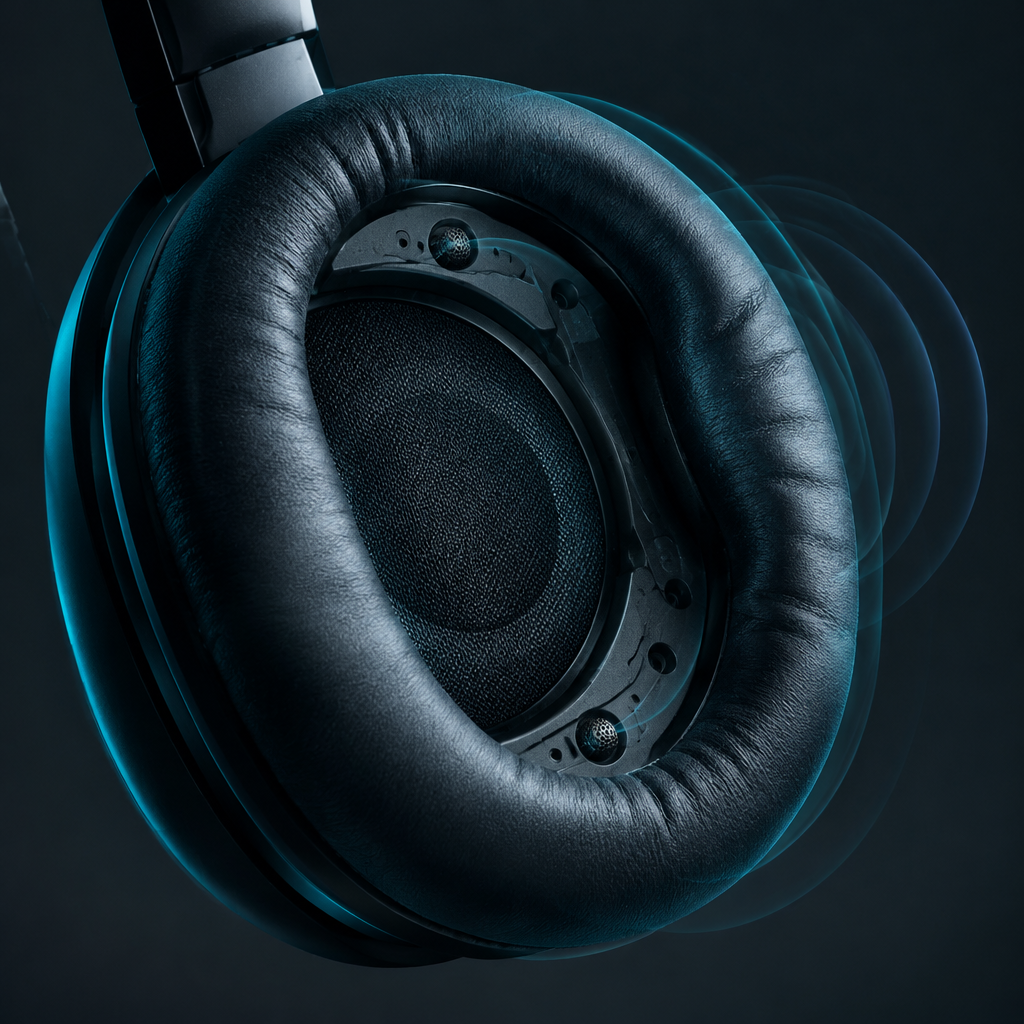
Brute force is Nothing's way. The Headphone (1) Pro, at £349, carries Bluetooth 6.1 with LDAC alongside SBC and AAC, a claimed frequency range of 20 Hz to 40 kHz, and ten microphones: three feedforward and two feedback per cup. Nothing claims up to 46 dB of real-time adaptive cancellation, which in pressure terms is roughly a 200-to-1 reduction, plus 68 hours of battery that sag to 30 with the cancellation running. The delta between those two numbers is the honest price of a hybrid ANC stack, and it dwarfs Audio-Technica's.
The hybrid layout is the standard industrial answer to seal variation. The feedback microphones sit close to the ear and hear the actual error, so the loop absorbs whatever the feedforward estimate got wrong, up to the stability limit. The earpads carry a silicone baffle to keep that limit high. Sealed, the design can be aggressive. Leaky, it must back off. This is why even a flagship with ten sensors cares so much about what sits between pad and skin.
The drivers deserve their own sentence. One dynamic handles bass, a second precision dynamic covers the midrange, and the highs go to an xMEMS solid-state part: a silicon diaphragm driven by piezoelectric actuators etched into the chip, moving with the speed of a switching transistor rather than the momentum of a moving coil. Transient response is where MEMS drivers earn their keep, and a three-way crossover in a headphone is a genuine engineering gamble, detail against crossover risk. Nothing is betting you will hear the difference.
What the Broken Seal Means for You
The landscape sorts cleanly for buyers. If your noise lives on planes, trains, and open offices, the closed hybrid cup still owns the job. Nothing about 2026 changes the frequency ceiling, so passive attenuation remains half the product, and Audio-Technica's mesh grilles surrender that half on principle. The ATH-AL5NC is a home instrument: gaming, movies, long evening sessions where you want the room's rumble damped but its voices still audible. That is also the most honest use of open-back ANC, because an open-back is permanently in transparency mode, whether the marketing says so or not.
If you wear glasses, or have hair, or a jaw, leakage detection is the feature to shortlist. It converts the most common failure mode of noise cancellation into a solved problem at mid-range prices. And when a spec sheet shouts microphone counts at you, remember what the extra microphones are mostly for: correcting an estimate that a better seal would never have gotten wrong. The decibel claims live or die below a kilohertz, regardless of how many sensors point at your head.
The larger trend matters more than any single product. For fifty years the industry's contract read: give us a perfect seal and we will give you silence. Nobody has a perfect seal. The class of 2026 is tearing up the contract and replacing it with something more adult: measure the leak and adapt to it, or drop the pretense of silence and cancel what can be canceled. The seal is broken. The engineering is finally honest about it.