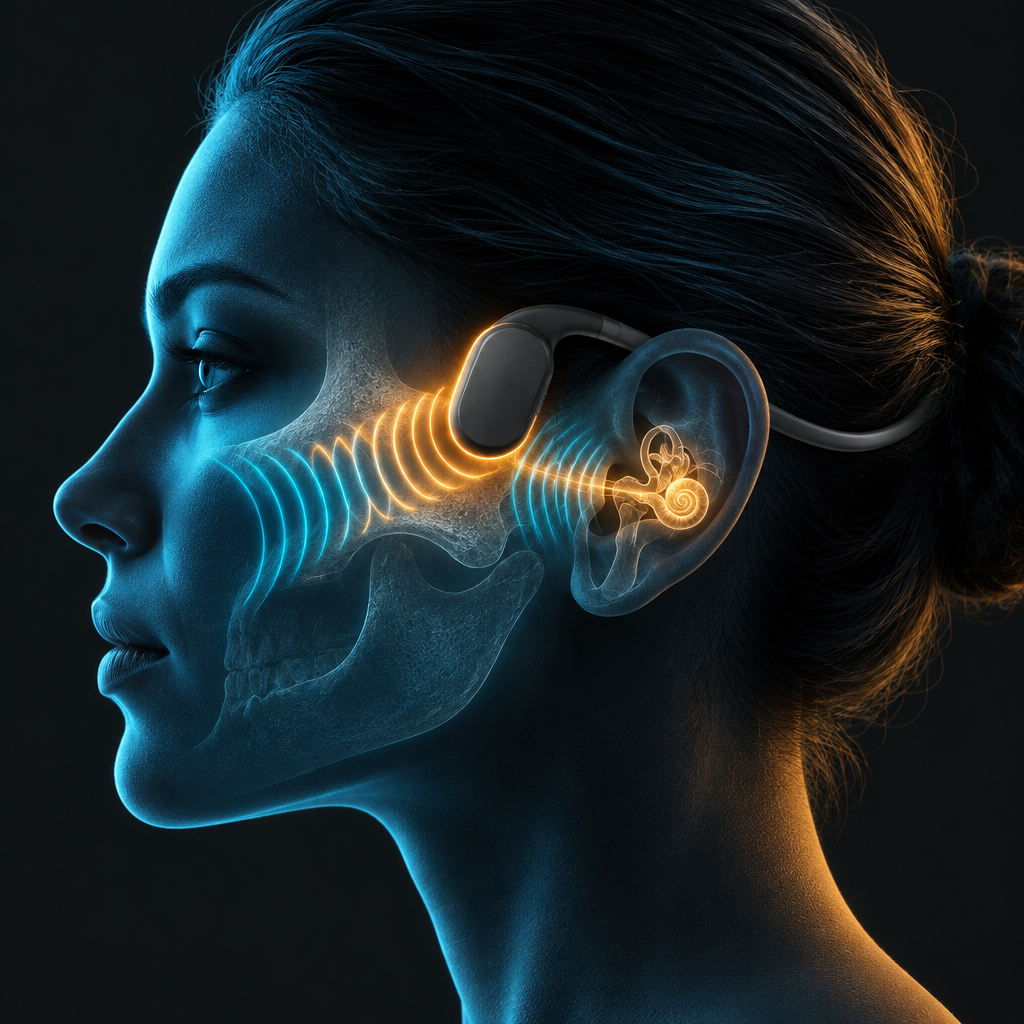
Bone conduction technology feels like science fiction, yet it's been quietly revolutionizing how millions experience audio. Instead of speakers pumping sound into your ear canals, bone conduction headphones vibrate directly against your skull, transmitting audio through your temporal bone and into your inner ear. The result: crystal-clear music, podcast, or calls while your ears remain completely unobstructed and aware of your surroundings. For athletes, accessibility advocates, and anyone tired of traditional earbuds, this shift represents a genuine game-changer.
The Physics Behind the Vibration
Most of us learned in school that sound travels through air as waves hitting our eardrums. Bone conduction flips this entirely. When you strap a device like the Shokz OpenMove or Philips A5002 against your temples or behind your ears, embedded transducers create precise vibrations at frequencies between 20 Hz and 20,000 Hz, mimicking the full spectrum of human hearing. These vibrations travel directly into your petrous bone, a section of the temporal bone that houses your inner ear (cochlea). Your cochlea doesn't distinguish whether vibrations came from air waves or physical oscillation; it simply converts them into electrical signals your brain interprets as sound.
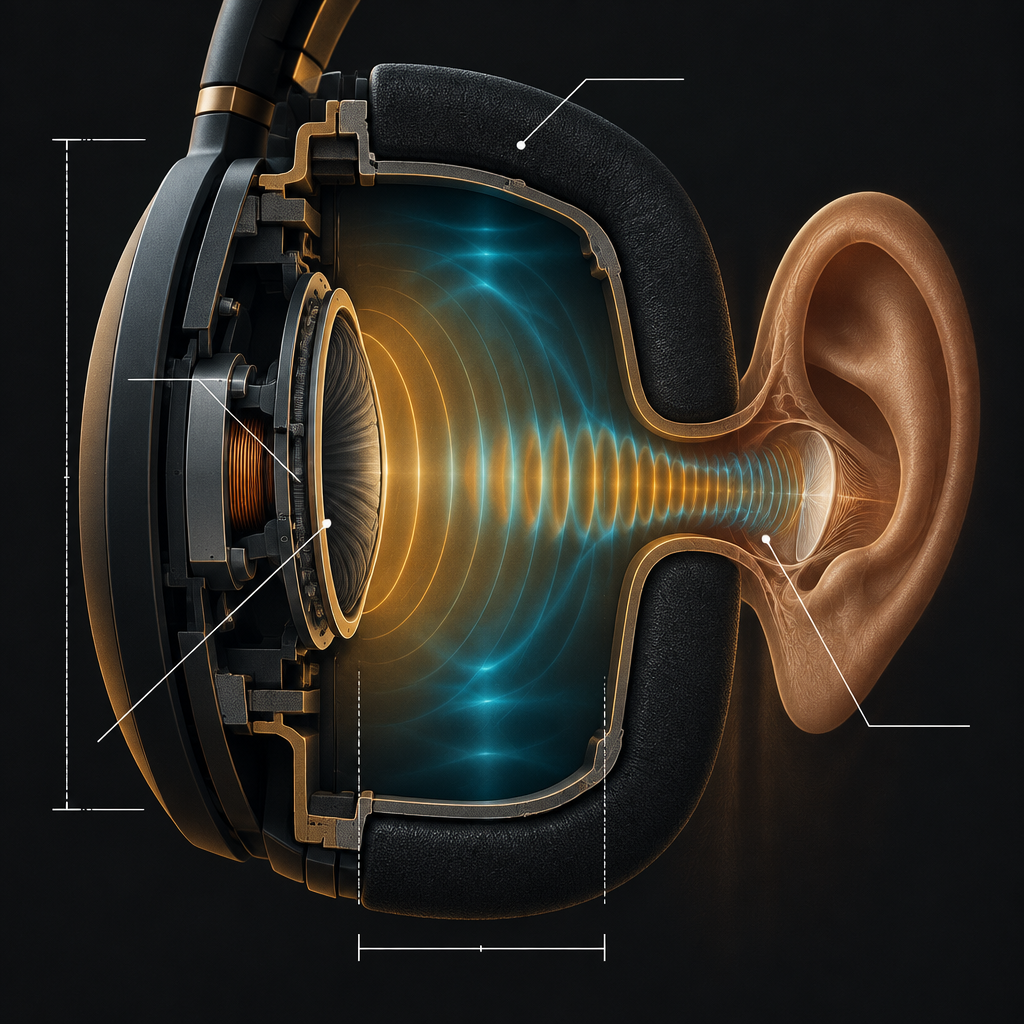
This bypasses the entire middle ear mechanism. Normally, sound enters through your external ear, vibrates your eardrum, then transfers through tiny ossicles (hammer, anvil, stirrup) before reaching the cochlea. Bone conduction eliminates several steps, which is why it's so valuable for individuals with conductive hearing loss or middle-ear damage. The technology was first developed in the 1970s for military and medical applications, but consumer adoption didn't explode until companies like AfterShokz (now Shokz) proved the tech could deliver genuine audio quality at scale.
The Shokz Dominance and Emerging Competition
When Shokz released the OpenMove in 2020, followed by the more premium OpenRun and OpenRun Pro, they essentially owned the bone conduction headphone category. Their transducers, patented vibration algorithms, and industrial design became the industry standard. The OpenRun Pro, priced around $200, delivers dual-transducer technology that creates a stereo image without traditional left-right speaker separation. It's counterintuitive but it works: different frequencies vibrate at slightly different amplitudes or phase offsets, creating a believable sense of directionality.
But Shokz's monopoly has weakened. Philips launched the A5002, targeting fitness and accessibility markets with aggressive pricing under $150. Philips uses a single transducer design, which simplifies manufacturing and reduces cost, though the stereo effect is less pronounced. Swim-specific brands like Aftershokz Titanium and newer players like Vidonn are pushing into niches: waterproof models that sync with your smartphone via Bluetooth 5.2 or 5.3 for swimming, yoga, and water sports where traditional headphones fail entirely.
Korean manufacturers haven't ignored this trend either. LG and Samsung both filed patents for bone conduction tech in their wearables divisions, suggesting mainstream headphone makers view this as more than a niche market. The competitive pressure has forced Shokz to innovate continuously, launching the OpenRun Mini for smaller heads and the OpenFit, which uses a hybrid approach with tiny open-ear speakers instead of pure bone conduction. This portfolio expansion signals that bone conduction itself is maturing into multiple subcategories.
Use Cases That Justify the Premium Price
Why would anyone pay $150 to $300 for bone conduction headphones when solid Bluetooth earbuds cost $50? The answer lies in specific, high-value scenarios where traditional audio is problematic or impossible.
Sports and fitness: Runners, cyclists, and trail athletes need situational awareness. A delivery truck doesn't care if you're listening to your running podcast; you need to hear it coming. Bone conduction eliminates this tension. You get music and podcasts while maintaining 100% ear-canal clarity. Most Shokz models are also IP67 or IP68 rated for sweat and rain, and some (like the Titanium) are fully waterproof for swimming and open-water triathlons.
Accessibility: For deaf or hard-of-hearing users with functional inner ears but damaged middle-ear mechanisms, bone conduction is transformative. It bypasses the broken link in the hearing chain entirely. Blind or low-vision athletes also benefit from complete ear-canal freedom, allowing them to rely on spatial audio cues without the sensory occlusion that earbuds create. Organizations like the American Foundation for the Blind have championed bone conduction specifically for this reason.
Professional and industrial settings: Construction workers, factory operators, and emergency responders use bone conduction for hands-free communication while maintaining environmental awareness. The OSHA requirement for workers to hear warning signals, vehicle backups, and colleagues makes bone conduction technically superior to sealed earbuds.
Driving and commuting: Some jurisdictions now legally prefer bone conduction over earbuds for drivers. You stay connected without the distraction barrier that earbuds create. Shokz, recognizing this, markets the OpenRun specifically to commuters as a safety-first audio solution.
Audio Quality: The Trade-Off That Gets Smaller Every Year
Early bone conduction headphones sounded tinny, thin, and lifeless. This was the honest limitation: vibrating your skull isn't as efficient at delivering bass as drivers pumping air pressure into your ear canal. The lowest frequencies (below 100 Hz) were virtually absent in first-generation devices, which meant drum kicks, bass guitar, and percussion-heavy music suffered badly.
The gap has narrowed dramatically. Modern Shokz and Philips devices now reproduce down to about 20 Hz with acceptable clarity, though bass still lacks the visceral punch of closed-back earbuds. For vocals, podcasts, audiobooks, and acoustic music, bone conduction is genuinely indistinguishable from traditional headphones. For electronic dance music, hip-hop, and bass-heavy genres, it's a noticeable but manageable compromise. If you're a producer or audio engineer, earbuds will remain your choice. If you're a casual listener who values situational awareness, the audio quality is excellent enough that the trade-off barely registers.
Battery life varies widely. Shokz OpenRun delivers around 8 hours; the OpenRun Pro pushes closer to 11 hours. The mini variants and budget options like the Philips A5002 offer 6 to 7 hours, which is still respectable for daily use. Charging via USB-C or magnetic contacts is quick, usually 90 to 120 minutes for a full charge.
The Accessibility Paradox
Here's where bone conduction gets interesting from a broader perspective. The technology was designed to help people with hearing disabilities access audio. Yet the mainstream market views it as a lifestyle feature for athletes and fitness enthusiasts. This suggests that open-ear audio is genuinely valuable to everyone, not just people with hearing loss. The accessibility advantage isn't charity; it's performance.
This inversion has already influenced product design. Companies are now working backward from bone conduction's open-ear advantage and applying similar principles to new categories. Open-ear speakers (tiny directional speakers worn near the ear but not in it), transparent earbuds with pass-through microphones, and spatial audio with head-tracking all chase bone conduction's core benefit: full awareness of your environment while staying connected.
Market Adoption and Barriers
Global bone conduction headphone sales are projected to grow from roughly 2.5 million units in 2023 to over 6 million by 2027. That's substantial, but still a fraction of the 350+ million earbuds sold annually. Why hasn't bone conduction exploded if it's so good?
First, price. At $150 to $300, bone conduction is a premium purchase. Budget earbuds at $20 to $50 meet most casual users' needs. Second, brand awareness. Most people have never tried bone conduction; they don't know it exists or assume it won't work well. Third, niche positioning. Marketing typically targets runners and accessibility audiences, not mainstream music listeners. Fourth, audio quality perception. Despite improvements, bass-heavy music fans will always prefer earbuds. Bone conduction won't replace traditional headphones; it will occupy a distinct category for specific use cases.
What's Next for Bone Conduction
The next frontier involves hybrid designs. Shokz's OpenFit uses both bone conduction and open-ear speakers, combining advantages of both. We're also seeing experiments with multi-transducer arrays to improve stereo separation and directional audio. Some companies are exploring integration with AR glasses, where bone conduction serves double duty: audio delivery and a non-visual interface for voice commands.
Comfort and fit will also improve. Current bone conduction devices require you to find the exact optimal position; slightly off-center vibration feels off. Machine learning and adaptive fitting could eventually auto-calibrate optimal placement per user, optimizing comfort and sound quality simultaneously.
Conclusion
Bone conduction headphones represent a genuine shift in audio design philosophy. Rather than isolating you in sound, they integrate sound into your awareness. For athletes, accessibility advocates, and anyone working or moving in environments where traditional earbuds are impractical, they're not just an alternative; they're the superior choice. The technology has matured enough that audio quality is no longer a barrier. What remains is awareness, affordability, and the slow march of consumer adoption. If you haven't tried bone conduction, your next run, commute, or work shift might be the moment everything clicks.