The Paper Towel Tube Problem
You have lived this scenario. Your Bluetooth headphones sound immaculate streaming music. Rich lows, crisp highs, a soundstage that feels wider than the room. Then someone calls. The music fades. A tiny glitch clicks through the drivers. Suddenly the caller sounds like they are speaking through a paper towel tube, and you sound equally wretched to them. The headphones did not change. The audio architecture underneath them did.
For two decades, Bluetooth headphones have operated with a split personality. Two completely separate profiles, two completely separate codecs, two completely separate audio paths. A2DP for music, one direction, no return audio, reasonably good quality. HFP for calls, bidirectional but gutted to narrowband voice quality. Switching between them is not graceful. It is a hard handoff, and you hear it every time.
Bluetooth LE Audio kills this problem at the foundation. Not with a patch. Not with a better codec stapled onto the old architecture. With a fundamental redesign of how audio flows between devices.
One Stream, Two Directions
The breakthrough lives inside something called a Connected Isochronous Stream. CIS, for short. The name is unglamorous. The capability is not.
In Classic Bluetooth, A2DP sends audio one way. Phone to headphones. Done. No return path exists within that profile. When you need to send audio back, the entire system switches to HFP, which uses a different codec at a fraction of the bitrate. Your headphones effectively become a different device.
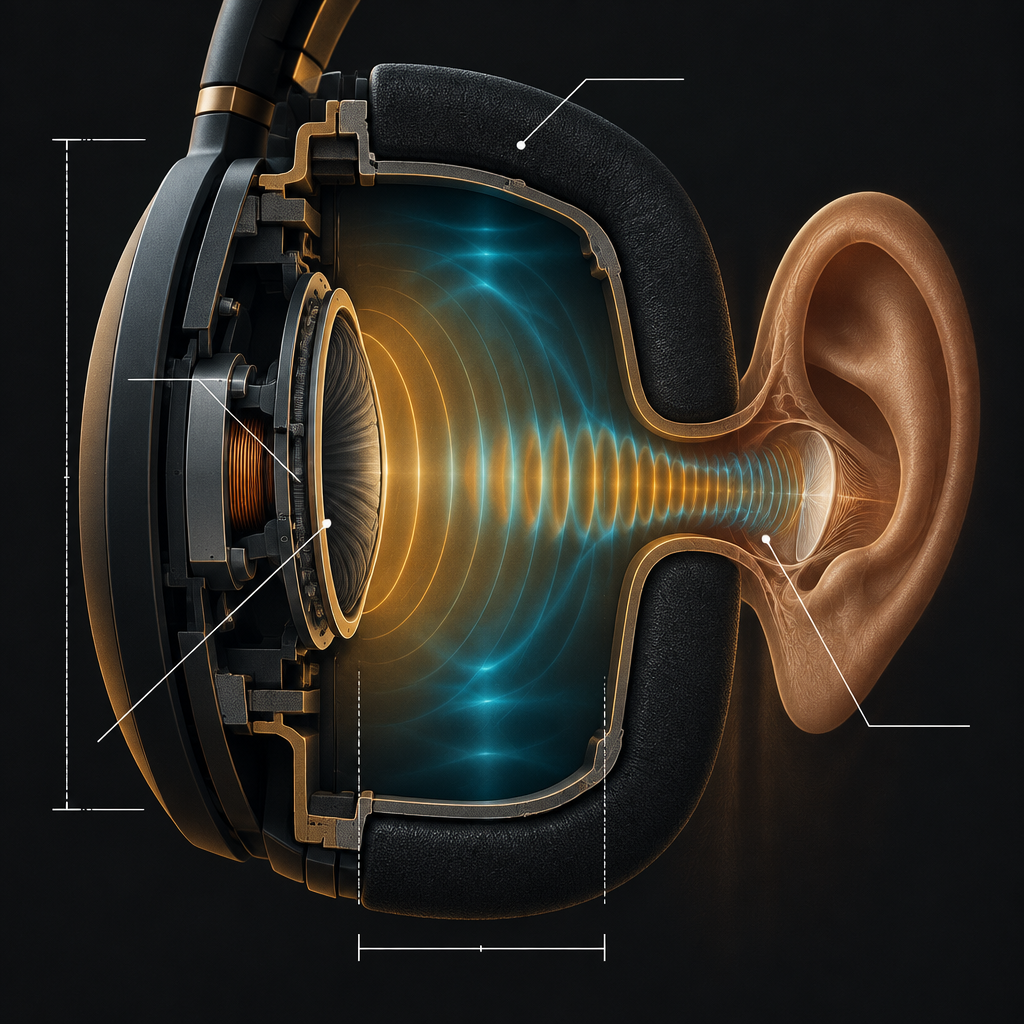
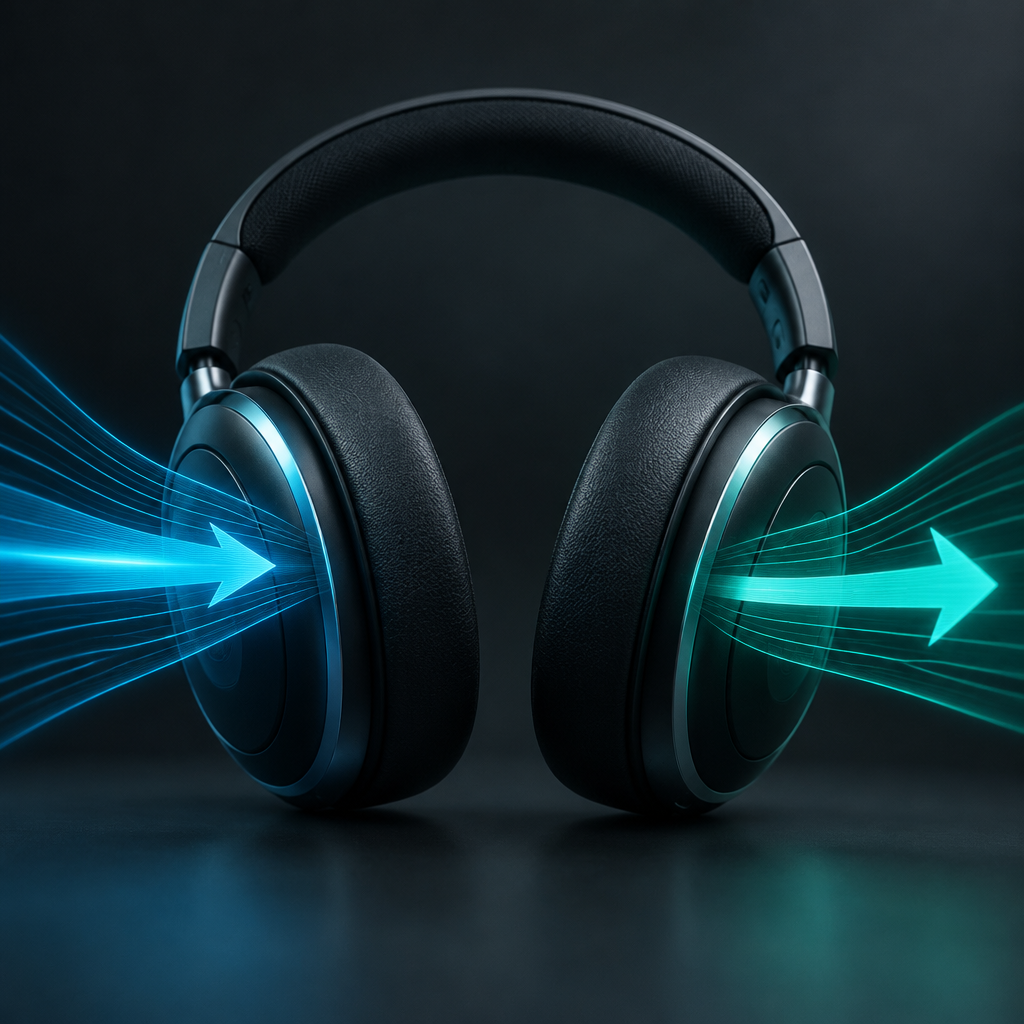
CIS changes the topology. A single Connected Isochronous Stream carries audio in both directions simultaneously. Downlink: stereo music encoded in LC3 flowing from your phone to your headphones. Uplink: your voice, also encoded in LC3, flowing from the headphone microphones back to the phone. Same stream. Same codec. Same timing reference. No profile switching. No codec swap. No glitch.
The word isochronous matters here. It means the data arrives at precise, predictable intervals. Not whenever the radio gets around to it. Audio packets flow on a fixed schedule, which is what makes synchronized bidirectional streaming possible without the drift and desync that plagued earlier approaches.
The CIG: Choreography for Two-Way Sound
Individual CIS channels do not work alone. They are grouped into a Connected Isochronous Group, or CIG. Think of the CIG as a conductor that synchronizes every stream within it to a shared clock. For a pair of LE Audio headphones, a typical CIG contains multiple CIS channels: one for the left earbud downlink, one for the right earbud downlink, and one for the microphone uplink. All three streams share the same timing reference data, which is what prevents the left channel from drifting out of sync with the right, or the microphone from falling behind the music.
This is architecturally distinct from what Classic Bluetooth does. Classic Bluetooth maintains one A2DP connection for music and a completely separate HFP connection for voice. They are not synchronized to each other because they were never designed to coexist. The CIG solves this by design, not by workaround.
The CIG also matters for multi-stream audio, which eliminates the earbud relay problem where one earbud forwards audio to the other. With LE Audio, the phone sends independent left and right streams directly to each earbud. That capability has been covered extensively. What gets less attention is that the microphone uplink rides inside the same CIG, synchronized to the same clock, encoded with the same codec. Headphones become full-duplex audio devices without compromising on either direction.
LC3: Same Codec, Both Ways
The codec situation under Classic Bluetooth is genuinely absurd. SBC or AAC for music. CVSD or mSBC for voice. Different algorithms, different bitrates, different frame structures. Your headphones contain silicon dedicated to decoding music and separate silicon for encoding voice. The two never meet.
LE Audio replaces both with LC3, the Low Complexity Communication Codec. LC3 encodes speech and music at a wide range of bitrates, supporting 16, 24, and 32-bit depths at sampling rates from 8 kHz to 48 kHz. Frame intervals of 7.5 ms and 10 ms keep latency tight. The codec is block-based, operating on transform coefficients, which makes it efficient enough for the tiny batteries inside wireless headphones.
The point is not just that LC3 sounds better than SBC at half the bitrate, though it does. The point is that the same codec handles both directions. Music encoded in LC3 flows down. Voice encoded in LC3 flows up. Same decoder, same encoder, same quality framework. When a call comes in during music playback, nothing reconfigures. The audio path does not switch codecs. The downlink shifts from stereo music to the caller's voice, and the uplink activates to carry yours. Both encoded in LC3. Both flowing through the same CIG with the same timing guarantees.
This is why LE Audio headphones can theoretically deliver wideband or super-wideband voice quality on calls, matching or exceeding what the microphone captures, rather than compressing it into a narrow telephone channel. The bottleneck was never the microphone hardware. It was the transport.
The ISO Interval: Where Latency Lives
Every CIS operates on an ISO Interval, which defines how frequently audio events occur. For headphones, this interval typically sits at 7.5 or 10 milliseconds. Each event carries a subevent where the phone transmits a packet and the headphones respond. Shorter intervals mean lower end-to-end latency, which matters enormously for gaming and real-time communication. Longer intervals conserve power, which matters for battery life.
The tradeoff is real and measurable. A 7.5 ms ISO Interval keeps round-trip audio latency low enough for competitive gaming where frame timing matters. A 10 ms interval saves enough power across a day of use to matter for all-day wear. Developers choose based on the product's priorities. LE Audio does not force one answer; it provides the control mechanism.
Retransmissions also factor in. If a packet is lost or corrupted, the CIS protocol retransmits on a different physical channel to reduce the chance of consecutive failures. This retransmission window eats into the ISO Interval budget. A shorter interval leaves less room for retransmissions, which means a crowded RF environment could degrade audio quality at low-latency settings. The system is not magic. It is a carefully engineered set of tradeoffs that designers must balance.
TMAP: The Profile That Replaces Two
All of this capability needs a profile that defines how devices negotiate and use it. TMAP, the Telephony and Media Audio Profile, is that specification. It sits on top of the Basic Audio Profile (BAP), which handles the fundamental audio streaming mechanics, and defines how LE Audio devices handle both telephony and media use cases through a single unified framework.
Under Classic Bluetooth, telephony and media were separate worlds. A2DP and HFP had their own negotiation, their own codecs, their own state machines. TMAP collapses both into one. A TMAP-capable headphone can stream music in stereo, accept a phone call in wideband voice, and switch between them without reconfiguring the underlying audio path. The CIG stays established. The CIS channels stay active. Only the audio content changes.
This has practical consequences for product design. A pair of gaming headphones implementing LE Audio with TMAP can receive game audio in stereo while simultaneously transmitting high-quality voice chat to teammates, all through the same isochronous infrastructure. No profile juggling. No quality cliff when the voice channel activates. The headphones operate as a unified two-way audio device.
What This Unlocks Beyond Calls
The implications stretch past phone calls. Real-time translation headphones can receive a translated audio stream in LC3 while sending the wearer's voice in LC3 to the translation service, both directions maintaining quality that the old HFP pathway could never deliver. Musicians can monitor a live mix through headphones while their performance audio travels back to the mixing board over the same CIG. Assistive listening scenarios become sharper because the return voice channel from a hearing aid or headphone microphone retains the fidelity needed for speech recognition systems, rather than arriving compressed into a narrow band.
The fundamental shift is philosophical. Classic Bluetooth treated audio as one-directional entertainment that occasionally needed a low-fidelity back channel. LE Audio with CIS treats audio as bidirectional communication where neither direction is second-class. Your headphones are not a speaker that sometimes moonlights as a microphone. They are a two-way audio device where both paths deserve genuine codec quality.
The Catch: Adoption and Integration
The architecture is sound. The specification is finalized. The profiles are published. But the gap between specification and product is where most Bluetooth innovations die quietly. LE Audio requires support across the entire chain: the phone's Bluetooth stack, the headphone's chipset, the operating system's audio framework, and the application layer. Any break in the chain falls back to Classic Bluetooth, which means you are right back to the A2DP and HFP split.
As of 2026, Samsung has integrated LE Audio hearing aid connectivity and Auracast broadcasting into smartphones and tablets. Sony demonstrated Auracast at live concerts. Qualcomm and OPPO are pushing high-resolution LE Audio audio devices to market. The infrastructure is building. But a TMAP-capable headphone connected to a phone without full LE Audio support will negotiate down to Classic Bluetooth, and the bidirectional advantage vanishes.
The question is no longer whether the technology works. The CIS specification, the LC3 codec, and the TMAP profile collectively prove that it does. The question is whether the ecosystem reaches the point where a wireless headphone can assume its companion device supports full-duplex LE Audio, the way it currently assumes support for A2DP. When that assumption flips, the paper towel tube finally goes away for good.