Your Bluetooth Headphones Already Track Your Head. The Open Spatial Audio Standard Could Set That Data Free.
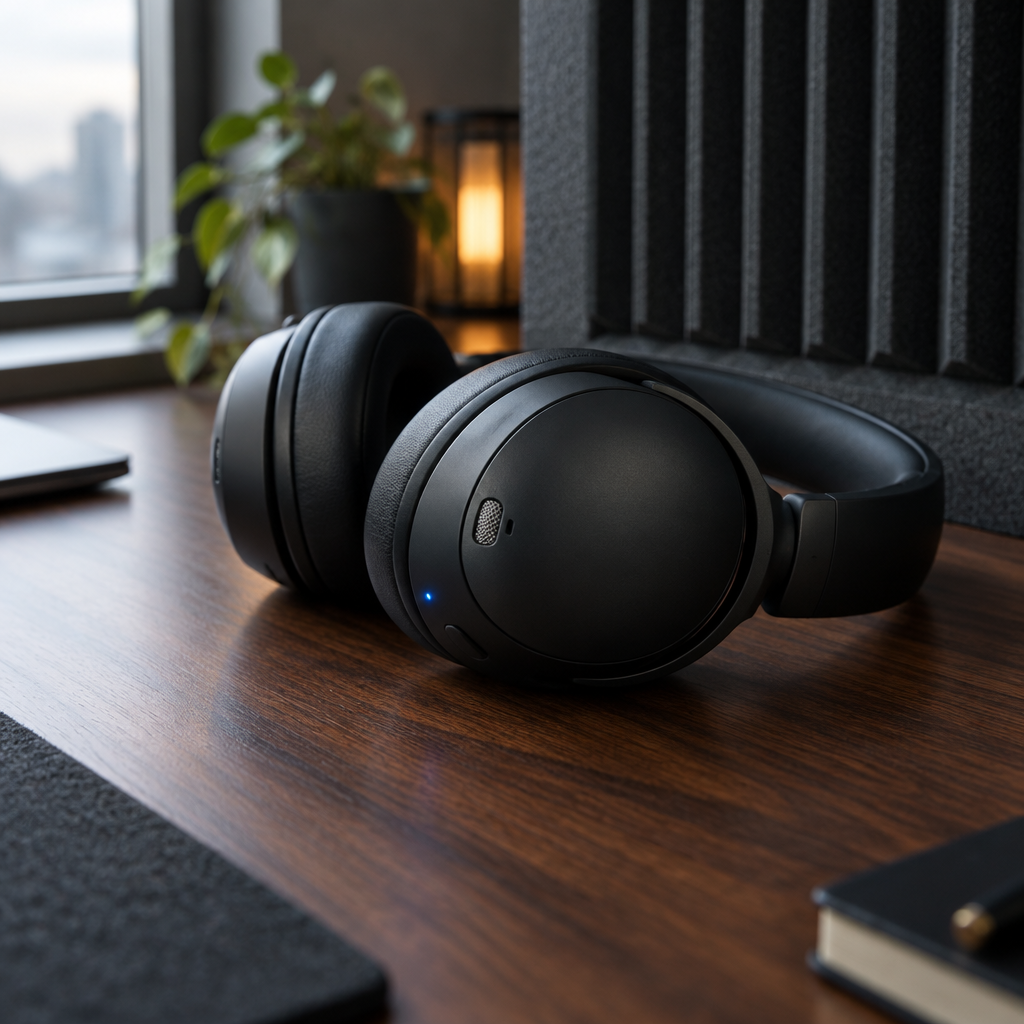
If you own a pair of Sony WH-1000XM5 headphones, or Apple AirPods Max, or certain Soundcore models from Anker, you are wearing a small inertial measurement unit on your head. It tracks rotation. It calculates tilt. It feeds those numbers into a spatial audio engine that shifts the soundstage as you turn. You probably bought the headphones for noise cancellation or battery life, and the gyroscope was a bonus you never configured. But it is there, running constantly, generating a stream of orientation data that travels over a Bluetooth connection to whatever device is producing the audio.
That data stream uses a protocol. And the protocol is, surprisingly, open.
The head tracker hiding in plain sight
Android publishes a specification called the Head Tracker HID Protocol. HID stands for Human Interface Device, the same family of standards that keyboards and mice use. The protocol defines how a head tracking sensor attached over Bluetooth or USB reports its orientation data to a host device. It describes the report format, the sensor fields, and the calibration sequence. Any headphone manufacturer implementing head tracking for Android spatial audio follows this specification, whether or not their marketing materials mention it.
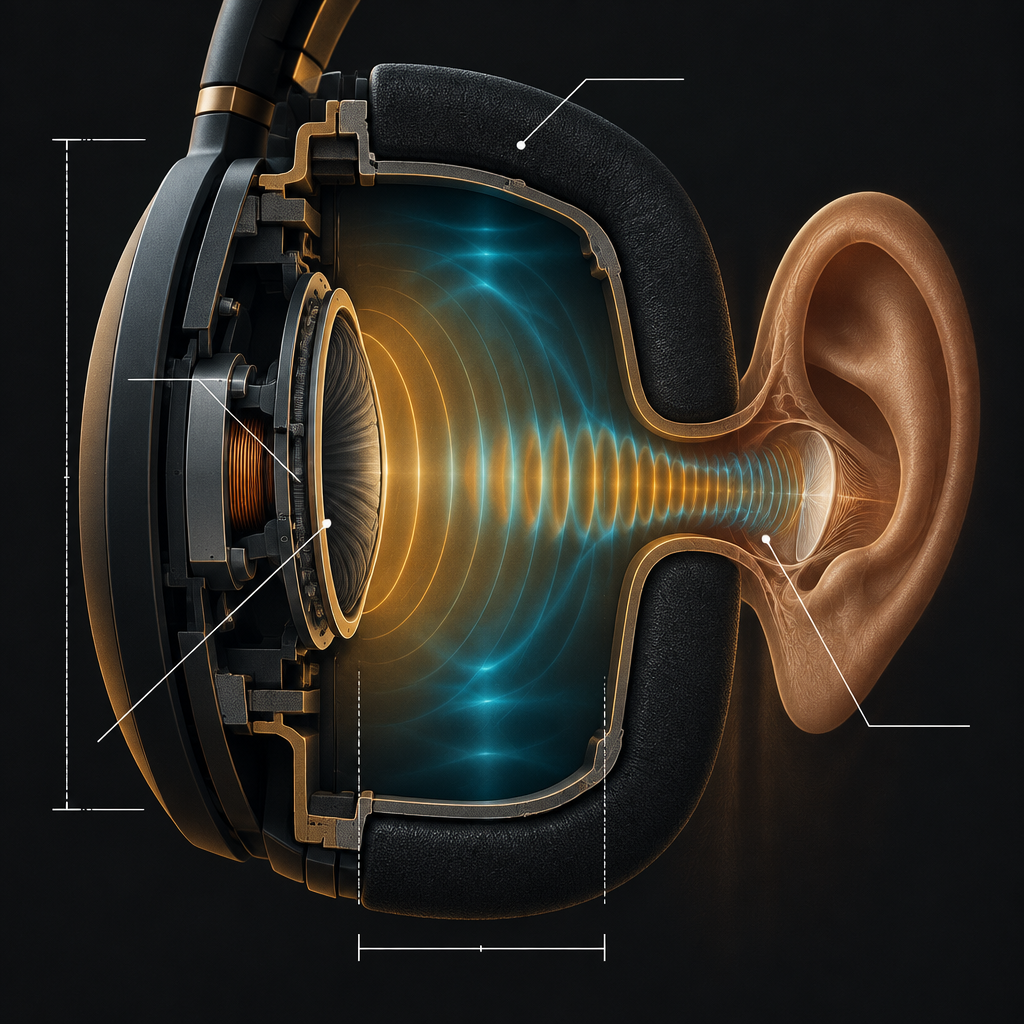
The protocol handles six degrees of freedom: pitch, yaw, roll, and the three angular velocities associated with each. An inertial measurement unit inside the headphone earcup generates raw accelerometer and gyroscope readings. A small processing pipeline converts those readings into a quaternion or rotation vector, which the HID report transmits to the phone. The phone's audio framework then applies that rotation to the spatial audio rendering pipeline, repositioning virtual sound sources in the listener's perceived space.
Here is the interesting part. A developer recently demonstrated that Sony headphones paired over Bluetooth could feed head tracking data directly into OpenTrack, an open source application used by flight simulator enthusiasts for head tracking. The headphones became a head tracker for Microsoft Flight Simulator without any modification. The IMU was already there. The Bluetooth connection was already there. The HID protocol was already there. Nobody had asked permission. The data was available to any application that knew how to listen for it.
Why spatial audio fractured into proprietary islands
Spatial audio on headphones works by simulating how sound reaches your ears from different directions. A stereo mix places instruments left and right. A spatial audio mix places them in a three dimensional field: above, behind, to the side, and at varying distances. To maintain that illusion as you move, the system needs to know where your head is pointing and adjust the virtual sound sources accordingly. Without head tracking, spatial audio is fixed: the orchestra sits in front of you, and turning your head does nothing. With head tracking, the orchestra stays anchored in the room while your perception rotates through it.
Several companies built their own implementations of that idea. Apple's Spatial Audio uses the H1 and H2 chips to process head tracking data from AirPods and render Dolby Atmos content on iOS devices. Sony's 360 Reality Audio creates object based spatial mixes that integrate with the Sony Headphones Connect app. Dolby Atmos for Headphones is a licensed format available on Xbox, Windows, and Amazon Prime. Each system works. Each system is closed. A pair of Sony headphones cannot render Apple's spatial audio format. An Apple device cannot decode Sony's 360 Reality Audio file. A game on Windows might support Dolby Atmos for Headphones but not Apple Spatial Audio.
The fragmentation is not accidental. Each company wants its spatial audio ecosystem to be the one consumers adopt. If you buy a pair of headphones that works with Apple Spatial Audio, you are more likely to stay inside Apple's hardware and content ecosystem. The head tracking data, which travels over an open HID protocol, gets captured by a proprietary rendering engine at the point where it matters most: the moment the gyroscope reading is converted into a sound field.
What the Bluetooth SIG is building
The Bluetooth Special Interest Group has a different vision. By 2027, the SIG plans to establish standardized approaches for spatial audio on headphones and surround sound systems as part of its LE Audio enhancement roadmap. The foundation is already in the LE Audio specifications that shipped in 2022 and 2023, but those specifications focus on point to point and broadcast audio. Spatial audio requires a multi channel framework: the ability to carry several audio streams with precise timing relationships so a renderer can place them in a three dimensional space.
LE Audio's isochronous channels provide some of this infrastructure. Connected Isochronous Streams, the unicast mechanism in LE Audio, already supports stereo audio with independent left and right channels. The specification allows multiple isochronous streams within a Connected Isochronous Group, which means a source device can transmit several audio channels to a pair of headphones with synchronized timing. The Common Audio Profile defines how these streams interoperate with volume control, media control, and coordinated set identification. In theory, a multi channel spatial audio stream could flow through these same channels, with each audio object occupying its own isochronous stream.
The challenge is bandwidth. A stereo LC3 stream at 24-bit, 48 kilohertz consumes roughly 100 to 200 kilobits per second per channel. A full spatial audio mix with eight or more objects requires significantly more. Bluetooth LE's current maximum data rate of 2 megabits per second cannot carry multiple high resolution channels alongside metadata and head tracking telemetry without aggressive compression. The result sounds acceptable but loses the fidelity that audiophiles and home theater enthusiasts demand from spatial formats.
The bandwidth bridge nobody has built yet
The Bluetooth SIG is addressing this gap from two directions. The first is High Data Throughput, or HDT, a new physical layer mode that raises Bluetooth LE's maximum data rate from 2 megabits per second to 7.5 megabits per second. HDT uses higher order modulation schemes, specifically QAM variants, to pack more bits into each radio symbol while maintaining the same 2 megasymbol per second signaling rate. Forward error correction based on convolutional codes protects the more complex signal encoding from interference. An adaptive bitrate mechanism lets devices downgrade from 7.5 megabits per second to 6, 4, 3, or 2 megabits per second on a packet by packet basis if the radio environment degrades, preserving the connection instead of dropping it.
That throughput would be enough to carry a multi channel spatial audio stream with significantly less compression. A 7.1 channel surround mix at 48 kilohertz, 24-bit, using LC3 at moderate bitrates, could fit within an HDT connection alongside head tracking telemetry and control data. The SIG has released the HDT draft specification for developer review, with a target completion in late 2026.
The second direction is frequency expansion. By 2027, the SIG expects Bluetooth to operate in the 5 gigahertz band, with 6 gigahertz following in 2028. The current 2.4 gigahertz ISM band is increasingly congested, with over 5 billion Bluetooth devices shipped annually competing with Wi-Fi, Zigbee, and other protocols. Moving to higher frequencies reduces interference and unlocks wider channels, which translates directly into higher sustainable throughput for multi channel audio without the adaptive fallbacks that degrade quality in crowded environments.
Why standardization matters more than the codec
The open spatial audio effort matters because it changes what a headphone is. Today, a pair of headphones is an endpoint in a proprietary rendering pipeline. The headphone's IMU generates orientation data. A phone application owned by the headphone manufacturer processes that data. A content format owned by a platform company provides the spatial mix. Three companies participate, and the consumer gets whatever combination they happen to support. If the Spatial Audio standardization effort succeeds, the head tracking protocol, the multi channel transport, and the rendering framework would all sit inside Bluetooth's specification set, available to any manufacturer, any operating system, and any content creator, without licensing fees or platform restrictions.
The parallel to LC3 is instructive. Before LE Audio, the default Bluetooth codec was SBC, and higher quality options like LDAC and aptX required licensing fees that excluded budget manufacturers. LC3 became the standard codec in LE Audio, open to all SIG members, delivering better quality than SBC at lower bitrates. Standardized spatial audio could do the same thing for immersive sound: remove the format tax, broaden compatibility, and let product differentiation happen on hardware quality and tuning rather than proprietary lock in.
The timeline nobody can control
None of this arrives quickly. HDT is expected to enter the core specification in late 2026, but manufacturer adoption typically lags specification releases by 18 to 24 months. Auracast, introduced in 2022, only gained meaningful market traction in mid 2025. Spatial audio standardization depends on HDT for bandwidth, on the 5 gigahertz band expansion for interference free throughput, and on the SIG's working groups to define how multi channel audio objects map onto isochronous streams. The SIG's own estimate places standardized spatial audio in the market around the turn of the decade.
By then, the proprietary ecosystems will not be standing still. Apple will be several generations into its spatial audio platform. Dolby Atmos for Headphones will have broader content support. Sony's 360 Reality Audio will have evolved or been absorbed into another format. The open standard needs to offer something the proprietary systems cannot: universal compatibility across every headphone, every phone, and every content source, without requiring the consumer to check a compatibility chart.
The gyroscope in your headphones is already producing the data. The HID protocol is already carrying it. The question is whether the rest of the stack catches up before proprietary spatial audio becomes the only option that works seamlessly. The Bluetooth SIG is betting that openness wins eventually. The proprietary platforms are betting that lock in wins first. Both cannot be right.