There is a Bluetooth profile built to make wireless headphones viable for competitive gaming. It targets a total system delay of 40 milliseconds. It preserves full game audio while the microphone stays open. It exists in shipping firmware right now, on one of the most popular headphones on the planet.
Nobody can turn it on.
That sounds like hyperbole. It is not. The profile is GMAP, the Gaming Audio Profile, part of Bluetooth LE Audio. Sony added it to the WH-1000XM6 in a firmware update. The headphones are ready. The phones, consoles, and PCs on the other end of the connection are not. What you get instead is a fascinating look at how a technically excellent standard can arrive in the world and remain invisible to the people who need it most.
What GMAP actually solves
Classic Bluetooth gaming audio has a structural problem, not just a speed problem.
When you play a game over traditional Bluetooth and need the microphone, your headphones switch into a hands-free profile. Game audio collapses to a narrow, telephone-quality codec because the old specification cannot send high-fidelity sound in both directions simultaneously. Your gunshots sound like they traveled through a parking garage. That is not a tuning choice. It is a fundamental limitation of the A2DP and HFP architecture, which splits audio into a one-way high-quality path and a two-way low-quality path with nothing in between.
GMAP sits on top of LE Audio isochronous channels, which treat bidirectional audio as a first-class citizen rather than a fallback compromise. It defines a set of Quality of Service tiers that tighten the timing budget across the entire chain: encoding, radio transport, buffering, and decoding. Level A, the most aggressive configuration, caps total system delay at 40 milliseconds.
Consider that figure for a moment. Conventional Bluetooth 5.x latency typically falls between 50 and 100 milliseconds depending on the codec and device combination. GMAP Level A aims below the floor of what most people currently experience, and it keeps game audio fully intact while doing so.
The ISOAL detail that makes 40ms possible
To understand why GMAP can target such a tight budget, you need to look at a layer that almost no audio review mentions: the Isochronous Adaptation Layer, or ISOAL.
ISOAL sits between the host controller interface and the link layer in Bluetooth's isochronous architecture. Its function is to take service data units from the upper stack and adapt them into Protocol Data Units that the radio can transmit on a fixed schedule. Think of it as the packaging department that decides how to box up audio for the delivery truck. If the boxes are too large, the truck idles. If they are too small, overhead eats throughput for breakfast.
Bluetooth 6.0 added a framed mode to ISOAL that gives engineers finer control over how audio data is segmented before it hits the air. Smaller logical chunks mean the decoder does not have to wait as long for a complete frame before it can begin processing. The latency improvement is architectural. You are reducing the minimum unit of delay itself, not just hoping the radio gets faster or the buffer gets shorter.
GMAP exploits this directly. By specifying conservative SDU sizes and tight transport intervals in its QoS parameters, the profile squeezes the pipeline down to something competitive with a dedicated low-latency dongle. In theory, every frame arrives with enough headroom for the decoder to stay ahead of the playback clock without padding the buffer unnecessarily.
The Sony WH-1000XM6: a beta that half works
In practice, the story is messier. Sony quietly added a GMAP-capable LE Audio mode to the WH-1000XM6, slapped a Beta tag on it in the Sound Connect app, and shipped it into a world where almost nothing could talk to it.
Enabling LE Audio on the XM6 requires two toggles in different apps, a full re-pair, and acceptance of a warning screen listing everything you forfeit: LDAC, spatial audio, head tracking, the voice assistant, Quick Access, and auto-switch between devices. The firmware update itself took roughly 40 minutes to download for some users.
For those willing to flip every switch, the latency improvement was immediate and unmistakable. In rhythm games where single-digit milliseconds can make or break a combo, taps landed where the music said they should. Voice chat held up without crushing game audio into a telephone-quality mush, which is the single most important problem GMAP was designed to solve.
But the actual GMAP negotiation, the invisible handshake that optimizes every parameter for gaming, never fully engaged. LE Audio connected. The latency dropped. The mic worked. The headphones were speaking a language nobody else in the room had learned.
Why one side being ready is not halfway
Here is the uncomfortable geometry of Bluetooth profiles: they require two devices to agree. One side implementing a profile is not 50 percent functional. It is zero percent functional. A profile is a contract, and contracts need two signatories.
The Sony XM6 can speak GMAP. Your phone almost certainly cannot. The PlayStation 5 does not support Bluetooth audio at all. Neither does the Xbox. The Switch 2 has LE-Audio-capable hardware that Nintendo has not enabled in software. Windows 11 supports LE Audio but connects to the XM6 through a different profile, so the microphone still degrades game audio. Dedicated LE Audio dongles from Creative and FlooGoo fail to negotiate GMAP with the XM6. One premium transmitter paired over LDAC instead and never entered the low-latency path.
The ecosystem is a scattering of islands. Each one knows about LE Audio. Each one implements a different slice. None of them are coordinating their handshakes in the specific way GMAP demands.
This is not entirely Sony's fault. Headphone firmware is tested and released on a schedule that runs ahead of operating system support. The chicken-and-egg problem is structural: phone makers have little incentive to prioritize GMAP until headphone makers ship it, and headphone makers have little incentive to push GMAP until phones support it. Sony, to its credit, decided to ship first.
Inside the 40 millisecond budget
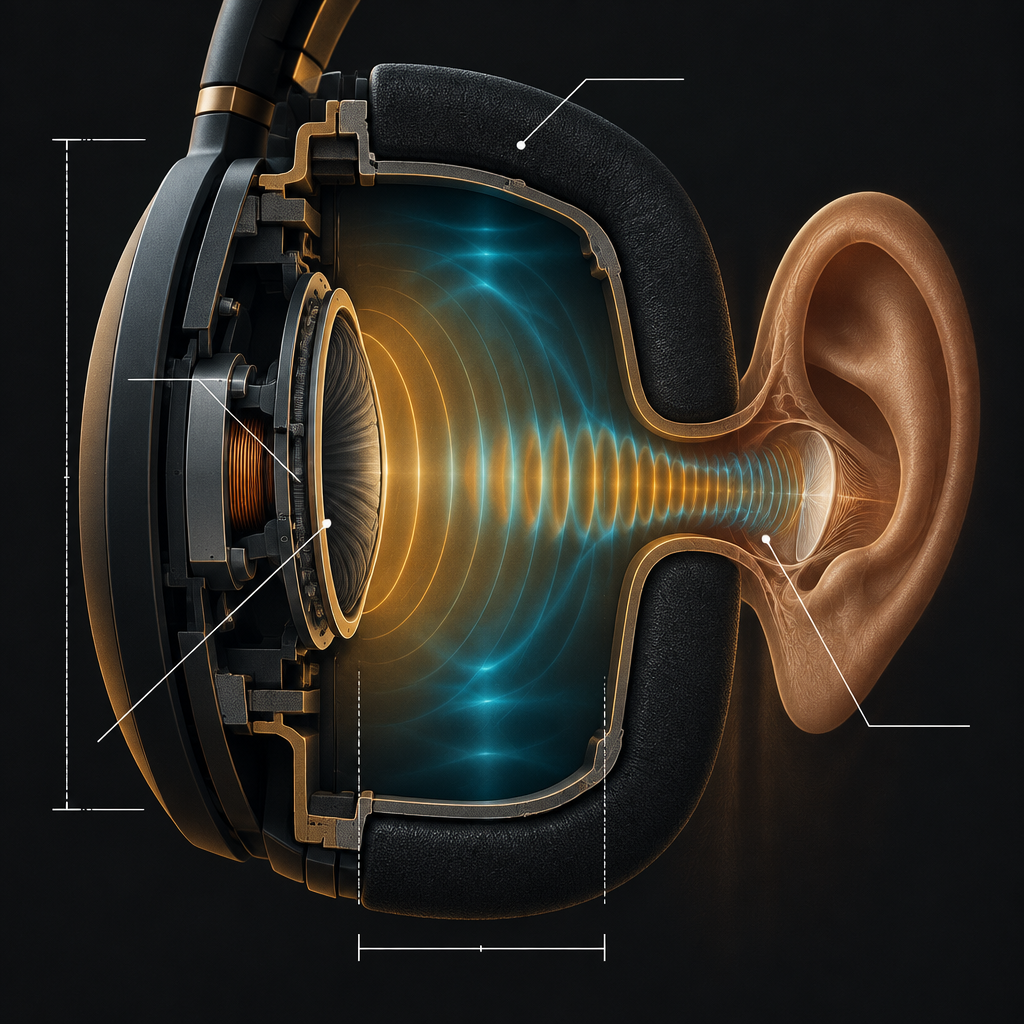
Zoom into the GMAP Level A specification and the ambition sharpens. The 40 millisecond target is a ceiling for the complete path, not just the radio. It is sliced into segments: codec processing on the source device, transport latency across the air, presentation delay on the headphone side, and the codec's own decode time. Every segment is accounted for in the QoS parameters.
LC3, the codec LE Audio uses by default, can operate with 10 millisecond frame durations. That gives the codec a relatively small share of the budget. The radio transport and the buffering window eat most of what remains. GMAP specifies tight intervals between isochronous events so the stream can deliver each audio packet within its window without keeping large safety buffers alive on either end.
Level B, the more forgiving tier, allows 60 to 80 milliseconds of total delay. That is still a meaningful improvement over classic Bluetooth, but it reserves more headroom for retransmissions in hostile radio environments. The two levels give manufacturers a genuine choice: aggressive latency in controlled conditions, or resilient latency on a crowded train where packets collide and retransmissions pile up.
What does not go away
The feature trade-offs Sony exposed are not quirks of a beta implementation. They are real constraints.
LE Audio mode on the XM6 disables LDAC, spatial audio, and head tracking because the current hardware cannot maintain both an isochronous gaming path and a high-bitrate music path simultaneously. The radio has one schedule. The codec has one pipeline. Asking it to deliver 40 millisecond gaming audio and 24-bit LDAC music at the same time is like asking a chef to sear a steak and temper chocolate on the same burner.
Until headphone silicon can juggle multiple LE Audio contexts with independent QoS parameters, users will toggle modes rather than settle into one. That is a hardware limitation, not a software gap. It will require a new generation of Bluetooth controllers designed for concurrent isochronous streams with different latency budgets.
What headphone buyers should do now
If you own a WH-1000XM6 and you game on your phone, try the LE Audio beta for your next session. The latency improvement is genuine even without full GMAP engagement, and voice chat without crushed game audio is a real quality-of-life upgrade. Just remember you will lose LDAC and spatial audio while it is active, and treat it as a mode you toggle rather than a permanent setting.
If you are buying headphones specifically for gaming, keep your expectations calibrated. A dedicated low-latency dongle operating at 15 to 20 milliseconds still beats Bluetooth at 40, no matter how elegant the profile. GMAP narrows the gap. It does not close it.
Watch for the phrase GMAP supported on future phones, dongles, and PCs rather than just headphones. That is the signal that the other half of the contract has arrived. Until then, the capability is real, the engineering is impressive, and the ecosystem remains the bottleneck. The headphones are ready. The world is catching up slowly.