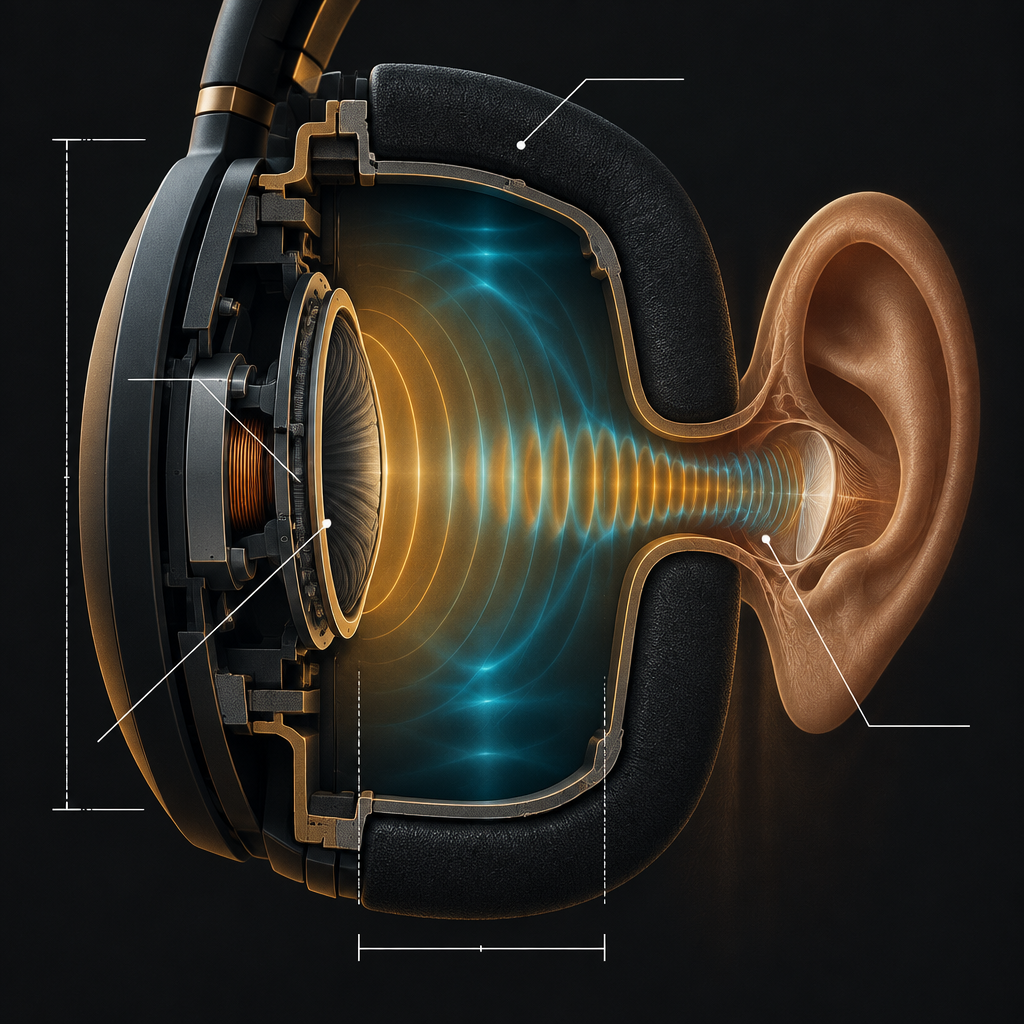
Your headphones are not dumb anymore. The pair sitting on your desk right now runs a full software stack on a System-on-Chip that manages pairing, audio processing, microphone input, voice assistant integration, and the trusted relationship between the headset and your phone. That chip decides what your headphones can hear, what they transmit, and which devices they trust. So what happens when the chip itself has a gaping security hole?
Researchers Dennis Heinze and Frieder Steinmetz at ERNW, a German cybersecurity consultancy known for dissecting wireless and embedded systems, asked that exact question. The answer they found is unsettling. A diagnostic protocol called RACE, short for Remote Access Control Engine, was sitting inside Airoha Bluetooth SoCs, fully exposed over the air without any authentication requirement. No pairing needed. No passcode. No user interaction. Just proximity.
The Chip Inside Your Cans
Airoha Technology is a silicon supplier you have probably never heard of, yet their chips are everywhere. They specialize in Bluetooth audio SoCs and reference designs, particularly for True Wireless Stereo earbuds. Major headphone and earbud manufacturers build products on top of Airoha's chips and software development kit. Sony, Bose, JBL, Marshall, Jabra, Beyerdynamic, and Teufel all have products in the affected list. As the researchers put it bluntly: if you are wearing earbuds right now, there is a non-zero chance they are running an Airoha chip.
These SoCs do far more than maintain a Bluetooth link. They run the firmware that controls how your headphones pair, handle digital signal processing for active noise cancellation, manage microphones for calls and voice assistants, and maintain the cryptographic trust relationship with your smartphone. When a vulnerability exists at this level, an attacker does not need to break into your phone directly. They can compromise the headphones first and use them as a bridge to everything the phone already trusts.
The supply chain dynamic matters here. Airoha designs the silicon and ships a reference SDK. OEMs take that SDK, customize it for their product, and flash it onto their hardware. If the reference implementation ships with a critical security flaw, that flaw propagates downstream to every OEM using the chip. Some vendors might add their own authentication layers on top, but most simply use the reference implementation as-is. Why would they not? The SDK is supposed to be production-ready. That assumption turned out to be wrong.
What Is RACE and Why Was It Exposed?
RACE is an internal protocol designed for factory diagnostics, device servicing, and firmware updates. Think of it as the service port that engineers use on the assembly line or at a repair bench. It can read from and write to arbitrary memory locations, both flash storage and active RAM. In a properly locked-down device, this protocol would be accessible only through a physical USB connection or a secured, authenticated wireless channel.
On affected Airoha-based devices, RACE was exposed over three interfaces simultaneously: Bluetooth BR/EDR (also known as Bluetooth Classic), Bluetooth Low Energy, and USB. In all three cases, the researchers found that pairing was not enforced. An attacker within Bluetooth range, roughly thirty feet, could connect to a powered-on device and start issuing RACE commands to manipulate memory contents without the user ever seeing a prompt or hearing a beep.
The lack of authentication is itself a separate vulnerability. Even without touching RACE, an unauthenticated attacker could connect to the device and use the Bluetooth Hands-Free Profile to send or receive audio. That means eavesdropping through the headphone microphone becomes trivially possible. The person sitting across the coffee shop from you could be listening to your conversation through your own earbuds, and you would have no idea.
Bluetooth Classic uses a static, globally unique device address assigned by the manufacturer. This address is required to establish a connection. Even when a device is not in discoverable mode, knowledge of the address is sufficient to connect if the device remains connectable. BLE supports privacy features like Resolvable Private Addresses that rotate periodically to prevent tracking, but not all implementations use them. On the affected devices, the researchers found that the addressing and authentication models were inconsistent at best, leaving doors open that should have been closed by design.
Three CVEs, One Broken Design
ERNW disclosed three specific vulnerabilities. CVE-2025-20700 is a permission bypass that allows access to critical RACE protocol data through Bluetooth Low Energy. CVE-2025-20701 is a privilege escalation in the Airoha Bluetooth audio SDK that lets an attacker escalate from a standard Bluetooth connection into full RACE control. CVE-2025-20702 rounds out the set with additional access control failures. All three share the same root cause: Airoha's reference implementation left factory diagnostic capabilities enabled and unauthenticated in production firmware.
The technical details are grim. RACE allows reading and writing to arbitrary flash and RAM addresses. That means an attacker can dump the entire firmware, extract any stored credentials or pairing keys, modify audio routing tables, inject custom audio processing code, or alter the device's Bluetooth configuration to make it behave differently with your phone. In practice, the researchers demonstrated that a compromised headset could impersonate itself to the paired smartphone, issuing commands through the Hands-Free Profile as if the user had triggered them. Your headphones, in other words, become a proxy attacker with the same level of trust your phone already grants them.
The attack chain does not require sophisticated equipment. A standard laptop with a Bluetooth adapter and the open-source RACE Toolkit is enough. The researchers built and released this toolkit specifically so that consumers and security professionals can test their own devices. The barrier to exploitation is low enough that script-kiddie level attackers could theoretically weaponize it once the methodology is public, which it now is.
The Affected Device List Reads Like a Best-Seller Chart
This is not an edge-case problem affecting obscure hardware. The verified vulnerable list includes some of the most popular wireless audio products on the market. Sony's WH-1000XM5 and WF-1000XM5, two of the best-selling noise-canceling headphones and earbuds respectively, are squarely in scope. Bose QuietComfort Earbuds, a staple for travelers, are affected. JBL Live Buds 3, which sell in enormous volumes through big-box retailers, appear on the list. Marshall's MAJOR V and MINOR IV are included, alongside products from Beyerdynamic, Jabra, and Teufel. Ten vendors, dozens of products, millions of units.
Heinze summarized the threat model in stark terms at the time of initial disclosure: any vulnerable device can be compromised if the attacker is in Bluetooth range. That is the only precondition.
The Patching Problem Nobody Talks About
Here is where the story moves from concerning to frustrating. Airoha released an updated SDK for hardware vendors in June 2025, shortly after the initial partial disclosure. The SDK includes mitigations for all three CVEs. But Airoha makes chips, not headphones. The fix has to flow through a chain: Airoha ships the SDK update to OEMs, each OEM adapts the update to their specific product firmware, tests it, and then pushes it to users through their proprietary companion app or update mechanism.
That chain is broken in practice. Some vendors have released firmware updates. Many have not. Some have updates available but do not document them clearly, so users have no way to know whether their specific model is patched. The researchers released a tool called RACE Toolkit that lets anyone test whether a device remains vulnerable, but the average headphone buyer is not running security diagnostics on their earbuds. They are just listening to music.
The full technical disclosure happened on December 28, 2025, six months after the initial advisory. ERNW published a white paper with complete attack methodology alongside the toolkit. They also presented their findings at 39c3, the Chaos Computer Congress. By that point, the window for silent exploitation had been open for half a year, and the patching landscape was still patchy at best.
What You Should Actually Do
First, check whether your headphones or earbuds are on the affected list. ERNW maintains a device lookup tool alongside the RACE Toolkit on GitHub. Second, if you own an affected product, open the manufacturer's companion app and look for a firmware update. Sony has been relatively proactive with updates for the WH-1000XM5 and WF-1000XM5. Other vendors have been slower or silent. Third, when you are not actively using your headphones, power them off. An unpowered device cannot be compromised over Bluetooth. Fourth, if you use your headphones in sensitive environments where conversations matter, consider whether a wired headset might be the safer choice until your device is patched.
One more practical tip: check your Bluetooth settings on your phone and remove paired devices you no longer use. Every paired headphone represents a trust relationship stored on your phone. If that headphone is compromised, the trust extends to whatever the attacker can push through the Hands-Free Profile. Pruning old pairings reduces your attack surface.
The Bigger Picture
The broader lesson here extends well beyond Airoha. The IoT attack surface is not growing because of flagship devices. It is growing because of the secondary peripherals that sit permanently paired to your phone with minimal oversight. Baby monitors, smart TVs, streaming sticks, and now wireless headphones all operate as trusted endpoints on your personal network. Each one is a potential doorway. Most users never think about the security of their earbuds because earbuds feel passive. They are not.
The next time you slip on your noise-canceling headphones and settle into a coffee shop, remember that the chip inside them is running a full computing stack with the ability to hear everything around you. Whether that chip is secure depends entirely on whether the manufacturer bothered to lock the service door. In the case of Airoha-based headphones, that door was left wide open, and the industry is still scrambling to close it.