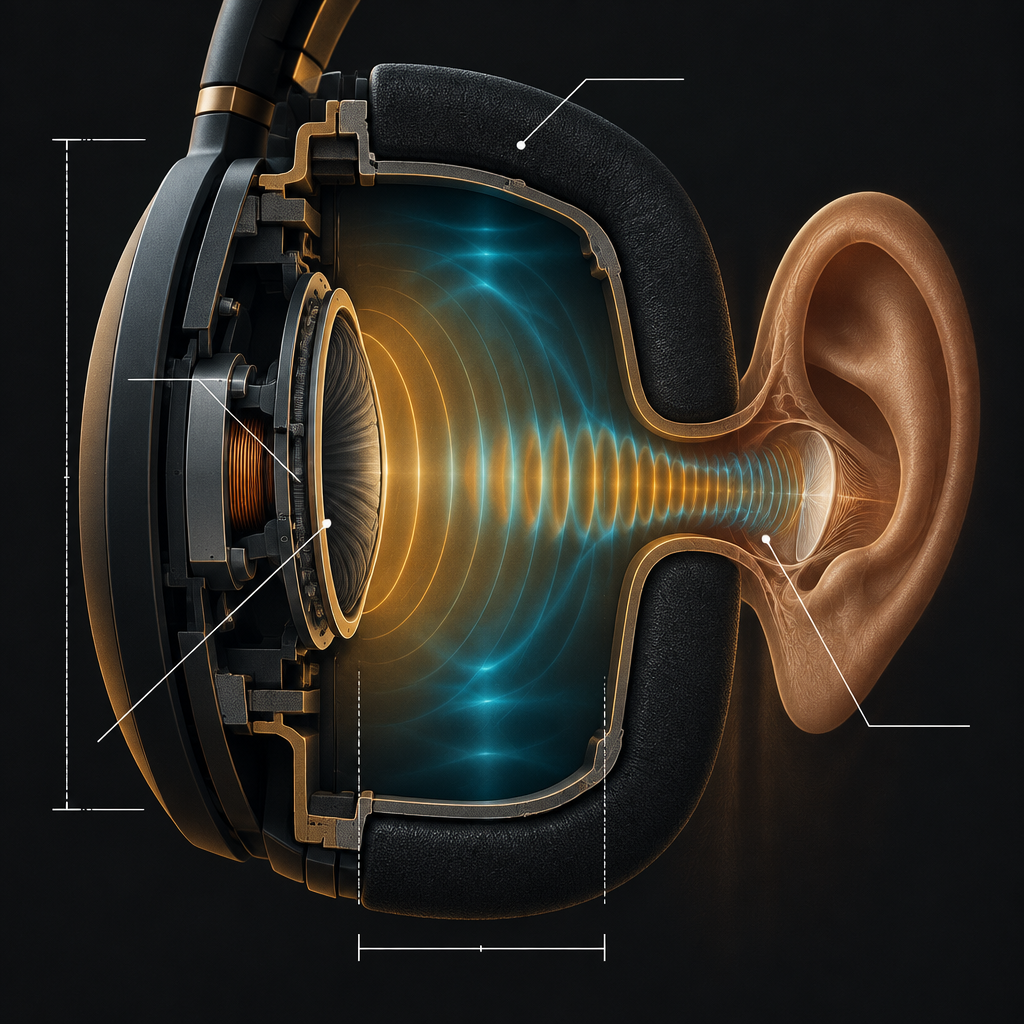
The next meaningful upgrade in wireless headphones may not arrive as a new driver, a bigger codec number, or another promise of lossless audio. It may arrive as a better sense of where your phone is.
That sounds almost comically basic. A pair of headphones already knows when it is connected. Your phone knows roughly where it is. The Bluetooth link knows whether packets are arriving. Yet those facts are not the same as knowing distance, direction, or whether a listener is moving away from the source. Bluetooth 6 begins to close that gap through a feature called Channel Sounding.
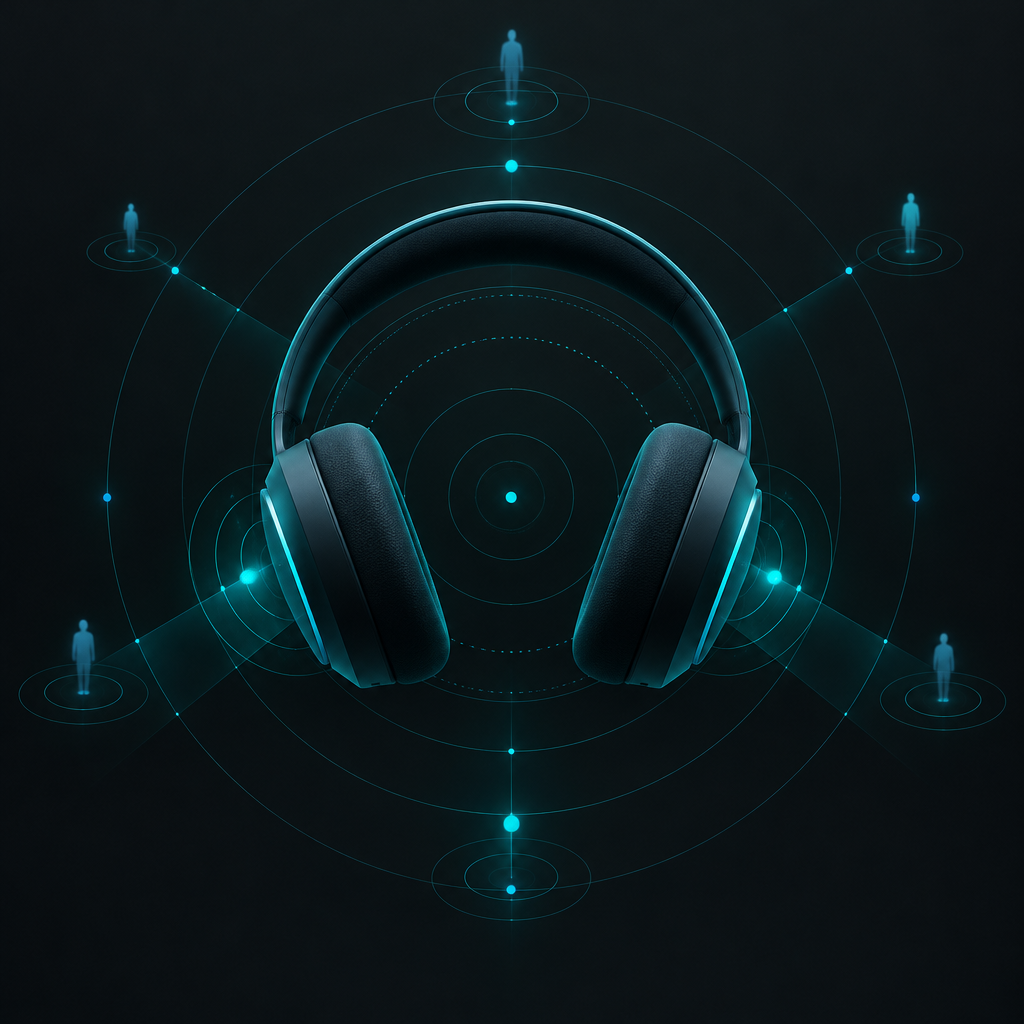
Channel Sounding is not an audio codec. It does not increase the number of bits available for a song, and it does not turn a compressed stream into an analog master tape. It is a radio measurement system, designed to estimate the distance between Bluetooth Low Energy devices with much more precision than the old received-signal-strength shortcut.
For headphones, that distinction matters. The best uses may happen before a sound is produced, in the small decisions that determine whether the connection feels instant, stable, and almost invisible.
The problem with asking a radio signal for distance
Traditional Bluetooth devices can make educated guesses about proximity by measuring received signal strength. If the signal is strong, the phone and headphones are probably close. If it is weak, they may be farther apart, blocked by a body, or surrounded by interference.
That guess is useful, but it is a poor ruler. A signal can become weaker because a person put a hand over the phone. A crowded 2.4 GHz environment can make a nearby device look distant. The orientation of a headphone antenna, the material of a desk, and the way a device is tucked into a pocket all change the result.
Channel Sounding takes a more deliberate approach. Bluetooth devices exchange carefully timed radio packets across multiple frequencies, then use measurements such as phase and round-trip timing to estimate separation. The exact implementation involves calibration, antenna behavior, clock accuracy, and algorithms that must reject bad readings. In other words, it is not a magic centimeter tape measure. It is a standardized way to gather better evidence.
That evidence could let a phone distinguish between headphones that are two feet away on a desk and headphones that are twenty feet away in another room. More importantly, software can combine distance with motion, connection quality, and user behavior. Headphones can become less like a passive endpoint and more like a nearby device with context.
What this could change in everyday headphones
The first visible benefit may be smarter connection management. Imagine taking off your headphones and placing them on a table. Today, a phone may keep streaming to them until an auto-pause sensor, a timeout, or another device forces a decision. With more reliable proximity data, the system could make a better distinction between “the listener briefly removed the headphones” and “the headphones have been left behind.”
That could improve automatic switching without making it feel jumpy. A phone might hold the audio connection while the headphones are close, even if the signal briefly dips. It might hand audio back to the phone when the headphones are clearly moving away. The goal is not to disconnect more often. The goal is to stop treating every radio fluctuation as a meaningful event.
There is also a practical security angle. A device manager could use distance as one signal in a lost-headphone alert. It would not replace a location network, because Bluetooth range and indoor radio behavior are messy. But “last seen nearby, now moving farther away” is more useful than a generic statement that the device is no longer connected.
Battery management is another possibility. Headphones already change behavior based on whether they are being worn, but a charging case, phone, and headset do not always agree about the listener’s situation. Better proximity estimates could help a headset choose when to maintain an active link, when to reduce scanning, and when to enter a deeper sleep state. Small savings repeated over a week matter more than a dramatic laboratory claim.
Why this matters for latency, even though it is not a latency feature
Bluetooth 6 Channel Sounding is not itself a low-latency audio mode. Audio delay still depends on the codec, buffering, radio scheduling, operating-system audio paths, and the way an application synchronizes video with sound. A headphone that advertises Bluetooth 6 can still feel sluggish in a game if the rest of its system is built around a large buffer.
But latency is not only a codec problem. It is also a prediction problem.
A wireless system has to decide how much time to reserve for retransmissions and timing uncertainty. A conservative buffer protects against glitches, but it adds delay. An aggressive buffer feels responsive, but it risks an audible dropout when the radio environment changes. Better knowledge of device proximity and link behavior could give future firmware more confidence when making that trade.
Consider a listener walking from a phone on a table toward another room. The system could identify a sustained change in separation rather than reacting to one weak packet. It might alter its retransmission strategy, prepare a handoff, or warn the user before the link reaches the point where a large recovery buffer becomes necessary. None of this removes the laws of radio. It simply gives the software more information before the failure arrives.
The spatial audio connection
Spatial audio makes this especially interesting. Head tracking in headphones usually relies on inertial sensors, and some systems use the phone’s motion data as part of the experience. The listener turns their head, the virtual sound field stays anchored, and the system tries to keep several coordinate systems aligned.
Distance is a different piece of the puzzle. If the phone is acting as the playback source, its physical relationship to the listener can become relevant. A future spatial system could use ranging data to detect that the source has moved from a pocket to a nearby table, or that the listener has walked away from the screen that is supposed to anchor the sound. The resulting experience might adjust its behavior instead of silently allowing the virtual scene to drift.
This will not create a perfect three-dimensional map by itself. Distance is not direction. Channel Sounding also does not automatically solve head tracking, multipath reflections, or the uncomfortable fact that a human listener moves unpredictably. Still, a more dependable range estimate could be a useful input alongside inertial measurement units, cameras, ultra-wideband, and software models.
The strongest products will probably hide all of this. Users do not want to calibrate a range sensor before listening to a podcast. They want the soundstage to stay put, calls to survive a walk to the kitchen, and the right device to take over without a tiny ceremony.
Bluetooth 6 does not make every headphone feature new
There is a recurring problem with Bluetooth marketing: a version number gets treated as if it describes one complete product. It does not. Bluetooth specifications contain multiple features, and a manufacturer chooses which ones to implement. A Bluetooth 6 phone paired with older headphones does not retroactively give those headphones Channel Sounding. A headset can also support some parts of a specification while omitting others for cost, power, certification, or product-positioning reasons.
Even when both devices support the same feature, the user experience depends on the operating system and the manufacturer’s software. Ranging has to be exposed to applications or used by system-level services. It has to behave sensibly in rooms full of reflections. It has to avoid draining the battery. It has to fail gracefully when one device is in a bag, behind a body, or surrounded by competing radios.
That is why the first generation may feel underwhelming. New hardware could ship before the surrounding software knows what to do with better distance data. The feature may initially appear in device finding, presence detection, or accessory setup rather than in the audio path itself.
The codec race is becoming a systems race
For years, wireless headphone conversations focused on the codec. SBC, AAC, aptX variants, LDAC, and LC3 each became shorthand for a particular promise about quality, compatibility, or latency. Codecs still matter. They determine how audio is represented and how much radio capacity the stream consumes.
But the experience of a wireless headphone is a chain, not a codec logo. Microphones, antenna placement, radio scheduling, digital signal processing, noise cancellation, sensor fusion, buffering, and power management all sit between the listener and the music. A technically excellent codec cannot rescue a headset with unstable antennas or poorly tuned firmware.
Bluetooth 6 points toward that broader reality. Channel Sounding is valuable precisely because it is not a sound-quality feature. It can improve the decisions around the stream. The future premium headphone may compete less on one spectacular specification and more on how gracefully it handles transitions, distance, congestion, motion, and imperfect conditions.
What to watch for when buying
Do not buy a pair of headphones solely because a box says Bluetooth 6. Check whether the product specifically lists Channel Sounding, which devices support it, and what the manufacturer says it actually does. Compatibility between the phone, operating system, and headphones will determine whether the feature is useful.
For audio quality, look at the complete codec and platform story. For gaming, look for a stated low-latency mode and independent tests, not just a Bluetooth generation number. For calls, microphone processing and wind performance are often more important than the maximum music bitrate.
And keep an eye on the boring details. Reliable multipoint behavior, sensible auto-pause, fast reconnection, comfortable fit, and predictable battery life are still the features that determine whether headphones become part of a routine or end up in a drawer.
Bluetooth 6 will not make a mediocre headphone sound like a great one. It may, however, help great headphones behave more intelligently. The important upgrade is not necessarily a wider frequency response. It is a wireless system that knows when the listener is near, when the connection is changing, and when the best action is to do nothing at all.
Sources and technical references
- Bluetooth SIG, “Bluetooth Core Specification 6.0 Feature Overview.”
- Bluetooth SIG, “Bluetooth Channel Sounding.”
- Bluetooth SIG, “LE Audio” and “A Technical Overview of LC3.”
- Silicon Labs, “Bluetooth Channel Sounding.”