The wireless audio landscape in 2026 sits at an inflection point. Bluetooth 5.4 has achieved widespread hardware adoption, bringing with it meaningful improvements in range, stability, and multi-device connection handling. Yet beneath the surface, a quieter but more consequential battle is unfolding around audio codecs, the algorithms that compress and transmit sound from source to headphones. Understanding which codecs matter, how they differ, and where the industry is headed will help you make smarter choices about wireless headphones in a market that now has genuine technical depth.
The baseline codec used across all Bluetooth audio remains SBC, the Subband Codec. SBC has been the Bluetooth default since the early 2000s; it is royalty-free, universally supported, and perfectly adequate for casual listening. But "adequate" has never been the objective of the engineers pushing wireless audio forward. Over the past decade, manufacturers have layered increasingly sophisticated proprietary and open codecs on top of the SBC foundation, each claiming advantages in fidelity, latency, or power efficiency. Qualcomm's aptX family, Sony's LDAC, Samsung's Scalable Codec, and most recently the industry-standard LC3 codec driving Bluetooth LE Audio, all compete for prominence in the premium headphone market.
Hardware Foundation: What Bluetooth 5.4 Delivers
Bluetooth 5.4 itself brings tangible improvements to the foundational protocol. The version released in 2024 and now standard in 2026 headphones improved transmission speed by up to 75 percent compared to Bluetooth 5.0, which reduces latency in real time audio and gaming scenarios. Connection stability improved through enhanced antenna design and signal processing; the protocol now handles interference better in crowded RF environments like offices or urban areas. The ability to maintain multiple simultaneous connections is more reliable, a practical benefit for anyone who has experienced the frustration of a headset that loses its phone connection when a nearby tablet powers on. None of these improvements are revolutionary, but collectively they address genuine pain points that plagued earlier Bluetooth implementations.
Qualcomm AptX Adaptive and Dynamic Bitrate Scaling
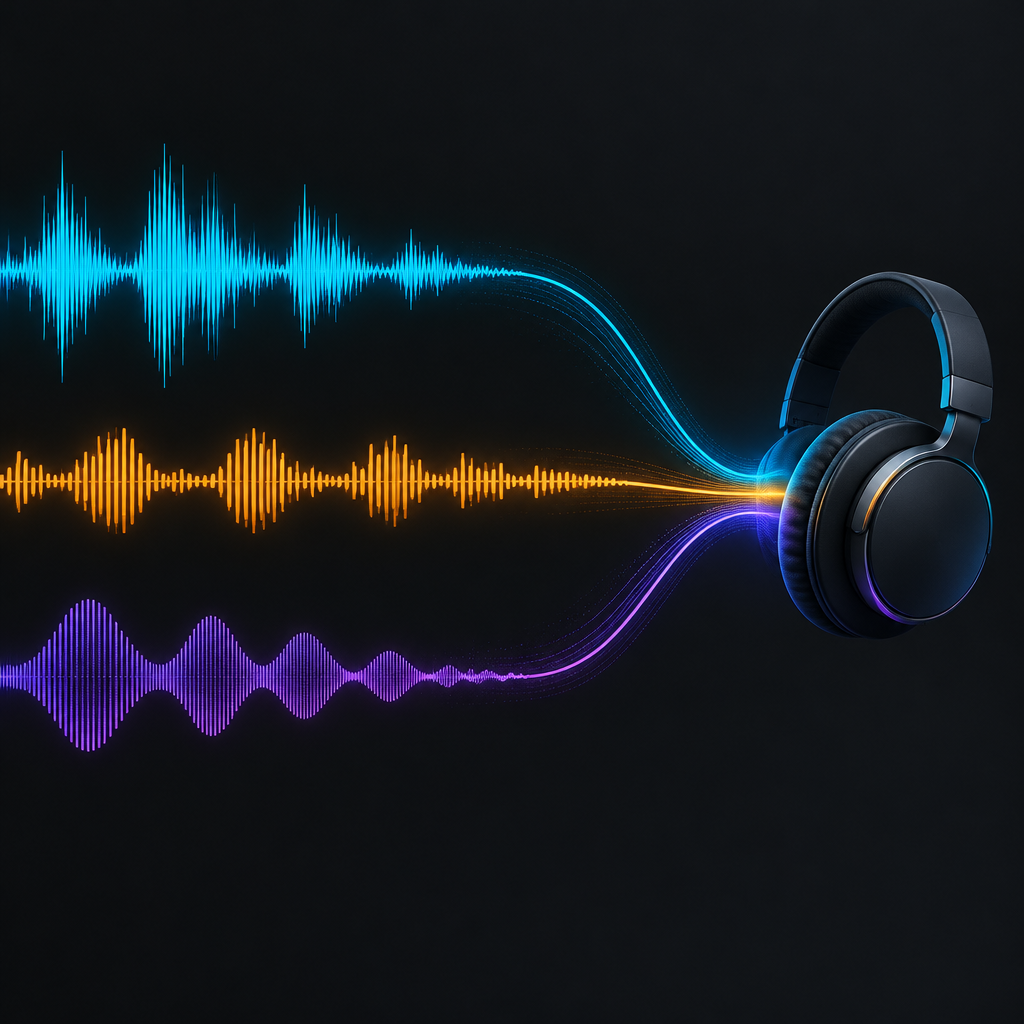
The codec layer, however, is where the real innovation happens. AptX Adaptive, released by Qualcomm in 2018, represents the mainstream approach to premium wireless audio. The codec operates at variable bitrates between 420 kilobits per second and 933 kilobits per second, scaling the data transmission dynamically based on the Bluetooth link quality and the source material. When the connection is robust and the source offers rich detail, aptX Adaptive delivers that detail; when interference arrives or bandwidth contracts, the codec automatically reduces bitrate while maintaining audio continuity. Gaming and video synchronization benefit from aptX Adaptive's ultra-low latency mode, which keeps audio cues within 32 milliseconds of visual action, tight enough that the human ear perceives them as synchronized.
The listener-facing reality of aptX Adaptive is straightforward: music sounds noticeably better than on SBC, particularly in the midrange clarity and treble definition. The difference is not subtle if you have trained ears, yet it is also not transformational. A $40 pair of headphones with aptX Adaptive will sound better than a $200 pair with SBC, but a $200 pair with SBC and a superior driver design might still edge out cheaper aptX hardware. The codec is a necessary but not sufficient component of audio quality.
Sony LDAC and the High-Resolution Tradeoff
Sony's LDAC codec takes a different approach, targeting higher resolution audio. LDAC can transmit up to 990 kilobits per second of compressed audio, preserving more of the original waveform than aptX. For users with high-resolution audio content, typically FLAC files or lossless streaming from services like Amazon Music Ultra HD or Tidal HiFi, LDAC offers measurable fidelity advantages. The tradeoff is power consumption; LDAC requires more processing power than aptX, which explains why battery-life-critical devices like true wireless earbuds have been slower to adopt it compared to over-ear headphones with larger batteries.
Bluetooth LE Audio and the Rise of LC3
The industry inflection point arrives with Bluetooth LE Audio and its mandatory codec, LC3. Unlike aptX or LDAC, which are proprietary technologies owned by Qualcomm and Sony respectively, LC3 is a royalty-free codec specified by the Bluetooth Special Interest Group. Adoption is driven not by marketing but by the simple fact that devices implementing Bluetooth LE Audio must include LC3 support. The codec achieves near-transparent audio quality at bitrates as low as 64 kilobits per second, a capability that makes it viable for hearing aids, cochlear implants, and other ultra-low-power applications that drove the entire LE Audio initiative.
For consumer headphones, LC3 delivers a practical middle ground. Compared to SBC, the improvement is substantial and immediately audible; compared to aptX Adaptive or LDAC, the difference narrows considerably depending on your source material and listening context. More importantly, LC3's efficiency means that Bluetooth LE Audio enabled headphones can achieve dramatically longer battery life than current implementations, a shift that will likely reshape the market once LE Audio adoption accelerates beyond niche applications.
Navigating the 2026 Headphone Market Tiers
The practical landscape for headphone buyers in 2026 breaks into clear tiers. Entry-level wireless headphones ship with SBC and basic Bluetooth 5.4 support; they work acceptably, and the 5.4 improvements in stability mean fewer connection dropouts than previous generations. Mid-market headphones, typically between $80 and $250, overwhelmingly feature aptX Adaptive support, which represents the sweet spot of cost, battery efficiency, and audible quality improvement. Premium over-ear headphones increasingly include both aptX Adaptive and LDAC, letting users switch codecs based on their source material; an iPhone will trigger aptX, while a Tidal HiFi Android device can use LDAC for maximum fidelity.
The emerging tier is Bluetooth LE Audio enabled headphones. As of June 2026, these remain niche products, largely confined to hearing aids and specialized audio equipment. Consumer headphone manufacturers including Sony and Bose have announced LE Audio products, but supply has not yet matched enthusiasm. Once LE Audio becomes standard rather than exceptional, the battery life improvements will reset consumer expectations. Headphones that run for 100 hours between charges rather than 30 hours will redefine the category.
The Real-World Impact of Audio Latency
Latency, the delay between the audio source and the speaker output, matters more than many listeners realize, particularly for gaming and video work. SBC introduces roughly 100 to 150 milliseconds of latency, which is imperceptible for music but instantly noticeable in a gaming context where gunfire or an impact should trigger instantaneously with the visual. AptX Low Latency mode cuts this to roughly 32 milliseconds, tight enough for real-time alignment. Bluetooth LE Audio achieves even lower latencies, and emerging gaming headphones explicitly optimized for mobile or PC gaming are leveraging this advantage.
The multi-codec approach that premium manufacturers have adopted reflects the reality that no single codec yet dominates across all use cases. Apple's ecosystem limits codec options; AirPods support a proprietary Apple codec optimized for iOS integration, while third-party wireless headphones connected to iPhones default to aptX or SBC depending on hardware support. Android users have broader flexibility, as devices from Samsung, Google, and others often support multiple codecs. Streaming services complicate the picture further; Spotify and YouTube Music stream compressed AAC audio, which means that LDAC's high-resolution capability remains theoretical unless you subscribe to a service that actually delivers it.
The transition narrative plays out over the next few years. Bluetooth 5.4 is now standard, which means latency and stability concerns that defined earlier adoption will fade into irrelevance. The codec wars will gradually resolve around LC3, driven by the sheer reach of Bluetooth LE Audio adoption across hearing aids, health devices, and eventually mainstream consumer products. AptX Adaptive will remain dominant in gaming and video-oriented devices because its real-time optimizations offer genuine advantages there. LDAC will persist in the high-end audiophile segment where users actively seek lossless or high-resolution content.
Choosing the Right Codec for Your Setup
For a buyer in 2026, the recommendation simplifies. If you stream music casually and want stability without overthinking it, any Bluetooth 5.4 headphone will serve you well; the protocol itself has matured past the point of frequent complaints. If you care about audio quality or plan to game, specify aptX Adaptive support as a baseline. If you have a subscription to a high-resolution service and a preference for detail, look for LDAC. If you want to future-proof your investment, prioritize Bluetooth LE Audio support, even if the current product selection is slim. By the time you need new headphones again, LC3 will likely be the codec that ships in everything.
The engineering that enables these choices, from Qualcomm's dynamic bitrate scaling to the Bluetooth SIG's open-standard approach with LC3, represents genuinely sophisticated work that most users will never see labeled or discussed. Buying a pair of headphones means trusting that the internals were designed well, and in 2026, the internals have earned that trust.