For years, Bluetooth headphones have been excellent at one very specific trick: connecting one listener to one source. Your phone knows your headphones. Your laptop knows your headphones. A television can send audio to a pair of headphones, provided the television and the headphones agree to pair. The model is private, convenient, and strangely limiting.
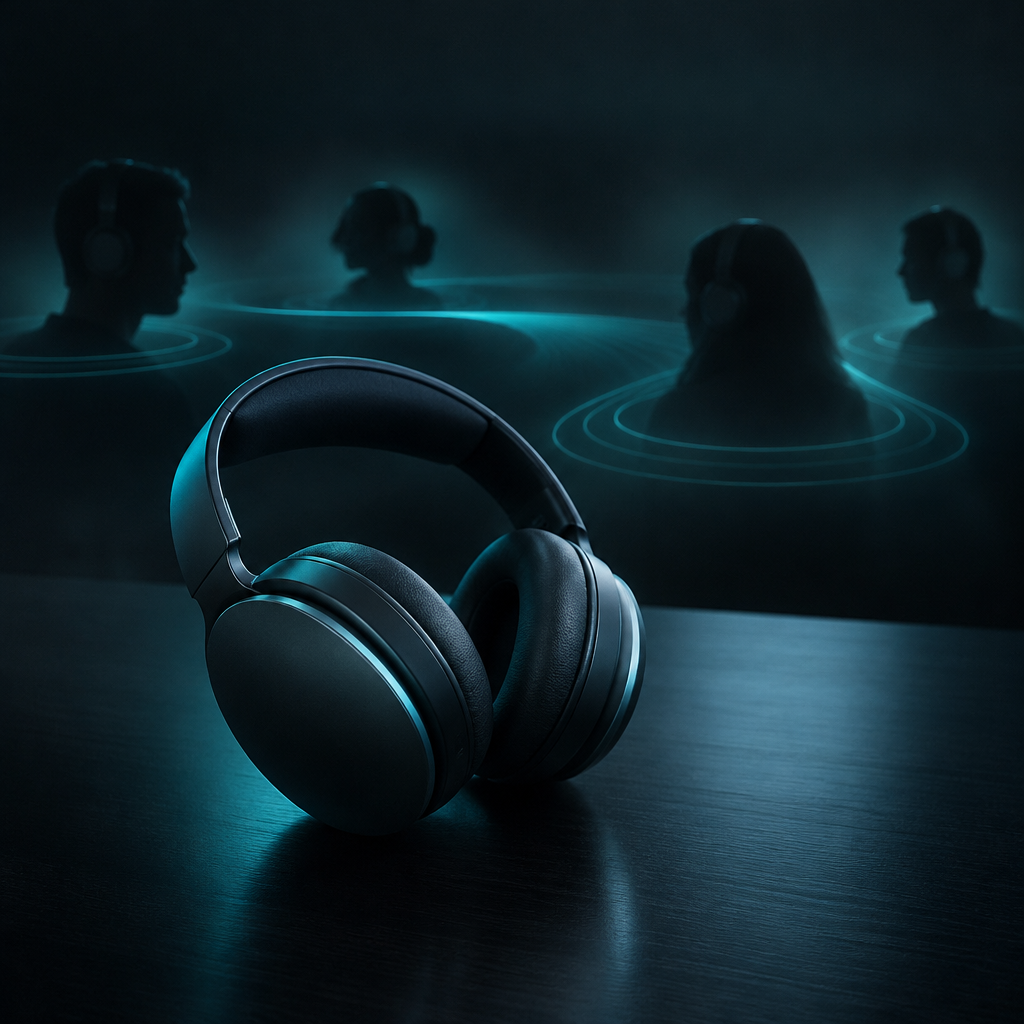
Auracast broadcast audio proposes a different arrangement. Instead of treating wireless audio as a conversation between two named devices, it lets a transmitter publish an audio stream that many compatible headphones can discover and join. The result is less like pairing with a friend’s phone and more like tuning a radio station, except the station can be a television in a sports bar, a tour guide’s microphone, a cinema soundtrack, or a public announcement channel.
That distinction matters because headphones are about to become more than personal music accessories. They are increasingly worn in places where the useful sound is already in the room, but it is too quiet, too distant, masked by crowd noise, or unavailable to the listener. Auracast is an attempt to give that sound a standardized digital doorway.
Bluetooth pairing is not a broadcast
Traditional Bluetooth audio is built around a connection relationship. A source and a sink establish a link, negotiate capabilities, and move audio across that link. That works beautifully for a phone and a headset. It is less elegant when fifty people need the same soundtrack, or when a venue wants visitors to hear a screen without handing out a box of proprietary receivers.
Auracast uses Bluetooth LE Audio building blocks, including Bluetooth Low Energy radio transport, isochronous channels, and the LC3 codec. The transmitter sends a broadcast stream without maintaining an individual audio connection to every listener. Compatible headphones can scan for available broadcasts, obtain the information needed to interpret one, and synchronize to the selected stream.
The technical payoff is not simply a larger pairing limit. A broadcast has a different control model. The venue publishes audio. Listeners choose whether to receive it. A broadcast can be open, protected with a code, or presented through an assisted discovery flow such as a QR code. That flexibility is important in a world where “available audio” might mean a public television, a ticketed theater performance, or a language-specific tour channel.
Why LE Audio is the foundation
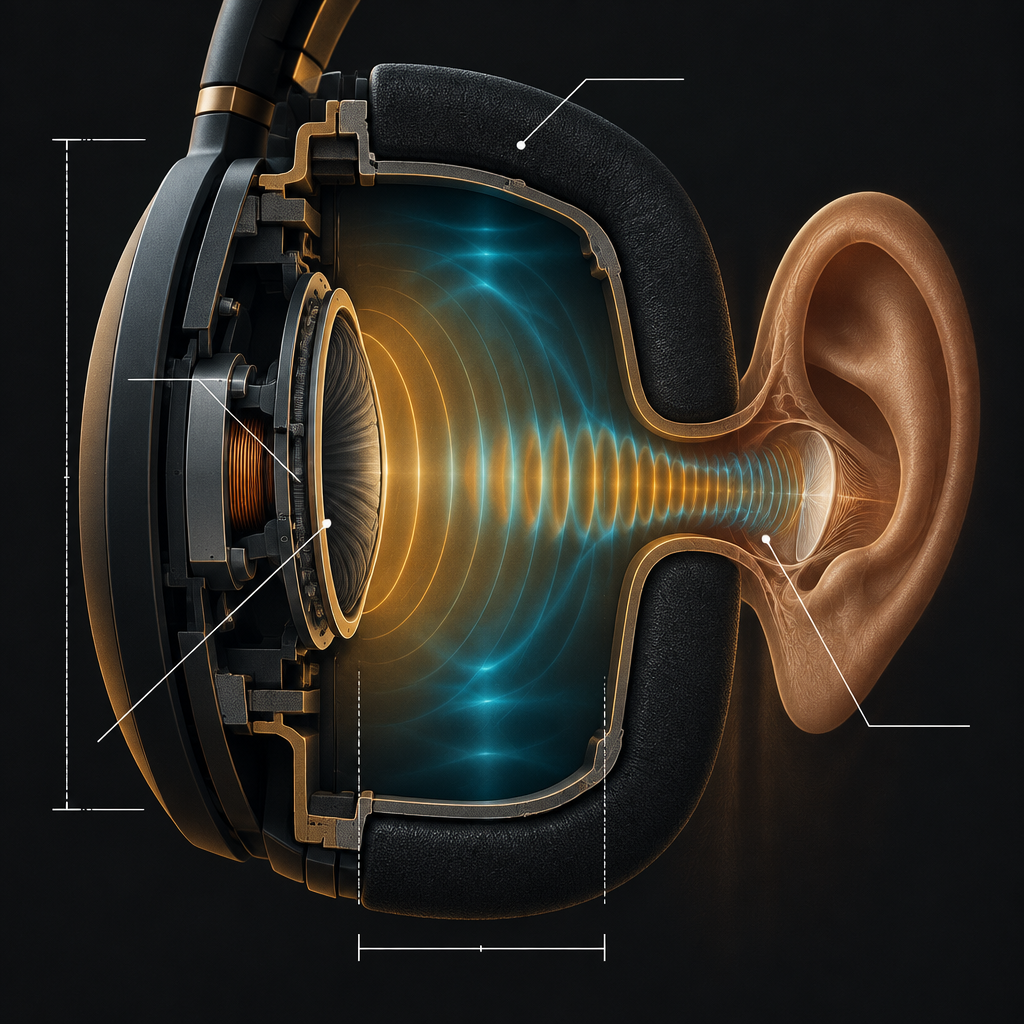
Auracast is often described as a Bluetooth feature, but the useful engineering sits inside the newer LE Audio architecture. Bluetooth Low Energy gives the system a radio framework designed for efficient, scheduled data exchange. Isochronous transport provides timing behavior suited to audio, where a packet arriving late can be nearly as troublesome as a packet disappearing.
Then there is LC3, the Low Complexity Communication Codec. It is designed to deliver good perceived quality across a range of bitrates while allowing implementations to balance audio quality, resilience, and power consumption. A codec does not magically eliminate interference or make every headphone sound identical, but it gives a broadcast system a common audio language that is more flexible than simply reusing an older Bluetooth profile.
For listeners, the important point is that Auracast is not a software radio app pasted on top of ordinary Bluetooth. The headphones need the right radio, controller, host software, audio stack, and user interface. A product may support LE Audio in one mode and still lack the complete experience needed to discover and join broadcasts comfortably.
The first killer feature may be a silent screen
Imagine a row of televisions in an airport lounge, gym, waiting room, or sports bar. The screens are visible, but the speakers are muted because nobody wants six competing audio tracks filling the room. With Auracast, a viewer could open a headphone menu, see nearby broadcasts, and listen to the selected screen at a useful volume.
This is a deceptively large improvement. Existing solutions often require a dedicated infrared receiver, an analog jack, a venue-specific app, or a staff member who can explain a complicated setup. Auracast gives the venue an interoperable target. It also gives the traveler a chance to use headphones already in their bag rather than borrowing a mystery device with a dying battery.
There will still be practical details. The user interface has to identify broadcasts clearly. “TV 3” is not helpful if the room contains twelve screens. A good system could combine broadcast names with location data, QR codes, or a tap-to-join marker. The radio can make the stream available, but design has to make the correct stream obvious.
Assistive listening without a separate social category
Auracast may be most consequential in theaters, houses of worship, lecture halls, museums, and transit terminals. Public audio is often difficult even for people who do not consider themselves hard of hearing. Reverberation, distance, HVAC noise, and competing conversations can turn clear speech into a guessing exercise.
Traditional assistive listening systems have helped, but deployment is uneven. Some rely on hearing loops, some on infrared, and others on venue-owned receivers. Auracast offers the possibility of a shared standard that can serve hearing aids, cochlear implants, earbuds, and over-ear headphones, assuming those products support the relevant features.
The social design is significant. A broadcast channel does not have to announce why someone is listening. The same stream can be useful to a person with hearing loss and to a visitor who wants the tour guide’s voice without crowd noise. Accessibility becomes an ordinary listening choice instead of a separate piece of equipment that marks the user out.
That does not make Auracast a replacement for every assistive technology. Microphone placement, venue acoustics, personal hearing profiles, and regulatory requirements still matter. A clean digital feed cannot repair a badly mixed microphone or a transmitter installed behind a concrete wall. It can, however, remove several layers of friction between the sound source and the listener.
Shared listening is the consumer-friendly demo
The most immediately charming use case is sharing audio. One phone could broadcast music, a podcast, or a movie soundtrack to several nearby headphones. Friends on a flight could listen together without a splitter. A parent and child could share a tablet. A group could hear a guide’s narration while walking through a city.
This changes the emotional shape of Bluetooth audio. Pairing is intimate but individual. Broadcasting is communal. The source no longer has to manage a list of separate audio connections in the same way, and the listeners do not have to pass a phone around or crowd around one pair of speakers.
There are caveats. The source device needs to support broadcast transmission, and battery life depends on how the radio and audio pipeline are implemented. Content owners may also impose restrictions on rebroadcasting. A technically easy feature can still run into licensing, privacy, and venue policy questions.
Latency, synchronization, and the unglamorous engineering
Broadcast audio sounds simple until multiple headphones must agree on time. If one listener hears a sports commentator half a second after another, the shared experience becomes awkward. If a screen’s image and the broadcast sound drift apart, the feature feels broken even when the audio quality is excellent.
LE Audio’s isochronous design is intended to support synchronized delivery, but the complete latency budget includes capture, encoding, scheduling, radio transmission, buffering, decoding, and playback. Headphone manufacturers can add delay with conservative buffers or adaptive processing. Noise cancellation and spatial audio may also require blocks of samples that complicate timing.
Venue operators will need to measure the whole path, not just advertise a Bluetooth version. A well-tuned transmitter with sensible buffering can make a broadcast feel immediate. A poorly configured installation can produce lip-sync problems and leave users blaming their headphones for a fault in the room.
Discovery is the make-or-break moment
People understand selecting Wi-Fi networks because phones have spent years teaching them the pattern. Auracast discovery aims for a similar mental model, with scanning, searching, QR codes, and tap-to-hear options. The experience still has to be fast enough for a person standing in a crowded terminal or entering a theater as the lights go down.
Broadcast names should be human-readable. Temporary channels should expire cleanly. Private streams should not appear as obvious targets to everyone nearby. Headphones should remember useful channels without silently joining the wrong one. A venue may need a way to publish language choices, accessibility information, and the physical location of a transmitter.
These are not cosmetic details. In wireless audio, the first thirty seconds determine whether a feature becomes part of a person’s routine or becomes another icon they never touch. Auracast can have strong radio engineering and still fail if discovery feels like troubleshooting a router.
What headphone buyers should look for
Do not treat a Bluetooth number on a product page as proof of Auracast support. Look for explicit mention of Auracast broadcast audio, LE Audio broadcast reception, and the devices or operating systems supported by the manufacturer. Firmware may matter, and some products may need a companion app or a dedicated system menu.
It is also worth checking how the feature behaves alongside multipoint, active noise cancellation, spatial audio, and microphone use. Wireless products have finite processing and radio resources. Early implementations may make tradeoffs, such as disabling a listening mode, reducing battery life, or limiting the number of simultaneous broadcasts stored in memory.
For public venues, ask a more basic question: is there actually a transmitter where you want to listen? Auracast-capable headphones cannot tune into silence. Adoption will be gradual, and the best early experiences are likely to come from places with a clear reason to deploy it, including theaters, museums, airports, classrooms, and assistive listening installations.
The headphone is becoming a receiver for the world
Auracast matters because it widens the job description of headphones. They no longer have to wait for a phone, laptop, or television to invite them into a private connection. They can become receivers for shared sound that is already being produced around us.
The technology will not arrive as one dramatic switch. Transmitters have to appear in venues and consumer devices. Headphones need compatible hardware and thoughtful software. Standards have to be implemented consistently. Users need a discovery flow that feels obvious. Each piece is manageable, but the value only becomes visible when the pieces meet in the same room.
That is why Auracast is more interesting than another incremental specification number. It treats wireless audio as infrastructure. When it works, a television can be heard without being loud, a guide can be understood without shouting, and several people can share one source without negotiating a tangle of pairings. Headphones stop being isolated endpoints and start acting like personal windows into the sound around them.
Sources: Bluetooth SIG, “Auracast broadcast audio,” accessed August 29, 2026; Bluetooth SIG, “LE Audio,” accessed August 29, 2026; Bluetooth SIG, “Consumer audio is going all in on Auracast broadcast audio: Are you keeping up?”, June 12, 2026; Bluetooth SIG, “Real-world listening: Auracast broadcast audio’s clearer sound is driving meaningful progress,” June 11, 2026.