Auracast Is Turning Bluetooth Headphones Into Personal Audio Receivers
For years, Bluetooth headphones have been defined by a small ritual: open the case or press the power button, choose a phone, and listen to whatever that phone decides to send. The connection is personal, private, and usually one-to-one. Useful, certainly. Also a little unimaginative.
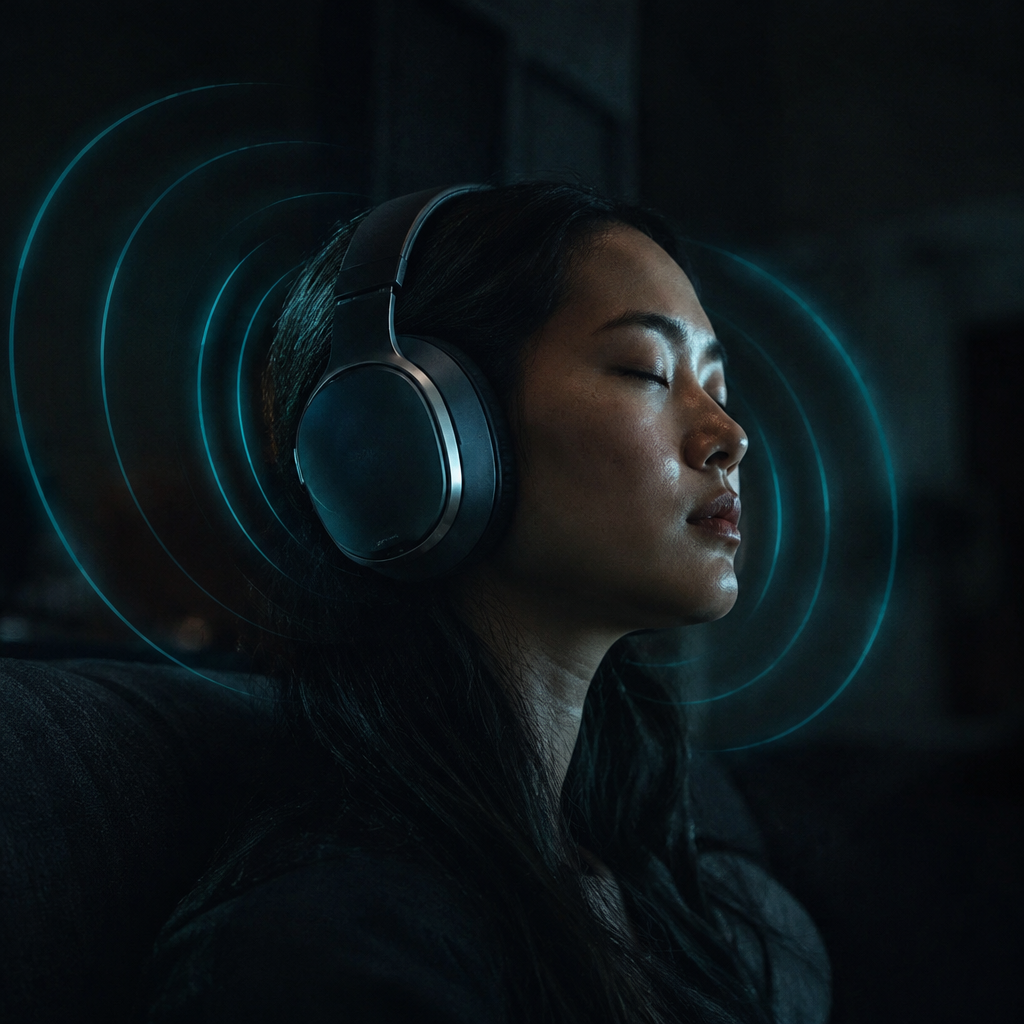
Auracast is pushing Bluetooth audio in a different direction. Instead of treating headphones as accessories that belong to one smartphone, it treats them as receivers that can discover and join a broadcast. A television in an airport lounge, a museum guide, a lecture hall, or a living room could transmit an audio stream that nearby compatible headphones select from a list. The headphone is no longer waiting for one device to claim it. It is listening for the right signal.
That shift depends on Bluetooth LE Audio, the newer audio architecture built on Bluetooth Low Energy rather than the older Bluetooth Classic audio path. The distinction is technical, but its consequences are easy to feel: lower power options, better support for multiple streams, a modern codec, and a broadcast mode that can serve many listeners at once.
The Problem With the Old Bluetooth Model
Classic Bluetooth audio was designed around a source and a sink. Your phone is the source. Your headphones are the sink. Pairing establishes a relationship between them, and an audio profile carries the sound. That model works beautifully when one person owns the source and one person owns the headphones. It becomes awkward when a room, building, or public venue needs to send the same sound to many people.
Traditional workarounds are not elegant. A venue might install an infrared assistive listening system, distribute dedicated receivers, or turn up a television loud enough for everyone. Each solution adds equipment, friction, or unwanted noise. Even ordinary sharing is clumsy. One phone may support a limited number of connected accessories, and pairing a stranger's headphones is not exactly a relaxing way to begin a movie.
LE Audio changes the underlying architecture. A source can send an isochronous stream, a time-sensitive transmission designed for audio, while multiple receivers synchronize to it. With Auracast, the transmitter advertises the broadcast and its metadata. Compatible headphones discover available streams, then join the one the listener chooses.
What the Headphones Actually Have to Do
Calling Auracast a Bluetooth version of a radio station is tempting, though incomplete. A broadcast is not simply an open stream that every device automatically plays. The headphones first scan for announcements. Those announcements can include a broadcast name, language information, and other details that help a listener identify the correct service. Joining may be open, protected by a broadcast code, or assisted by a companion device that handles discovery.
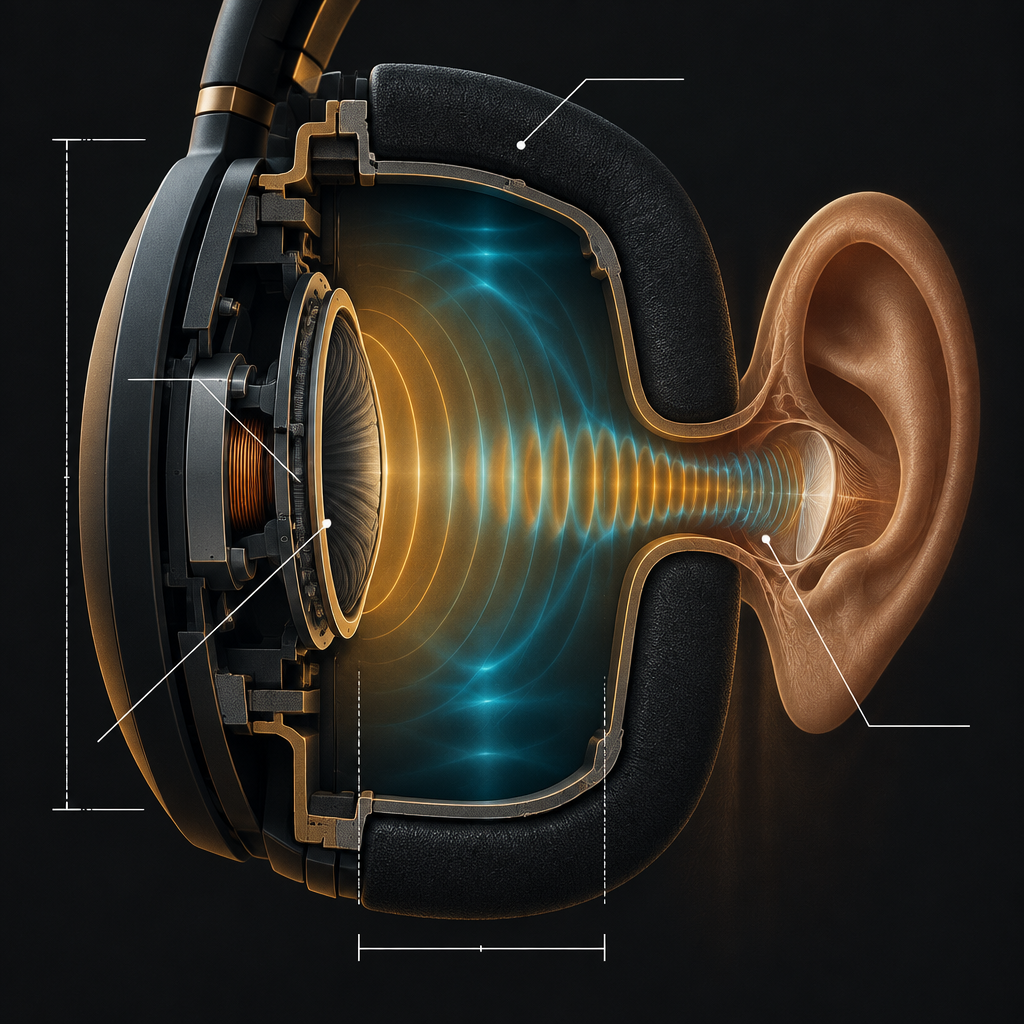
Inside the headphones, the radio and audio stack need to support the relevant LE Audio specifications. The set must process the LC3 codec, manage timing, decode the selected stream, and keep the left and right channels aligned. It also needs a user interface that makes several nearby broadcasts understandable. “Conference Room B” is useful. A list of anonymous hexadecimal identifiers is not.
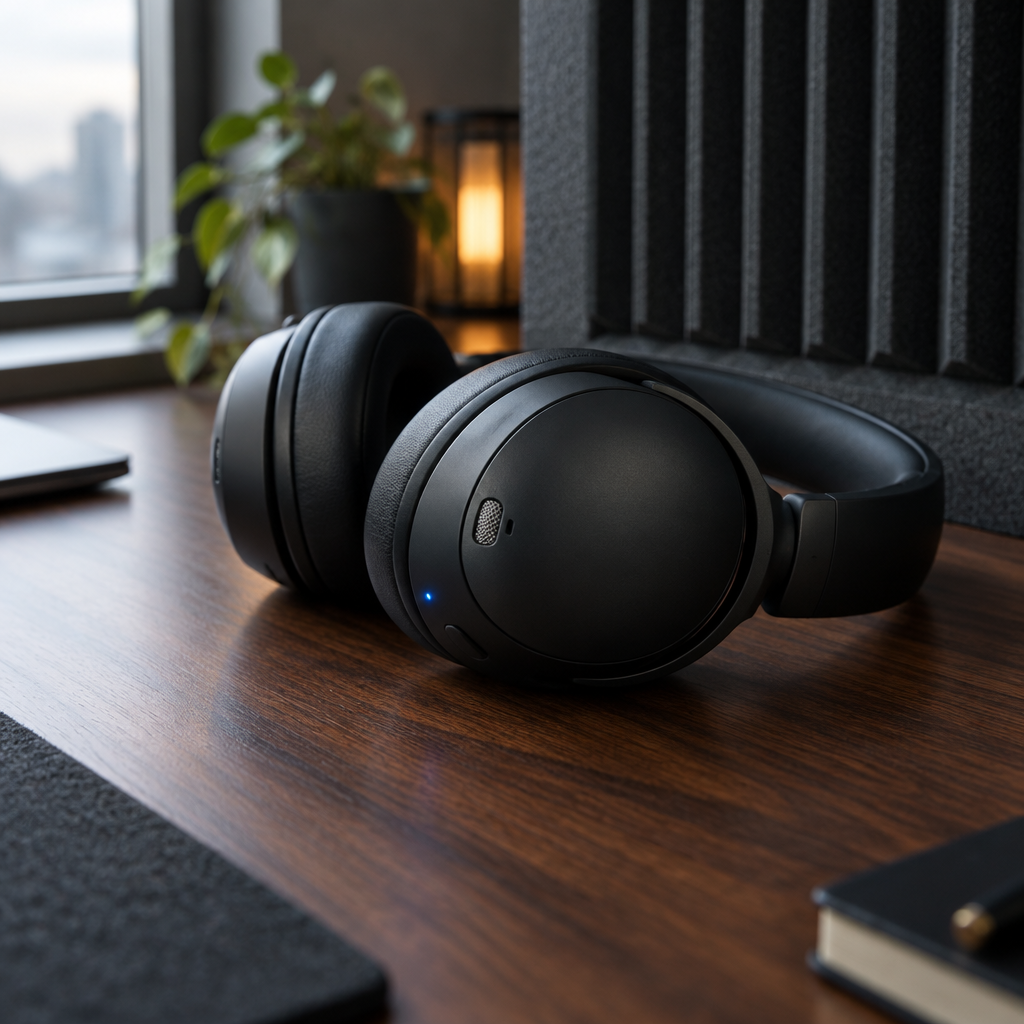
This is where product design matters more than the Bluetooth logo on the box. A pair of headphones can advertise Bluetooth 5.3 or Bluetooth 5.4 and still provide no meaningful Auracast experience. Bluetooth version numbers describe a collection of radio capabilities, not a guarantee that every optional audio feature is present. Buyers need to look for explicit LE Audio and Auracast support, plus confirmation that the phone, television, or transmitter can originate the broadcast.
LC3 Is the Quiet Workhorse
The codec underneath LE Audio is LC3, short for Low Complexity Communications Codec. Its importance is not that it makes every recording magically sound like a studio master. Its value is flexibility. LC3 is designed to maintain strong audio quality at lower bit rates than the mandatory SBC codec used by Classic Audio, giving manufacturers room to trade bandwidth for battery life, robustness, or smaller hardware.
That tradeoff is crucial in a broadcast environment. A transmitter serving a crowd does not want to waste energy and spectrum when a more efficient stream will do the job. A headphone designer may use the savings for longer playback, a smaller battery, or additional processing for noise control. The engineering decision is not “quality versus bad quality.” It is a more useful menu of choices among quality, resilience, power consumption, and latency.
LC3 also fits voice applications better than the old assumptions around Bluetooth music. LE Audio can carry higher quality speech and support coordinated microphone behavior, which matters for calls, gaming chat, and hearing assistance. In headphones, the result could be less dependence on a single heavily optimized proprietary mode. Standardized does not mean boring. It means more devices have a common starting point.
Why Public Venues Are the Big Test
The most compelling Auracast use case may not be music at all. Imagine arriving at an airport and seeing a broadcast called “Gate 18 announcements” on your headphones. At a theater, you could select the assistive listening stream without borrowing a receiver. In a museum, a broadcast could carry a tour in English, Spanish, or another language, with each visitor choosing the appropriate feed.
There is a social advantage here. A person using headphones for accessibility is not forced to wear a visibly different device or explain why they need a special receiver. The same broadcast can serve people with hearing loss, travelers who want clearer speech, and anyone who prefers listening through their own headphones. Accessibility becomes part of the ordinary audio infrastructure instead of a separate technical island.
But public deployments will be judged on reliability, not demos. Broadcast discovery must be quick. The audio must remain synchronized with the screen or stage. Transmitters need sensible coverage and channel planning. Venue staff need to know whether a broadcast is active and what happens when a network or power system fails. A clever standard cannot repair a badly installed antenna or a confusing sign.
Home Theater Gets More Interesting
Auracast also solves a familiar domestic argument: one person wants the television loud, another wants it quiet, and somebody else is already asleep. A TV with a suitable transmitter could send its sound directly to several pairs of headphones. Each listener could use their own volume setting, and a household would not need a collection of proprietary wireless headsets tied to one base station.
That sounds simple until synchronization enters the picture. If the headphones receive a delayed stream while the room speakers play immediately, lip sync falls apart. LE Audio’s isochronous transport is built for coordinated timing, but the complete system still depends on the television, transmitter, headphone firmware, and processing pipeline. Noise cancellation and digital equalization can add their own delay. The best products will expose latency and synchronization as engineering priorities, not hide them behind vague promises.
There is another possibility: sharing a phone’s audio without passing the phone around. A group on a hike could listen to the same guide. Friends could share a playlist. A classroom could receive a teacher’s voice while students retain personal volume control. These are small moments, yet they show why broadcast is different from simply adding another pairing slot.
The Adoption Hurdles Are Real
Auracast has a classic network effect problem. Headphones need compatible transmitters to be useful, while venues and television makers have little incentive to install transmitters before enough people own compatible headphones. Public signage and operating-system support can help, but the transition will not happen everywhere at once.
Battery behavior will matter, too. Scanning for broadcasts continuously could consume power, especially if a headphone has to maintain a conventional connection at the same time. Good products will make discovery efficient, wake the radio intelligently, and explain what is happening. Otherwise, users may blame Auracast when the real problem is a poorly tuned implementation.
Privacy deserves attention. A broadcast is not a private connection, even when the audio is intended for a limited audience. Protected broadcasts can require a code, but listeners should understand whether a stream is public, encrypted, or merely obscure. Venue operators should avoid transmitting sensitive conversations as if they were background music. Wireless convenience does not repeal the laws of acoustics, security, or common sense.
What to Look For in Headphones
If you are buying headphones with an eye toward the next few years, start with explicit support for Bluetooth LE Audio and Auracast, not just a high Bluetooth version number. Check whether firmware updates can add features, whether multipoint remains available alongside LE Audio, and whether the manufacturer documents broadcast discovery clearly.
Also look beyond codec checklists. Comfortable wear, stable microphones, effective noise control, repairability, and predictable battery life still matter every day. Auracast is an important new capability, but it cannot rescue headphones that hurt after twenty minutes or lose connection whenever you put your phone in a pocket.
The deeper change is conceptual. Bluetooth headphones are becoming less like private cables between two gadgets and more like adaptable audio terminals. They can receive a call from a phone, a program from a television, a translation from a museum, or an announcement from a gate. The source can change. The listener stays in control.
That future is arriving unevenly, with plenty of compatibility fine print along the way. Still, Auracast gives Bluetooth something it has lacked for a long time: a reason to be present in the room, not merely attached to one person’s pocket. Once transmitters become ordinary, headphones may stop asking, “Which device am I paired with?” and start asking a more useful question: “What would you like to hear?”
Frequently Asked Questions
What is Auracast?
Auracast is Bluetooth broadcast audio built on LE Audio. It allows one transmitter to advertise an audio stream that multiple compatible headphones or other receivers can discover and join.
Do all Bluetooth 5.3 headphones support Auracast?
No. Bluetooth version numbers do not guarantee support for every optional feature. The product should specifically list Bluetooth LE Audio and Auracast compatibility.
What is LC3?
LC3 is the Low Complexity Communications Codec used by LE Audio. It is designed to provide good audio quality at efficient bit rates, giving manufacturers more flexibility with battery life, bandwidth, and robustness.
Can several people use one Auracast stream?
Yes. Broadcast audio is designed for one-to-many listening. The practical limit depends on the implementation, coverage, stream configuration, and the capabilities of the receivers.
Will Auracast replace normal Bluetooth pairing?
Not likely. One-to-one connections remain useful for calls, private listening, and device control. Auracast adds a broadcast option for shared audio rather than eliminating conventional pairing.