When Sony released the WH-1000XM3 in 2018, active noise cancellation crossed from luxury to mainstream. Today, ANC exists in everything from $100 earbuds to premium flagships. Millions of people slip on ANC headphones every morning and never think twice about what's happening inside the earcup. The inverted soundwaves, the reference microphones, the feedback loops, the neural networks analyzing ambient noise patterns in real time, the digital filters applying phase inversion to incoming audio. It all happens in the background. But here's what most people don't realize: the same technology designed to protect your ears from aircraft cabin roar might be actively sabotaging your hearing health.
Phase Inversion and Destructive Interference
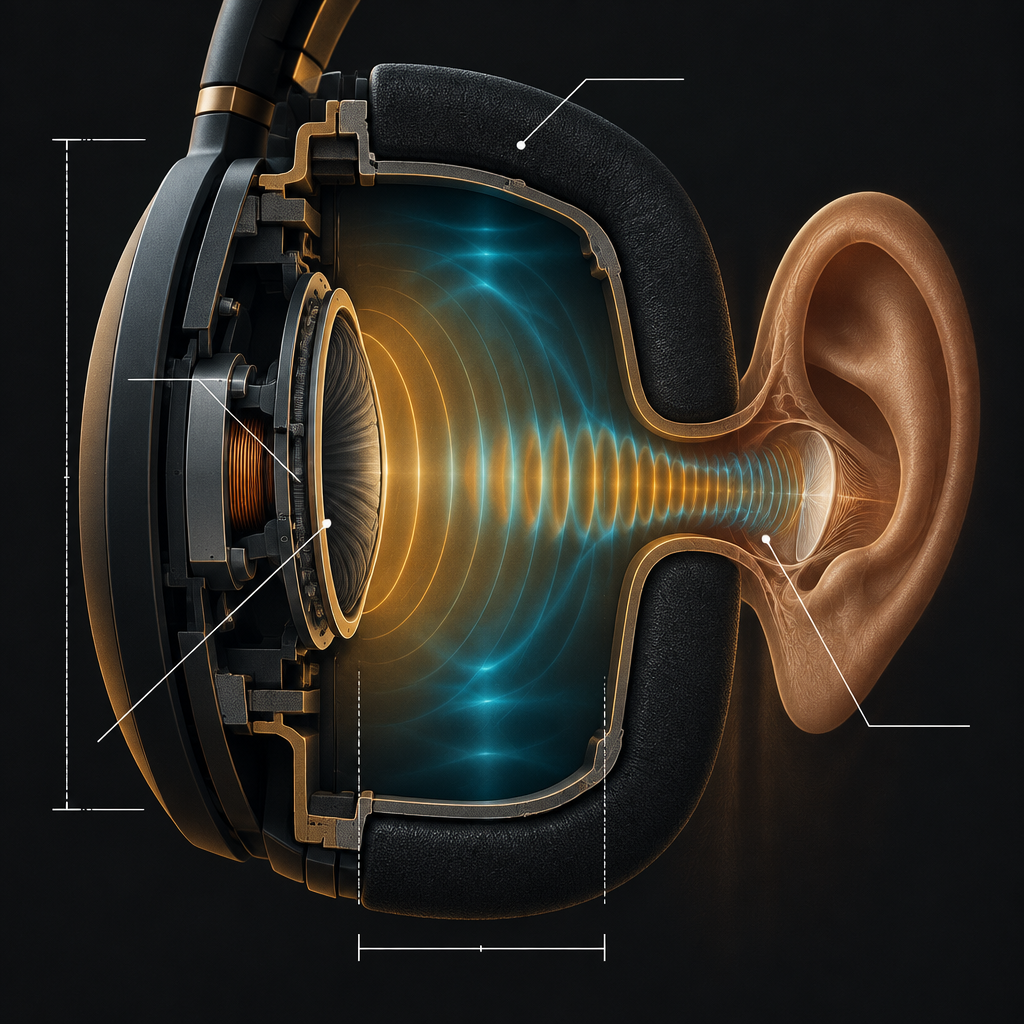
The mechanism behind active noise cancellation is deceptively elegant. Unlike passive noise isolation, which simply blocks sound with physical barriers and acoustic foam, ANC actually listens to the environment and fights back. A microphone on the outer surface of your headphone detects ambient noise, typically low-frequency rumble like road traffic or airplane engines. That audio signal gets routed to a dedicated ANC processor, which inverts the phase of the detected sound wave by 180 degrees. The inverted signal is then sent to the speaker driver inside the earcup and played at the exact moment the ambient noise would reach your ear. When the real noise wave meets its inverted twin, they cancel each other out through destructive interference. What you hear is silence, or near silence. The physics is beautiful. The implementation, however, is increasingly troubling.
Feedforward Versus Feedback Architecture
Feedback ANC versus feedforward ANC represents the first major architectural divergence in how headphones listen to your world. Feedforward systems use external microphones positioned on the outside of the earcup. These mics detect noise before it enters your ear canal and feed that information to the ANC engine with minimal latency. The advantage: feedforward systems can react extremely quickly, sometimes within microseconds, which makes them excellent for continuous, relatively predictable sounds like engine noise or wind rumble. The disadvantage: they're catching sound after it's already traveled some distance, and they can't detect what's happening in your actual ear canal. Feedback ANC, by contrast, uses microphones positioned inside the earcup itself. These mics sample the acoustic signal already in your ear canal and generate a correction signal in real time. The result is more precise cancellation, especially for mid and high frequencies, because the system is working with data from the exact acoustic space where sound is actually reaching your eardrum. But feedback systems have their own liability: latency issues and feedback loops if not carefully managed. Modern premium headphones combine both approaches, creating hybrid ANC architectures. Apple's AirPods Pro, Sony's flagship models, and Bose's QC headphones all use feedforward external mics plus feedback ear canal mics, with sophisticated signal processing to blend their outputs into seamless cancellation. This is where the technology gets genuinely impressive. And this is also where the hearing health problem emerges.
The Environmental Masking Hazard
The insidious risk of ANC masking is this: your ears evolved to use ambient sound as a situational awareness tool. That rumble of an approaching car engine isn't just noise; it's a safety signal. When you're wearing ANC headphones and your favorite podcast, your attention is focused inward. But your hearing also provides a second, unconscious channel of environmental monitoring. You don't consciously think about traffic behind you, but your brain is tracking it. ANC severs that channel. It doesn't just reduce the sound; it actively eliminates the signal your nervous system uses to gauge proximity to danger. Studies from the University of Colorado and reported in outlets like the BBC have found that young people wearing ANC headphones show measurably reduced awareness of their surroundings compared to those wearing passive headphones or no headphones at all. The cancellation is so effective that people literally cannot hear vehicles approaching, horns honking, or warnings from other pedestrians. In urban environments, this creates a particular vulnerability: a cyclist or pedestrian in ANC mode is essentially driving with blinders on.
Volume Hiding and Middle Ear Reflex Interference
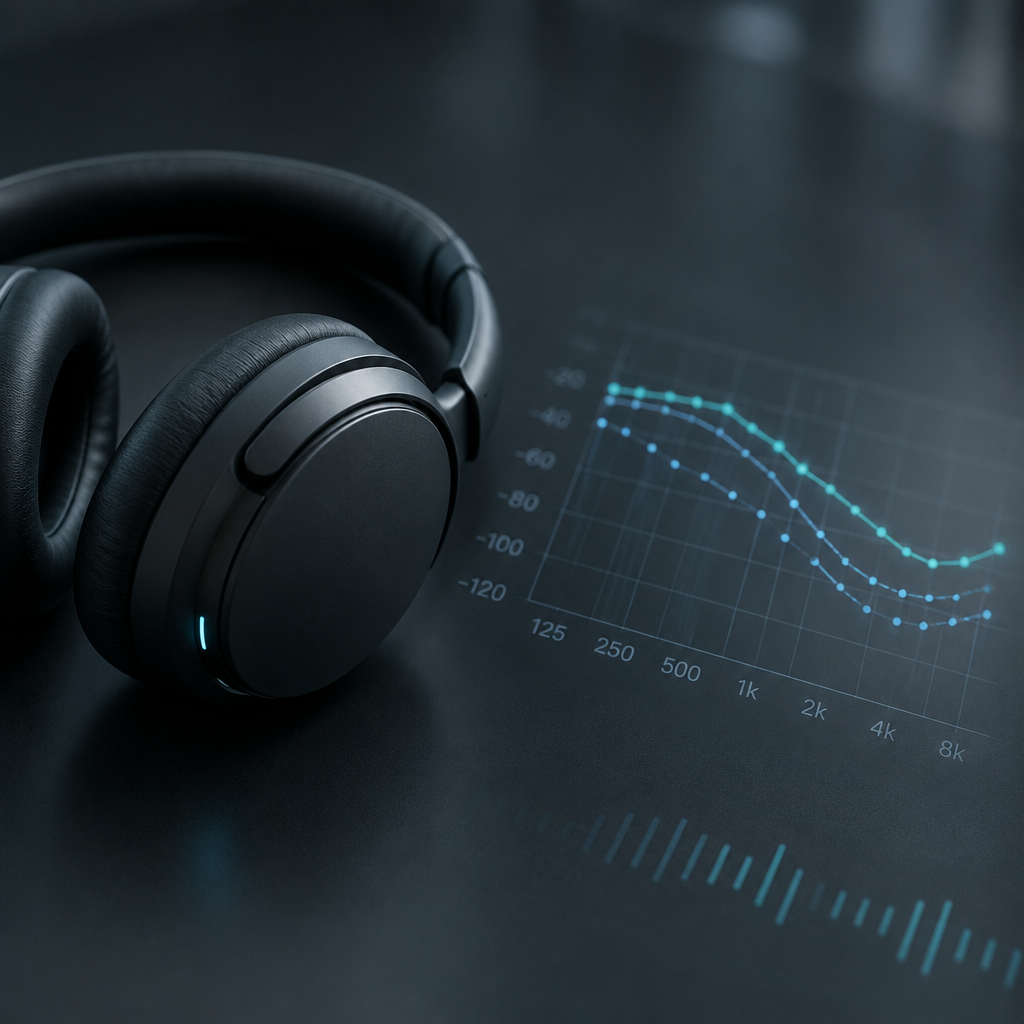
But there's a second, equally serious problem that often gets overlooked: ANC can also be inducing hearing loss through a mechanism called spectral smearing and the loss of dynamic range processing. When ANC inverts and cancels ambient noise, it's not just eliminating bass rumble. It's also interfering with the body's natural middle ear reflex. At around 100 decibels, your middle ear muscles (the tensor tympani) contract automatically, pulling the eardrum taut to protect against loud sounds. This reflex happens unconsciously. But ANC systems don't account for this reflex, and they can't distinguish between ambient noise that warrants protection and ambient noise that's merely annoying. The result: your protective mechanisms stay relaxed because your brain never perceives the danger signal. If you then listen to music or podcasts at normal volumes through ANC headphones, your ears are receiving elevated sound pressure without the protective response they would normally mount. It's volume hiding. The perceived loudness seems manageable because dangerous frequencies are being suppressed, but the eardrum is still experiencing significant stimulus. Research from Audibel and the University of Colorado's School of Public Health confirms that people wearing ANC headphones for extended periods show higher rates of temporary threshold shifts and, in some cases, permanent hearing loss, even when they believe they're listening at safe volumes.
Industry Inertia and Emerging Safety Algorithms
Manufacturers have been slow to address this paradox, partly because admitting the risk would require redesigning how ANC functions at a fundamental level. Some newer models include transparency or ambient modes that disable ANC and let real-world sound through, but these features are often clunky, requiring manual mode-switching, and they don't solve the underlying architectural problem. A few research teams are experimenting with adaptive ANC systems that preserve certain frequency ranges or that allow periodic breaks in cancellation to let safety signals through. Some proposals involve machine learning algorithms trained to identify hazard sounds, like horns or alarms, and automatically disable ANC for those frequencies while maintaining cancellation of neutral ambient noise. These approaches show promise, but they're not yet standard in consumer headphones.
Practical Guidelines for Safe Daily ANC Use
What can you do right now? First, don't expect your headphone manufacturers to solve this problem for you. The financial incentive to market ANC as universally beneficial is enormous. Second, be intentional about when and where you wear ANC. In stationary environments (offices, trains, airplanes) where your surroundings aren't changing rapidly, ANC is genuinely useful and safe. In dynamic urban environments, especially while driving, cycling, or crossing streets, consider using passive headphones or no headphones at all. If you must use ANC, keep volume levels low and take frequent breaks to allow your middle ear muscles to reset. Third, explore headphones that offer granular control over ANC intensity. Some models let you adjust the strength of cancellation, which can help you maintain ambient awareness while still reducing the most fatiguing low-frequency rumble. Finally, if you spend hours daily in ANC headphones, get your hearing checked by an audiologist. Temporary threshold shifts can recover if caught early, but repeated exposure to masked high volumes can cause permanent damage.
The uncomfortable truth is that active noise cancellation, for all its sophistication, represents a biological mismatch. We've engineered technology that's more aggressive than our ears can safely tolerate. The solution isn't to abandon ANC, but to use it intelligently, with clear-eyed understanding of its real risks. Your hearing isn't infinite. It's one of the few things you don't get back.