The Problem with Sealed Audio
For decades, personal audio has meant one thing: sound isolation. In-ear monitors, noise-canceling earbuds, and sealed headphone designs dominated the market because they delivered full frequency response and immersive sound stages. The trade-off was unavoidable; you became disconnected from your environment.
This design philosophy works fine in certain contexts. A commuter on a train benefits from blocking out rumble and chatter. A gym enthusiast wants to focus on their workout, not ambient noise. But there's a growing segment of listeners who need something different. They need to hear approaching cyclists while jogging. They need to catch a conversation with a colleague while working. They need situational awareness, and sealed earbuds actively prevent it.
How Open-Ear Technology Works
Open-ear earpieces come in several mechanical flavors, but they share a core principle: sound reaches your ear through the air, not through a sealed canal.
The most common design uses air-conduction drivers that angle sound toward your ear opening rather than into it. These earpieces typically hook over your ear or sit at your temple, delivering audio while leaving your ear canal open to ambient sound. Shokz and Oladance lead this category with their open-design flagships. The drivers vibrate at frequencies that propagate through air, creating a sound stage that sits somewhere between your ears and the outside world. It's not as immersive as sealed earbuds, but it's far more spatially aware.
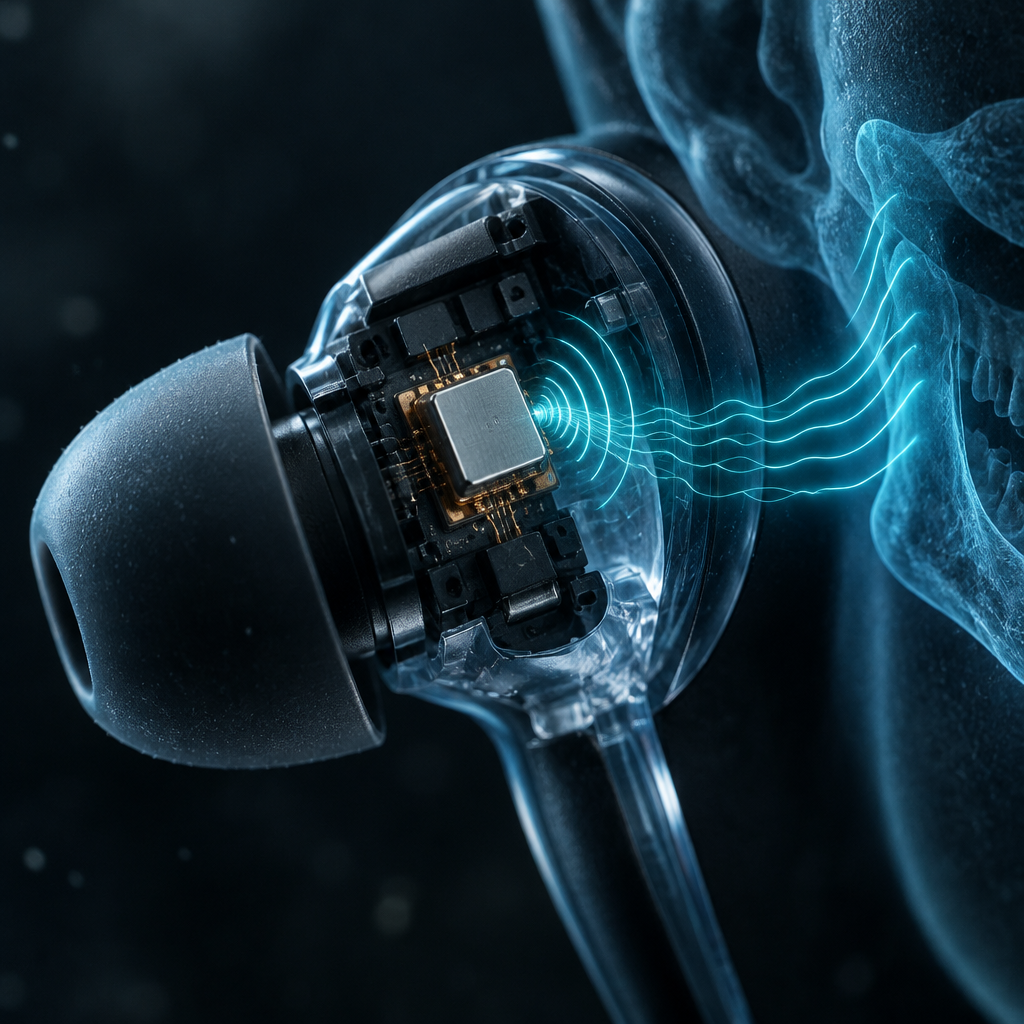
A secondary approach uses bone-conduction vibrations that transmit sound through your skull itself. Certain products combine both methods; the OpenMeet UC from Shokz pairs bone-conduction vibrations with traditional air-conduction drivers for enhanced clarity. This hybrid approach gives you richer audio without sacrificing openness.
Directional audio technology adds another layer. Some earpieces use phased microphone arrays and DSP tuning to create a focused acoustic beam, reducing sound leakage and preventing your audio from broadcasting to everyone around you. This matters more in professional settings; a call center agent using open-ear earpieces shouldn't spill their conversations to coworkers.
The Safety Argument and Market Reality
Safety is the primary driver of open-ear adoption. Studies show that 68 percent of users now prefer open-ear designs for situational awareness; another 44 percent of those users continue choosing them after their first purchase. Cyclists and runners lead the adoption curve, but the technology is creeping into workplace audio as well.
Consider the logistics worker navigating a warehouse. Sealed earbuds mean they can't hear a forklift approaching. A delivery driver in urban traffic faces similar hazards if locked into a noise-canceling bubble. Open-ear earpieces eliminate these risks without requiring the user to constantly pull out their device to stay aware.
The market is responding. Bose, Sony, and Apple now offer open-ear options alongside their traditional sealed products. EarFun's recent CES 2026 showcase featured multiple OWS entries. This is no longer niche; it's mainstream.
Sound Quality Trade-Offs
There's an elephant in the room: open-ear earpieces cannot deliver the bass response or soundstage depth of sealed earbuds. Physics intervenes. An open ear canal leaks low frequencies; a driver aimed at your ear rather than into it naturally sacrifices dynamic range. High-end open-ear models compensate through careful EQ tuning and multiple drivers per side, but they're fighting physics. Don't expect subwoofer-level bass.
Mid-range and treble performance is surprisingly strong. Modern open-ear products handle vocals and instrumental detail well. The soundstage, while different from sealed earbuds, has its own character; some listeners prefer the less-in-your-head feel of air-conduction audio.
Where open-ear excels is conversation clarity and spatial audio for entertainment. A podcast or call through open-ear earpieces feels more natural because your brain isn't fighting the sensation of isolation. Directional audio keeps your private conversations private. For commuters and professionals, this is often more important than bass extension.
Comfort and Ergonomic Design
Open-ear earpieces have sparked a new era of ergonomic thinking. Since they're not jammed into your ear canal, fit is determined by ear loops, concha placement, or bone-conduction vibration points. Many users find them significantly more comfortable during extended wear; no pressure, no heat buildup, no sensation of something foreign in your ear.
The downside is that fit varies wildly across ear shapes. A design that works perfectly for one person might slide or rotate on another. The market has responded with adjustable ear loops, multiple sizing options, and concha-fit designs that adapt to different ear geometries. EarFun's OpenJump and Oladance's OWS Pro both use sophisticated fitting systems to address this.
Durability also matters. Traditional sealed earbuds collect earwax in the nozzles; open-ear designs avoid this problem entirely. Weather resistance is easier to engineer when you're not sealing anything. Most modern open-ear products sport IP54 or IP55 ratings, comparable to sealed equivalents.
The Professional Angle
Workplaces are adopting open-ear earpieces faster than casual consumers realize. Call centers have been using specialist open-ear headsets for years; the transition to consumer open-ear earpieces feels natural. Retail workers, warehouse staff, and outdoor professionals all benefit from audio that doesn't isolate them from colleagues or hazards.
Directional audio and noise rejection become critical in noisy environments. The best consumer open-ear earpieces now use multiple mics and AI-driven noise suppression to isolate speech in chaotic settings. This brings professional-grade audio processing to everyday listening.
Where Open-Ear Doesn't Fit
Let's be direct: if you're a bass-head, an audiophile, or someone who needs complete isolation, open-ear earpieces aren't for you. The physics simply don't work. Similarly, if you're in a genuinely quiet environment and want immersion, sealed earbuds remain superior.
Sound isolation for focus, privacy, or protection against loud environments is still the domain of sealed designs. Open-ear is not a universal replacement; it's a specialized solution for specific use cases.
The Market Outlook
Industry projections suggest the open-ear earpiece market will grow significantly through 2026 and beyond. Safety consciousness is rising globally, especially in regulated industries. The technology's comfort advantages are undeniable once you experience them. Major manufacturers are investing in R&D to solve the remaining performance gaps.
Where once open-ear was a niche for cyclists and military personnel, it's becoming a mainstream option. The real question isn't whether open-ear earpieces are viable; it's whether sealed earbuds will eventually lose market share to them in certain categories. For commuters, professionals, and anyone who values situational awareness, that transition is already underway.
Final Thoughts
Open-ear earpieces represent a philosophical shift in personal audio design. Rather than maximizing immersion and isolation, they optimize for integration with your environment. That trade-off works brilliantly for runners, commuters, professionals, and anyone who needs to stay aware while listening. The technology isn't perfect; it sacrifices bass response and soundstage depth. But for the 68 percent of users who prioritize safety and situational awareness, those limitations feel like acceptable compromises for something that fundamentally improves their daily lives.