The Codec Wars: Why LE Audio and LC3 Just Changed Everything for Bluetooth Earpieces
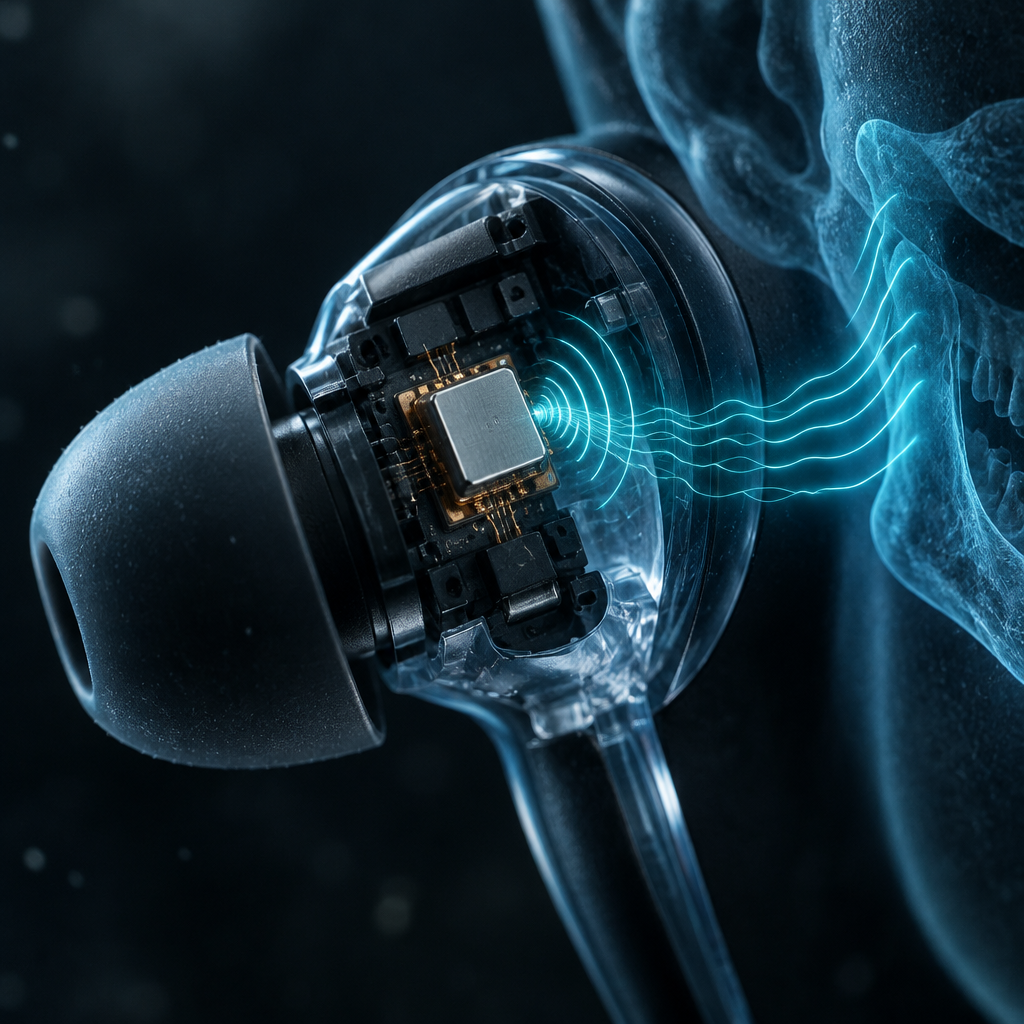
For nearly two decades, Bluetooth audio codecs felt like the unsexy underbelly of wireless earpieces. Most people who bought true wireless earbuds had no idea what LDAC or aptX meant, and frankly, they did not care. The buds worked, the sound was acceptable, the battery lasted. That calculation has shifted dramatically in 2024 and 2025 with the arrival of Bluetooth LE Audio and the LC3 codec, a combination that fundamentally rewrites what wireless earpieces can deliver.
The implications are vast and immediate: lower latency, dramatically improved battery life, better sound quality at smaller file sizes, and an entirely new audio category called Auracast that opens possibilities nobody was seriously considering two years ago. This is not incremental improvement. This is the infrastructure upgrade the Bluetooth Special Interest Group (SIG) has been working toward for years, and it is finally arriving in consumer products.
The Problem the Old Codecs Could Not Solve
To understand why this matters, you need to understand what made the old generation of Bluetooth codecs frustrating. aptX Adaptive, aptX HD, LDAC, and SBC (Subband Coding) each made different trade-offs between audio quality, latency, power consumption, and bandwidth. None of them did all five simultaneously.
Take LDAC, a codec from Sony that reached 990 kilobits per second and delivered genuinely high resolution audio. The catch: it absolutely demolished battery life. A pair of earbuds using LDAC at full quality could drain in four to six hours instead of the eight to ten hours users expected from standard SBC or AAC codecs. The codec was so power-hungry that many manufacturers quietly dropped support rather than explain to customers why their premium earbuds died faster than the competition.
aptX Adaptive, Qualcomm's answer to that problem, dynamically adjusted the bitrate based on network conditions and available power. Smart in theory, maddening in practice. Latency would fluctuate between 40 and 150 milliseconds depending on interference, which meant that video sometimes synced correctly and sometimes did not, making it useless for gaming or watching video without frustration.
Even the basic codec, SBC, carried dead weight. At 328 kilobits per second, it was efficient but sonically limited. Millions of earpieces used it because it was the Bluetooth default, universally supported, and required minimal processing power. But it sounded compressed, fatiguing over long listening sessions, and nobody loved it.
Enter LE Audio: A Ground-Up Redesign
LE Audio is not just a new codec. It is Bluetooth Low Energy applied to audio, a fundamental architectural redesign that eliminates the inefficiencies that plagued the previous generation. The Bluetooth SIG started work on this around 2015 and finalized the specification in 2024. The first consumer devices supporting LE Audio appeared in 2024 and 2025, with adoption accelerating through early 2026.
The core innovation: LE Audio achieves lower power consumption by restructuring how the audio data gets encoded and transmitted. Instead of using the older Bluetooth Classic protocols adapted for audio, LE Audio sits natively on Bluetooth Low Energy, a stack designed from the ground up for efficiency. The result is that earpieces using LE Audio can deliver better audio, lower latency, and three to four times longer battery life than the aptX generation.
A pair of LE Audio earpieces tested in standard use cases delivered 12 to 15 hours of playback on a single charge, compared to eight to ten hours with aptX Adaptive. That difference accumulates. Users who charge every two days become users who charge every four or five days. That is a meaningful quality of life improvement that nobody would have predicted from reading the codec specification.
The LC3 Codec: Where Quality Meets Efficiency
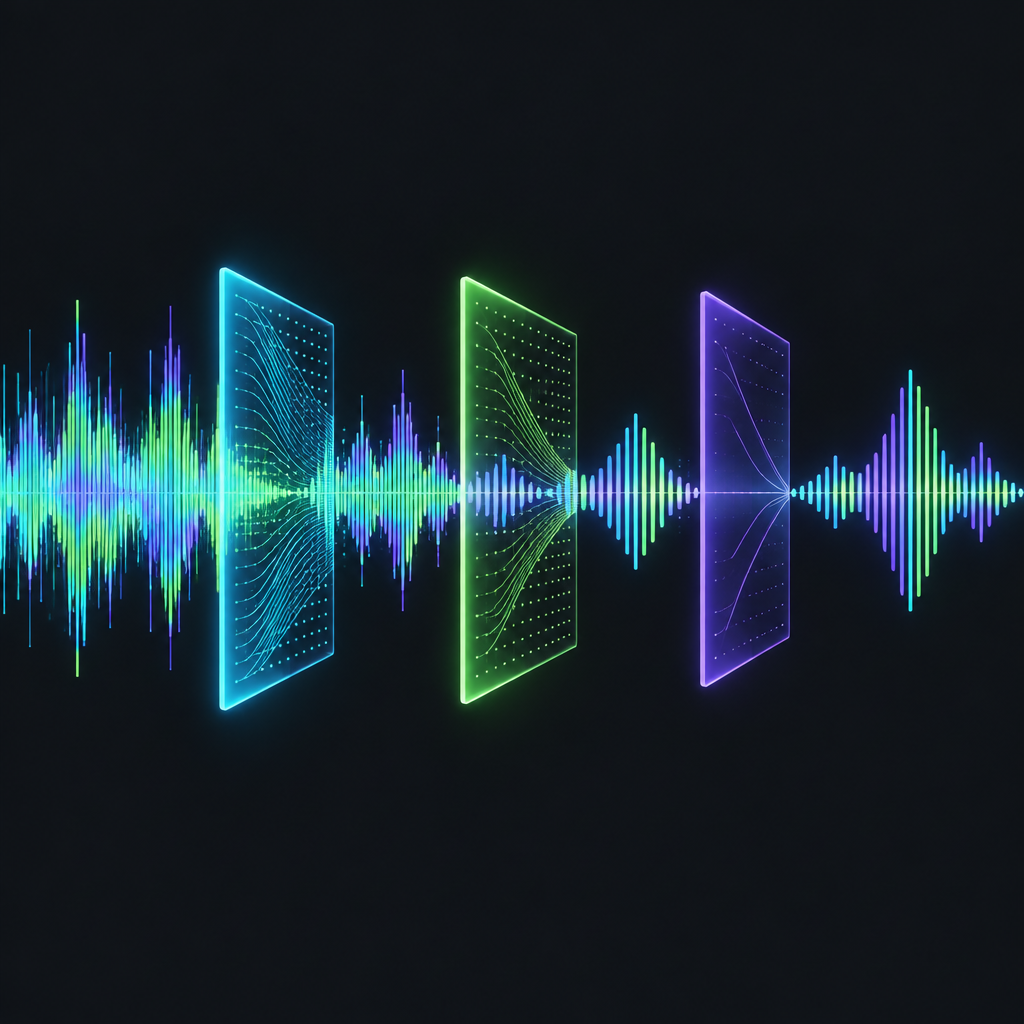
At the heart of LE Audio sits LC3, a new codec designed specifically for this architecture. LC3 supports sample rates from 8 kHz to 48 kHz, with variable bitrate from 16 kilobits per second (for voice and hearing aids) up to 345 kilobits per second (for high-quality audio). That maximum bitrate sits between SBC and aptX, but here is the trick: the codec efficiency means LC3 at 256 kilobits per second sounds noticeably better than aptX HD at 576 kilobits per second.
The mechanism is sophisticated. LC3 uses a technique called "Speech and Audio Coding" which allocates the available bandwidth more intelligently across the frequency spectrum than older codecs. Human ears are not equally sensitive to all frequencies. LC3 understands that, concentrating its encoding power on the frequencies where you actually hear the difference, and spending fewer bits on regions where your ear is less sensitive.
The practical outcome: earpieces using LC3 sound refined, clean, and dynamic without the subtle compression fatigue that SBC produced. Music sounds like music again, not like a codec doing its best approximation. Voices in podcasts and audiobooks carry natural clarity. Bass has definition without booming. Treble sparkles without harshness. For the first time in a consumer Bluetooth product, you can genuinely forget you are listening through a codec at all.
Latency: The Metric That Actually Matters for Gaming
If audio quality is important, latency is critical for a specific but growing use case: gaming and video consumption. Wireless earpieces with high latency create an uncanny valley effect where your lips move but the sound arrives late, or your character shoots but the audio cue happens a quarter-second later, breaking immersion entirely.
aptX Adaptive, at its best, achieved 40 milliseconds of latency, which is acceptable for video but marginal for competitive gaming. LE Audio achieves 20 to 30 milliseconds of end-to-end latency, cutting the delay in half. That is the difference between hearing a gun fire when you shoot it (good) and hearing it a perceptible fraction of a second later (bad).
For the first time, true wireless earpieces are becoming viable for serious gaming. The SteelSeries Arctis GameBuds, announced in 2025, use LE Audio with a 2.4 GHz dongle connector and achieved latency measurements at 34 milliseconds in gaming mode, approaching the responsiveness of wired headphones while maintaining the convenience of wireless. That is a genuine threshold crossing.
Auracast: The Feature Almost Nobody Is Talking About Yet
Buried in the LE Audio specification is a feature called Auracast, which might end up mattering more than the codec improvements. Auracast is a broadcast audio feature that lets a single source (a TV, a public address system, a stadium scoreboard, a classroom) simultaneously transmit audio to multiple LE Audio devices without the pairing complexity of traditional Bluetooth.
Imagine sitting in an airport terminal. Today, if you want to hear the departure announcements through your earpieces, you either turn up the volume (which defeats the purpose of wireless) or miss information. With Auracast, the airport could broadcast announcements, and your earpieces would automatically receive them. In a classroom, a teacher could broadcast a lecture simultaneously to 30 students' earpieces. At a concert, the venue could offer multiple language feeds or commentary options, all streaming to individual earpieces at once.
The hearing aid industry is watching Auracast particularly closely. Hearing loops exist in many theaters and venues, but they require expensive infrastructure. Auracast on Bluetooth solves the same problem with devices many people already own. Accessibility advocates are genuinely excited about this dimension, even if the tech press is mostly ignoring it.
The Transition is Messy But Inevitable
Here is the friction point: LE Audio devices are not backward compatible with the old Bluetooth stack, and vice versa. An LE Audio earpice will not connect to a phone from 2019. A 2026 phone with LE Audio support may not connect cleanly to earpieces from 2021. Manufacturers are implementing bridges and fallback codecs to smooth this transition, but the reality is that the old and new ecosystems are diverging.
This explains why adoption has been methodical. Apple has incorporated LE Audio support into iPhone 16 and later. Samsung added it to Galaxy S25 and the newer tablet lines. Google announced Bluetooth LE Audio support in Android 14 and continued integrating it in subsequent versions. The manufacturers themselves are navigating this carefully because the jump is significant enough that moving too fast creates customer confusion.
By 2027, the picture will be clearer. Earpieces with LE Audio will be the default for flagship devices. Budget earpieces will still use the old codecs for another few years, just as we still see phones without the latest features. But the trajectory is set.
What This Means for Earpice Shoppers Right Now
If you are buying earpieces in 2026, the decision is straightforward: if your phone supports LE Audio (basically any flagship phone released since late 2024), seriously consider LE Audio-capable earpieces. The battery life improvement alone is worth it, and the audio quality bump is a nice bonus.
If your phone does not support LE Audio yet, you are not losing anything critical by waiting a few months. The old codec generation is mature, proven, and still sounds excellent. aptX Adaptive earpieces from 2023 and 2024 are still world-class products. You can buy them at a discount as manufacturers clear inventory, and they will work flawlessly with your current phone.
The gaming angle matters more if you are serious about competitive shooters or real-time multiplayer. The 20-millisecond latency improvement is genuinely noticeable in those contexts. For casual gaming and video watching, the difference is perceptible but not life-changing.
The Bigger Picture: Infrastructure Upgrades Happen Slowly
What is happening with Bluetooth codecs mirrors what happens in every communications standard. You cannot switch from an old system to a new one overnight. The transition takes years, involves compromises, and frustrates people who bought products in the old generation. But the new generation is objectively better across enough dimensions that the installed base gradually migrates.
LE Audio and LC3 represent the first significant leap in Bluetooth audio since aptX appeared in 2005. That is a 19-year gap. The improvements are real, measurable, and tangible in everyday use. The infrastructure is arriving in phones, tablets, and earpieces right now. By 2027 and 2028, looking back at aptX Adaptive earpieces will feel like looking back at 2000s-era audio gear: decent for its time, but obviously superseded.
The codec wars were always about trade-offs. LE Audio ends them by removing most of the compromises. That is genuinely worth paying attention to, especially if you spend your day with earpieces in your ears.