For two decades, Bluetooth audio existed in a parallel universe from hearing aid technology. Hearing aids were medical devices, engineered to clinical standards and locked behind prescriptions and audiologist appointments. Consumer earbuds were entertainment gadgets, optimized for music fidelity and noise cancellation. The two categories rarely spoke to each other. Then Bluetooth LE Audio arrived and started collapsing that boundary. In 2026, that collapse is accelerating into something unprecedented: mass-market earbuds that work as legitimately powerful hearing assistance devices.
The shift began quietly. Apple dropped FDA clearance for AirPods Pro 3 as an over-the-counter hearing aid. Phonak, the 75-year-old hearing aid manufacturer owned by Sonova, released Sphere Infinio, earbuds with full hearing-aid capability. GN Hearing, another industry titan, pushed Auracast broadcast audio into office environments so that people with hearing loss could unmute TV meetings that were previously silent to them. None of this required reinventing the wheel. All of it became possible because LE Audio fixed the architecture that Classic Bluetooth never had.
The Codec That Changed Everything
The practical pivot point is the LC3 codec, a new audio codec purpose-built for LE Audio. If you have ever dug into Bluetooth audio specs, you know the baseline: Classic Bluetooth uses SBC, a codec that dates to the 2000s. SBC is simple, reliable, and it works. It is also power-hungry relative to what modern hardware can achieve. To transmit CD-quality audio over Classic Bluetooth, you need to burn battery like a desk lamp. To save power, manufacturers compress quality down to a point where many users notice degradation, especially in speech clarity. That tradeoff shaped the entire market for fifteen years.
LC3 demolishes that constraint. Fraunhofer IIS, the research institute behind MP3 and AAC, spent years optimizing LC3 to deliver higher audio quality at lower bit rates than SBC. The listening tests are conclusive: LC3 at 32 kbps sounds better than SBC at 64 kbps. At 48 kbps, LC3 achieves near-transparent quality for speech. That is not hype; that is the published research. The result for earbuds is staggering. A device can stream high-quality audio, keep the Bluetooth radio powered at a fraction of the previous draw, and either make the battery last three or four times longer, or shrink the battery entirely and make the earbud smaller and lighter.
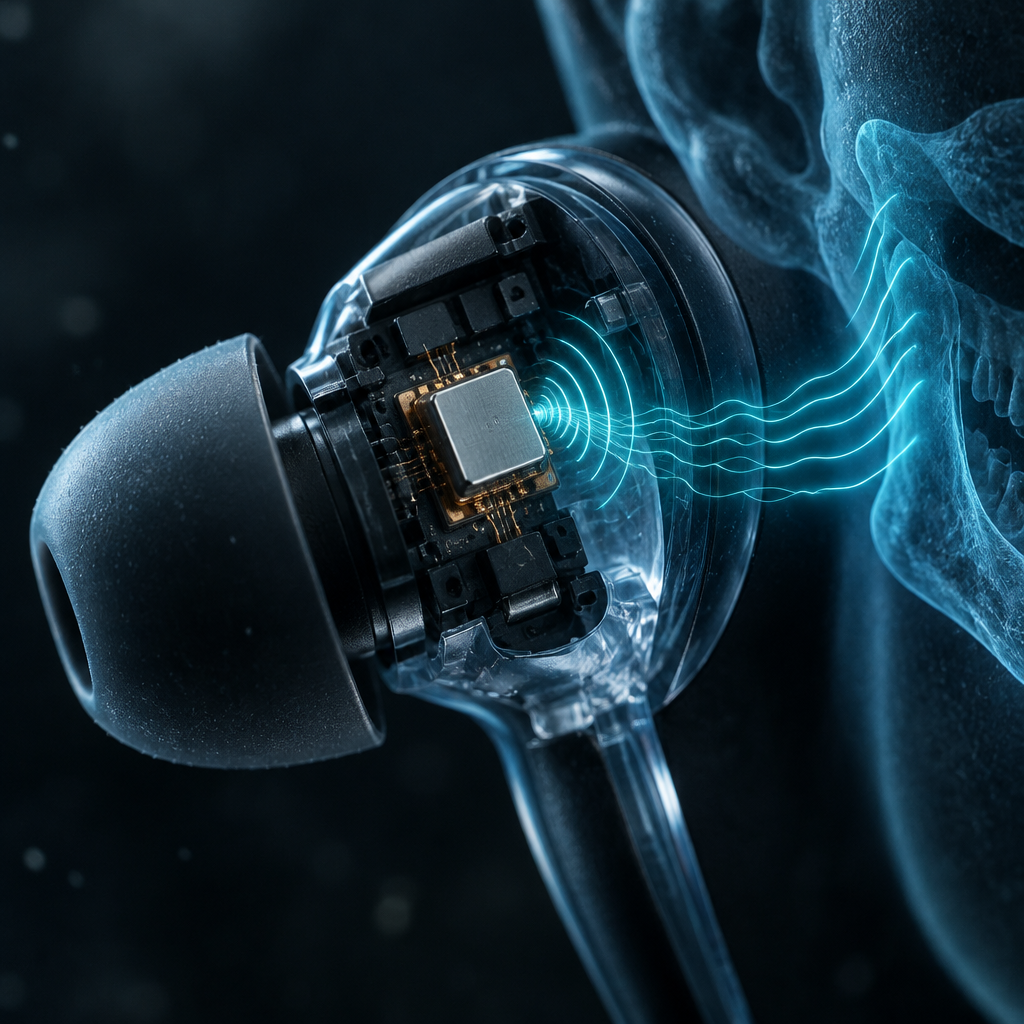
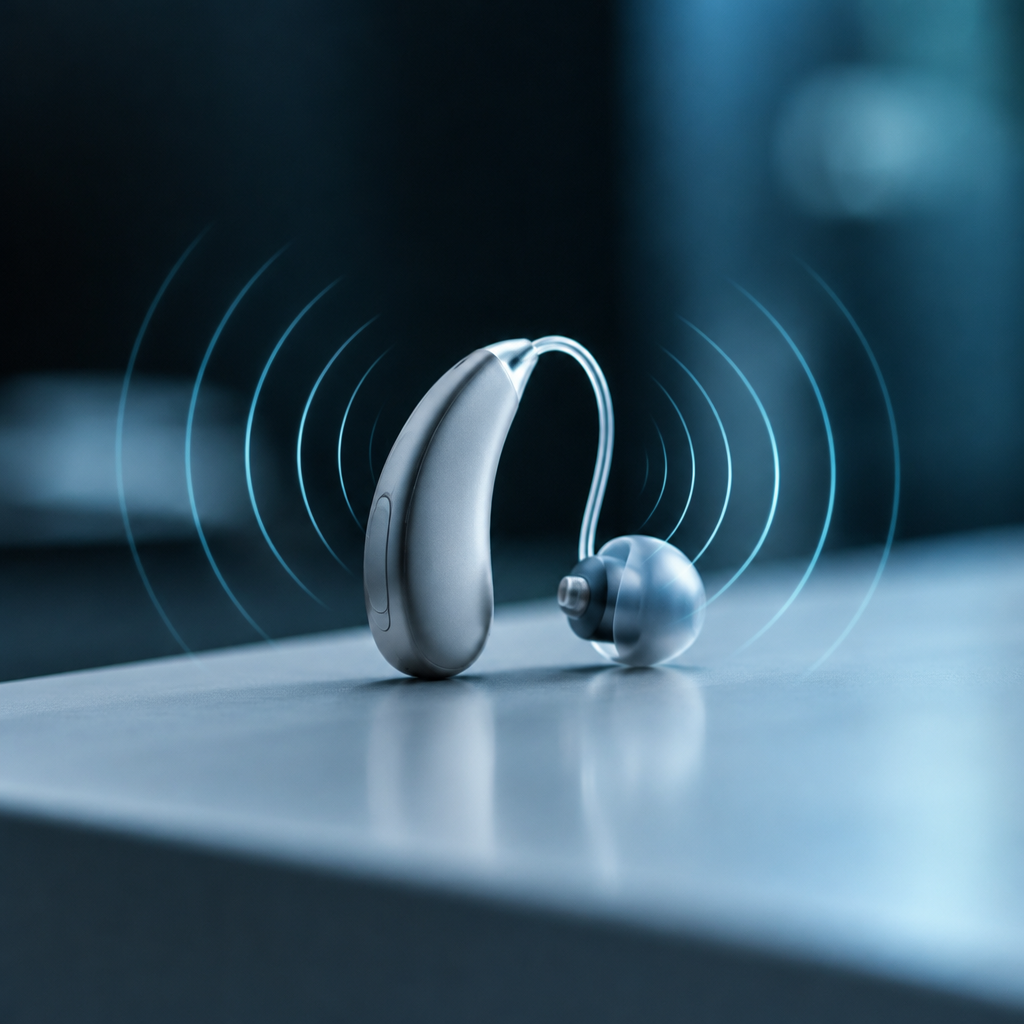
For hearing aids, this codec advantage is transformative. Hearing aids sit in or behind your ear, powered by button-cell batteries roughly the size of a lentil. Battery drain has always been a limiting factor. With LC3, manufacturers can deliver streaming audio directly to the hearing aid processor without killing the battery in two hours. Speech clarity improves because the codec is engineered for intelligibility. And the bit-rate efficiency means that multiple independent audio streams can be transmitted simultaneously without overwhelming the available bandwidth, a feat that feeds directly into hearing-aid features like directional microphone processing and binaural synchronization.
Multi-Stream Audio: The Hearing Aid Feature You Did Not Expect From Earbuds
Truly wireless stereo earbuds have an architecture problem that audio engineers have been wrestling with since TWS became mainstream. Each earbud contains a full Bluetooth radio and processor. Both earbuds are paired to the same phone. Naively, you might think the phone transmits stereo audio as a single stream split into left and right channels, with both earbuds receiving both channels. That would double the radio traffic and destroy battery life, so nobody does that. Instead, the phone transmits left audio to the left earbud and right audio to the right earbud, a technique called channel separation or asymmetric streaming. It saves power, but it introduces latency and synchronization challenges. Each earbud pulls audio at slightly different timing because the radio hops and connection parameters are different. With music, you might not notice. With video, lip-sync can drift. With voice calls, the experience falls apart.
LE Audio's multi-stream feature enables something radically different. The phone can transmit multiple independent synchronized streams, and each earbud can receive whichever stream it needs. The obvious use case is stereo: send a left stream and a right stream, and both earbuds get both streams so they can choose the best one based on signal strength and compensate for timing drift. But hearing-aid manufacturers have noticed a deeper advantage. With multiple streams, you can transmit a wireless microphone signal for directional processing, a separate reference signal for noise cancellation, and independent audio for each ear simultaneously. In a hearing-aid context, that means one ear can focus on a conversation with your partner while the other ear listens for environmental warnings. A person with asymmetric hearing loss can get different processing in each ear. Auracast broadcast audio can feed one stream to the hearing aids while another stream delivers a personal audio track. The combinatorial flexibility opens an entirely new design space.
Auracast and the Right to Hear Publicly
Auracast is the broadcast audio mode that LE Audio introduced, and it is quietly revolutionary for accessibility. Picture this: you are in a restaurant with a TV on mute. A person with hearing loss wants to follow the conversation on screen. Classically, they are stuck. Auracast flips that dynamic. The TV (or any audio source) can broadcast its audio stream openly. Any person within range with a compatible device can receive it and listen at their own volume, privately. The TV never sends audio directly to one person; it simply makes the stream available, and interested listeners opt in. No pairing required. No special setup. No awkward tech support conversation in the middle of the dining room.
GN Hearing has already deployed this in office environments. When a meeting is streamed to a TV, GN's hearing aid users can receive the audio directly on their devices. The clarity goes up, the volume is private, and the social friction disappears. Multiply that across airports, train stations, classrooms, and concert halls. An accessibility feature that was previously expensive and required advance setup becomes invisible infrastructure.
Apple AirPods Pro 3 and the Normalization of Hearing Tech
Apple's move to FDA-clear AirPods Pro 3 as an over-the-counter hearing aid is strategically significant beyond the product itself. Apple has never framed earbuds as medical devices. AirPods are for music. For calls. For Siri. The idea that they could also serve a hearing-assistance function makes them impossible to stigmatize. A teenager can wear AirPods Pro 3 in high school without anyone knowing they are using them for hearing correction. That normalization matters more than the raw specs. Hearing loss stigma is real, and tools that make assistive technology indistinguishable from consumer tech remove a barrier to adoption. Apple's move signals that major consumer electronics manufacturers are betting on LE Audio and are willing to place hearing-assist functionality into mainstream products.
Phonak's approach with Sphere Infinio is the opposite vector but the same destination. Infinio looks like a high-end earbud, not a hearing aid. It charges in a pod. It has touch controls. But underneath, it is a full-featured hearing-aid platform with prescription-grade processing, powered by Sonova's proprietary technology and integrated with LE Audio native streaming. Audiologists can program it with as much precision as a $6,000 behind-the-ear device. The difference is you can also just listen to music on it. The product category itself is dissolving.
The Remaining Barriers
LE Audio earpieces are not flawlessly ubiquitous yet. Phone support is patchy. Older Android devices do not have LE Audio drivers. iPhones got comprehensive LE Audio support in iOS 17, but the rollout of compatible apps was slower than Apple or the Bluetooth SIG anticipated. The LE Audio specifications themselves are feature-complete, but hardware manufacturers are still ramping production. Supply chains that have been optimized for Classic Bluetooth for fifteen years do not pivot overnight.
There is also a cost question. Early LE Audio hearing aids are more expensive than they should be relative to the technical improvements, partly because manufacturers are still learning how to optimize for the new architecture and partly because the regulatory path for OTC hearing aids is still being clarified. As volume increases, pricing will normalize.
Why This Matters in 2026
The convergence of LE Audio and hearing-aid technology is not just an incremental refinement. It is a restructuring of an entire industry. Hearing loss affects nearly 1.5 billion people globally, and most go untreated because hearing aids are expensive, socially stigmatized, and require ongoing professional management. Consumer earbuds sold with hearing-assistance capability, powered by a better codec and designed to be invisible in form factor, have the potential to move the needle on that number. You will see more hybrid devices, more OTC options, and more integration between entertainment and accessibility. The earbud market will fragment into use-case-optimized variants. By 2027, the question 'are these earbuds or hearing aids?' will stop making sense. They will just be earpieces that do whatever your life requires.