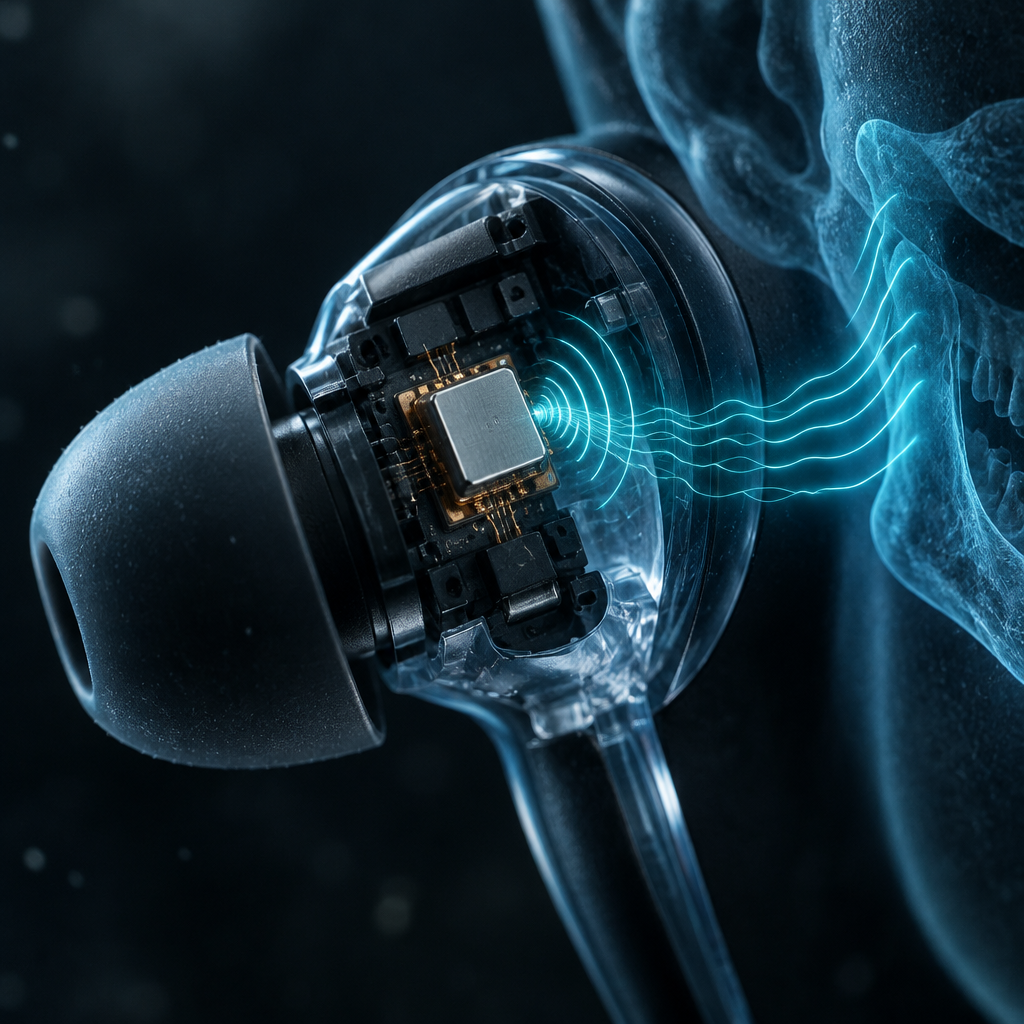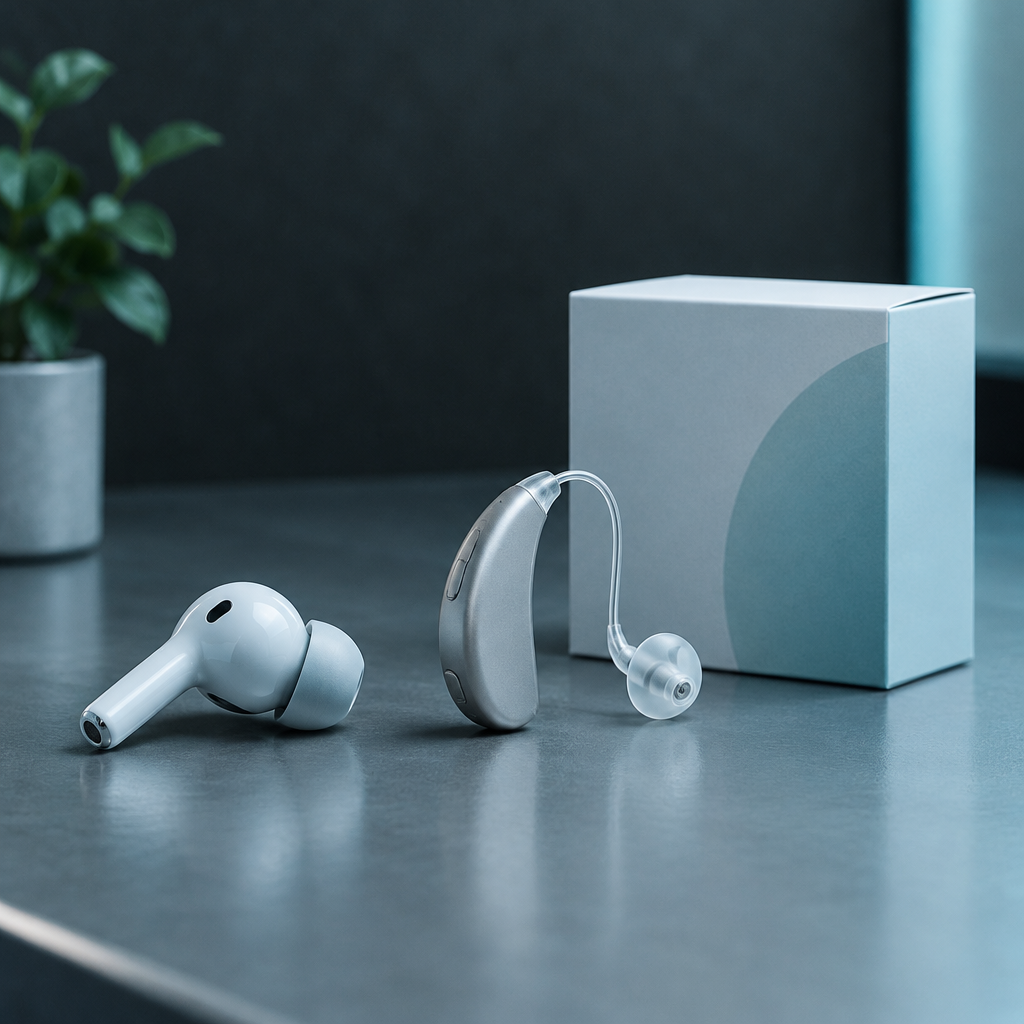
Something strange happened in 2026 that nobody in the audio industry wants to frame honestly: your wireless earpieces and your grandfather hearing aids are becoming the same product. Not similar. Not converging. The same.
The Over-the-Counter Hearing Aid Act passed in 2022. The FDA published its final rule that same year. But the real accelerant, the thing that made the categories bleed into each other so completely that marketing departments are running out of lane dividers, was Bluetooth LE Audio. Specifically, the part of LE Audio nobody was asking for in 2023 but everyone needs in 2026: Auracast broadcast audio and the hearing assistance profile baked directly into the spec.
We are now living in a world where Apple shipped a clinical-grade hearing aid feature in AirPods Pro 2 via a software update, where Samsung calls its Galaxy Buds 4 hearing enhancement a "lifestyle feature" rather than a medical one, where Jabra spent a decade making enterprise headsets and pivoted to OTC hearing aids under the Jabra Enhance brand before their parent company shut down the entire consumer earbud division in 2025, and where a Chinese startup called ELEHEAR is shipping AI-powered OTC devices with 50 dB of gain for under three hundred dollars. The labels are breaking down. Here is why the engineering actually matters and what it means for the earpieces you buy in 2026.
The FDA Rule That Started Everything
Before October 2022, you could not buy a hearing aid in the United States without a prescription, a hearing test, and a professional fitting. The devices themselves were regulated as Class I or Class II medical equipment, distributed through audiologists and hearing clinics, and priced accordingly. Average cost for a pair: four thousand to six thousand dollars. Not covered by Medicare. Not covered by most private insurance.
The OTC rule created a new regulatory category: air-conduction hearing aids for adults with perceived mild-to-moderate hearing loss, sold directly to consumers, no prescription, no audiologist visit. The FDA set output limits (111 dB SPL maximum, 120 dB SPL for devices with input-controlled compression), required labeling about when to see a doctor, and otherwise got out of the way.
What this meant for consumer audio companies was straightforward: you already know how to build tiny speakers that fit in ears, you already have DSP pipelines for noise reduction and equalization, you already have Bluetooth chipsets connected to phone apps for configuration. The regulatory gap between your existing product and a hearing aid was smaller than the competitive gap between your noise cancellation and Sony. So the market responded exactly the way anyone paying attention would have predicted: everybody jumped in.
LE Audio and the Technical Bridge
Bluetooth Classic, the version used by every wireless earpiece since the first pair of Apple AirPods in 2016, was never designed for hearing assistance. It is a point-to-point connection protocol with good bandwidth and acceptable latency for music streaming, but it drains battery aggressively and cannot broadcast one audio stream to multiple devices simultaneously. For a hearing aid use case, where you want a single audio source (a lecture hall PA, a theater sound system, an airport gate announcement) to reach dozens or hundreds of individual devices, Bluetooth Classic is useless.
LE Audio introduces the LC3 codec, which delivers equivalent or better audio quality than Classic SBC at roughly half the bitrate. Lower bitrate directly translates to lower power consumption, which is why modern LE Audio earpieces can stream audio for eight or nine hours instead of five or six. But the genuinely transformative piece is Auracast.
Auracast is a broadcast audio profile: one transmitter, unlimited receivers within range. A single source can stream audio to any number of LE Audio devices tuned to the same broadcast channel. This is the architecture that public venues, houses of worship, transit systems, and theaters are beginning to adopt in 2026 because it solves the assistive listening problem without requiring dedicated hardware that nobody carries. Instead of borrowing a specialized receiver from the box office, you pair your own earpieces to the Auracast stream. The same device you use for phone calls and podcasts becomes a hearing augmentation system when you walk into a calibrated environment.
This is not theoretical. Bluetooth SIG reports that Auracast transmitter deployments in public venues are accelerating through 2026, particularly in Japan, parts of Europe, and select US airports. The installed base of LE Audio compatible devices, including phones that can act as Auracast assistants, crossed 2.5 billion units globally in early 2026 according to ABI Research. The infrastructure is being built for a use case that blurs the line between assistive technology and everyday audio, and the result is that the line stops mattering.
Apple Changed the Conversation in 2024
When Apple received FDA clearance for the Hearing Aid Feature on AirPods Pro 2 in September 2024, the implications landed harder than the feature itself. Here was the world highest-volume consumer earbud manufacturer, the company that defined the true wireless category, shipping a software update that turned an existing product into a regulated medical device. No new hardware. No separate product line. No hearing clinic channel. Just a firmware build that enabled a clinically validated hearing test, a personalized audiogram, and dynamic amplification tuned to the user specific hearing profile.
The test itself, conducted entirely through the AirPods and an iPhone, is a modified pure-tone audiometry protocol that plays tones at varying frequencies and volumes, asks the user to tap when they hear a sound, and builds a hearing profile from the responses. The results are stored in the Health app and applied to the AirPods transparency and media playback modes, boosting frequencies where the user shows loss while maintaining natural perception where hearing is normal.
The FDA clearance covered mild-to-moderate hearing loss, the exact same range targeted by the OTC rule. Apple did not create a new category. They simply walked an existing category product across a regulatory line that the FDA had redrawn two years earlier. The effect on the market was immediately apparent: if hearing aids can be a free software update on mass-market consumer earbuds, the four-thousand-dollar clinic model has a problem.
The Real State of OTC Earpiece-Hearing Aid Devices in 2026
The market now splits into three rough tiers. At the top, Apple and Samsung ship hearing features as part of premium earbud ecosystems. AirPods Pro 2 (and presumably the Pro 3, whenever Apple decides to release them) include hearing aid functionality that Consumer Reports testing found comparable to entry-level prescription devices, albeit with battery life limitations inherent to streaming earbuds. Samsung Galaxy Buds 4 Pro include Adaptive Ambient Sound that functions similarly, though Samsung has been more restrained in marketing it as a hearing aid equivalent.
In the middle tier, dedicated OTC brands like Jabra Enhance (before the wind-down), Eargo, Lexie, and Audien sell devices that look increasingly like consumer earbuds but emphasize hearing features in their software. The Eargo SE, for example, is invisible in the ear canal and uses a proprietary fitting algorithm rather than an audiogram-based approach. These devices cost between three hundred and eighteen hundred dollars, well below clinic pricing, and include support apps that let users adjust their own settings without professional intervention.
The bottom tier, and arguably the most interesting from an engineering perspective, is the direct-to-consumer budget segment. ELEHEAR Beyond, released in late 2025, includes VocClear AI noise suppression with 24 dB of ambient attenuation, 50 dB of maximum gain, Bluetooth LE Audio with Auracast support, and a self-administered hearing test, all for under three hundred dollars. Devices like the iWANTEK AI Earbuds Pro add real-time translation and AI meeting summaries on top of hearing enhancement, which is either a brilliant feature integration or deeply unnecessary, depending on how many languages you need translated during a conference call.
Where This Gets Complicated
The convergence creates problems that neither the consumer electronics industry nor the medical device industry has fully addressed. Battery life is the most obvious: true wireless earpieces with active DSP for hearing enhancement, always-on transparency, and LE Audio streaming burn through their batteries in four to six hours. Traditional prescription hearing aids using zinc-air batteries last days, sometimes a full week. For someone who actually relies on amplification to function, a device that dies by lunchtime is not a medical instrument. It is a toy with a good feature set.
Stigma is the second problem, though it is fading. Traditional hearing aids carry a perception of age and disability that has historically kept people with measurable hearing loss from seeking treatment. Consumer earbuds, by contrast, are worn by literally everyone, from teenagers on the subway to executives on Zoom calls. Putting hearing assistance inside the same form factor reduces the psychological barrier to adoption, which is a genuine public health win. But it also means the device is subject to the two-to-three-year replacement cycle of consumer electronics, which is a terrible fit for a medical necessity.
The third problem is regulatory gray area around features that walk up to the line of clinical hearing aids without crossing it. Samsung Ambient Sound is marketed as a hearing enhancement for situations like conversations in noisy restaurants, not as a hearing loss correction device. But the underlying DSP is doing essentially the same thing: frequency-specific gain, directional beamforming for speech, compression to keep transient sounds comfortable. The difference between hearing enhancement and hearing correction is a marketing claim, not an engineering distinction. As the FDA and comparable international regulators figure out how to classify devices that refuse to stay in their lane, the industry is moving faster than the rulemaking.
What You Should Actually Buy in Summer 2026
If you have diagnosed hearing loss, start with an audiologist. No OTC device, including Apple AirPods Pro, replaces a professional evaluation. Mild-to-moderate loss in the typical speech frequencies can often be addressed by OTC options, but asymmetric loss, sudden onset, tinnitus in one ear, or hearing loss accompanied by dizziness all require medical evaluation. The FDA warning labels exist for a reason.
If you are a consumer looking for earpieces that happen to include hearing-aware features, the landscape in summer 2026 is straightforward. AirPods Pro 2 remain the most polished implementation of hearing assistance in a consumer form factor, with the caveat that they require an iPhone and the battery life is marketing optimism rather than engineering reality. Samsung Galaxy Buds 4 Pro are the Android equivalent with comparable features. For dedicated OTC devices, the Eargo SE and Lexie B2 Plus Powered by Bose represent solid mid-tier choices with actual hearing aid company expertise behind their tuning.
The budget tier, led by ELEHEAR and iWANTEK, delivers genuine value for users who need amplification and noise management without spending a thousand dollars. The AI features are real even if the marketing overstates them, and the inclusion of LE Audio and Auracast at the three-hundred-dollar price point would have been science fiction in 2022.
The bigger point, the one the industry does not say out loud, is that the category is disappearing. By 2028, the distinction between consumer earbuds and OTC hearing aids will be primarily regulatory labeling, not functionality. Every premium earpiece will include hearing assistance. Every hearing aid will look and connect like a consumer earbud. The technology has converged. The regulators are catching up. The only remaining question is whether the battery life and the business models can converge as quickly as the signal processing already has.