The Two Faces of Your Earbuds
When you open your phone's Bluetooth settings and search for nearby devices, your new earbuds might show up twice. Not because a firmware update went sideways. Not because you have a ghost pairing lingering from an old phone. Because the earbuds are, in a very literal protocol-level sense, two different devices.
One face speaks Classic Bluetooth, the BR/EDR radio that has powered wireless audio since 2003. It carries the A2DP profile for stereo music, the HFP profile for phone calls, and the AVRCP profile for play and pause controls. The other face speaks LE Audio, the new stack built on Bluetooth Low Energy, carrying the LC3 codec over isochronous channels and exposing a completely different set of profiles: BAP, TMAP, HAP, and the rest of the suite the Bluetooth SIG finalized in mid-2022.
Both faces share one physical radio. Both faces are awake. And until every phone your earbuds might encounter supports LE Audio, both faces need to stay on.
What Dual Mode Actually Means Inside the Chip
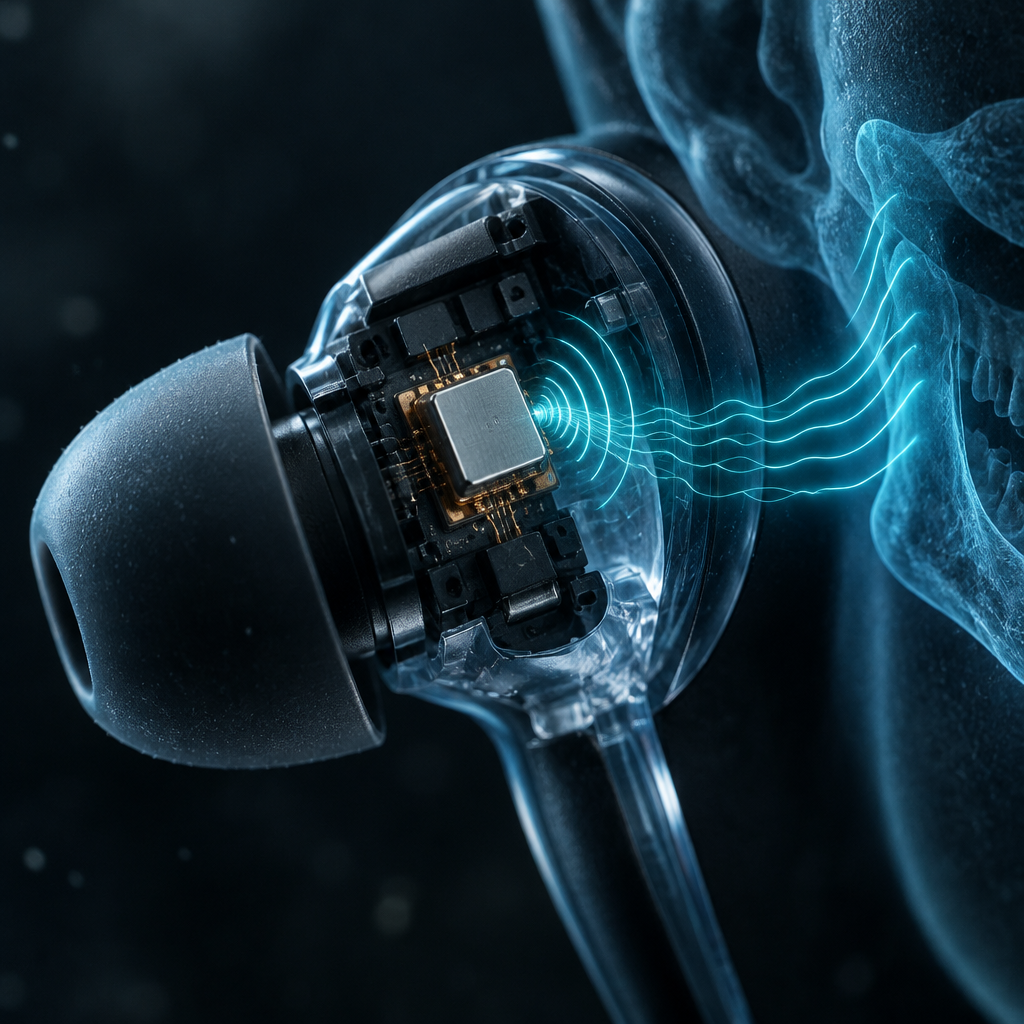
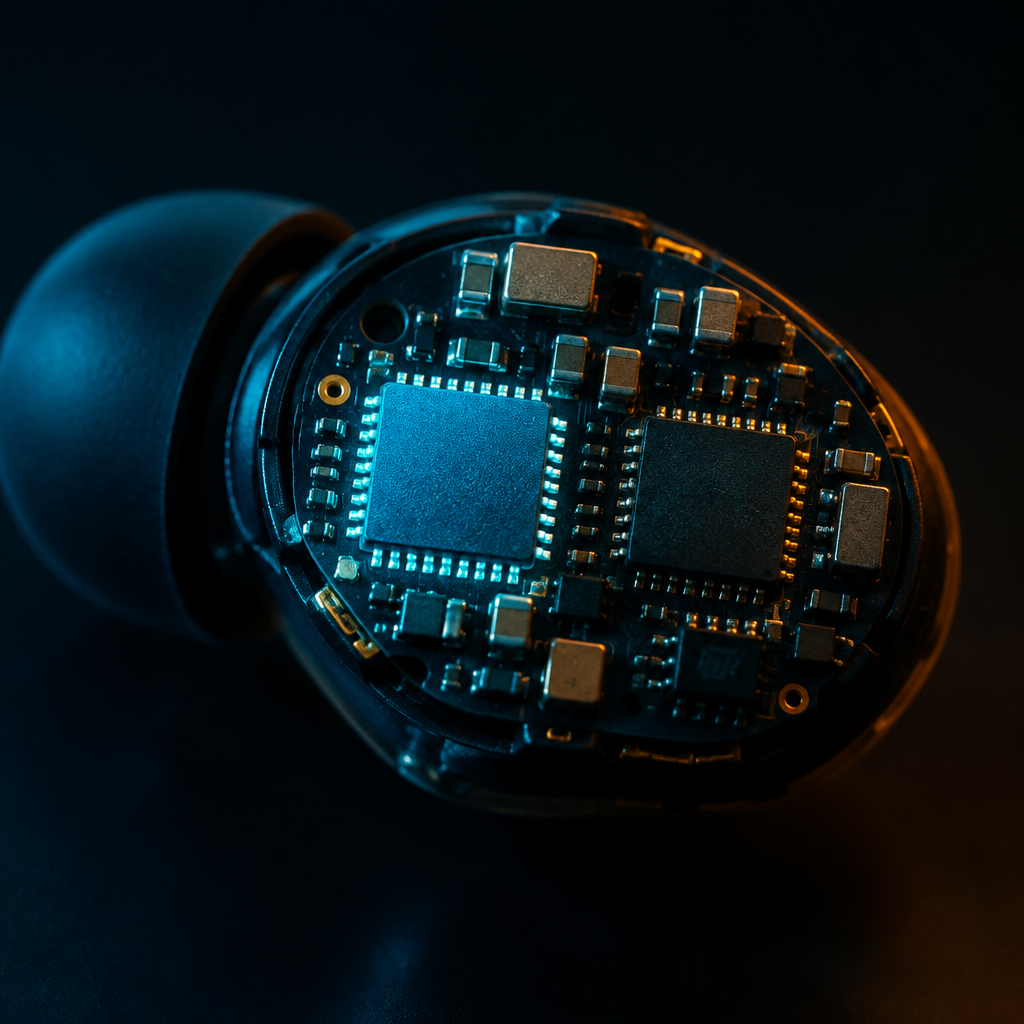
A dual-mode Bluetooth chip is not two radios. It is one 2.4GHz transceiver with a scheduler that time-slices between two completely different protocol stacks. On the Classic side, the radio hops across 79 channels in 625-microsecond slots using frequency-hopping spread spectrum. On the LE side, it hops across 40 channels using a different, more deterministic scheme with its own advertising and connection event timing.
The link layer controller inside the chip manages the handoff. When a Classic ACL link is active, say your earbuds are connected to your laptop for A2DP, the controller reserves specific slots for Classic traffic. Between those slots, it interleaves LE advertising events, LE connection events, or LE scan windows. This is time-division multiplexing at the microsecond level, and it is invisible to the user and, mostly, to the application layer above it.
The cost is not free. Every slot the radio spends maintaining a Classic connection that is not actively streaming audio is a slot it cannot use for LE Audio, for scanning, or for sleeping. In a tiny earbud with a battery the size of a vitamin capsule, sleep matters more than almost anything else.
The Discovery Problem: SDP and GATT, Side by Side
When your phone discovers earbuds, it probes them over two entirely separate service discovery mechanisms.
Classic Bluetooth uses SDP, the Service Discovery Protocol. The earbud publishes a list of supported profiles: A2DP with SBC and maybe AAC or aptX, HFP with its codec lists, AVRCP with its control commands. These are queried over an L2CAP channel during the Classic pairing or connection setup.
LE Audio uses GATT, the Generic Attribute Profile. The earbud exposes a completely separate service tree. The Published Audio Capabilities Service, or PACS, advertises which LC3 configurations the earbud supports: sampling rates, frame durations, channel counts, and bitrate ranges. The Audio Stream Control Service, or ASCS, manages the actual stream setup, including configuring the codec, setting the quality of service, and enabling the stream. These GATT services have no relationship to the SDP records. They live in different parts of the device firmware, are queried by different layers of the phone's Bluetooth stack, and are maintained by different software modules.
The earbud carries both registries at all times. If a phone only supports Classic, it reads the SDP records and never touches GATT. If a phone supports LE Audio, it reads the GATT services and may never open an A2DP connection. But the earbud does not know which kind of phone it will meet until the connection forms, so it advertises both ways simultaneously.
This is why some phones show a single entry for modern earbuds, the OS merges the Classic and LE advertisements into one logical device, and others show two. Android has gotten better at merging; some OEM skins still have not. iOS handles it cleanly because Apple controls both the operating system and the earbuds. But the underlying cause is protocol diversity that the user interface has to paper over.
The Power Bill for Keeping a Ghost Alive
Here is where the engineering gets uncomfortable.
A dual-mode earbud that is streaming music over LE Audio, with a Connected Isochronous Stream to each bud, still typically maintains a Classic ACL link to the phone. Why? Because the phone might receive a call, and the call must route over HFP, which is a Classic Bluetooth profile. LE Audio has no HFP equivalent in widespread use yet. Telephony over LE Audio exists in the TMAP specification, using bidirectional CIS for voice, but phone operating systems have barely begun to route calls through it. So the earbud holds both links open: two CISes for LE Audio streaming, plus a Classic ACL link sitting idle, waiting for a call that may never come.
An idle Classic ACL link is not free. It requires periodic wakeups to maintain the connection supervisor timer, keep the L2CAP signaling channel alive, and respond to any queries from the phone. Each wakeup turns the radio on, burns power, and steals a slot from the LE scheduler. On an earbud with a 50 milliamp-hour battery, the overhead of a dormant Classic connection alongside an active LE Audio session is not theoretical. It shortens runtime in a way that shows up in battery benchmarks, though chipset vendors do not publish exact figures.
Chipset makers have been working on this. Qualcomm's QCC308x series and the newer S7 Pro Gen 1 platform both support aggressive power gating. When the Classic link is idle, the controller can minimize its active window to just enough to keep the supervisor timer from expiring, sometimes as little as a few hundred microseconds every several seconds. But the link cannot be fully dropped without losing HFP, and HFP is non-negotiable for a product that wants to be called earbuds.
The Negotiation That Should Be Simple But Is Not
When a modern phone connects to a dual-mode earbud for the first time, a negotiation happens that most users never see. The phone's Bluetooth stack probes both the SDP and GATT registries. It discovers that the earbud supports both A2DP and BAP. Then it has to choose which one to use.
The decision should be straightforward: prefer LE Audio. It offers lower latency, better codec efficiency, and multi-stream. But it is not that simple. The phone's operating system may not support LE Audio at all. Even if the hardware does, the OS audio routing layer may not be wired for LE Audio's isochronous streams. Windows 11 added LE Audio support but only for specific codec configurations. Android delegates the actual audio routing to the vendor's audio HAL, which means a Samsung phone and a Pixel phone may handle the same earbuds differently. iOS has LE Audio support but only for AirPods Pro 2 and a limited set of certified third-party earbuds.
So the phone falls back to A2DP. The earbud, which has been advertising LE Audio capabilities via GATT and maintaining the necessary advertising events, now commits to a Classic A2DP session. The LE Audio stack does not shut down. It stays resident, continuing to advertise, in case the phone or another device wants to switch. More power. More slots. More wakeups.
And in a twist that makes the problem three-dimensional instead of two, some premium earbuds also carry a third radio: Wi-Fi. Qualcomm's S7 Pro Gen 1 platform introduced micro-power Wi-Fi for near-lossless audio streaming over its XPAN, or Expanded Personal Area Network, technology. That Wi-Fi radio shares the same 2.4GHz band as both Bluetooth stacks. The coexistence problem, already a scheduling dance between Classic and LE, now becomes a three-way arbitration between Classic slots, LE connection events, and Wi-Fi contention windows. The controller has to ensure none of them collides. Every collision is a retransmission. Every retransmission is power.
When the Ghost Can Finally Leave
The industry's answer to all of this is simple to state and hard to execute: stop shipping Classic. When every phone, laptop, car, and television that a consumer might pair with supports LE Audio, earbuds can drop the BR/EDR radio entirely, collapse to a single GATT-based service tree, and reclaim the slots that Classic was borrowing.
Nordic Semiconductor has been pushing this vision hard. Their nRF54L series chips are LE-only, designed for hearing aids and low-power earbuds where the Classic stack was never needed in the first place. These chips do not carry BR/EDR at all. No SDP records. No A2DP fallback. No idle HFP link. Just LE, GATT, isochronous channels, and the full LE Audio profile suite. For hearing aids, which never needed Classic because hearing aids were never connecting to a 2005 car stereo, this is clean and obvious.
For mainstream consumer earbuds, the reality is different. Qualcomm's latest earbud chips are dual-mode because their customers, the earbud brands, demand compatibility with the billions of Classic devices still in pockets, cars, and gyms. A pair of earbuds that cannot connect to a three-year-old Android phone or a five-year-old laptop is a product that collects returns. The Bluetooth SIG's own forecasts suggest that Classic and LE Audio will coexist in new products for at least another five years, possibly longer.
Five years of dual-mode earbuds. Five years of two stacks on one battery. The ghost of Bluetooth Classic is going to be paying rent for a while.
The engineering is not glamorous. It is not a new codec or a flashy feature you can demo at a trade show. It is the quiet, unglamorous work of keeping two protocols from stepping on each other inside a device the size of a jellybean, and paying for it in milliamp-hours that nobody will ever miss until they are gone.