Why Your Earbuds Are Getting Their Own Brain
For most of the Bluetooth era, earbuds were dumb speakers at the end of a wireless pipe. The phone did the heavy lifting. The earpieces handled decoding, a little bass boost, maybe some rudimentary noise gate. Anything resembling intelligence, whether noise cancellation adaptation, voice isolation, or language translation, lived on the phone or on a distant server. The earbud was a peripheral. It received instructions and produced sound.
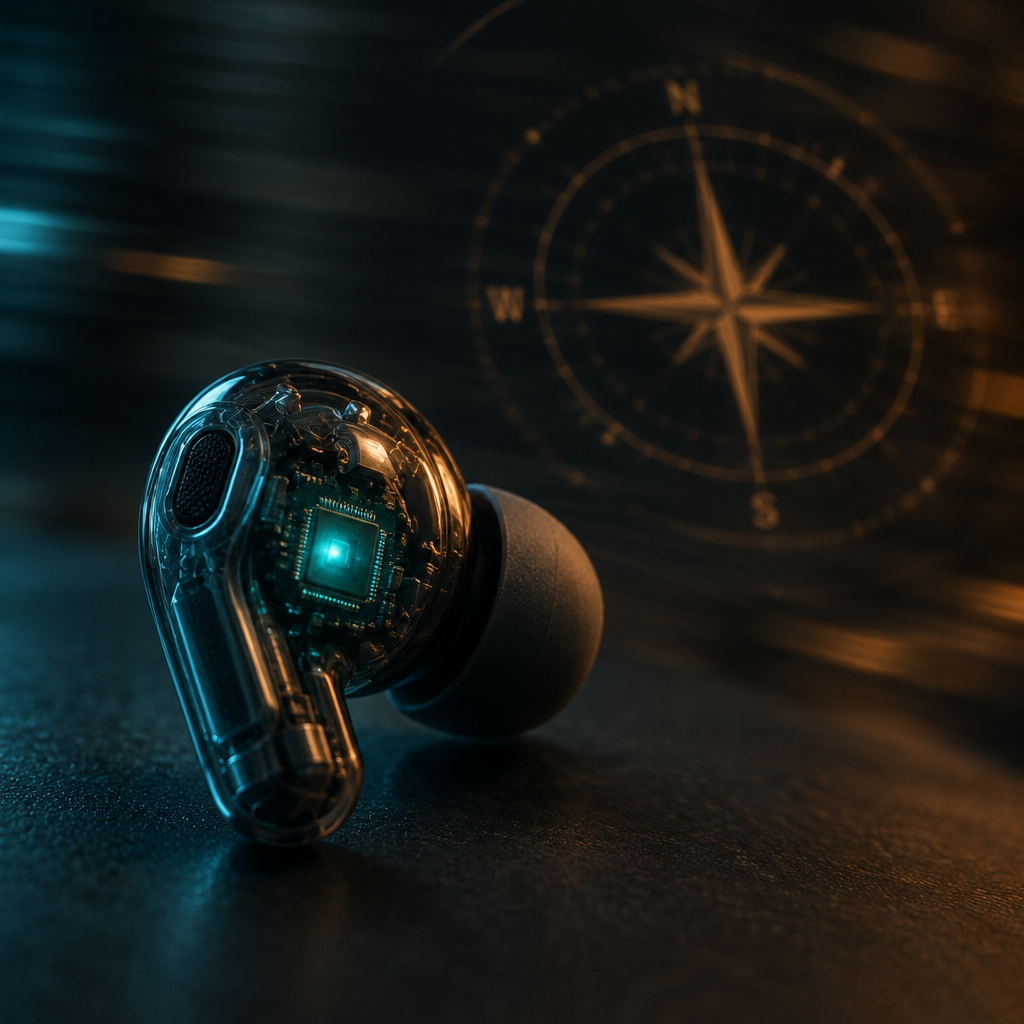
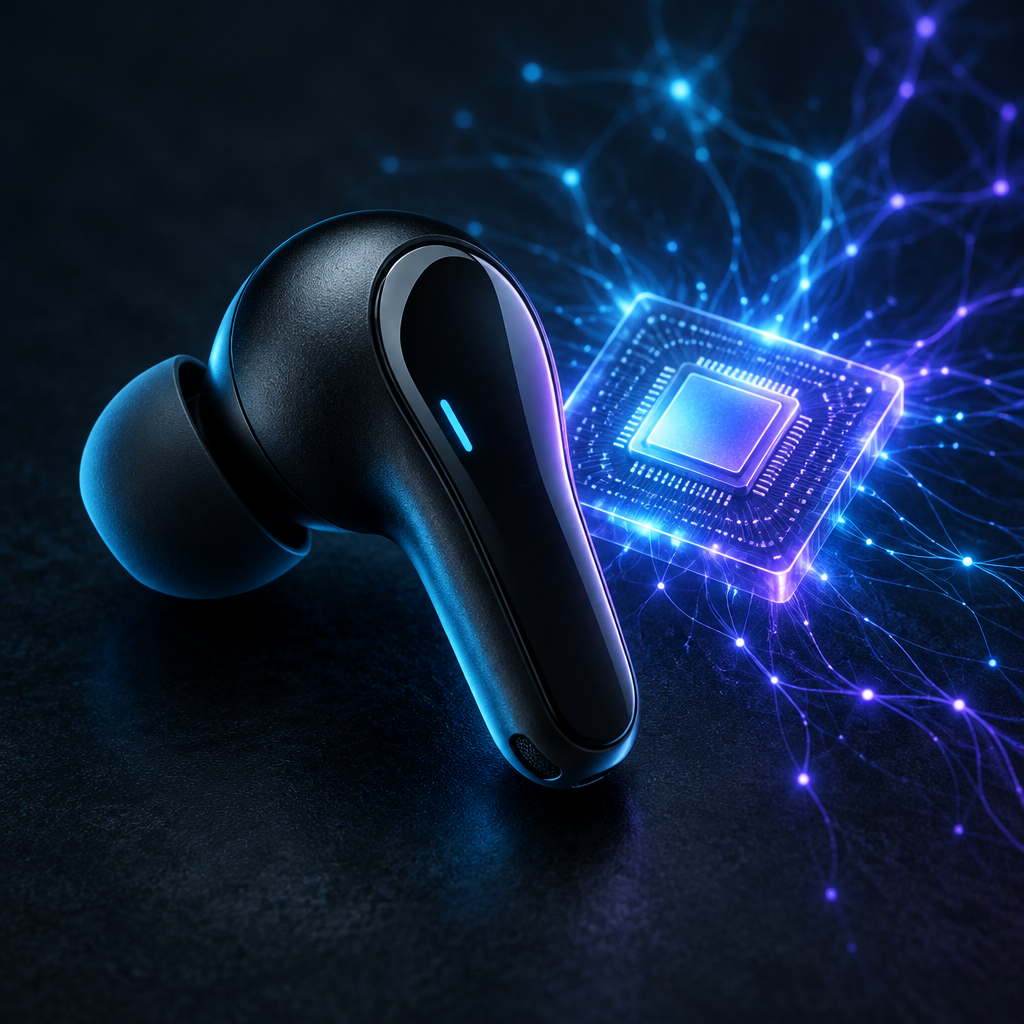
That arrangement is breaking apart. The newest earbuds carry their own silicon designed specifically for machine learning workloads. Apple's H2 chip includes a neural engine rated at 15 billion operations per second. Qualcomm's S7 Pro platform packs a dedicated Micro NPU delivering roughly 100 times the AI processing power of the previous generation. These are not incremental clock speed bumps. They are architectural decisions to treat the earbud as a computer first and an audio device second.
The question is why. What changed that made on-device AI worth the milliwatts?
Latency, privacy, and the cloud tax
Cloud-based audio processing has a fundamental geometry problem. Sound enters the microphone, gets encoded, travels over Bluetooth to the phone, travels over Wi-Fi or cellular to a server, gets processed, returns the same path, and finally plays through the speaker. Every hop adds latency. Every hop adds a failure mode. A real-time translation pipeline with that topology runs at 800 to 1,200 milliseconds. You ask a question in one language and wait a full second before the translation arrives in your ear. The conversation stutters. People talk over each other. The technology works in the literal sense and fails in the human sense.
Running the entire pipeline on the earbud collapses that chain to 300 to 500 milliseconds. Apple's Live Translation on the AirPods Pro 3 achieves this by keeping every stage local. Acoustic modeling, language understanding, machine translation, and speech synthesis all execute on the H2 chip without a single packet leaving the device. The conversation flows. The speakers do not talk past each other. The difference between 400 milliseconds and 1,000 milliseconds is the difference between awkward and functional.
Privacy is the second axis, and it is not abstract. Earbud microphones capture everything in range. Conversations, background chatter, the ambient texture of a space. Sending that stream to a cloud endpoint means your audio leaves your body and lands on someone else's infrastructure. On-device processing keeps the data inside the silicon on the side of your head. Apple and Qualcomm both emphasize this, and the emphasis is not marketing decoration. It is a genuine architectural distinction with real consequences for what these devices can do in sensitive environments.
How you fit a transformer inside an earbud
The engineering story is less glamorous than the product story and far more interesting. Modern language models are enormous. A standard transformer model can require several gigabytes of storage. An earbud has a battery the size of an aspirin tablet and flash storage measured in the low hundreds of megabytes. You cannot bolt a full language model onto that platform. You have to compress it until it fits, and the compression has to preserve enough accuracy to be useful.
Three techniques make this possible. Quantization reduces the precision of the model's weights from 32-bit floating point to 8-bit integers. This cuts memory usage by roughly 75 percent with minimal accuracy loss, because neural networks are remarkably tolerant of imprecision in their internal representations. Weight pruning identifies connections that contribute little to the output and removes them entirely, thinning the network's density without hollowing its reasoning. Knowledge distillation trains a small student model to mimic the behavior of a large teacher model, transferring the teacher's competence into a footprint the student can actually carry.
The result lands at 50 to 120 megabytes per language pair. Not small in absolute terms, but viable inside an earbud that already allocates space for audio buffers, codec firmware, and the Bluetooth stack. Apple's Core ML framework handles the deployment, mapping the compressed model onto the neural engine's architecture to maximize operations per watt. Qualcomm's Micro NPU takes a similar approach with a low-power accelerator designed from the ground up for inference, not training. The training happens in data centers. The inference happens in your ear.
The pipeline itself runs four stages in sequence. An acoustic model converts raw audio into phoneme sequences using deep neural networks, similar in architecture to OpenAI's Whisper but stripped down for edge execution. A language model processes those phonemes through a transformer with self-attention mechanisms that track dependencies across long sentences. A machine translation engine applies sequence-to-sequence models with attention to map between languages while preserving meaning. Finally, a neural vocoder generates natural-sounding speech, using techniques derived from DeepMind's WaveNet, optimized for the constrained output environment. Four neural networks, running in series, on a device smaller than a quarter.
The Bluetooth paradox: less radio, more compute
Here is the counterintuitive part. Moving intelligence onto the earbud can actually reduce Bluetooth's burden, not increase it. When the earbud processes audio locally, it sends less data over the wireless link. A translation that runs in the cloud requires streaming raw microphone audio continuously in both directions. A translation that runs on the earbud sends nothing until the final synthesized speech needs to reach the other listener, and even that can be handled through the phone's cellular connection rather than the Bluetooth audio channel.
This matters because Bluetooth's bandwidth is finite and contested. LE Audio improved efficiency with the LC3 codec, but the fundamental constraint remains. Every bit you transmit costs power and competes with other traffic. Offloading processing to the earbud frees the wireless link for its primary job: delivering high-quality audio to the listener.
Qualcomm's S7 Pro platform takes this further with its XPAN architecture, which dynamically switches between Bluetooth LE Audio and micro-power Wi-Fi depending on link conditions. When Wi-Fi is available, the earbuds can stream 96 kilohertz, 24-bit lossless audio that Bluetooth cannot touch. The earbud's on-device AI manages that transition, deciding when to switch and scaling the bitrate to prevent glitches. The intelligence that was once spent in the cloud is now spent managing the radio itself.
What the accuracy numbers actually tell us
The performance data from Apple's translation models reveals where edge AI excels and where it struggles. Restaurant ordering hits 96 percent accuracy at 300 milliseconds latency. Hotel service conversations reach 93 percent. Business meetings drop to 85 percent. Airport security questions fall to 82 percent. The pattern is clear: constrained vocabulary and predictable sentence structures run well on-device. Open-ended conversations with domain-specific terminology push the compressed models past their comfort zone.
This is not a failure of the approach. It is the expected shape of a technology in its first generation. The models will grow in capability as compression techniques improve and as the NPU hardware gains throughput. But the trajectory matters more than the current snapshot. Cloud-based translation has been improving for a decade and still cannot match on-device latency. On-device translation has been shipping for one year and already matches cloud accuracy in common scenarios while cutting latency in half. The gap will close from both directions.
Why the competition split along the cloud edge line
Not every manufacturer chose the same path. Google's Pixel Buds Pro 2 relies on cloud-based transformers for translation, running the full mBERT model on Google's infrastructure. Samsung's Galaxy Buds3 Pro uses a hybrid approach, handling simple phrases locally and calling cloud services for complex sentences. Xiaomi's Buds 4 Pro leans almost entirely on cloud APIs. Apple stands alone in pushing 100 percent of the pipeline to the edge.
Each choice reflects a different bet about the future. Google is betting that its cloud infrastructure will always offer more raw intelligence than a chip running on a battery. Samsung is hedging. Apple is betting that model compression and dedicated silicon will advance fast enough to make the cloud unnecessary for earbud-scale tasks. Qualcomm's S7 Pro platform gives Android manufacturers the hardware foundation to follow Apple's path if they choose, but the software investment required to build compressed, edge-optimized models is substantial. The question is whether the industry treats on-device AI as a differentiator worth funding or a checkbox to satisfy with cloud fallback.
The earbud is becoming a platform
The deeper story is about what an earbud is. For a decade, the answer was an audio output device with a microphone attached. The Bluetooth link defined its capabilities because everything interesting happened on the other end of that link. A dumb earbud paired with a smart phone produced smart behavior. The intelligence was rented, not owned.
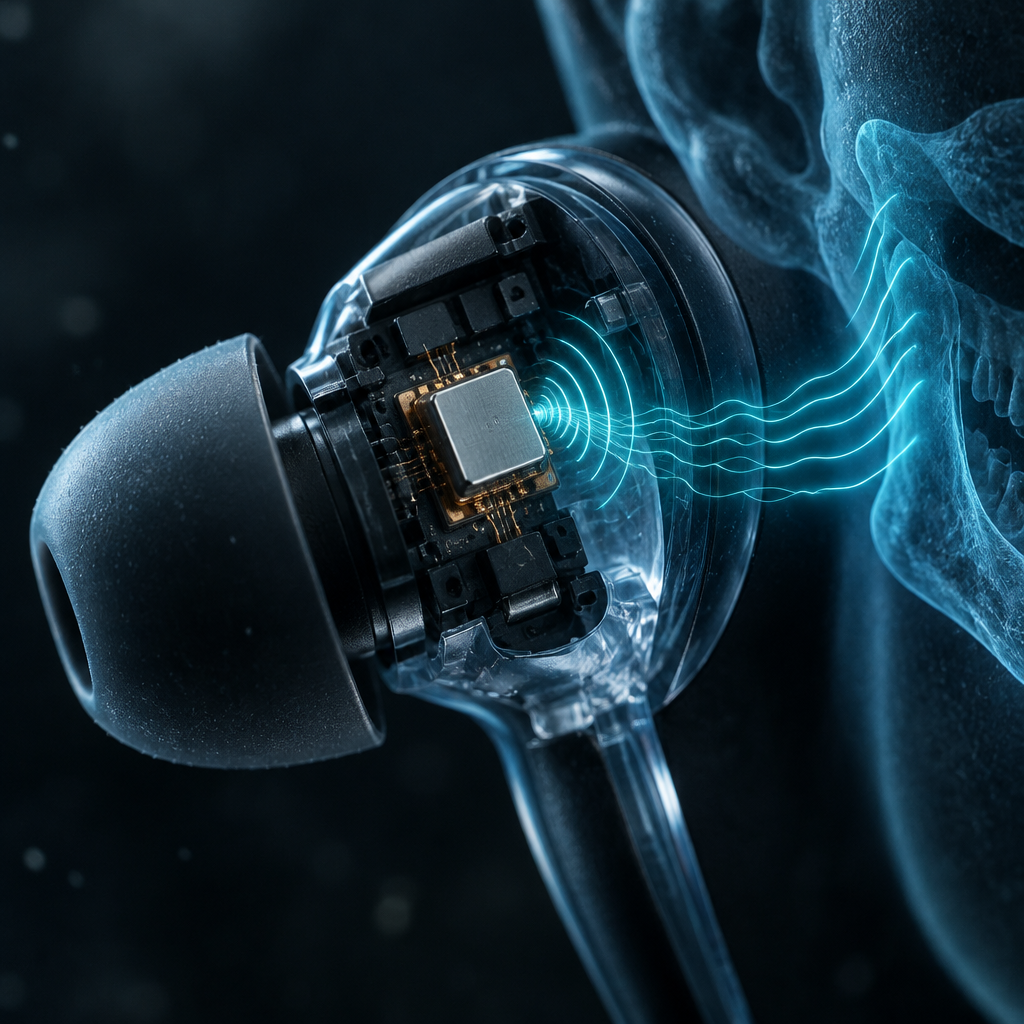
Dedicated neural silicon changes that. An earbud with its own NPU can adapt noise cancellation to a specific room in real time, isolate a voice using beamforming tuned to the wearer's anatomy, translate a conversation without a network connection, and manage its own radio link to optimize audio quality against interference. Each of those tasks was either impossible, cloud-dependent, or barely functional three years ago.
The earbud is becoming a platform. Not in the marketing sense where everything with a processor is a platform. In the engineering sense, where the device runs its own software stack, makes its own decisions, and degrades gracefully when the phone is absent. The Bluetooth link is still there, but it is no longer the sole source of intelligence. It is a transport layer for audio, serving an earpiece that can think for itself.
That shift will not be obvious to someone buying earbuds in 2026. They will notice better noise cancellation, faster translation, cleaner calls. They will not see the NPU running underneath. But the manufacturers building these devices are making a bet that the next decade of earbud innovation happens inside the earbud, not on a server someone else controls. Given the latency math, the privacy constraints, and the rate of improvement in model compression, that bet looks reasonable. The earbuds are getting their own brain because the alternative is to keep waiting for the cloud to think for them. Nobody wants to wait that long.