The Hearing Test That Fits in Your Pocket
Apple's five-minute hearing test works like a clinical pure-tone audiogram compressed into an iPhone app. You sit in a quiet room. You place AirPods Pro 2 or AirPods Pro 3 in your ears. The app plays tones at frequencies ranging from 250 Hz to 8 kHz, pulsing each tone three times. You tap when you hear something. The app monitors ambient noise through the earbud microphones and pauses automatically if someone starts talking or an air conditioner cycles on. If the ear tips don't seal properly, the app tells you to try a different size before continuing.
At the end, you get a number. That number represents your average hearing level across the frequencies most critical for understanding speech. Anything up to 25 dBHL is considered normal. 26 to 40 dBHL is mild loss. 41 to 60 dBHL is moderate. The app stores the full audiogram in Apple's Health app, and from that moment forward, your AirPods use it as a prescription. Amplification is mapped frequency by frequency. The frequencies where you hear less get boosted more. The frequencies where you hear fine stay untouched. Apple says you should not share your earbuds with anyone once hearing aid mode is active, because the frequency adjustments are tuned to your specific hearing profile.
The DSP That Makes It Possible Is Not New
Here is the part that surprises people. The core technology inside these consumer earbuds, the thing that lets them function as hearing aids, is not a recent breakthrough. It is a category of signal processing called Wide Dynamic Range Compression, or WDRC, and audiologists have been using it for decades.
WDRC does something intuitively simple but technically demanding. It compresses the dynamic range of incoming sound so that soft sounds become audible without making loud sounds unbearable. A person with mild to moderate hearing loss can still hear a door slam. What they lose is the quiet stuff: consonants at the ends of words, the breath between syllables, the murmured aside across a restaurant table. WDRC applies more gain to soft sounds and progressively less gain as sounds get louder, creating a curved amplification profile that follows the user's audiogram.
Dedicated hearing aids implement WDRC across 16 to 64 independent frequency channels. Each channel gets its own compression threshold, its own compression ratio, its own attack and release times. A professional audiologist fits the device by running real-ear measurements and fine-tuning each channel until speech lands in the audible range without distortion.
Apple and Samsung shortcut this entire process. They replace the audiologist with a self-guided test, replace the real-ear measurement with a sealed ear-tip fit check, and replace the multi-channel fitting session with an algorithmic translation of audiogram results into gain parameters. Less precise than a professional fitting. Also free, five minutes, and running on hardware that 100 million people already own.
Beamforming: When Earbud Microphones Become Ears
Amplification alone is not enough. A hearing aid that makes everything louder just makes a noisy room noisier. The harder problem is pulling speech out of background chaos, and this is where earbuds bring genuine engineering muscle to the table.
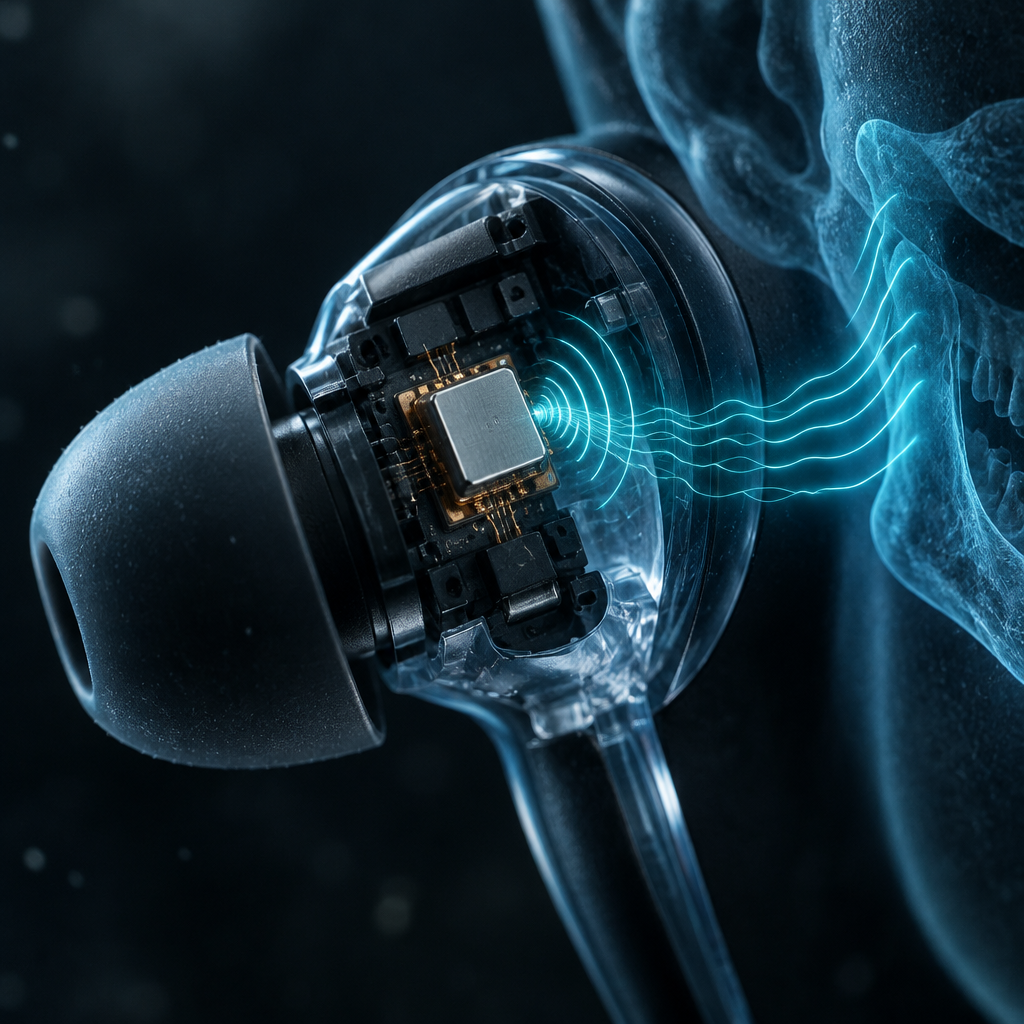
Apple's Conversation Boost uses beamforming to focus on the person talking directly in front of the wearer. The AirPods Pro have outward-facing microphones that capture the sound field around the head. Directional processing algorithms attenuate sounds arriving from the sides and rear while preserving sounds from the front. Samsung's Galaxy Buds3 Pro and Buds4 Pro take a similar approach, using their own adaptive noise control to reduce competing ambient sound while emphasizing nearby voices.
Anker's approach is the most aggressive in raw compute terms. The Anker RIC Hearing Aids Pro, revealed at IFA 2026, runs on a proprietary chip called THUS AI that performs 7.2 billion operations per second. Four beamforming microphones feed the processor, which identifies speech from in front of the wearer and suppresses everything else. Anker already shipped this chip in its Soundcore Liberty 5 Pro earbuds for call quality. The hearing aid version repurposes that voice-isolation pipeline for a different use case: helping people with hearing loss follow conversations in restaurants, family gatherings, and meeting rooms.
The crossover reveals something important. The DSP tricks that make your voice sound clear on a phone call through earbuds are, at a fundamental level, the same tricks that help a person with mild hearing loss pick out a conversation partner in a crowded bar. The difference is tuning, certification, and intent.
The Connectivity Layer: ASHA, LE Audio, and the End of the Hearing Aid Island
Traditional hearing aids lived on an island. They connected to smartphones through specialized protocols most phones did not support. Apple built Made for iPhone hearing aid compatibility into iOS years ago. Google developed ASHA, or Audio Streaming for Hearing Aids, as a Bluetooth Classic protocol for Android. Both standards required hearing aid manufacturers to implement them and phone manufacturers to support them, creating a maze of compatibility matrices that frustrated users.
LE Audio changes this picture entirely. Built on Bluetooth Low Energy, LE Audio introduces the Hearing Access Service, a standardized profile designed specifically for hearing aids and assistive listening devices. LE Audio streams audio using the LC3 codec, which delivers better quality at lower bitrates than the SBC codec that Bluetooth Classic relied on. It consumes less power, which matters enormously for devices running on tiny zinc-air or lithium-ion cells. And it supports Auracast, the broadcast audio feature that lets a public space transmit audio to any compatible receiving device within range.
The convergence is striking. When Apple and Samsung ship hearing aid features in earbuds, they are not building a separate hearing aid stack alongside the audio stack. They are using the same Bluetooth LE Audio pipeline, the same LC3 codec, the same microphones and DSP, for hearing assistance and music streaming and phone calls. The hearing aid is not a mode the earbud switches into. It is a filter applied on top of audio that is already flowing through the device.
What Earbuds Still Cannot Do
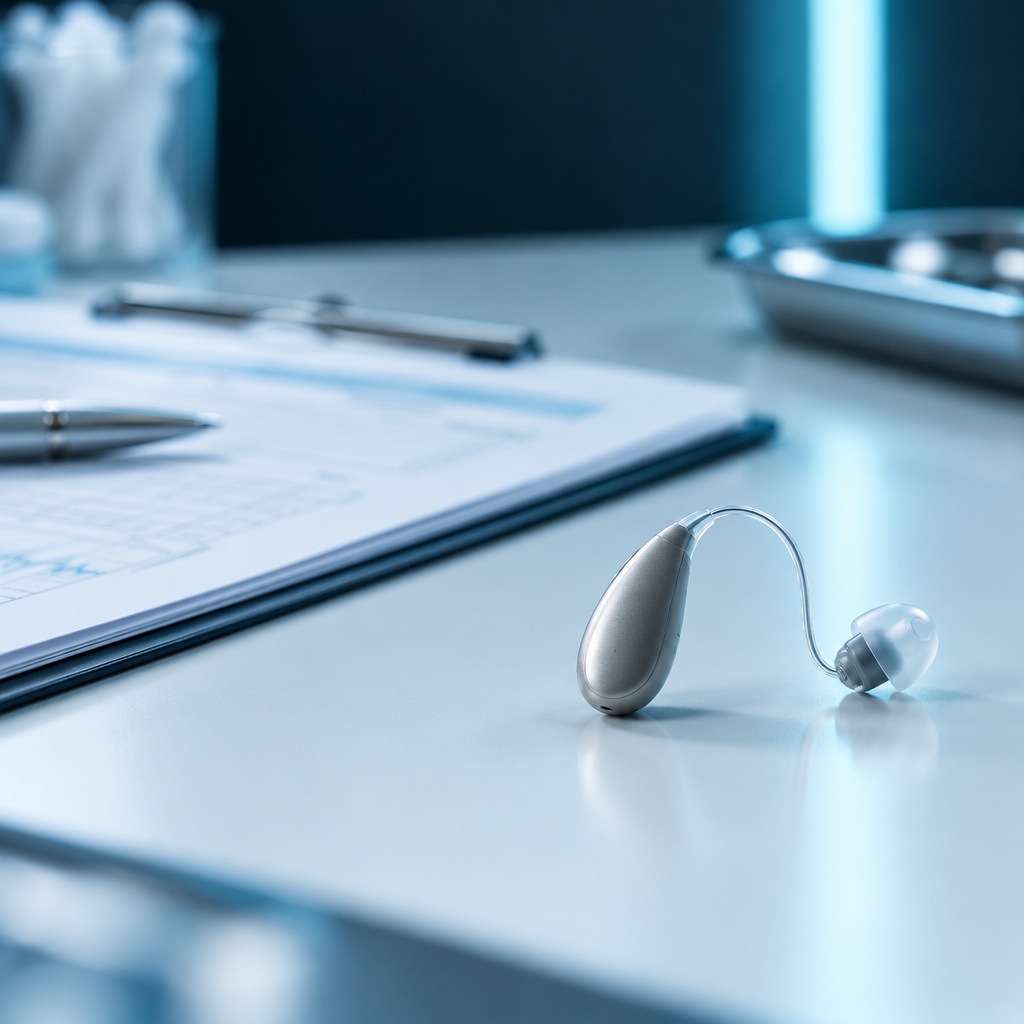
The honest limitations matter. Consumer earbuds are not receiver-in-canal instruments. They sit in the ear canal but they do not use a thin acoustic tube to deliver sound deep into the canal the way a RIC hearing aid does. Their microphones are positioned for Bluetooth calls and ambient awareness, not for the precise spatial hearing that a behind-the-ear hearing aid achieves with microphones placed above the pinna, where the outer ear naturally filters and localizes sound.
Battery life is another gap. A hearing aid runs all day on a single zinc-air cell. AirPods Pro in hearing aid mode draw more power than in normal listening mode because the microphones, DSP, and amplification pipeline run continuously. Apple claims 67 percent more battery life in Transparency mode on a single charge for the AirPods Pro 3, partly because the hearing features demand it.
Severe hearing loss remains out of reach. The FDA's OTC hearing aid rule covers perceived mild to moderate hearing loss only. Severe and profound loss requires prescription devices, professional fitting, and power output that consumer earbuds cannot safely deliver. The self-guided hearing tests in both Apple's and Samsung's implementations will recommend seeing a doctor if results fall outside the mild to moderate range.
There is also the question of feedback. Hearing aids fight a relentless battle against acoustic feedback, the whistling that occurs when amplified sound leaks out of the ear canal, gets picked up by the microphone, and re-amplifies in a loop. Dedicated hearing aids use sophisticated feedback cancellation algorithms tuned to the acoustic properties of their shells and ear molds. Earbuds, with their silicone or foam tips creating a less customizable seal, face a harder feedback problem. Apple addresses this partly through the Ear Tip Fit Test, which checks the seal before enabling hearing assistance. A workaround, not a solution.
Why This Matters Beyond Convenience
More than 1.5 billion people live with hearing loss worldwide. The vast majority never seek treatment. The average delay between noticing hearing difficulty and seeking help is seven to ten years in the United States. Cost is a primary barrier: prescription hearing aids run $2,000 to $7,000, and Medicare does not cover them. Stigma is the other. People associate hearing aids with aging and decline, tolerating hearing loss for years before wearing something that looks like a medical device.
Earbuds solve both problems at once, or at least blunt them. An AirPods Pro 2 costs $249. A Galaxy Buds3 Pro costs around $200. Both are objects people already carry, already charge, already wear in public without embarrassment. The FDA's clearance of software, not hardware, is the regulatory unlock. The hearing aid is a feature, not a product. It arrives as a firmware update, runs through a standard Bluetooth audio pipeline, and requires no visit to an audiologist, no insurance claim, no waiting period.
Anker's entrance into the OTC hearing aid market signals where this is heading. A company that made its name in phone chargers and Bluetooth speakers now ships a receiver-in-canal hearing aid with an onboard audiogram, AI-powered beamforming, and a direct-to-consumer sales model. The lines between consumer audio and medical hearing technology are not blurring. They have already crossed. The question is no longer whether earbuds can be hearing aids. The FDA answered that. The question is what happens to the hearing aid industry when 100 million people carry an FDA-cleared hearing aid in their pocket and don't think of it that way.