The Protocol That Was Never Supposed to Leave the Factory
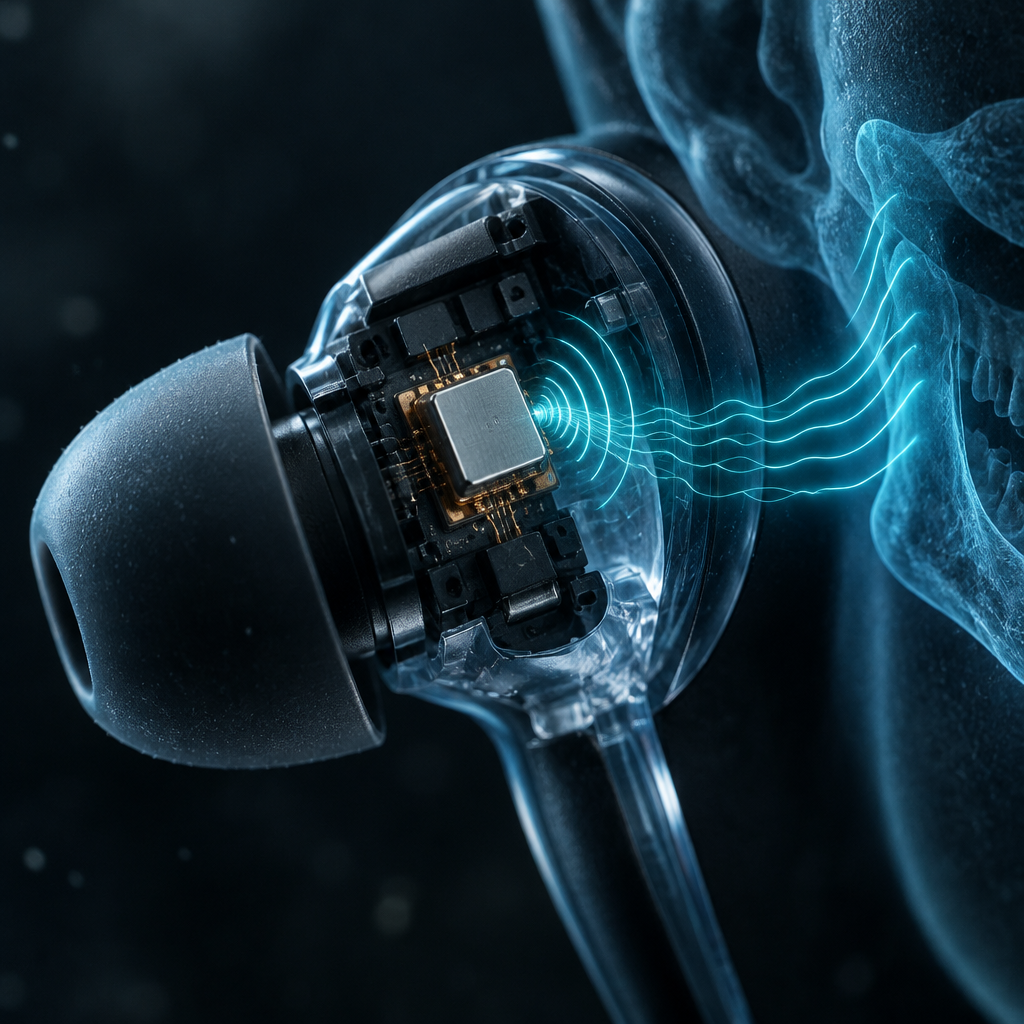
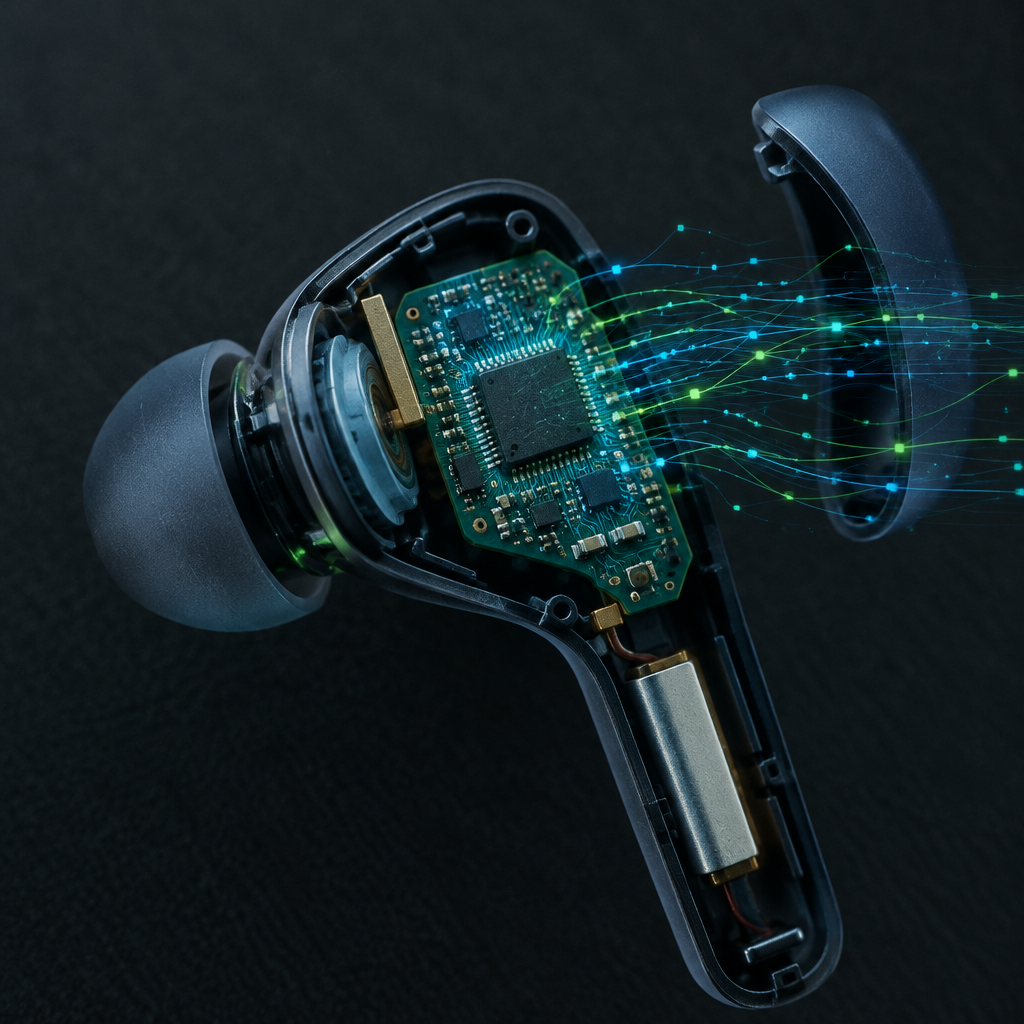
Inside every pair of true wireless stereo earbuds, a system-on-chip handles the Bluetooth radio, the audio codec, the battery management, and the firmware that ties it all together. For a large portion of the TWS market, that chip comes from Airoha Technology, a MediaTek subsidiary headquartered in Hsinchu, Taiwan. Airoha ranks among the top three global suppliers of Bluetooth audio silicon. Their chips, including the AB156x, AB157x, AB158x, and AB159x series, power products spanning budget in-ears to flagship noise-canceling models from Sony, Bose, JBL, Beats, Marshall, Jabra, and several others.
During manufacturing, these chips need a way to be configured, tested, and flashed. Airoha built a custom protocol called RACE, which stands for Realtek and Airoha Command Extensions, to serve this purpose. RACE can read from and write to arbitrary addresses in flash storage and RAM. It can flash firmware. It can read out the contents of the non-volatile data manager partition where Bluetooth link keys, configuration data, and device parameters live.
This kind of low-level access is normal on a factory floor. What is not normal is leaving it exposed on production firmware shipped to consumers. That is exactly what Airoha's SDK did. The protocol was accessible over both Bluetooth Low Energy and Bluetooth Classic. No pairing required. No authentication. No user interaction. An attacker within radio range could connect, enumerate the exposed services, and start issuing commands.
Three CVEs That Stack Into Full Device Takeover
In March 2025, security researchers Dennis Heinze and Frieder Steinmetz at the German cybersecurity firm ERNW disclosed three vulnerabilities to Airoha. After two months of silence followed by repeated contact attempts, Airoha shipped a patched SDK to its OEM customers on June 4, 2025. ERNW presented partial findings at the TROOPERS conference that same month. The full technical disclosure, a white paper, and a testing toolkit arrived on December 27, 2025, alongside a talk at 39C3.
The three CVEs operate as a stack, each one widening the door a little further.
CVE-2025-20701 (High): Bluetooth Classic pairing was not enforced. The BR/EDR link layer normally requires a link key exchange before granting access to Bluetooth profiles like the Hands-Free Profile. On Airoha-based devices, this authentication step was optional. An attacker within radio range, roughly ten meters, could connect directly to a pair of earbuds and access Bluetooth Classic services without ever producing a PIN or triggering a confirmation prompt.
CVE-2025-20700 (High): The same absence of authentication applied to BLE. The GATT server running on these chips exposed RACE commands as readable and writable characteristics. Any BLE client within range could discover the service by its UUID, subscribe to notifications, and begin issuing RACE commands over an unencrypted connection.
CVE-2025-20702 (Critical): This CVE describes what those commands actually do when an attacker reaches them without authentication. RACE can read from and write to any address in flash or RAM. An attacker can dump the complete firmware image. They can extract Bluetooth link keys from the NVDM partition. They can write modified firmware into flash and achieve arbitrary code execution on the earbud processor.
From Memory Read to Phone Hijack
Reading flash to extract link keys is the pivot point. When you pair earbuds with a phone, both devices exchange cryptographic link keys that authenticate every subsequent connection. Those keys live in the earbuds' flash memory, inside the NVDM partition. An attacker who dumps them can impersonate your earbuds to your phone. The phone has no way to distinguish the attacker from the genuine device because the cryptographic bond is identical.
Once impersonation succeeds, the Hands-Free Profile opens a broad attack surface. HFP supports initiating phone calls, accepting incoming calls, querying the phone's own number, pulling call history, and on some platforms, retrieving stored contacts. Voice assistants like Siri and Google Assistant can be triggered through HFP commands remotely. At 39C3, the ERNW team demonstrated a full chain: extract link keys from earbuds via RACE, impersonate the earbuds to a paired smartphone, place a call to an attacker-controlled number, and listen through the phone's microphone. They extended the demo to hijack a WhatsApp session and access Amazon accounts.
The eavesdropping scenarios branch in two directions. The first is direct: connect to the earbuds' microphone through HFP without pairing. This works, but drops any existing Bluetooth audio connection, which means the earbuds suddenly go silent for the user. Not particularly stealthy. The second is indirect: steal link keys, impersonate the earbuds to the phone, place a silent call, and use the phone's microphone as the listening device. The phone never rings. The user sees nothing.
ERNW also flagged a more alarming possibility. The vulnerabilities are wormable. Because vulnerable devices can be identified by their exposed GATT services and because firmware can be rewritten to execute attacker-supplied code, a self-propagating exploit is technically feasible. One infected device scans for nearby earbuds, compromises them, and each newly compromised device repeats the process. The researchers stopped short of building a worm. They made clear that the ingredients exist.
The Patch Pipeline That Buckled
Airoha shipped a fixed SDK on June 4, 2025. That patch arrived at the chip vendor level. Getting it onto actual earbuds in actual homes required every individual manufacturer to integrate the fix, push it through their own companion app, and persuade users to open that app and install the update. The Bluetooth headphone firmware ecosystem has no equivalent of the silent, automatic over-the-air patching that smartphones enjoy. Each brand owns its own update infrastructure. Each brand moves on its own timeline.
The result was a patch rollout that stretched across thirteen months. JBL patched the Live Buds 3 and Endurance Race 2 in July 2025. Bose fixed the QuietComfort Earbuds by January 2026. Sony shipped its updates in early 2026. Apple delivered the final major patch for Beats Studio Buds, firmware version 1B211, in June 2026. Between ERNW's initial contact in March 2025 and Apple's patch in June 2026, over a year elapsed.
Some vendors never formally acknowledged the CVEs. Sony reportedly ignored direct communications from the researchers until learning the findings would be presented publicly. Supply chain opacity compounds the problem. Several manufacturers do not even know they are using Airoha silicon because they outsourced their Bluetooth module design to a third party that selected the chip. The Airoha SoC arrived as an invisible component in someone else's reference design.
The confirmed vulnerable device list reads like an audio industry catalog. Sony WH-1000XM4, XM5, and XM6. Sony WF-1000XM3, XM4, and XM5. Sony WF-C500 and WF-C510. Sony WH-CH520, WH-XB910N, WI-C100, CH-720N, Link Buds S, and ULT Wear. Bose QuietComfort Earbuds. JBL Endurance Race 2 and Live Buds 3. Marshall MOTIF II, MINOR IV, MAJOR V, ACTON III, STANMORE III, and WOBURN III. Jabra Elite 8 Active. Beyerdynamic Amiron 300. Teufel Tatws2. MoerLabs EchoBeatz. The EarisMax Auracast Sender. Over 100 models across nine brands, all sharing the same chip family, the same SDK, the same unlocked protocol.
The Airoha case exposes a structural weakness in how Bluetooth peripherals handle security throughout their lifecycle. The chip vendor builds the reference firmware. The OEM adopts it, sometimes wholesale, sometimes with modifications. The end user receives a product whose security posture was determined at the chip level, shaped by decisions made years before purchase, and rarely revisited. When a vulnerability surfaces at the foundation, the fix must travel back down a chain that was never designed to move quickly.
What This Means for You
The practical risk for most people is low. The attacker must be within Bluetooth range, roughly ten meters. The attack requires technical sophistication and, for the most damaging chains, specific timing conditions and individual adaptation per firmware version. If your earbuds are actively connected to your phone, certain attack paths narrow. ERNW was explicit on this point: any vulnerable device can be compromised if an attacker is in Bluetooth range. That is the sole technical precondition.
If you own earbuds from any affected brand, open the manufacturer's companion app and check for a firmware update. Install it. For Beats Studio Buds, confirm firmware version 1B211 or later by checking the Bluetooth settings info screen on a paired iPhone.
For anyone at elevated risk, journalists, diplomats, dissidents, executives under surveillance, the guidance from ERNW is unambiguous. Do not use Bluetooth earbuds in sensitive environments. Remove old Bluetooth pairings from your phone. Disable Bluetooth when you are not actively using the earbuds. Use wired headphones. The firmware update ecosystem for Bluetooth peripherals does not match the rigor of smartphone security patching. Until it does, diagnostic protocols that should never have left the factory will continue to surface in the field, and the distance between convenience and compromise will remain roughly ten meters.
ERNW released the RACE Toolkit on GitHub alongside the full disclosure. The tool communicates with Airoha-based devices over Bluetooth and USB, testing for the unauthenticated GATT and RFCOMM services described in the CVEs. The accompanying white paper, ERNW White Paper 74, documents the raw protocol structures and memory layouts used during the research. For anyone seeking definitive proof whether their specific earbuds are exposed, the toolkit provides it.