Earbud Comfort and Fit Engineering in 2026: Why Some Designs Work and Others Don't
Comfort in earbuds is not an afterthought. It's a physics problem wrapped in materials science, ergonomics research, and years of iteration. When an earbud feels good in your ear for six hours straight, that's not luck; that's the result of engineers making hundreds of small decisions about weight distribution, acoustic port placement, angled drivers, and surface textures. The earbuds that fail spectacularly, the ones that slip after five minutes or cause ear fatigue after an hour, often fail because the designer skipped or rushed these decisions.
In 2026, the state of earbud fit engineering has reached a point where genuinely comfortable all-day earpieces exist, but they're not inevitable. The gap between a $40 earbud and a $200 one often comes down to fit, not just audio quality. Understanding why this gap exists helps you make a smarter purchase.
The Anatomy of Fit: Weight and Balance
Weight is the first variable. Most earbuds in the true wireless category weigh between 4 and 7 grams each. At first, that seems negligible; your pinky finger weighs more. But your ear is not a rigid structure. It's a network of soft tissue, cartilage, and muscle, and it fatigues under sustained pressure. A 7-gram earbud will feel heavier than a 5-gram one not because of any difference your hand can detect, but because your ear's suspension system registers it differently over time.
The center of mass matters more than total weight. An earbud that's 5.5 grams but back-heavy will feel heavier than a 6-gram model with forward weight distribution. Apple's AirPods Pro 2 and Sony's WH-CH720N exemplify forward weight distribution; the heavy battery and driver live closer to the entry of the ear canal, and the tail is lighter. This keeps the earbud from rotating backward, which is what causes the slip.
Earbud design teams use 3D models to calculate center of mass before they build a single prototype. Companies like Apple and Sennheiser run finite element simulations on the ear canal itself, mapping pressure points and predicting fatigue zones. Budget brands often skip this step, which is why their earbuds feel loose after an hour but their spec sheet looks fine.
The Seal: Materials and Geometry
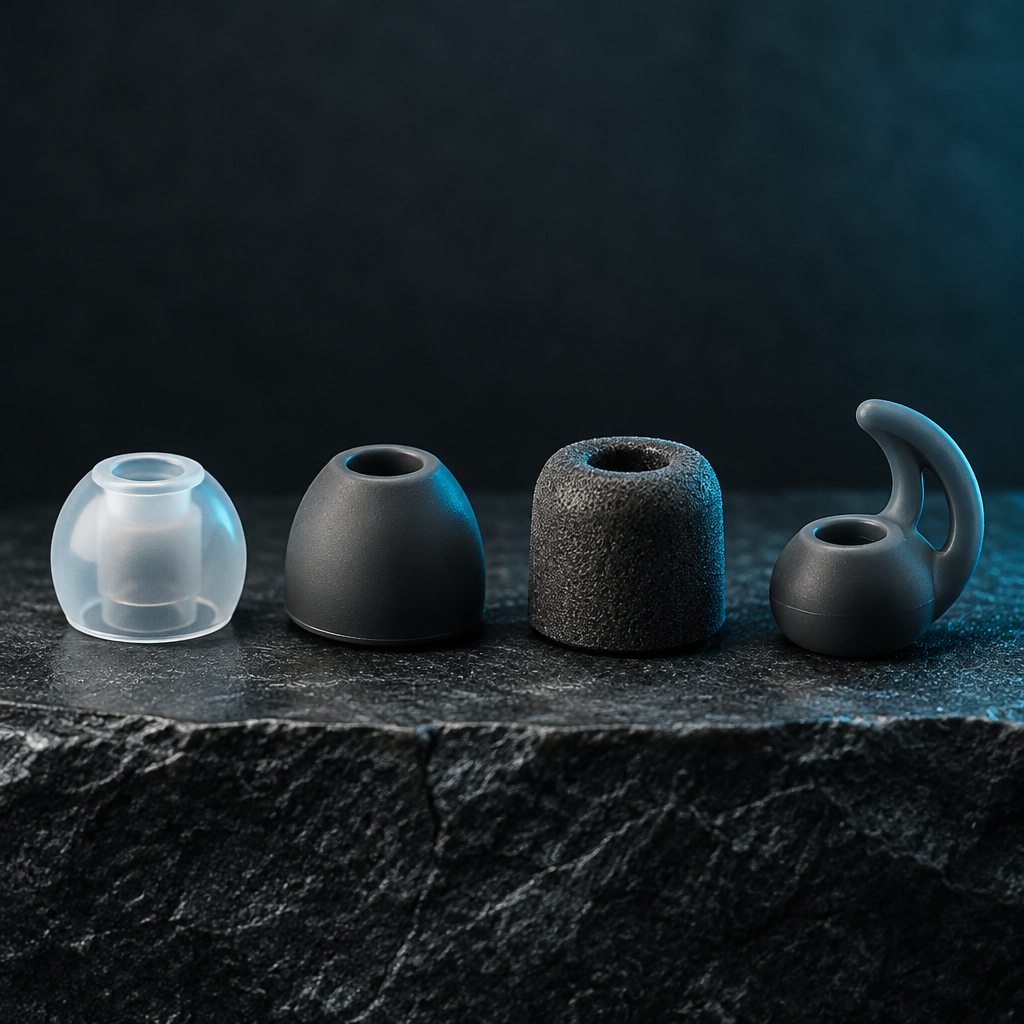
A secure seal in the ear canal is not just about noise isolation; it's about preventing rotation. If an earbud can't form a tight seal, it will slip backward or pop out entirely. The seal happens at the tip, and earbud makers have three main approaches.
Silicone tips remain the standard. They're cheap to manufacture, replaceable, and work well for most ear shapes. But silicone has a memory problem. It hardens over time, especially if you're not washing the tips weekly. After three months of daily use, silicone tips start to feel slippery, and earbuds that fit fine in month one start to slip in month four.
Memory foam tips (Comply foam, for example) solve this by maintaining flexibility longer. They expand slightly when warmed by body heat, creating a custom seal that adapts to your ear canal. The downside is durability and cleaning. Foam tips degrade faster than silicone, and if they get wet, they take hours to dry. For gym use or hot climates, silicone is more practical.
The geometry of the tip matters as much as the material. A straight tip inserts straight; most earbud manufacturers use this. An angled tip, one that curves inward, requires a rotational insertion movement and locks into the ear canal's natural curve. Sennheiser's Momentum True Wireless 3 uses angled tips. Once inserted correctly, they're nearly impossible to dislodge. The tradeoff is insertion difficulty for people new to that design.
Driver Placement and Acoustic Port Positioning
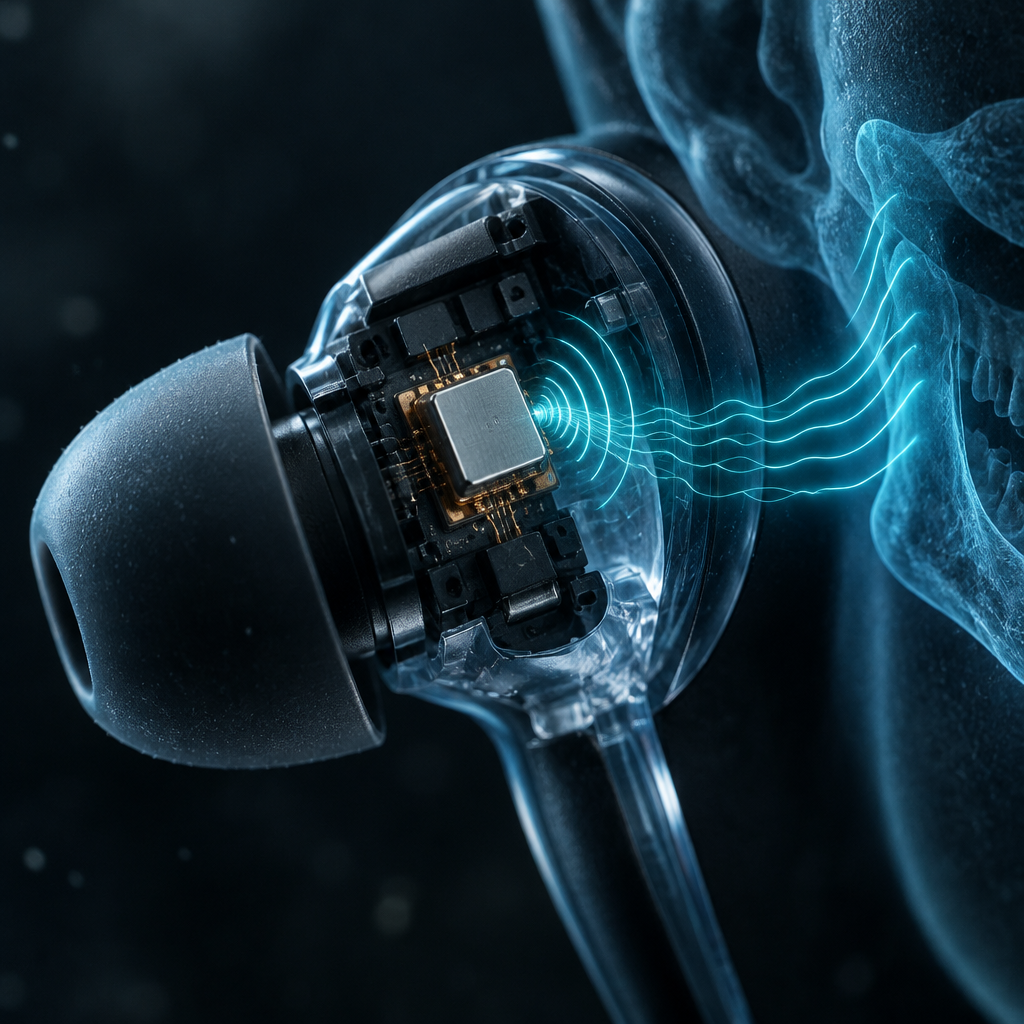
Where you put the driver and acoustic port changes how the earbud sits in the ear. A rear-facing driver with an acoustic port at the very back will create a pressure point at the deepest part of the ear canal. This can cause discomfort in longer listening sessions. A forward-facing driver with the port at the mid-canal point distributes pressure more evenly.
Sony's WH-1000XM5 Earbuds position their 8mm driver forward and use dual acoustic ports to manage pressure differently in the canal. This reduces the sensation of ear plugging and discomfort after two or three hours of continuous use. Apple's AirPods Pro 2 went further with their H2 chip's multi-chamber acoustic design, which smooths pressure spikes across a wider frequency range.
These details sound technical because they are. But you can feel them. An earbud that causes pressure after 90 minutes has a driver placement problem. An earbud that feels fine at hour two but starts to ache at hour four might be creating harmonic pressure at a certain frequency because of how the acoustic ports are tuned.
Surface Texture and Grip
The outside surface of an earbud affects how easily it slips. Smooth plastic slides. A textured surface or matte finish grips skin better and doesn't feel as cold when inserted. Apple uses a micro-textured plastic on the AirPods Pro 2's tail; it improves grip and reduces the sensation of a hard object in your ear.
Some manufacturers add silicone wings or stabilizers, small ear-hook attachments that grip the top of your ear. Jaybird, specializing in sports earbuds, includes these as standard. For people with small ear canals or active lifestyles, the wings are invaluable. For casual listening, they can feel bulky and unnecessary.
Skin contact temperature is often overlooked. Plastic feels colder than silicone or soft-touch rubber. Cold materials can trigger a reflex that pushes the earbud out or causes the ear canal to contract slightly. The best earbud materials warm quickly (within 30 seconds) and don't feel alien once in place. Cheaper earbuds that use bare plastic or aluminum shells can feel uncomfortable for the first few minutes of each session.
Fit Testing and Individual Variation
No single design works for every ear. Ear canal geometry varies widely. Some people have wider canals, others narrower. Some canals angle upward; others angle back. Some ears are sensitive to pressure; others are nearly insensitive to physical discomfort but highly sensitive to pressure-driven sound pressure level changes in the canal.
Responsible earbud manufacturers include multiple tip sizes. Apple provides four; Sennheiser six. Sony includes four sizes plus a proprietary fit test app. Anker's Soundcore Liberty 4 includes seven tip sizes. More sizes mean a better chance of finding the right fit for your ear, but they also suggest that the designer recognized the problem rather than solving it universally.
Fit test apps (Apple's Adaptive Audio fit test, Sony's Fit Optimizer) use microphones to measure seal integrity. They tell you whether your tips are actually sealing or just sitting loosely. This is valuable. Most people insert earbuds wrong the first time and don't realize it. A fit test catches this before you go for a run and lose one in the grass.
The Practical Differences in 2026
In the $100-150 range, you'll find earbuds with solid fit engineering. The Sennheiser Momentum True Wireless 3, Bose QuietComfort Ultra, and Apple AirPods Pro 2 all prioritize comfort alongside audio and noise cancellation. They use multiple tip sizes, forward weight distribution, and materials that feel good against skin. You can wear these for six to eight hours comfortably.
In the $50-100 range, you're making tradeoffs. The Anker Soundcore Liberty 4 offers good fit stability and multiple sizes at a lower price point, but the materials feel cheaper and pressure points emerge after three hours. The Nothing Ear is stylish but has a heavier earbud and single acoustic chamber design that causes fatigue faster.
Budget earbuds ($20-50) often skimp on this entirely. A single tip size, rear-heavy weight distribution, and hard plastic shells are the norm. Comfort drops off sharply after 90 minutes.
What to Test Before Buying
When you try earbuds in-store or before final purchase, insert them and leave them in for 10 minutes without audio. Notice where you feel pressure. Good earbuds should be nearly invisible; you might notice them because of audio or touch controls, not because of discomfort.
Shake your head side to side gently. A secure fit stays put. A loose fit will shift slightly. Neither is necessarily wrong depending on your priorities, but you should feel the difference intentionally.
Check whether the tips are actually sealing. If there's a gap, try a different size. The seal should feel snug but not painful. Painful is a sign the tip is too large.
Pay attention to ear fatigue over time, not instant comfort. A five-minute try-on won't reveal whether an earbud causes pressure aches after two hours. Read user reviews specifically about comfort longevity, not just initial feel.
The Trend for 2027
The best fit engineering in 2026 is moving toward ergonomic optimization using AI-guided scanning. Some higher-end models allow you to upload a scan of your ear canal from your phone camera, and the app recommends which tip size to use. This is early-stage, but it works. Within two years, expect this to become standard in the premium segment. Comfort won't be a post-purchase discovery; it'll be predictable before you buy.
For now, fit is something you have to test. The earbuds that feel good immediately often feel exhausting after an hour. The ones that take 10 minutes to adjust to often become invisible for the rest of the day. Comfort is an engineering discipline, not a happy accident. When you find earbuds that don't hurt, hold onto them. That's the result of someone doing the physics right.