For the better part of a decade, bone conduction earpieces occupied a peculiar niche. Athletes loved them because they left your ears open to ambient sound. Hearing-impaired users valued them because they bypassed damaged eardrums entirely. But everyone else dismissed them as a gimmick, a solution searching for a problem that didn't exist, audio quality that couldn't match traditional drivers, soundstage too compressed to justify the compromises.
That dismissal was premature. The bone conduction earpiece category has undergone a transformation so fundamental that the devices emerging in 2026 barely resemble their predecessors. The shift wasn't incremental. It was architectural.
Dual-Driver Architecture: The Breakthrough Nobody Expected
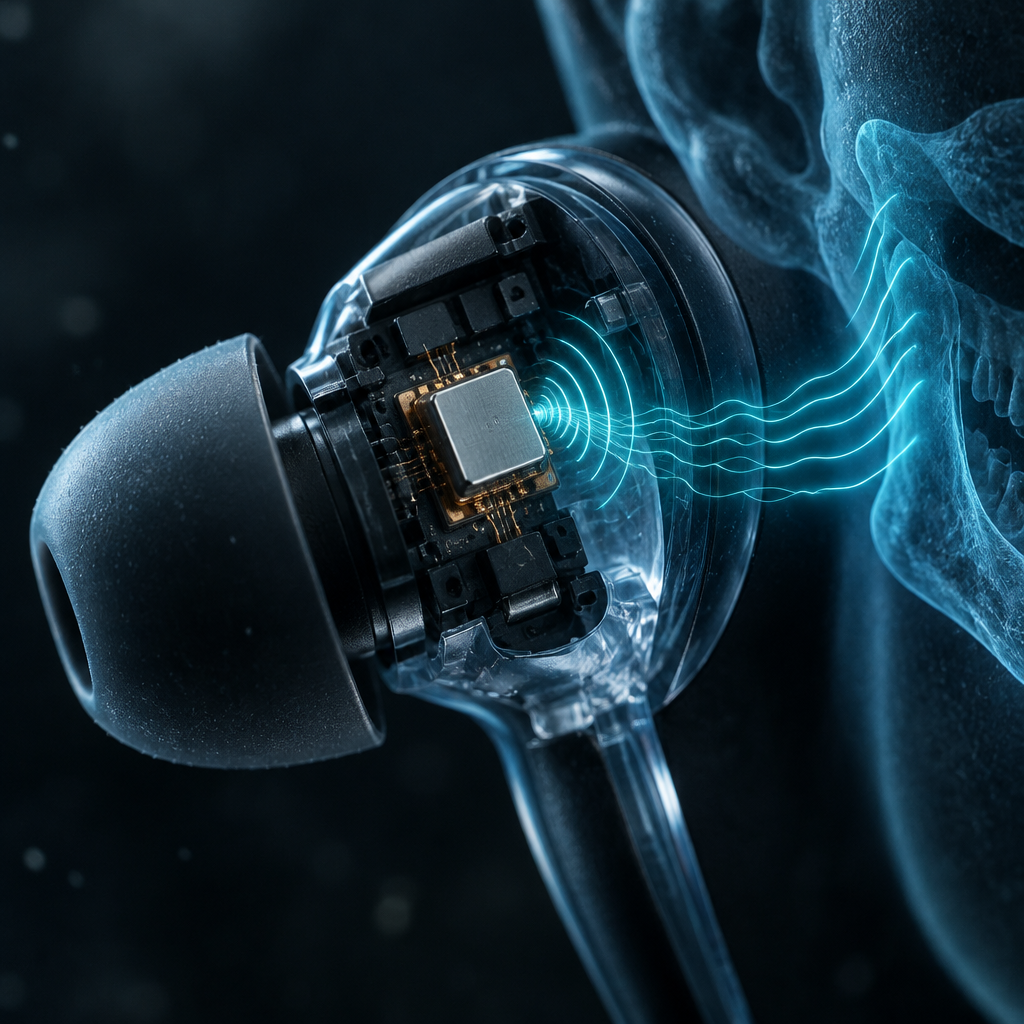
Shokz's introduction of dual-driver bone conduction in the OpenRun Pro 2 represents the inflection point. Instead of relying on a single piezoelectric transducer to vibrate the temporal bone and transmit sound to the inner ear, the new generation splits the workload. One driver handles mid and bass frequencies. The other manages treble. The result is counterintuitive: audio quality that rivals conventional in-ear drivers while maintaining the open-ear advantages that defined the category.
This is not a marketing story. The physics matter. Bone conduction's traditional weakness was harmonic distortion in the high frequencies. Temporal bone vibration at 8 kHz and above tends to scatter. You lose definition. High hats sound muddy. Cymbal crashes blur into wash. By splitting the signal path, engineers reduce the mechanical burden on each driver, lower distortion floors, and recover the articulation that made people skeptical of bone conduction in the first place.
The dual-driver approach also solved another problem nobody talked about much: listener fatigue. Bone conduction earpieces historically caused fatigue because the pressure point on the temporal bone remained constant, and the audio mixing required to compensate for bone conduction's frequency response made listening sessions feel tiring. Distribute the load across two drivers and you distribute the pressure. The listening experience becomes less exhausting. That matters for people wearing these devices six, eight, ten hours a day.
What matters more is what happened next. Once manufacturers solved the audio quality problem, they stopped treating bone conduction earpieces as a niche category and started treating them as a platform.
Multimodal Sensing: The Real Innovation
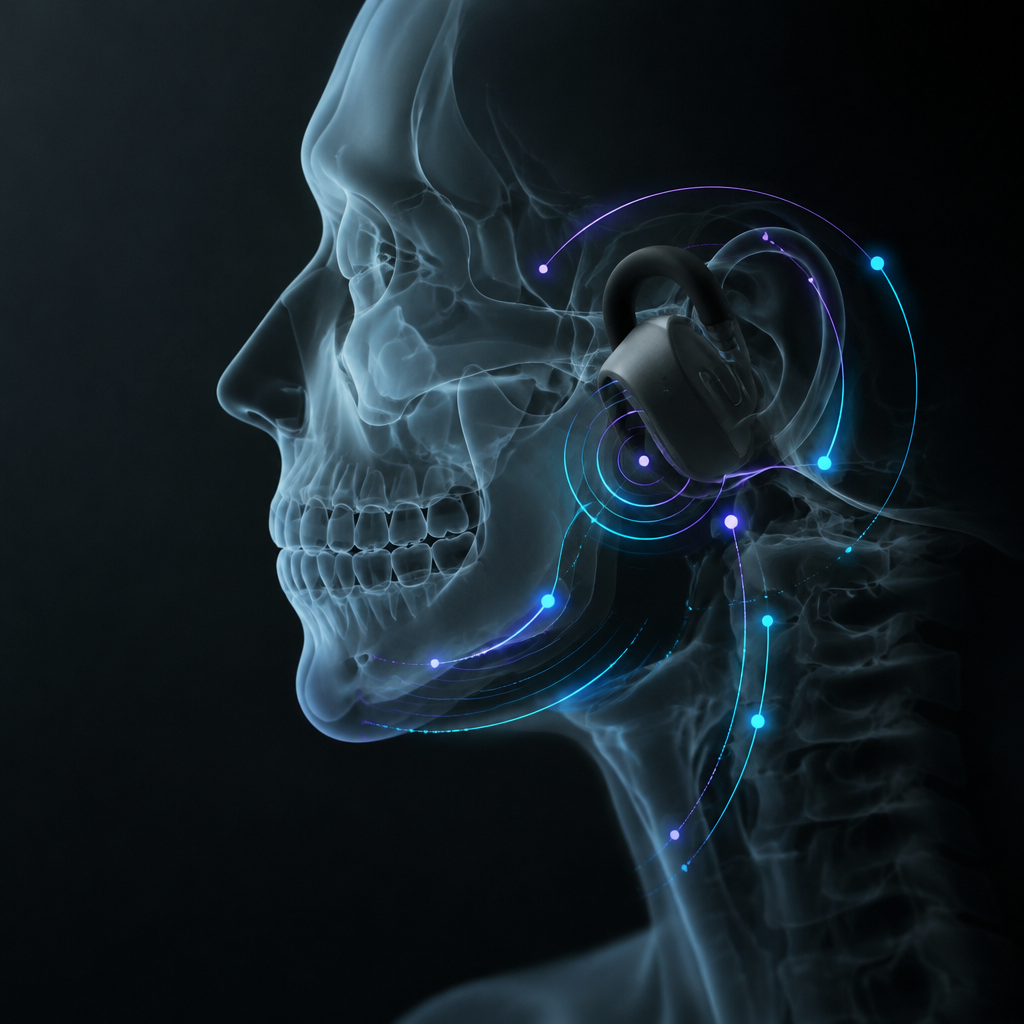
Bone conduction earpieces position themselves closer to the carotid artery, the temporal bone, and the mastoid process than any other wearable form factor. That proximity matters. It means sensors integrated into bone conduction earpieces can measure things that smartwatches and fitness trackers only estimate. Heart rate variability becomes measurable. Pulse oximetry becomes direct instead of derived. Core body temperature becomes accessible through the temporal region. Researchers at UCSD, MIT, and the University of Michigan have spent the last five years developing sensor suites that exploit this anatomical advantage.
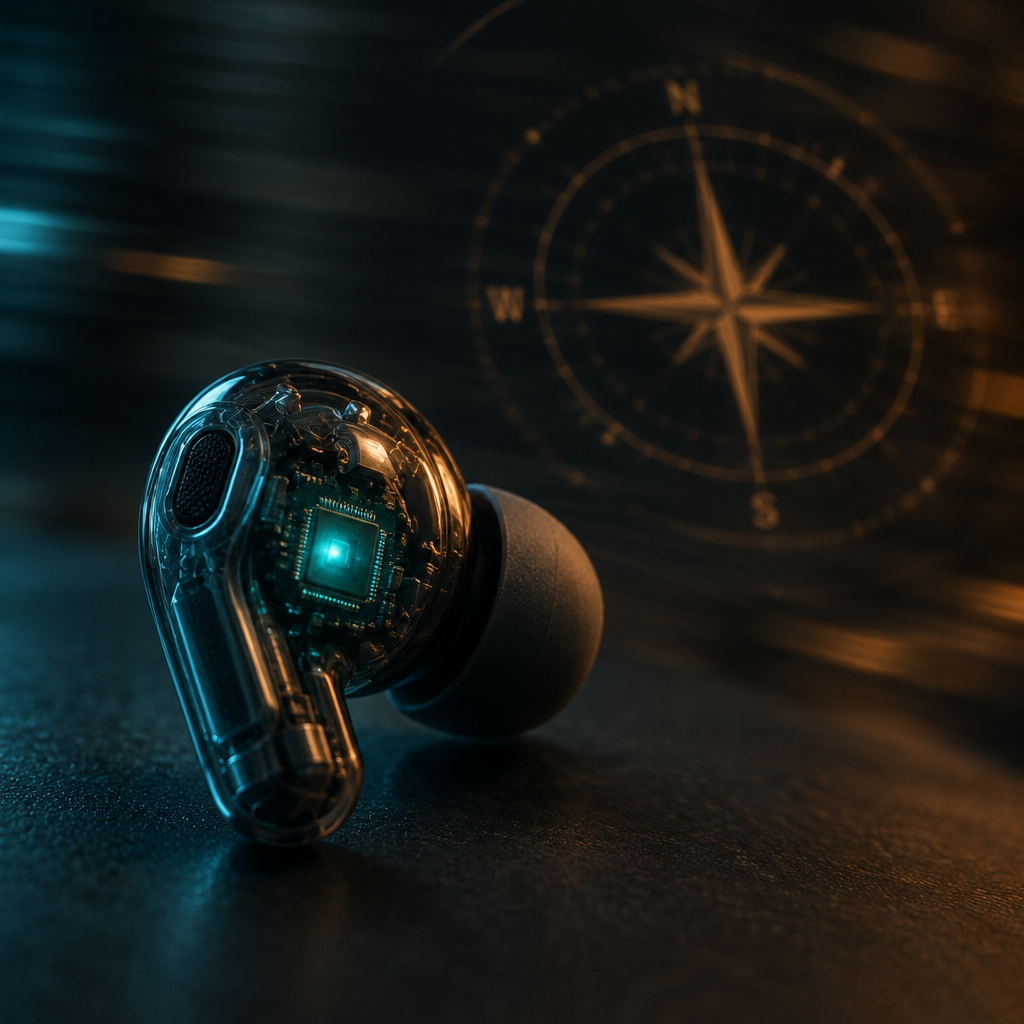
The current generation of hearables incorporates what researchers call multimodal sensing. This is not marketing terminology. It refers to the simultaneous measurement of multiple physiological variables using different sensor types. A single earpiece can carry photoplethysmography sensors (optical PPG) to measure heart rate and blood oxygen, electrocardiography electrodes to detect cardiac rhythm directly, electroencephalography sensors to measure neural activity, and microphones that analyze body sounds. A person wearing these earpieces is, in essence, wearing a portable diagnostic station.
Bose's Ultra Open Earbuds include heart rate monitoring. Samsung's Galaxy Buds integrate continuous blood oxygen tracking. Nothing's earpiece lineup incorporates spatial audio with health monitoring. Each manufacturer is racing to position themselves as the company that turns earpieces into comprehensive body data platforms. The consumer applications are obvious: fitness optimization, early detection of arrhythmia, sleep quality assessment, stress monitoring through heart rate variability. The clinical applications are more significant. A person who can continuously monitor their own ECG signal has data that cardiologists would have required an expensive Holter monitor to collect. A patient who can track their blood oxygen continuously can catch hypoxia incidents that a once-daily pulse oximetry reading would miss entirely.
The Data Problem
This is where the story gets complicated. More data is not inherently better data. More sensors in earpieces generates more noise, more artifacts, more false positives. The temporal bone moves. The arteries shift. Sweat creates conductivity changes that fool optical sensors. Physical activity generates mechanical noise in microphone channels. Every sensor type has failure modes, and when you stack five or six sensors on a device the size of a large bean, the failure modes compound.
The solution involves algorithmic sophistication that most consumers never see. Machine learning models trained on hundreds of hours of ground-truth sensor data learn to discriminate signal from noise. Sensor fusion algorithms combine data from multiple sources to improve confidence in measurements. Statistical methods weight different sensors differently depending on context. A running earpiece de-emphasizes some signals that matter at rest.
Samsung and Apple have the advantage here because they control both hardware and software ecosystems. Samsung can tune its earpiece algorithms based on Galaxy Watch data. Apple can correlate AirPods readings with Watch data. Smaller manufacturers like Shokz and Bose have to partner with health platforms like Oura, Garmin, and Fitbit to get that contextual information. The advantage shifts as manufacturers build partnerships. The industry is coalescing around data sharing agreements that weren't available two years ago.
The Open-Ear Revolution
Bone conduction's open-ear nature has become a feature, not a limitation. Traditional in-ear monitors create acoustic occlusion, trapping ambient sound inside the ear canal, and forcing your brain to work harder to process the full soundscape around you. Bone conduction earpieces play sound without blocking your surroundings. That changes everything for people who need situational awareness: runners who need to hear traffic, cyclists navigating roads, workers in environments where communication and safety matter.
The quality improvement in dual-driver bone conduction has eliminated the primary objection to open-ear listening: degraded audio quality. Bose's Ultra Open Earbuds deliver sound comparable to closed-ear in-ear monitors without any seal in the ear canal. Your ears remain completely open. You hear everything around you while listening to music or taking calls. This represents a genuine bifurcation in the industry. For years, designers assumed you had to choose: sealed in-ear monitors with premium audio, or open designs with audio that sounded like you were listening through a small speaker. That false binary no longer exists.
Where This Converges
The convergence point is obvious. Earpieces that combine high-fidelity audio, open-ear design, and comprehensive biometric sensing become the dominant wearable form factor for people who care about fitness, health data, and audio quality in equal measure. They're superior to smartwatches for continuous biometric sensing because they sit closer to critical arteries. They're superior to traditional earphones for situational awareness. They're catching up to or surpassing headphones for audio quality. The only advantage remaining to headphones is that you can get multiple sizes to fit different head shapes, and headphones can deliver more power because they don't have to be as compact.
For earpieces specifically, the remaining engineering challenges are miniaturization, battery life, and sensor reliability at scale. All three are solvable problems. Miniaturization is relentless in consumer electronics. Battery density improves steadily. Sensor manufacturing yields improve as production scales. None of these are showstoppers. They're just the normal friction of bringing new technology from research to consumer products.
What's remarkable is that earpieces have become the testing ground for ideas that were purely academic five years ago. The connection between bone conduction, multimodal sensing, and continuous health monitoring seemed theoretical in 2021. It's commercial reality in 2026. That transformation happened quietly, driven by engineers who understood that the future of wearables wasn't more watches on more wrists, it was more sensors in more ears.
The bone conduction earpiece started as an accessibility device. It became a sports category. It's becoming a health platform. That trajectory suggests where earpieces are heading next: toward a future where the audio device you wear is inseparable from the health monitoring device you depend on.