Bone Conduction Earpieces: The Future of Open-Ear Wireless Audio
Your ears have been listening to sound the same way for millennia. A vibrating eardrum receives acoustic waves, converts them to neural signals, and your brain interprets the world around you. But what if sound could bypass your eardrum entirely? What if it could travel straight through your skull to your inner ear, leaving your ear canals completely open?
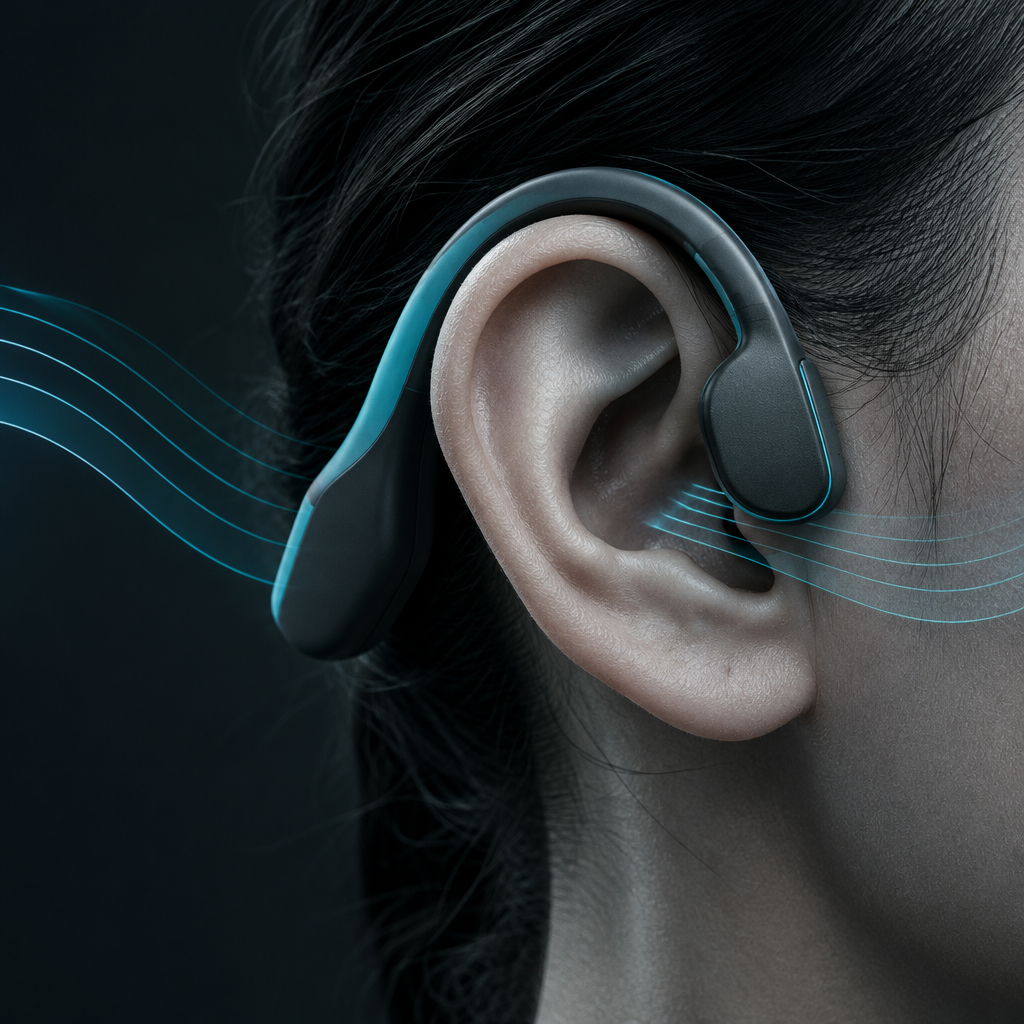
This isn't science fiction. Bone conduction earpieces, sometimes called open-ear headphones or bone conduction transceivers, represent a fundamental reimagining of how we experience wireless audio. Unlike traditional earbuds that seal inside your ear canal, bone conduction devices use vibration transducers positioned against your cheekbones or temples to send sound through your skull's bone structure directly to the cochlea. The result: crystal-clear audio while maintaining full environmental awareness.
In 2026, bone conduction technology has matured from niche sports accessory to mainstream audio solution. With improved battery life, richer audio fidelity, and Bluetooth 5.3/5.4 support, these earpieces are redefining what it means to stay connected without being cut off from your surroundings.
How Bone Conduction Actually Works
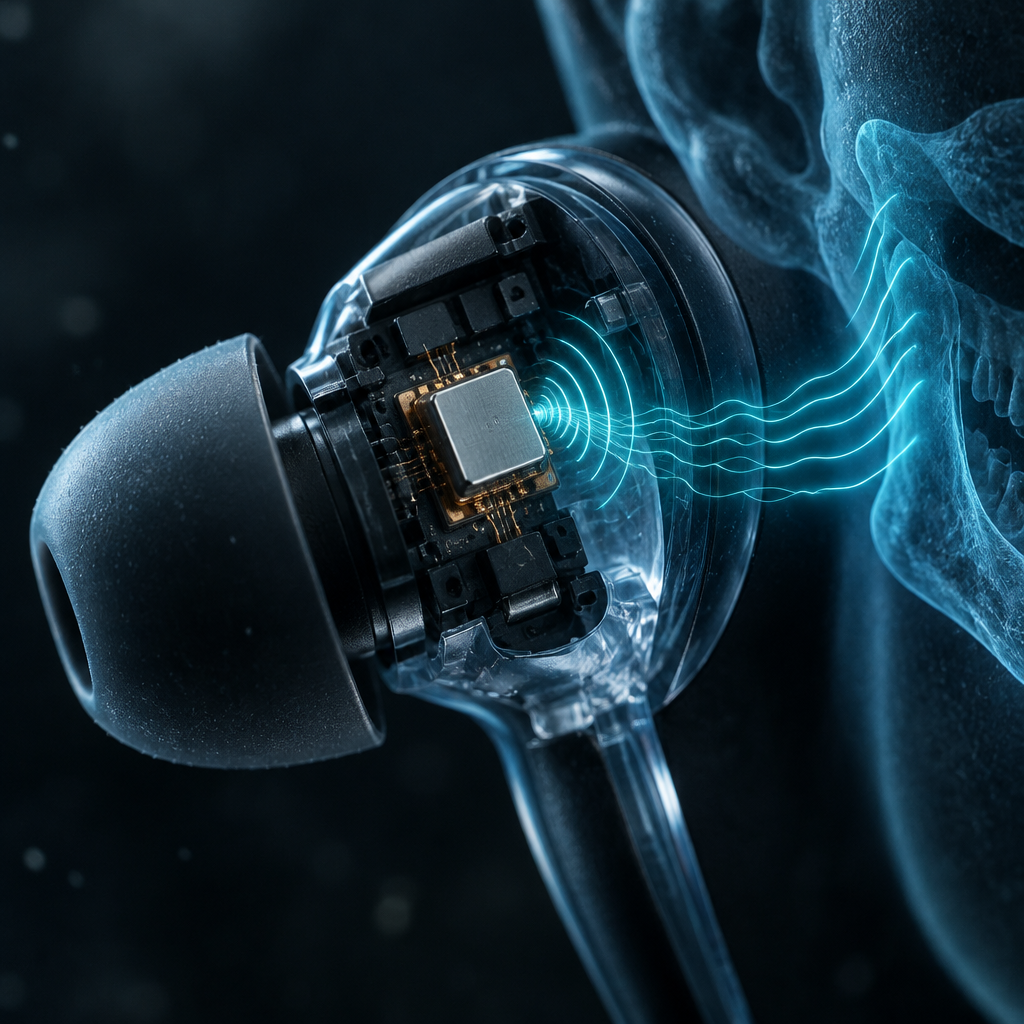
The mechanics of bone conduction hinge on a simple principle: bone conducts sound vibrations far more efficiently than air. When a vibration transducer presses against your skin, specifically at points like your mastoid bone (behind the ear) or your cheekbone, it sends oscillating vibrations through your skull.
Here's where the physics gets interesting. Your inner ear contains the cochlea, a spiral-shaped organ filled with fluid. Tiny hair cells inside the cochlea detect vibrations and convert them into electrical impulses. Traditional headphones send these vibrations through air in your ear canal; bone conduction earpieces skip that middle step entirely.
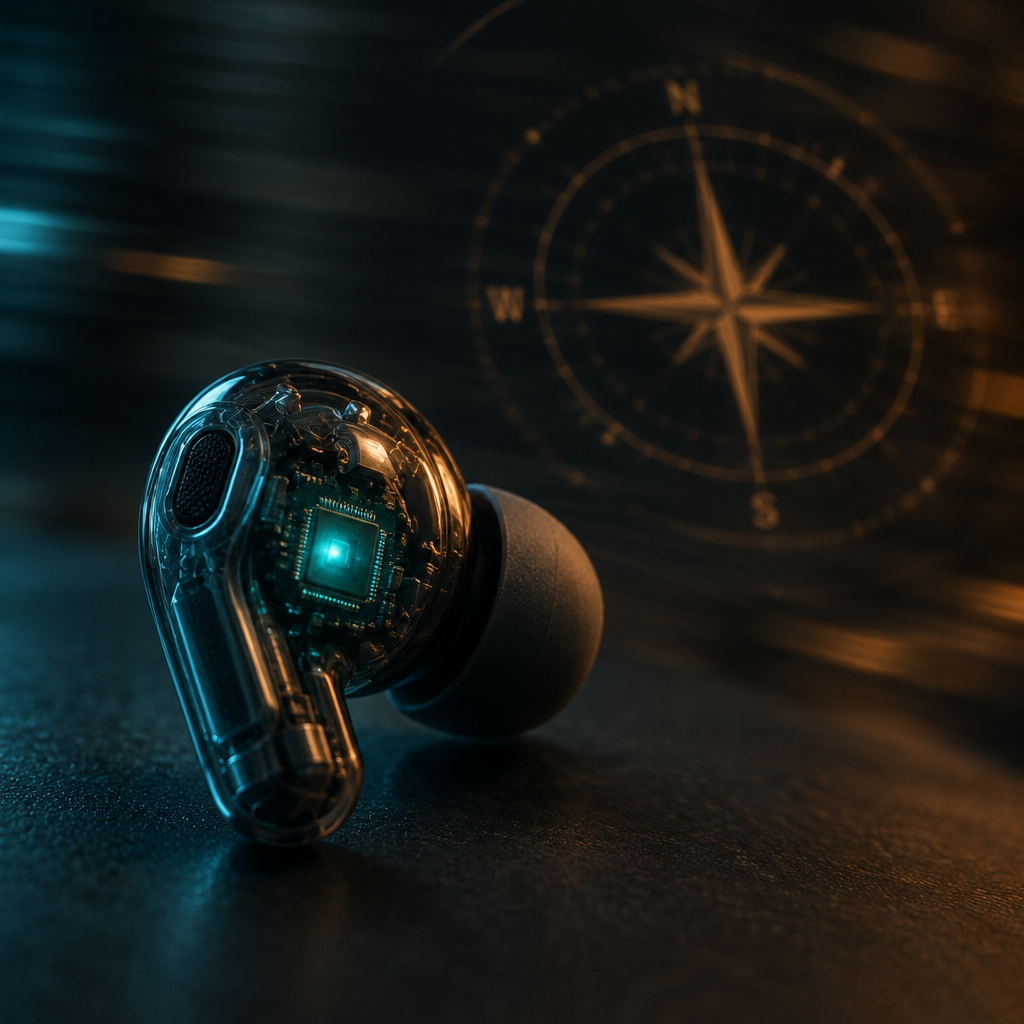
The transducers themselves are miniature electromagnetic devices capable of vibrating at frequencies ranging from 20 Hz to 20,000 Hz, the full human hearing range. Modern bone conduction earpieces use dual transducers per device to enhance stereo separation and reduce the "hollow" quality that plagued earlier generations.
The advantage here extends beyond novelty. When sound travels through bone, it experiences less degradation. There's no ambient noise interference with your ear canal, no pressure buildup, and no eardrum fatigue. For users who wear these devices 8+ hours daily, this translates to noticeably reduced ear fatigue compared to in-ear monitors.
Why Open-Ear Audio Matters
The rise of bone conduction earpieces coincides with a cultural shift in how we think about hearing. For decades, audio isolation was king. Noise-cancelling headphones became status symbols, a way to retreat from the world into your own sonic bubble. But isolation has downsides: safety risks when commuting, social awkwardness in shared spaces, and an inability to respond to unexpected sounds.
Open-ear audio inverts this philosophy. You hear your music, podcast, or call, but you also hear your environment. A cyclist wearing bone conduction earpieces can hear approaching traffic. An office worker can stay aware of conversations around them. Parents can listen to content while remaining alert to their children.
This wasn't possible with traditional earbuds. In-ear monitors create a physical seal that muffles external sound. To maintain awareness, you'd have to remove them or drastically lower volume, defeating the purpose.
Bone conduction solves this paradox. Your ear canals remain open. Sound waves from your environment pass through normally, mixing with the vibrations from the transducers. Your brain processes both simultaneously, allowing you to enjoy audio content without surrendering situational awareness.
For accessibility, the implications are profound. Users with conductive hearing loss, where sound can't efficiently travel through the ear canal, can bypass the damaged pathway entirely. Bone conduction sends vibrations directly to the inner ear, often restoring functional hearing. Medical-grade bone conduction devices have been used in hearing aids for over a decade; consumer earpieces bring this technology to mainstream audiences.
The 2026 Technical Landscape
Current bone conduction earpieces have reached maturity in several critical areas.
Bluetooth Connectivity: Most flagship models now support Bluetooth 5.3 or 5.4, enabling multi-point connections and lower latency (under 100ms). This means you can switch seamlessly between your phone, laptop, and tablet without manual re-pairing.
Battery Life: The open-ear form factor, where devices rest on your cheekbones rather than fitting snugly in your ears, allows for larger batteries. Premium models achieve 8 to 10 hours of continuous playback, with some standby configurations pushing 30+ days.
Audio Drivers: Dual transducers have become standard in high-end models. Stereo separation and bass response rival traditional earbuds. Some manufacturers are experimenting with phase-shifting technology to create phantom surround effects through bone conduction alone.
Durability: IP54 to IP67 ratings are common, making these earpieces suitable for swimming, heavy sweating during workouts, and water-resistant everyday use. Titanium and aerospace-grade polymers replace earlier plastic construction.
Customization: Companion apps offer EQ presets, ambient noise passthrough control, and multipoint pairing management. Some models include bone conduction calibration tools that optimize vibration frequency based on individual skull density.
Real-World Performance Tradeoffs
Bone conduction earpieces aren't universally superior to traditional earbuds; they make different tradeoffs.
Bass Response: Bone conduction struggles with sub-bass (frequencies below 60 Hz). Your skull vibrates less efficiently at lower frequencies, meaning bass-heavy content can sound thin. Subwoofer simulation, boosting sub-bass frequencies through software, helps, but can't fully replicate the chest-thumping punch of sealed earbuds.
Seal-Free Design: While open-ear operation is a feature for many, it's a liability in silent environments. Watching a movie in a quiet room with bone conduction earpieces means the audio feels "floaty," lacking the immersive envelopment of sealed monitors.
Comfort: Bone conduction earpieces rest against your skin continuously. Most users find them comfortable for 8+ hours, but some report pressure discomfort after extended sessions, particularly if the fit is overly tight.
Microphone Quality: Bone conduction microphones don't sit inside your ear, so they're further from your mouth. Call quality varies; premium models use beamforming algorithms to isolate your voice, but background noise rejection isn't as aggressive as earbuds with in-ear mics.
Market Leaders and Emerging Trends
Shokz (acquired by Aftershokz and now rebranding) dominates the bone conduction earpiece space with models like the OpenRun Pro and OpenRun Pro Mini. Philips, Panasonic, and emerging Chinese manufacturers are pushing aggressively into the category with competitive pricing and technical innovation.
Emerging trends include hybrid designs that combine bone conduction with active noise cancellation (creating a "selective isolation" mode), spatial audio mapping, and AI-driven ambient noise management. Some prototypes use multiple transducers positioned around the ear, enabling directional audio cues.
Hearing aid integration continues to accelerate. Cochlear implant users and those with conductive hearing loss now have mainstream consumer options that rival specialized medical devices at a fraction of the cost.
The Road Ahead
Bone conduction technology is approaching an inflection point. As battery density improves, as Bluetooth Low Energy Audio gains traction, and as consumers prioritize safety and awareness over isolation, expect rapid adoption outside niche markets.
The next frontier: comfort-optimized form factors. Thinner transducers, better weight distribution, and individual calibration tools will eliminate fit-related complaints. Some manufacturers are exploring vibration patterns that adjust to your specific skull resonance, unlocking better bass and clarity.
For audio professionals and content creators, bone conduction opens unexpected possibilities. Mixing engineers could monitor in open-ear mode without isolation fatigue. Podcasters could record high-quality content while remaining aware of studio activity.
Conclusion
Bone conduction earpieces represent more than a gadget category; they're a paradigm shift in how we balance connectivity with awareness. By sending sound directly through your skull, they achieve something traditional earbuds cannot: immersive audio without environmental isolation.
The technology isn't perfect. Bass response lags sealed earbuds, and comfort varies by individual skull anatomy. But for cyclists, outdoor athletes, accessibility-focused users, and anyone who values situational awareness, bone conduction offers a compelling alternative to traditional audio devices.
In 2026, bone conduction earpieces have matured from novelty to necessity. If you've spent years trapped between music and awareness, always compromising one for the other, bone conduction finally offers a third way: both.