Wireless earpieces have become very good at pretending the radio is not there. Tap an earbud, and music pauses. Say a wake phrase, and a phone answers. In a quiet room, the experience feels almost immediate.
Then reality breaks through. A game shot lands a fraction late. A tap takes a beat to register. You lower the volume and hear the change after your finger has already left the stem. The delay is small, but the brain is excellent at noticing small delays when sound, touch, and motion are supposed to line up.
A new Bluetooth Low Energy capability called Shorter Connection Intervals, or SCI, is aimed at this awkward middle ground. It does not make radio waves travel faster. It does not automatically improve a codec. It changes how often connected devices get an opportunity to talk, reducing the old Bluetooth LE minimum connection interval from 7.5 milliseconds to sub-millisecond territory. The Bluetooth SIG describes the feature as part of the newer Core specification work, and developer testing has centered on intervals as short as 375 microseconds in practical implementations.
The tiny appointment that controls a wireless conversation
Bluetooth devices do not continuously chatter. A phone and a pair of earpieces agree on connection events, little scheduled appointments during which packets can be exchanged. If an earbud has fresh touch-control data or a sensor event, it may have to wait for the next appointment.
At a 7.5 millisecond minimum interval, that wait is not enormous. In a favorable case, it is nearly invisible. In a busy system, however, the connection event is only one link in a chain. The controller has to schedule radio traffic. The operating system has to deliver an event. The audio subsystem has to react. A voice assistant may add its own processing time. A game has a render and input pipeline. Delays stack, and the user experiences the total, not the neat number printed in a Bluetooth specification.
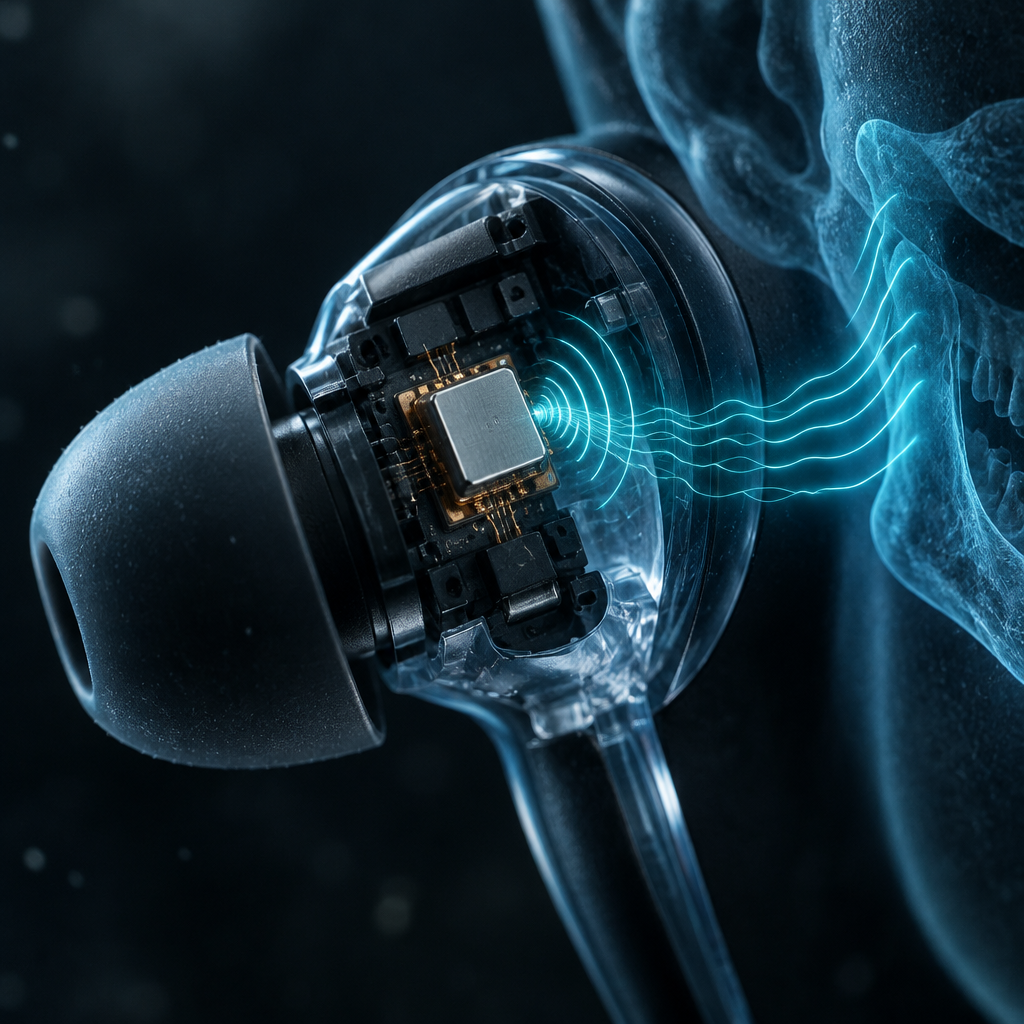
SCI gives compatible systems more opportunities to exchange short packets. That can reduce the waiting component of a control or sensor interaction. A tap on an earpiece can reach the phone sooner. A phone can send a command sooner. A motion sensor can report an event with less idle time between observation and transmission.
That sounds mundane until you remember how many earpiece features depend on quick, small exchanges. Play and pause. Transparency-mode switching. Head tracking. In-ear detection. Game control. Find-my-device beacons. A conversational assistant listening for a response. The improvement is not one dramatic leap. It is less dead air sprinkled throughout the interaction.
SCI is not the same thing as low-latency audio
This distinction matters. A shorter connection interval can help a device communicate promptly, but it does not guarantee that music or game audio will arrive at the speaker immediately.
Audio has its own machinery. With Bluetooth LE Audio, an earpiece can use isochronous channels, which are designed for timed audio delivery, and the LC3 codec, which offers flexible quality and bitrate choices. The source still captures or decodes audio, places it into frames, encodes those frames, schedules them, transmits them, buffers them, decodes them, and finally feeds a miniature amplifier and driver.
Each stage can contribute latency. A large jitter buffer may protect against interference but add delay. A noise-cancellation algorithm may need a predictable block of samples. A phone may favor battery life over immediate packet handling. The earpiece may reserve processing time for adaptive noise control. SCI can shorten one waiting interval inside that system. It cannot erase the rest.
Think of it as improving the traffic lights on one road, not removing every traffic light in the city. If the highway beyond the intersection is congested, the trip is still slow. If the entire route is well designed, the new timing can be genuinely useful.
Why earpieces are a particularly interesting target
Full-size headphones have room for larger batteries, stronger processors, and more generous antennas. Earpieces have none of those luxuries. Their radios operate beside skin, hair, and a tiny battery. The left and right units must coordinate while also maintaining a reliable link to the phone. Every unnecessary transmission costs energy, but every long pause can make the product feel sluggish.
That makes SCI a balancing tool rather than a free performance upgrade. A manufacturer could use shorter intervals during a control-heavy moment, then relax the schedule during steady playback. It could prioritize a tap, voice trigger, or tracking update without forcing every audio packet into an unnecessarily aggressive rhythm.
The word “could” is doing real work here. Bluetooth features are negotiated. Both ends need compatible radio hardware, controller firmware, host software, and product policies. An earpiece with a Bluetooth version number printed on its box is not automatically ready for every feature associated with a newer Core specification. The phone matters just as much, and so does the operating system’s Bluetooth stack.
Gaming is the obvious demo, but not the only one
Gaming will probably provide the easiest demonstration. Competitive players notice audio timing because footsteps, reloads, and impact sounds are tied to action. A shorter wait before packets can be exchanged is attractive, especially when combined with a low-latency codec mode and a carefully tuned game audio pipeline.
Still, the best result will come from coordination. If a game renders at one frame every 16.7 milliseconds, shaving a fraction from the Bluetooth scheduling step cannot transform the entire experience. If the phone uses a 60 millisecond audio buffer, SCI cannot wish that buffer away. Product marketing that treats one radio feature as a complete low-latency solution will be overselling it.
Voice interaction may benefit in a more subtle way. Earpieces are increasingly becoming microphones, sensors, and control surfaces, not just speakers. A quicker uplink can help a press, gesture, or wake-state update reach the phone. That may make an assistant feel more attentive, particularly when the user interrupts a response or switches listening modes.
There is also room for better synchronization between the two earpieces. LE Audio’s Multi-Stream Audio architecture already addresses the problem more directly than older arrangements in which one earbud can act as a relay. SCI is not a replacement for synchronized audio streams, but shorter control exchanges could help the system manage state changes and timing information with less waiting.
The battery question is where the engineering gets interesting
More connection events can mean more radio activity. More radio activity can mean more energy use. That is the obvious tradeoff, but it is not the whole story.
A system that transmits promptly and then sleeps may be more efficient than one that keeps a processor awake while waiting for a scheduled event. The answer depends on packet size, radio conditions, controller implementation, retransmissions, and how aggressively the operating system batches work. A shorter interval is an opportunity for smarter power management, not a promise of longer battery life.
Manufacturers may choose different strategies. A sports earpiece could favor responsive motion and touch controls. A long-flight model might stretch its timing during uninterrupted music. A gaming mode could accept higher power consumption for lower perceived delay. In other words, SCI may become another quiet software policy inside an earpiece app, not a single permanent setting.
What shoppers should watch for
For now, do not buy an earpiece solely because a listing mentions Bluetooth 6, Bluetooth 6.2, or LE Audio. Version labels are useful shorthand, but they do not tell you which optional features are implemented, enabled, or supported by your phone.
Look for explicit claims about shorter connection intervals, supported phones, gaming latency, and firmware requirements. Treat “low latency” as a result to verify, not a technical explanation. Independent measurements should separate touch-to-action delay, source-to-speaker audio latency, and microphone return latency. Those are different numbers.
Also watch for the less glamorous details: stable behavior with both earpieces connected, reliable recovery after interference, and whether low-latency mode disables useful features. A mode that makes a gunshot arrive sooner but turns off noise cancellation, multipoint, or half the battery gauge may not be the upgrade a buyer imagined.
A faster feeling, built from many small decisions
Bluetooth SCI is exciting precisely because it is not a flashy audio format. It is infrastructure. The feature attacks waiting time at the communication layer, where a device can be responsive or oddly hesitant even when the sound quality is excellent.
Its arrival will not make every earpiece feel instant. The source, operating system, codec, buffers, radio firmware, and acoustic processing still have to cooperate. But when those pieces are designed together, sub-millisecond connection opportunities can help earpieces behave less like accessories waiting for permission and more like immediate extensions of the phone.
That is the real direction of wireless audio. The next leap may not be a bigger driver or another dramatic codec number. It may be the disappearance of tiny pauses users were never supposed to notice in the first place.
Sources: Bluetooth SIG, “LE Audio” and “How Bluetooth Shorter Connection Intervals will impact the next generation of wireless innovations”; Novel Bits, “Bluetooth LE Shorter Connection Intervals: A Hands-On.”