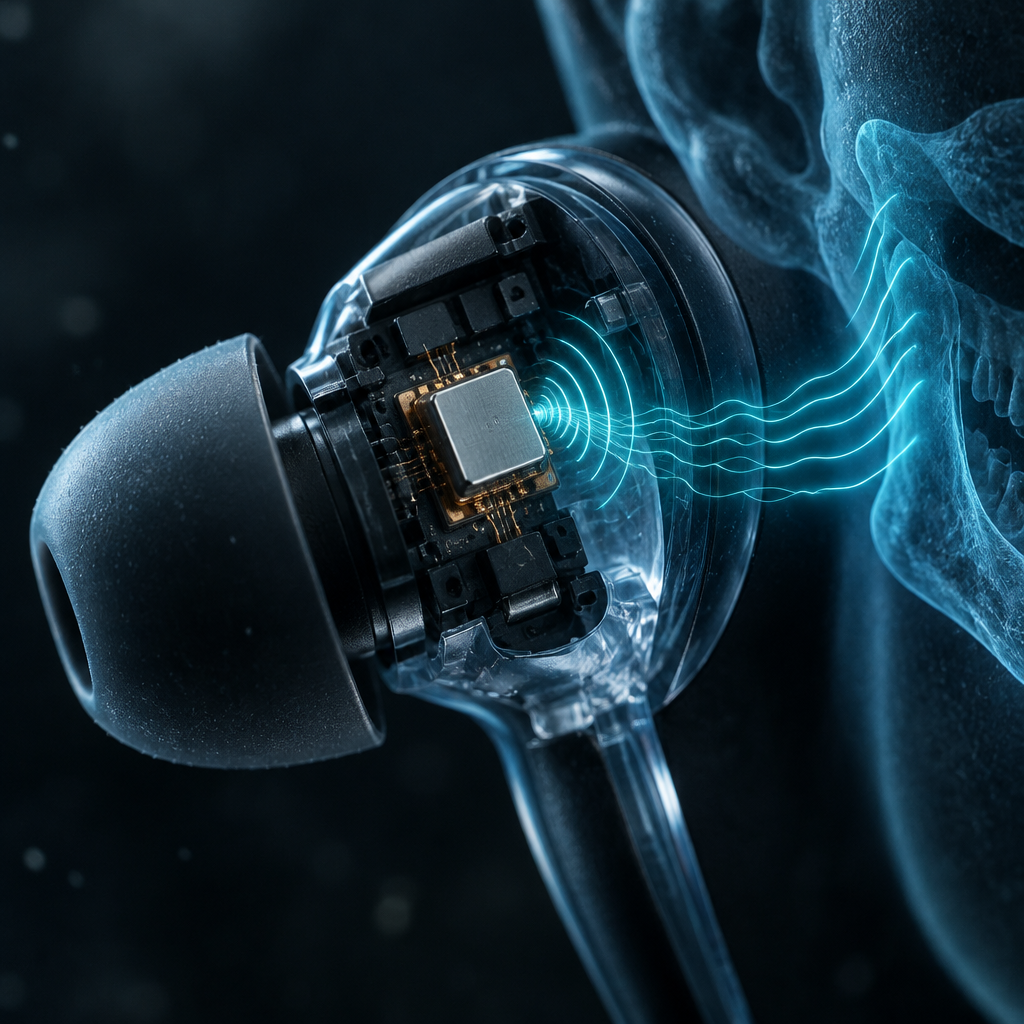
Wireless earpieces have become astonishingly good at hiding their own complexity. Put two tiny batteries, two radio systems, microphones, antennas, motion sensors, and miniature speakers into objects that can disappear inside your ears, then ask them to behave like one stereo device. Most of the time, they do. When they do not, the failure is usually subtle: one side arrives a fraction late, a connection hiccups, a game feels sluggish, or the left earpiece quietly drains faster than the right.
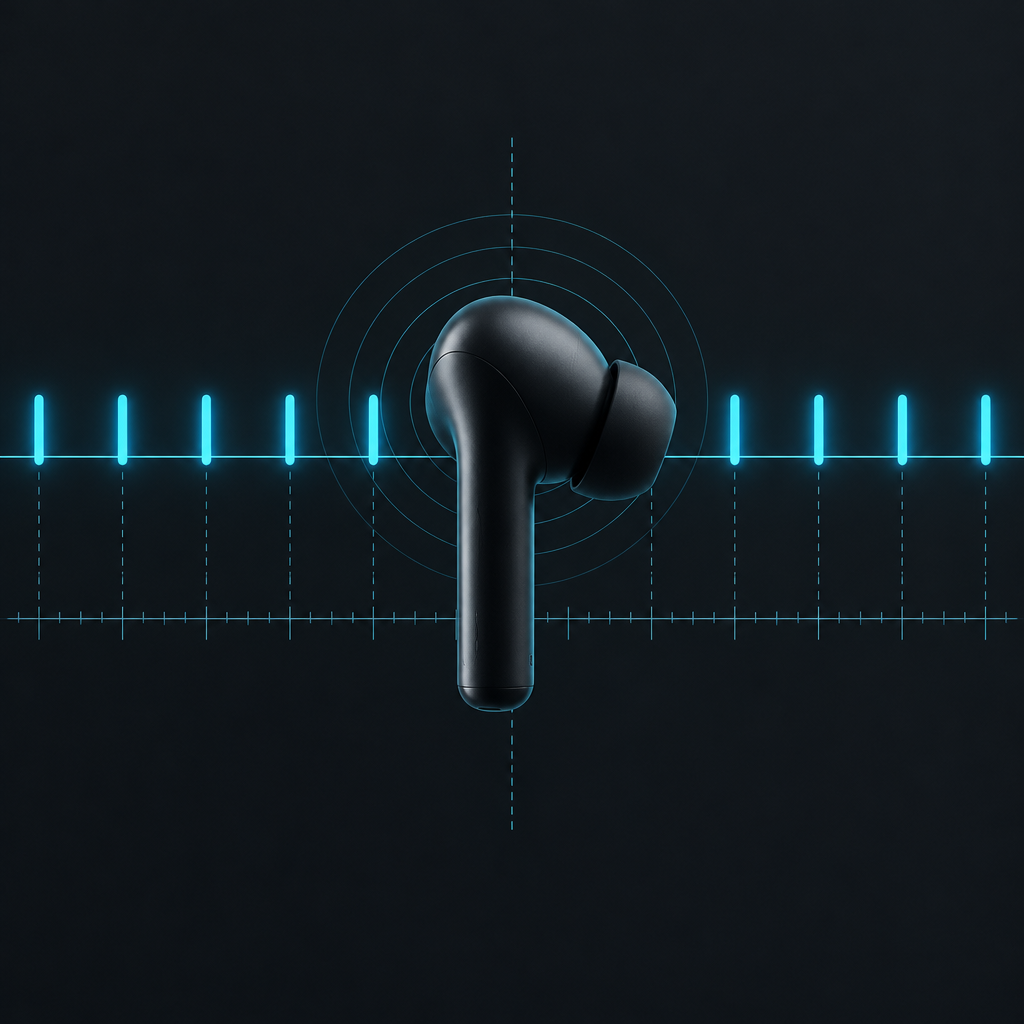
The industry has spent years advertising bigger drivers, stronger noise cancellation, and codec numbers that look impressive on a spec sheet. Those improvements matter. But for true wireless earpieces, the next genuinely important upgrade is less glamorous. It is timing.
The Old Arrangement Was Clever, Not Elegant
Early true wireless designs often treated one earpiece as the boss. Your phone sent audio to the primary side, and that earpiece relayed some or all of the information to its partner. The arrangement was practical because Bluetooth Classic was built around familiar point-to-point connections. It also created a chain of extra responsibilities.
The primary earpiece had to receive the radio packets, decode audio, coordinate with the second unit, and sometimes manage the return path for microphone data. The secondary earpiece had to stay synchronized while dealing with its own tiny antenna and the human body blocking radio signals. Every additional handoff was another opportunity for delay, retransmission, clock drift, or uneven battery consumption.
Manufacturers improved the architecture with proprietary links and dual-channel systems. That is why modern earbuds are far more reliable than the first generation. Still, the underlying problem remained: two physically separate computers were pretending to be one speaker system, while often receiving audio through different routes.
LE Audio Changes the Shape of the Conversation
Bluetooth LE Audio approaches the job through the Bluetooth Low Energy radio and a new audio framework. Its headline codec, LC3, is important because it can deliver useful audio quality across a range of bitrates, but the more consequential feature for earpieces is multi-stream audio.
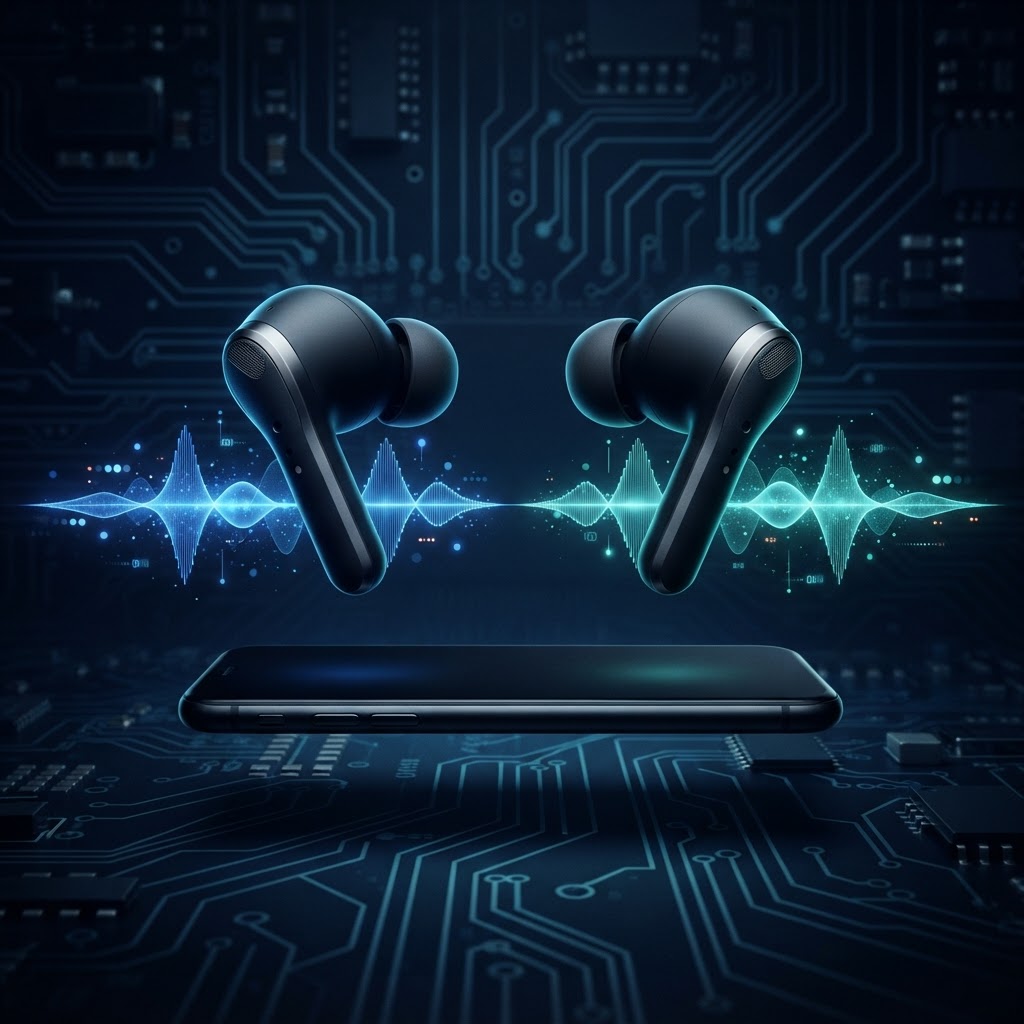
In a multi-stream arrangement, the source can transmit separate, synchronized streams for the left and right earpieces. The phone is no longer handing one earbud a complete assignment and asking it to manage the other side as a subcontractor. Each earpiece gets a cleaner relationship with the source. Both still have to coordinate, but the radio architecture is better suited to the physical reality of stereo earbuds.
That distinction sounds abstract until you consider what it fixes. Independent streams can reduce the amount of relay work performed by one earpiece. They can make stereo timing more predictable. They can improve switching between microphones during a call. They can also reduce the chance that a single weak link turns into a complete stereo failure.
Why Timing Is Audible
Humans are unusually sensitive to timing differences between our ears. A tiny mismatch can damage the center image, make a voice feel strangely detached, or create a faint echo that disappears when one earbud is removed. Music does not need to be dramatically out of sync for the stereo field to feel wrong.
Video and games expose the other side of the problem. A wireless system needs a buffer because radio packets do not arrive with the perfect regularity of a cable. Larger buffers make playback safer, but they add latency. Smaller buffers feel faster, but they leave less room for interference and retransmission. Good earpieces are constantly balancing those two pressures.
Better stream scheduling does not make physics disappear. It does give the system more disciplined timing information. That can help the earpieces maintain a smaller, more stable buffer instead of repeatedly adding delay to recover from uncertainty. For a movie, the result may be better lip sync. For a game, it may be the difference between an input feeling immediate and feeling vaguely soft around the edges.
LC3 Is About Graceful Failure
Codec discussions tend to become a contest over maximum bitrate. That is not the most useful way to judge LC3 in an earpiece. Its design goal is flexibility. It can operate at different frame durations and bitrates, allowing a device to trade efficiency, quality, and resilience instead of treating audio as an all-or-nothing pipe.
In a quiet room with a strong connection, the earpiece can use a quality-oriented setting. On a crowded train platform, where dozens of radios are competing for airtime and a body is blocking one side, the system can favor robustness. A short dropout is still annoying, but a codec and transport layer that fail gracefully are more valuable than a peak number that only exists under ideal conditions.
This is where technical marketing often gets slippery. LE Audio does not guarantee that every pair of earpieces will sound better than every Bluetooth Classic model. Tuning, speaker hardware, amplifier noise, antenna design, and software still decide the final experience. The promise is a more adaptable foundation, not automatic sonic perfection.
The Battery Story Is More Complicated
Multi-stream audio may also help battery life, but the answer is not as simple as “LE means low power.” A radio can be efficient and still consume more energy if the manufacturer pushes high bitrates, aggressive noise cancellation, constant voice detection, or frequent spatial-audio processing.
The advantage comes from reducing unnecessary work. A balanced architecture can prevent one earpiece from acting as a permanent relay station. The source can schedule packets more predictably. The two sides can spend less time awake waiting for each other. Those small savings matter in a device whose battery is measured in tens of milliwatt-hours rather than hundreds.
There is another practical benefit: more even battery use. Anyone who has owned true wireless earpieces has seen the familiar pattern where the right side reaches 12 percent while the left still claims 38 percent. Some of that difference comes from microphones, controls, and radio placement. A less lopsided connection strategy can reduce the burden on whichever side the original design chose as primary.
Calls Are the Quiet Showcase
Music gets the attention, but voice calls may reveal the advantage of the architecture more clearly. A call is not simply a downlink from phone to ears. The earpieces are also collecting microphone signals, suppressing wind and background noise, deciding which voice to emphasize, and returning processed audio to the phone.
With synchronized multi-stream support, designers have more room to treat the two earpieces as a coordinated microphone array. The left side and right side can contribute spatial information without relying on a fragile chain of improvised handoffs. That can improve beamforming and make it easier to reject noise that arrives from a different direction than the wearer’s voice.
Again, the standard does not do all the work. A poor microphone port can still collect wind. A cheap digital signal processor can still make speech sound metallic. But the transport layer stops being quite so much of a limitation, which gives engineers a better starting point.
What Buyers Should Watch For
The presence of Bluetooth 5.3 or Bluetooth 5.4 on a product box does not automatically mean the earpieces support every useful LE Audio feature. Bluetooth version numbers are broad radio-generation labels, not a complete feature list. Look for explicit support for LE Audio, LC3, and multi-stream audio, then check whether the phone supports the same features.
Compatibility is still the frustrating part. The source device, operating system, earpiece chipset, and firmware all need to agree. A pair of earpieces may technically contain the right silicon but use LE Audio only for selected phones or after a firmware update. Some models also keep Bluetooth Classic active for broader compatibility, which means the best mode is not always the mode you are using.
Do not buy on codec language alone. Read independent testing for connection stability, call quality, measured latency, and battery consistency between the two sides. If a product claims gaming latency, find out whether that requires a proprietary mode that disables normal multipoint. Features are never free. The question is what the earpieces give up to provide them.
The Less Dramatic, More Important Future
The next generation of Bluetooth earpieces will not necessarily sound revolutionary when you press play. That is part of the point. The best wireless engineering often appears as an absence: fewer stutters, fewer reconnects, less lip-sync drift, fewer calls where one side suddenly becomes the only side.
LE Audio and synchronized multi-stream transmission address the structural weaknesses that made true wireless audio so difficult in the first place. They give each earpiece a clearer job, give the source better control over timing, and give manufacturers more options when radio conditions turn ugly. LC3 adds a codec that can adapt instead of collapsing when the connection is no longer perfect.
For earpieces, that is a more meaningful upgrade than another promise of thunderous bass. Sound quality still matters, obviously. But once the drivers are good enough, the experience is won or lost in the invisible spaces between packets, clocks, microphones, and batteries. The future of wireless audio may arrive quietly, one synchronized millisecond at a time.