What Is Bluetooth Auracast and Why It Matters for Earpieces
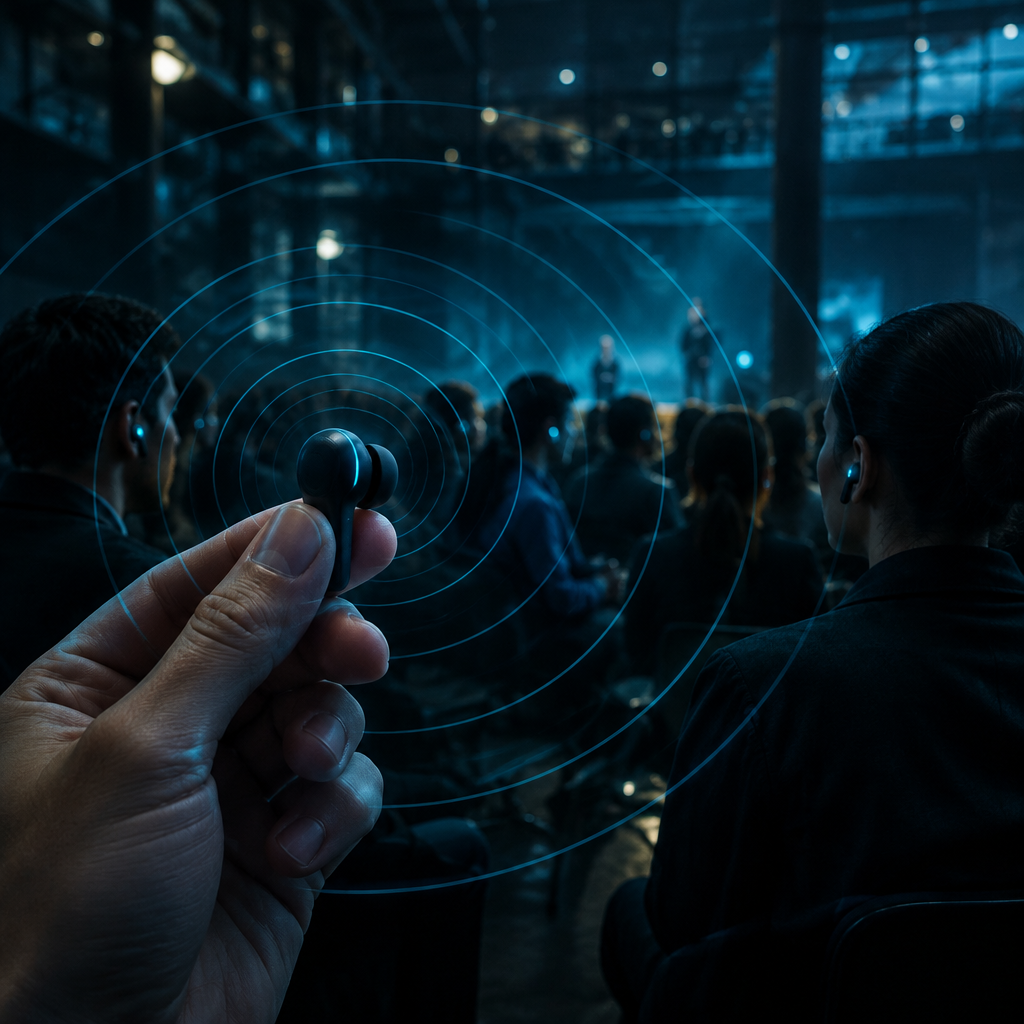
For decades, Bluetooth has operated on a one-to-one principle: a headset connects to a phone, a speaker pairs with a laptop. Bluetooth Auracast fundamentally shatters that paradigm by introducing broadcast capability to the Bluetooth ecosystem. Instead of a single source-to-sink connection, Auracast enables one device to transmit audio to dozens or hundreds of Bluetooth earpieces simultaneously, all tuned to the same broadcast stream.
This shift carries profound implications for earpiece design and usage patterns. Picture walking into an airport terminal where your earbuds automatically receive real-time gate announcements in your preferred language. Or attending a concert where the artist's audio streams directly to your ears at the same quality as the house system. These aren't hypothetical scenarios; they're concrete applications already being tested and deployed across industries.
The Technical Architecture Behind Broadcast Audio
Bluetooth's legacy model relied on pairing: a handshake between two devices that establishes encryption keys, manages power states, and maintains an exclusive connection channel. Auracast abandons exclusivity in favor of a broadcast model modeled on conventional radio, but with critical improvements. The protocol designates a "broadcast source" that transmits encrypted audio packets to a shared frequency, while any compatible earpiece acts as a "broadcast receiver" capable of tuning in without pre-pairing.
The Bluetooth Special Interest Group (SIG) engineered Auracast to address spectrum efficiency concerns by operating within Bluetooth's 2.4 GHz band, the same frequency used for traditional connections. The system employs advanced frequency-hopping spread spectrum (FHSS) to minimize interference from Wi-Fi, microwave ovens, and other devices sharing the spectrum. Unlike Wi-Fi multicast, which degrades rapidly with receiver count, Bluetooth's physical layer architecture maintains signal integrity even when hundreds of earpieces tune to the same broadcast.
Audio codec support in Auracast includes LC3 (Low Complexity Communications Codec), the state-of-the-art codec that achieves transparent audio quality at bitrates as low as 32 kbps. For demanding applications like live music or professional audio production, higher bitrates up to 256 kbps remain supported. This flexibility allows broadcasters to optimize quality versus battery drain based on application requirements.
Real-World Applications Transforming Industries
Transportation hubs represent Auracast's most immediate use case. Major airports are piloting the technology to broadcast gate changes, boarding updates, and multilingual announcements directly to passenger earpieces. The advantage is profound: instead of relying on passengers hearing overhead speakers in noisy terminals, critical announcements reach each person's ears with clarity. Users select their preferred language, and their earpieces filter to receive only relevant broadcasts.
The entertainment sector sees equally transformative potential. Live music venues are experimenting with Auracast to supplement house audio, allowing attendees to receive personalized audio mixes directly to their earbuds. Musicians performing at large festivals can transmit monitor mixes to band members' in-ears without dedicated wireless systems, reducing equipment complexity and cost. Museums and galleries are developing tour systems where visitors' earpieces receive synchronized narration as they move between exhibits, triggered by location beacons.
Healthcare facilities are adopting Auracast for patient communication and staff coordination. Hospital wards can broadcast important alerts to all staff members wearing compatible earpieces simultaneously, improving response times during emergencies. Surgical teams are testing the technology to transmit real-time guidance from remote specialists to surgical earpieces, enhancing collaboration across geographic distances.
Educational institutions from universities to K-12 schools are piloting Auracast for classroom audio distribution. Students with hearing impairments receive direct audio feeds from instructors' microphones, leveling the learning environment. Large lectures can broadcast without requiring students to purchase specialized receivers; any Auracast-compatible earpiece works.
Earpiece Hardware Requirements for Auracast Reception
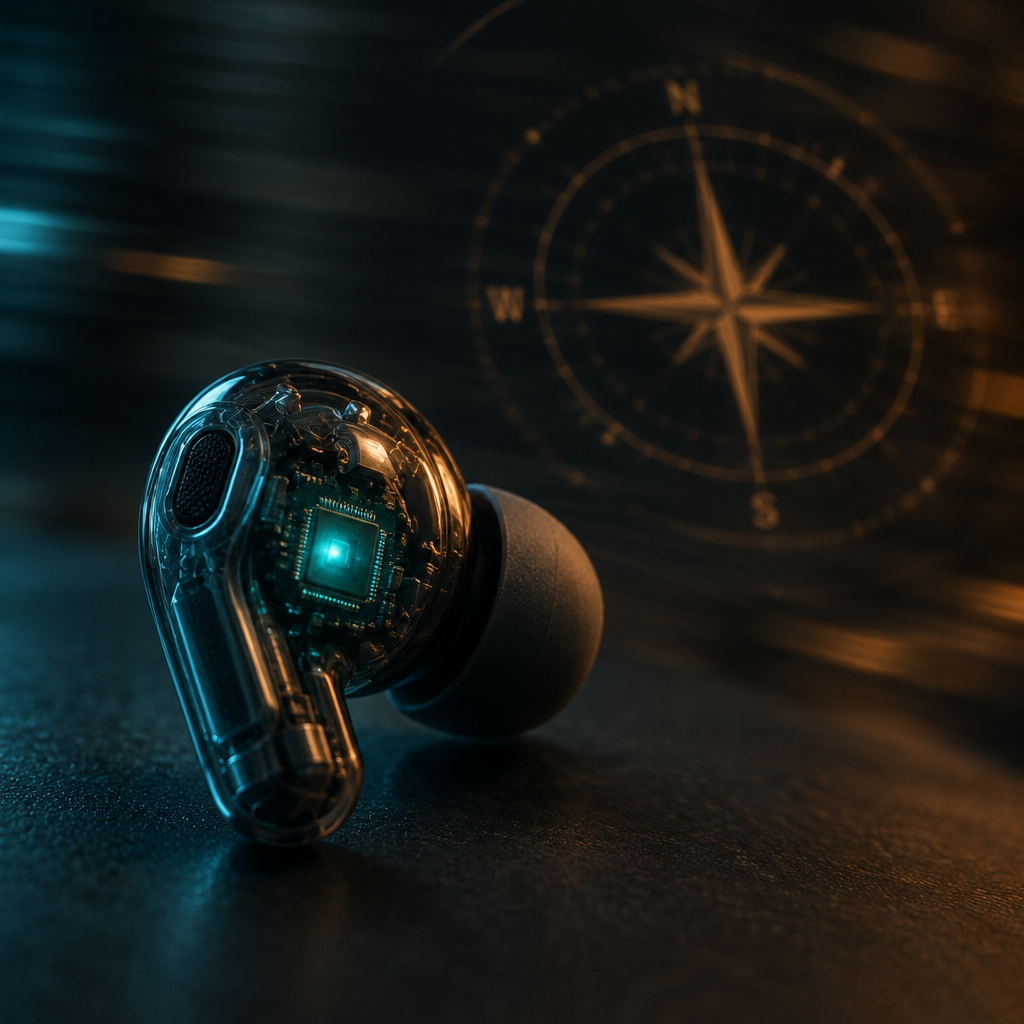
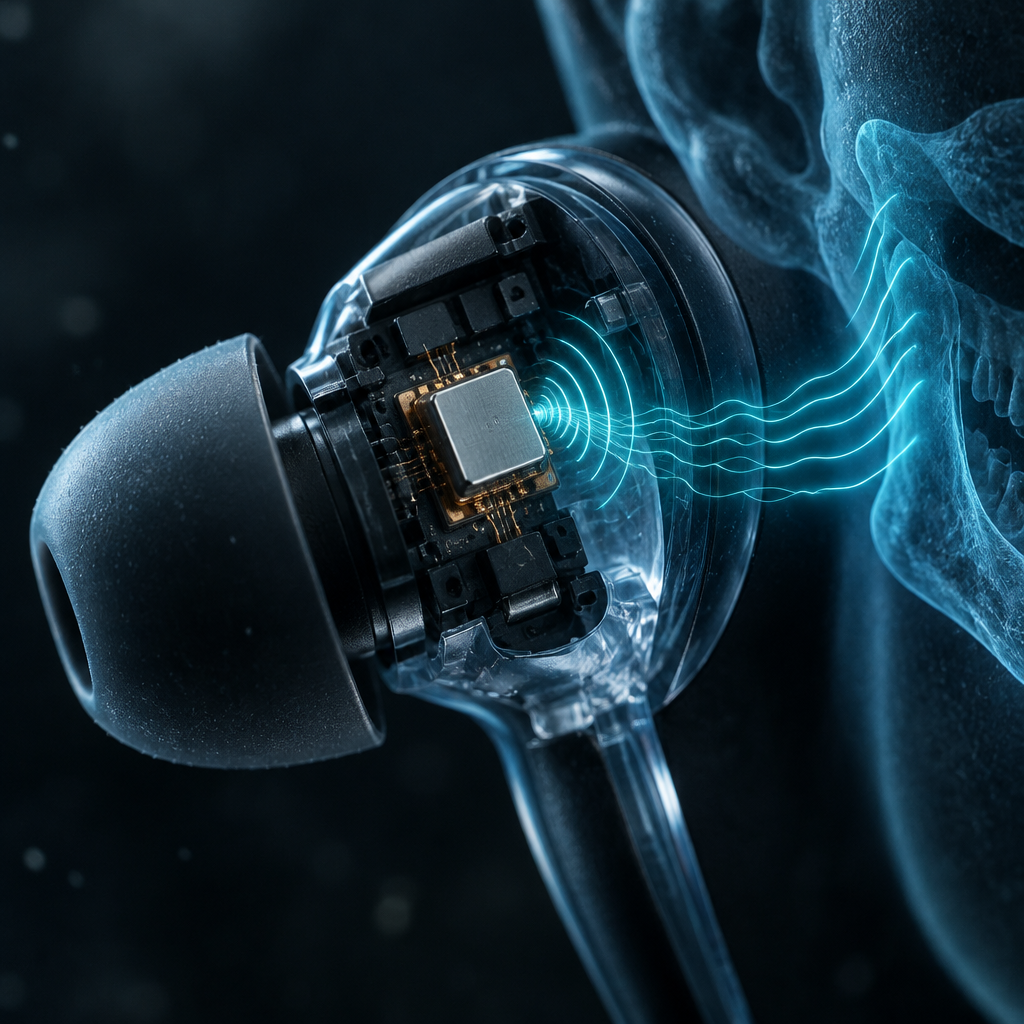
Not every Bluetooth earpiece supports Auracast reception; the feature requires specific hardware capabilities. Devices need Bluetooth 5.4 or later chipsets, which are becoming standard in flagship models from Apple, Samsung, Sony, and Bose. The processor must support Bluetooth Audio Codec and Controller Architecture (BACCA), the standardized framework for advanced audio processing.
Battery implications are significant. Auracast reception consumes less power than traditional connection overhead, since earpieces don't maintain bidirectional pairing state. A typical earpiece can tune in to multiple Auracast sources and switch between them with minimal power drain, extending battery life compared to traditional one-to-one Bluetooth connections. Early testing shows earpieces remain operational for 15-20 hours on a single charge while receiving continuous broadcasts, compared to 8-12 hours for traditional paired listening.
Storage requirements are minimal; Auracast doesn't demand additional onboard memory for broadcast reception. Existing flash storage on modern earpieces easily accommodates the firmware updates required to enable broadcast capability. This means older hardware can often be Auracast-enabled through software updates, provided the Bluetooth chipset itself supports the necessary features.
Security, Privacy, and the Path to Adoption
Broadcasting audio to multiple receivers raises legitimate security and privacy concerns that Bluetooth's architecture addresses directly. All Auracast transmissions are encrypted using 128-bit AES encryption, the same standard securing traditional Bluetooth connections. Broadcast source devices generate unique encryption keys, preventing eavesdropping or unauthorized reception.
Privacy controls allow broadcasters to limit reception to authorized devices. A hospital ward can ensure only hospital-issued earpieces receive critical patient announcements; a concert venue can restrict broadcasts to ticket holders with compatible devices. These controls operate at the Bluetooth layer, not requiring external authentication infrastructure.
Regulatory approval is advancing steadily. The Federal Communications Commission (FCC) and European Telecommunications Standards Institute (ETSI) have approved Auracast operation in their respective regions, and equivalent regulatory bodies worldwide are following suit. Manufacturers can now legally broadcast using the technology without fear of spectrum conflicts.
The Competitive Landscape and Industry Timeline
While Auracast is Bluetooth's innovation, competing standards like Ultra-Wideband (UWB) and proprietary wireless systems are developing broadcast capabilities simultaneously. Apple's spatial audio implementation, though not yet Auracast-native, positions the company to rapidly adopt broadcast features once development reaches maturity. Samsung has already integrated Auracast support in its Galaxy Buds Pro 2, marking the first mainstream commercial implementation.
Industry analysts project accelerating adoption through 2026 and 2027. Universities are committing to Auracast-compatible infrastructure in new lecture halls; major airlines are deploying broadcast systems in terminals; venue operators are testing live performance implementations. Each successful deployment validates the technology and drives earpiece manufacturers to prioritize Auracast support in new models.
What Auracast Means for Earpiece Users
For everyday users, Auracast introduces unprecedented convenience and accessibility. The technology dissolves barriers between hearing-impaired individuals and public spaces, automatically delivering tailored audio to those who need it. Travelers gain real-time flight information without hunting for airport displays. Concert attendees can customize their listening experience without sacrificing shared community enjoyment.
The shift also empowers earpiece manufacturers to innovate beyond single-device design constraints. Earpieces can now function as receivers in public broadcast scenarios, expanding their utility far beyond personal music and calls. This expanded purpose drives new hardware designs, improved audio processing, and longer battery life as manufacturers compete to deliver the best broadcast reception experience.
Conclusion: A New Era for Bluetooth Audio
Bluetooth Auracast represents one of the most significant architectural shifts in wireless audio technology since the protocol's inception. By enabling secure, efficient broadcast to multiple earpieces, the standard solves real-world problems across transportation, entertainment, healthcare, and education. Early deployments are proving the technology's reliability and user demand is driving rapid manufacturer adoption.
For earpiece owners, this is the moment to ensure your next purchase includes Bluetooth 5.4 support. The investment isn't about novelty; it's about future-proofing your audio hardware for an ecosystem that's fundamentally evolving. Within two years, Auracast reception will be a baseline expectation for premium earpieces, the same way noise cancellation was ten years ago. The broadcast revolution is here, and it's arriving through your earbuds.