Bluetooth 6.0 arrived in September 2024. Most people did not notice. That is not an indictment of the specification. It is a statement about how quietly infrastructure upgrades happen in consumer technology while everyone watches the shiny objects. But here we are in mid-2026, with Bluetooth 6.0 phones in pockets and Bluetooth 6.2 already ratified, and you might reasonably ask: what does any of this actually mean for the earpieces I buy today, or six months from now?
The answer is more than you would think. Less than the marketing will claim. And specific in ways that matter if you care about latency, connection stability, device tracking, and the quiet engineering work that determines whether your earpieces feel invisible or constantly demanding your attention.

What Bluetooth 6.0 Actually Changes
Let us skip the jargon thicket and focus on what is genuinely new. The Bluetooth SIG did not release a minor point update. Bluetooth 6.0 introduces Channel Sounding, a technique that enables centimeter-level distance measurement between two Bluetooth devices. It overhauls how devices discover and filter each other through new advertising mechanisms. It reduces latency in the Isochronous Adaptation Layer, the part of the stack that handles real-time audio. And it lays groundwork for future capabilities through an expanded feature set that devices can negotiate at the link layer.
If that paragraph felt like drinking from a firehose, the short version is this: Bluetooth 6.0 makes connections faster to establish, more stable once they exist, lower latency for audio, and enables your phone to tell you not just that your earbud is nearby, but exactly where it is and in what direction. That last one matters more than you might guess if you have ever spent twenty minutes searching for a single earbud that slipped between couch cushions.
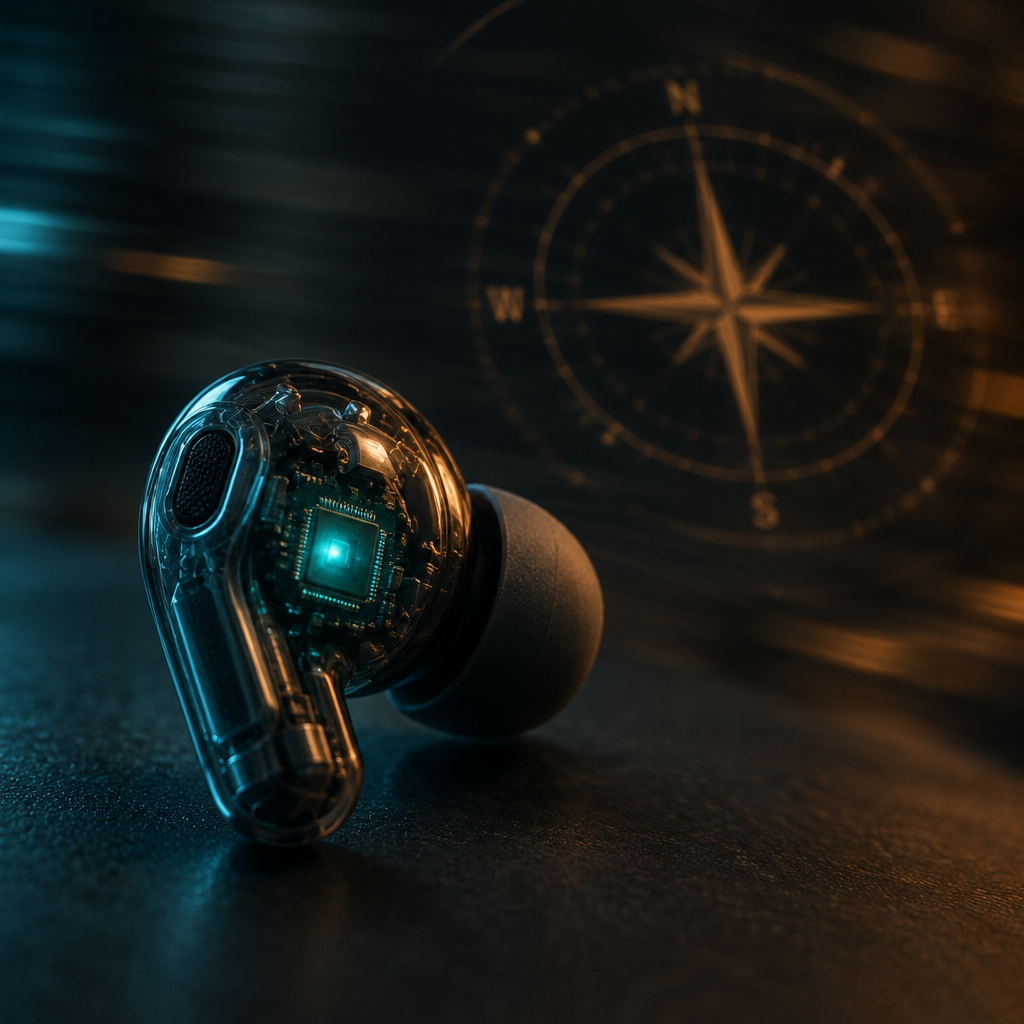
Channel Sounding: Find My Earbuds, Finally
The feature generating the most consumer-facing excitement is Bluetooth Channel Sounding. Unlike traditional RSSI-based proximity estimation, which basically measures signal strength and guesses at distance with all the precision of throwing a dart blindfolded, Channel Sounding uses phase-based ranging and round-trip time measurements to calculate actual distance. The result is accuracy within centimeters, not meters. And crucially, it is secure. The protocol includes built-in protections against relay attacks and distance spoofing, which means it is suitable for digital key applications and not just finding your misplaced tech.
For earpieces, Channel Sounding transforms the lost-bud scenario. Current implementations of Find My across Apple, Google, and Samsung ecosystems rely on a mix of Bluetooth signal strength, ultra-wideband where available, and last-known-location reporting through crowd-sourced networks. UWB is precise but power-hungry and expensive. Channel Sounding achieves comparable precision using standard Bluetooth radios at a fraction of the power draw. When Bluetooth 6.0 earpieces arrive, the tracking experience should feel qualitatively different: not "your earbud is somewhere in this room" but "your earbud is under the left cushion of the grey armchair, thirty centimeters from your right hand."
The catch, and there is always a catch, is that both the phone and the earpiece need Bluetooth 6.0 silicon. The iPhone 17 family, Google Pixel 10 series, and Samsung Galaxy S26 all ship with Bluetooth 6.0 modems. The earpiece side is not there yet. As of summer 2026, almost every wireless earpiece on the market still runs Bluetooth 5.3 or 5.4. The chipmakers, Qualcomm and MediaTek primarily, have Bluetooth 6.0-ready audio SoCs in their roadmaps, but the design-to-shelf pipeline for consumer audio is twelve to eighteen months. Expect the first Bluetooth 6.0 earpieces in late 2026 or early 2027.
ISOAL Enhancement: Latency That Actually Matters
Latency in Bluetooth audio is an old and mostly solved problem for video watching. Modern codecs and buffer management have reduced the gap between picture and sound to the point where lip sync issues are rare in streaming apps. But gaming and augmented reality are different beasts. In a first-person shooter, 40 milliseconds of audio latency is the difference between hearing the footstep and being dead before you heard it. In AR, spatial audio cues need to align with visual overlays in real time, or the illusion breaks and your brain rejects the experience as uncanny.
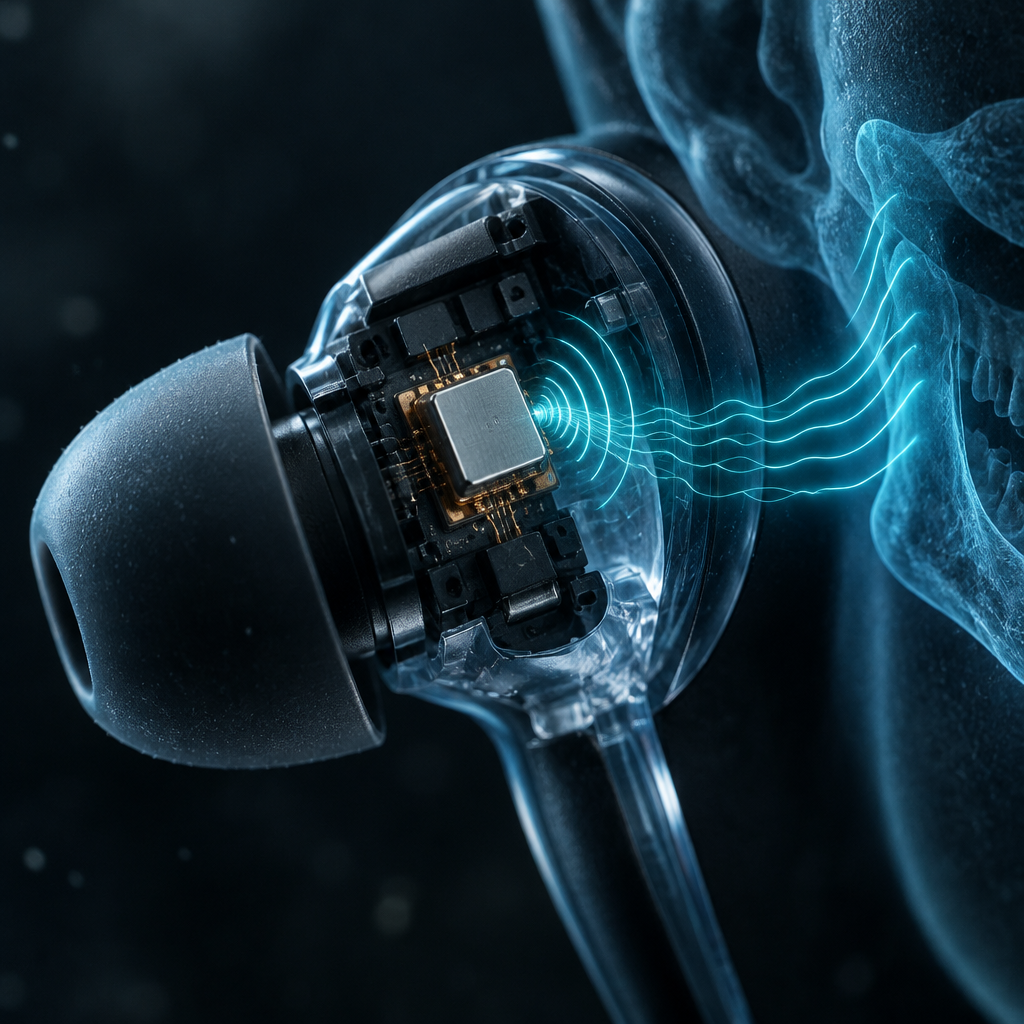
The ISOAL Enhancement in Bluetooth 6.0 addresses this by introducing a new framing mode that reduces the buffering overhead required to segment large audio frames into the small link-layer packets that Bluetooth LE uses for isochronous transmission. In plain English: the data gets from the phone to the earpiece with fewer intermediate steps and less waiting around. The improvement is not theoretical. Early testing by silicon vendors suggests latency reductions of 15 to 30 percent compared to equivalent Bluetooth 5.4 configurations using the same codec. For mobile gaming on wireless earpieces, that is the difference between playable and competitive.
Combine this with LE Audio and the LC3 codec, which already offers lower latency than Classic Audio SBC at comparable bitrates, and the Bluetooth 6.0 stack starts to look like the first version of the standard genuinely designed for the full range of audio applications rather than one optimized for music and retrofitted for everything else.
Better Multipoint Through Smarter Advertising
Bluetooth multipoint, the ability to connect earpieces to two devices simultaneously and switch between them, has been a feature for years. It has also been intermittently maddening for years. The logic that determines which device gets priority, when to switch, and how to handle overlapping audio streams is fragile. Sometimes it works flawlessly. Sometimes your earpieces refuse to release the connection to your laptop even though you have not touched it in three hours and you are actively pressing play on your phone.
Bluetooth 6.0 introduces Decision-Based Advertising Filtering and Monitoring Advertisers, two features that together make the discovery and reconnection process smarter. Decision-Based Advertising Filtering allows a scanning device, your phone, to evaluate the content of an initial advertising packet on a primary channel and decide whether to continue scanning on secondary channels for the full payload. This sounds textbook-dry, but the practical effect is that your devices waste less time and energy evaluating irrelevant connections. Monitoring Advertisers lets the host know when a previously discovered device moves in and out of range, so your phone can maintain an accurate picture of which earpieces are actually available for connection rather than blindly attempting to connect to something that left the room twenty minutes ago.
The net effect for multipoint users should be faster switching between devices, fewer failed reconnections, and less battery drain from the constant background scanning that current implementations rely on. Again, both ends of the connection need the new silicon, so this is a medium-term improvement rather than something you get with a firmware update.
The Bluetooth 6.0 Phone Gap
Here is where the timeline gets slightly absurd in a way that is entirely normal for Bluetooth. The specification was finalized in September 2024. The first phones with Bluetooth 6.0 modems shipped in late 2025, with broad flagship adoption in early 2026. The Bluetooth 6.2 core specification arrived in late 2025, adding further refinements. And yet, as of July 2026, you cannot buy a single pair of Bluetooth 6.0 wireless earpieces from a major manufacturer.
This is not unusual. Bluetooth version adoption in audio accessories always lags phones by twelve to eighteen months because audio manufacturers wait for mature chipset platforms, validated reference designs, and sufficient phone-side penetration to justify the per-unit cost increase of the newer silicon. The Qualcomm S7 and S7 Pro Gen 2 platforms, which power most premium wireless earpieces in 2026, still top out at Bluetooth 5.4. The S8 platform, expected to ship in sample quantities in the second half of 2026, will reportedly include Bluetooth 6.0 support.
The practical consumer advice is straightforward: if you need earpieces today, buy the best Bluetooth 5.4 earpieces you can afford. The audio quality, noise cancellation, and battery life improvements in current-generation flagships are real and immediate. Bluetooth 6.0 will not make your music sound better. It will make your connection more reliable, your latency lower, and your lost-bud recovery less infuriating, but none of that helps if no earpieces support it yet.
What About LE Audio and Auracast?
Bluetooth 6.0 is separate from LE Audio, but they converge in important ways. LE Audio introduced the LC3 codec, Auracast broadcast audio, and the isochronous channels that make true wireless stereo earpieces more power-efficient. Bluetooth 6.0 improves the transport layer that LE Audio runs on top of. They are complementary, not competing, standards.
Auracast, in particular, benefits from Bluetooth 6.0 improvements in advertising and connection management. Auracast broadcasts are essentially one-way audio streams that any compatible device can tune into, like a radio station. The discovery and connection process for Auracast involves scanning for broadcast sources, which is exactly the kind of operation that Decision-Based Advertising Filtering and Monitoring Advertisers optimize. In practice, Auracast on Bluetooth 6.0 should be faster to discover and more reliable to maintain than on Bluetooth 5.4, especially in environments with many competing broadcast sources like airports, gyms, or conference venues.
The broader arc here is that Bluetooth is gradually becoming less of a point-to-point cable replacement and more of a personal area networking technology. Bluetooth 6.0 is the specification where that transition becomes visible in the feature set rather than just the architectural diagrams.
Power Efficiency: The Quiet Killer Feature
Every Bluetooth version claims better power efficiency. Bluetooth 6.0 actually has some structural reasons to deliver it. The advertising improvements mean less time spent scanning. The ISOAL enhancement means fewer buffer operations per audio frame. The Frame Space Update allows more flexible timing between packet transmissions, which lets devices spend more time in low-power sleep states between active transmissions.
None of these individually are revolutionary. Together, they could extend real-world earpiece battery life by ten to fifteen percent compared to equivalent Bluetooth 5.4 hardware, all else being equal. That is not the kind of number that sells devices on a spec sheet. It is the kind of improvement you notice three months into ownership when you realize you are charging the case less often than you used to and you have not thought about battery anxiety in weeks. Those quiet improvements are, in many ways, more valuable than the headline features.
What to Actually Do in 2026
If you are shopping for earpieces in summer 2026, here is the honest framework. Buy based on sound quality, ANC performance, comfort, and battery life, the things that are real and measurable today. Bluetooth 5.4 is not obsolete and will not be for years. The audio pipeline that matters most, the codec, the driver, the tuning, the ANC algorithm, operates independently of the Bluetooth version number.
If you can wait until late 2026 or early 2027, and you care specifically about multipoint stability, mobile gaming latency, or precision device tracking, then Bluetooth 6.0 earpieces will be worth the wait. If you just want great sound for music and podcasts, buy now. The Sony WF-1000XM6, Apple AirPods Pro 3, Samsung Galaxy Buds 3 Pro, and Bose QuietComfort Earbuds III are all mature products at the top of their game, and none of them will become bad earpieces the day Bluetooth 6.0 buds ship.
Bluetooth 6.0 is a foundation, not a revolution. It fixes real problems in the current stack. It enables genuinely new capabilities in tracking and latency. But it does not change what makes an earpiece good, and the earpieces that support it are still months away. Know what you are buying, know what you are waiting for, and do not let a version number make the decision for you.