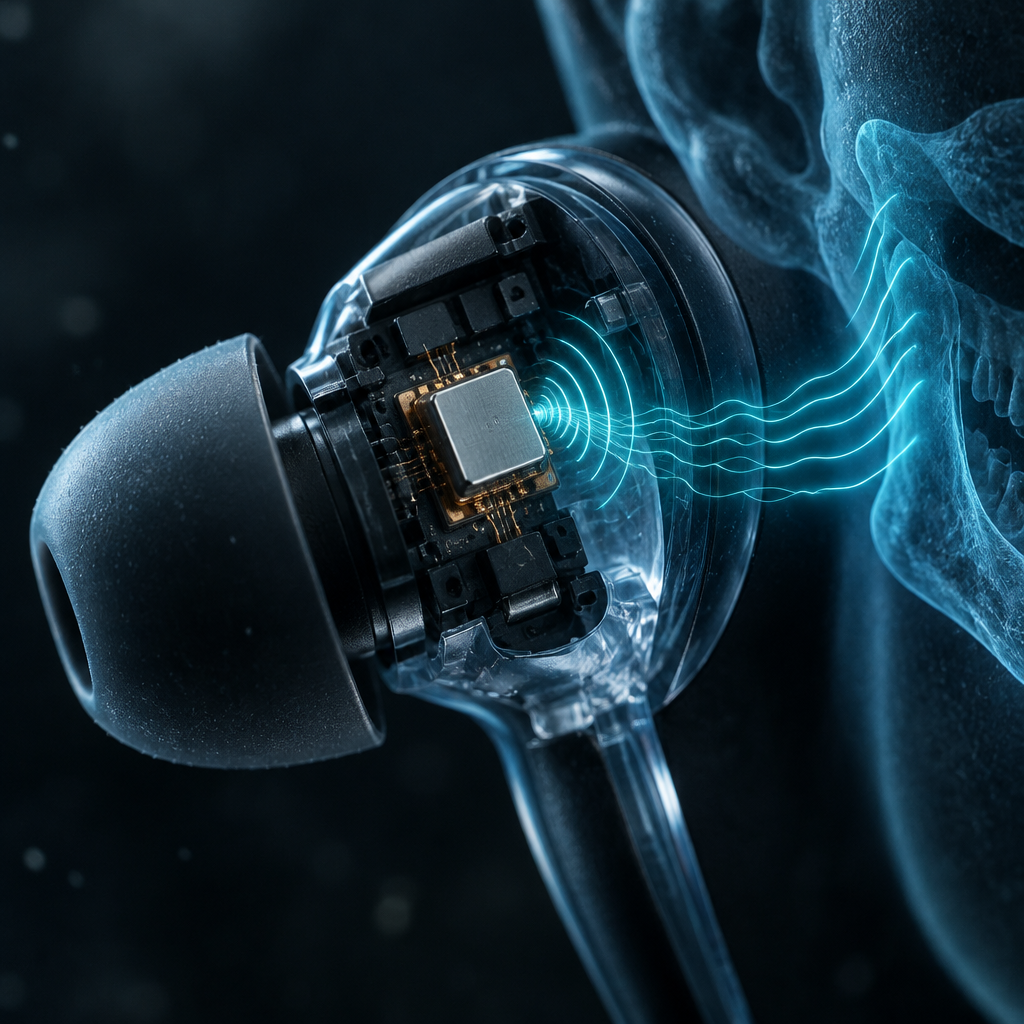
For decades, wireless headphones meant sacrifice. You could either have excellent sound or true mobility, but not both. Qualcomm's aptX Lossless changes that equation entirely, promising CD-quality audio over Bluetooth without the compression that has historically defined every wireless codec since the beginning.
The challenge of lossless wireless audio is ancient in technical terms. Since the Bluetooth standard launched in 1999, every codec in the ecosystem has required compression to fit the bandwidth constraints of the 2.4 GHz spectrum. SBC, AAC, aptX, aptX HD, LDAC, LHDC, LC3: all of them trim bits from the audio stream to make it fit. The promise of aptX Lossless is radical: transmit every single bit of a CD-quality recording (16-bit, 44.1 kHz) over Bluetooth without loss.
What Lossless Actually Means in This Context
Before diving into how Qualcomm achieved this, it helps to understand what "lossless" really means in the world of wireless audio, because the terminology gets muddied fast. A lossless codec preserves every piece of data from the original file. When you compress a WAV or FLAC recording with a lossless codec like FLAC or ALAC, the decompressed output is byte-for-byte identical to the source. No information is lost; only redundancy is removed.
Lossy codecs, which include every Bluetooth audio standard before aptX Lossless, work differently. They analyze the audio and discard information the human ear is unlikely to notice. MP3 throws away quiet sounds masked by loud ones. AAC removes frequencies outside the typical hearing range. aptX HD uses psychoacoustic modeling to trim bits that wouldn't affect perceived quality. All of these trade some fidelity for bandwidth efficiency.
The Bluetooth standard allocated 345 kilobits per second for audio transmission at 2 Mbps link speed. To transmit CD-quality audio at full bitrate (1.4 Mbps), you'd need compression that removes roughly 75% of the data. Every previous codec accepted this tradeoff. aptX Lossless, announced by Qualcomm in 2021 and finally reaching consumer headphones in the mid-2020s, does not.
How aptX Lossless Achieves the Impossible
The secret sits at the intersection of three technical advances: higher Bluetooth bandwidth from Bluetooth 5.2 and 5.3, more efficient lossless compression algorithms, and aggressive error correction that keeps the signal intact even in noisy environments.
Bluetooth 5.2 doubled the potential bandwidth available to audio by introducing new link speeds and advertising channel improvements that freed capacity for payload data. Bluetooth 5.3, released in 2023, added further refinements including channel sounding for better interference avoidance in the crowded 2.4 GHz band. These changes created breathing room that hadn't existed in earlier specs.
Within that new bandwidth, aptX Lossless applies a compression algorithm that mirrors techniques used in audio archival. It doesn't discard information; it exploits redundancy. Like FLAC, which compresses uncompressed audio by 30-50% by encoding the differences between consecutive samples rather than the absolute values, aptX Lossless uses predictive coding combined with entropy encoding. The algorithm models the audio stream, predicts what the next sample should be based on historical patterns, and encodes only the prediction error. When the prediction is accurate, the error is tiny, and the entropy encoding compresses it further.
The bitrate required is stunning in its efficiency. CD-quality audio (1.4 Mbps uncompressed) compresses down to approximately 420 kilobits per second with aptX Lossless in ideal conditions. That fits comfortably within modern Bluetooth bandwidth, leaving room for error correction codes that protect against dropouts and interference.
This is where aptX Lossless diverges from consumer FLAC, which offers zero error protection. If a file is corrupted during download, FLAC decompresses to garbage. Bluetooth travels through walls and crowds, so aptX Lossless wraps every packet in forward error correction (FEC). If 5% of the data is lost in transmission, FEC can reconstruct it. The tradeoff is modest: the additional overhead brings the bitrate to approximately 500 kbps at typical link speeds, still well under what Bluetooth 5.2+ can handle.
The Reality: Why Your Headphones Still Can't Use It
Here's where the story gets complicated. aptX Lossless was announced in September 2021. We're now in the middle of 2026, and the consumer adoption rate remains glacial.
The bottleneck is hardware. Qualcomm certifies the codec through Snapdragon Sound, its premium audio platform that bundles aptX Lossless with related technologies like spatial audio and active noise cancellation. Only high-end smartphones with recent Snapdragon processors support it. Apple's iPhones don't use Snapdragon; they use Apple's own audio stack, which means no aptX Lossless support on iPhone. Android devices with snapdragon chips manufactured before late 2023 lack the necessary firmware. On the headphone side, manufacturers must license the codec, design receiver hardware that can decompress at low power, and validate the entire pipeline before launch.
The first consumer headphones to ship with aptX Lossless support arrived in late 2024. By June 2026, you can count them on two hands. They're expensive, typically $400 and up. And they only deliver the lossless advantage if your source device, your streaming service, and your headphones all support it simultaneously.
Tidal is the only major music streaming service pushing lossless content distribution; Spotify, Apple Music, Amazon Music, and YouTube Music remain lossy-only. So the practical scenario is narrow: a Snapdragon Android device, a Tidal subscription, aptX Lossless headphones, and a direct Bluetooth connection (no intermediary devices).
Is It Actually Better?
This is where audiophiles will fight with physics. Technically, lossless audio contains more information than lossy, so by definition, a lossless codec is more accurate. Whether humans can hear the difference depends on source quality, playback equipment, listener hearing acuity, and a hundred contextual factors.
Double-blind listening tests have repeatedly shown that most listeners cannot distinguish between high-quality lossy codecs (aptX HD, LDAC at 990 kbps) and lossless audio in casual conditions. When you're on public transit with ambient noise, the environmental sound floor masks the difference entirely. Even in quiet rooms, the differences are often subtle, appearing as slightly better instrument separation or more natural reverb decay rather than dramatic improvements.
Where lossless shines is with certain genres and recording qualities. Classical music with subtle dynamics, jazz with precise cymbal decay, and orchestral recordings benefit from lossless transmission more than pop or hip-hop. High-resolution recordings (24-bit or higher sample rate) show more obvious improvement because they contain information that lossy codecs actively discard.
The real advantage of aptX Lossless is philosophical rather than immediately perceptible. You're getting exactly what the artist recorded without any algorithmic interpretation in between. That has value beyond audibility.
The Bigger Picture: What This Means for Wireless Audio
aptX Lossless matters less as a consumer feature right now and more as a proof of concept. It demonstrates that lossless wireless transmission is technically feasible, bandwidth-efficient, and compatible with real-world Bluetooth interference patterns. That knowledge shifts the entire industry's trajectory.
In the next 2-3 years, expect streaming services to expand lossless content catalogs beyond Tidal. Smartphone manufacturers, especially those using Snapdragon, will include aptX Lossless as a baseline feature in premium and mid-range models. Headphone manufacturers will drop the licensing costs as adoption scales.
By 2028, lossless Bluetooth audio might finally be the default for anyone who cares about fidelity, rather than a luxury checkbox on $600 earbuds. That represents a genuine shift: for the first time since wireless audio began, "wireless" won't automatically mean "compromised sound."
Until then, aptX Lossless remains what it has been since announcement: a technological achievement looking for an ecosystem to match it. The codec is ready. The headphones exist. The phones have the power. What's missing is the services and the critical mass of users who need lossless badly enough to reconfigure their entire audio setup around it. That day is coming, just not yet.