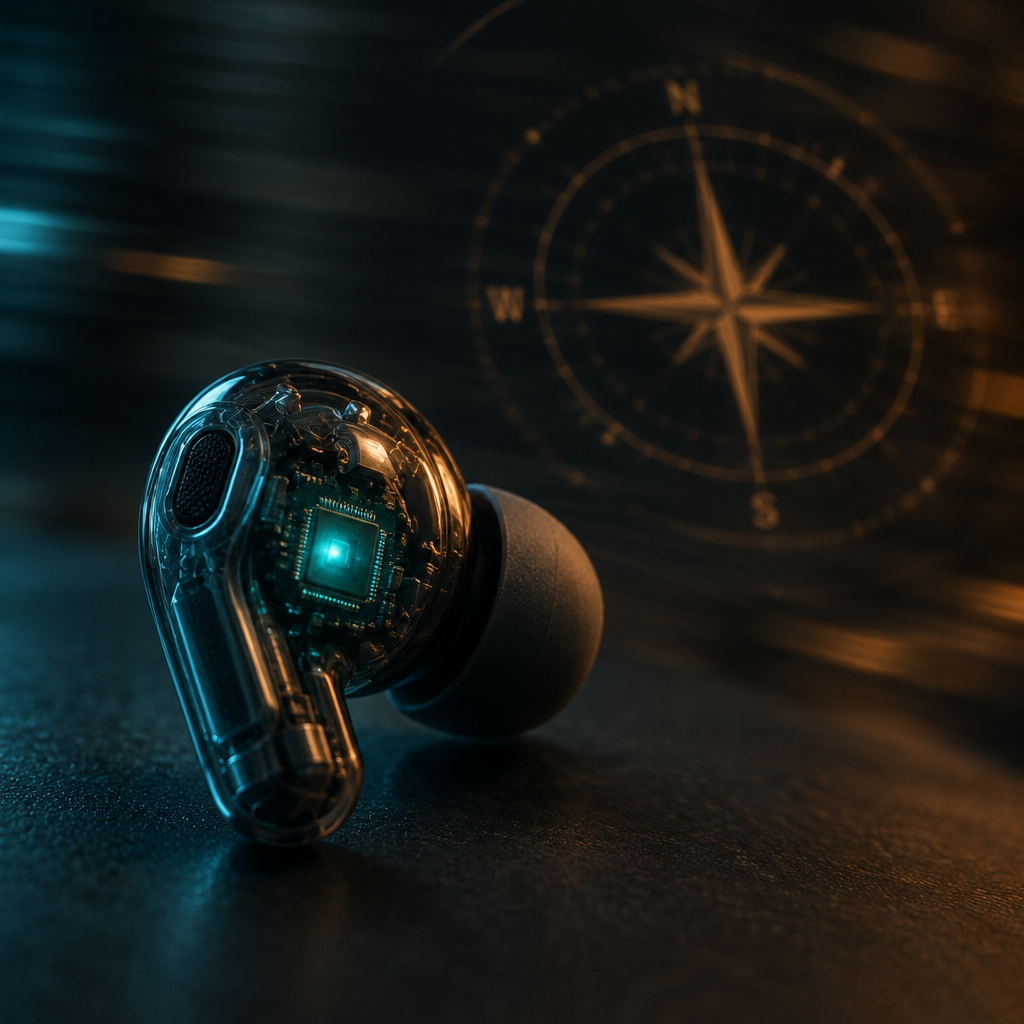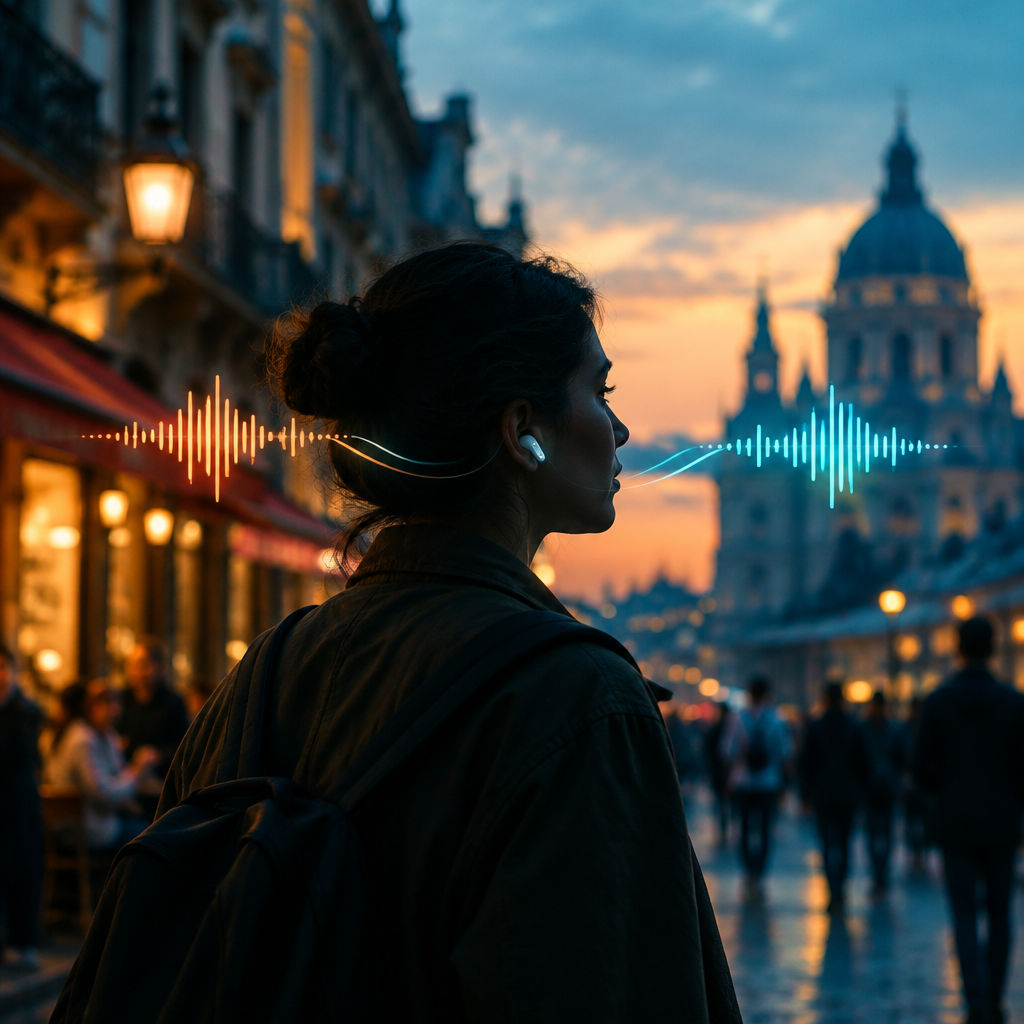
You have probably seen the videos by now. Someone slides a pair of earpieces into their ears, walks up to a stranger in a Tokyo subway or a Lisbon cafe, and starts speaking in English. The stranger replies in Japanese or Portuguese. Both people understand each other in real time. No phone in hand, no awkward pause while an app loads, no human interpreter hovering nearby. The earpieces handle it all.
What looked like a parlor trick in 2024 has become a legitimate tool in 2026. The global translator earbuds market is growing at roughly 13 percent annually, with the broader language translation device sector projected to reach $15.6 billion within a few years. The numbers tell part of the story. The technology tells the rest.
The Problem Nobody Talks About: Voice Capture in Noisy Environments
Traditional translation apps fail for a reason that has nothing to do with translation quality. They fail because phone microphones are terrible at isolating a single voice in a crowded room. You open Google Translate in a noisy restaurant, try to order in Spanish, and the app picks up the clatter of dishes, the music playing overhead, and the conversation at the next table. The result is garbled input that produces garbled output. The translation engine never had a chance.
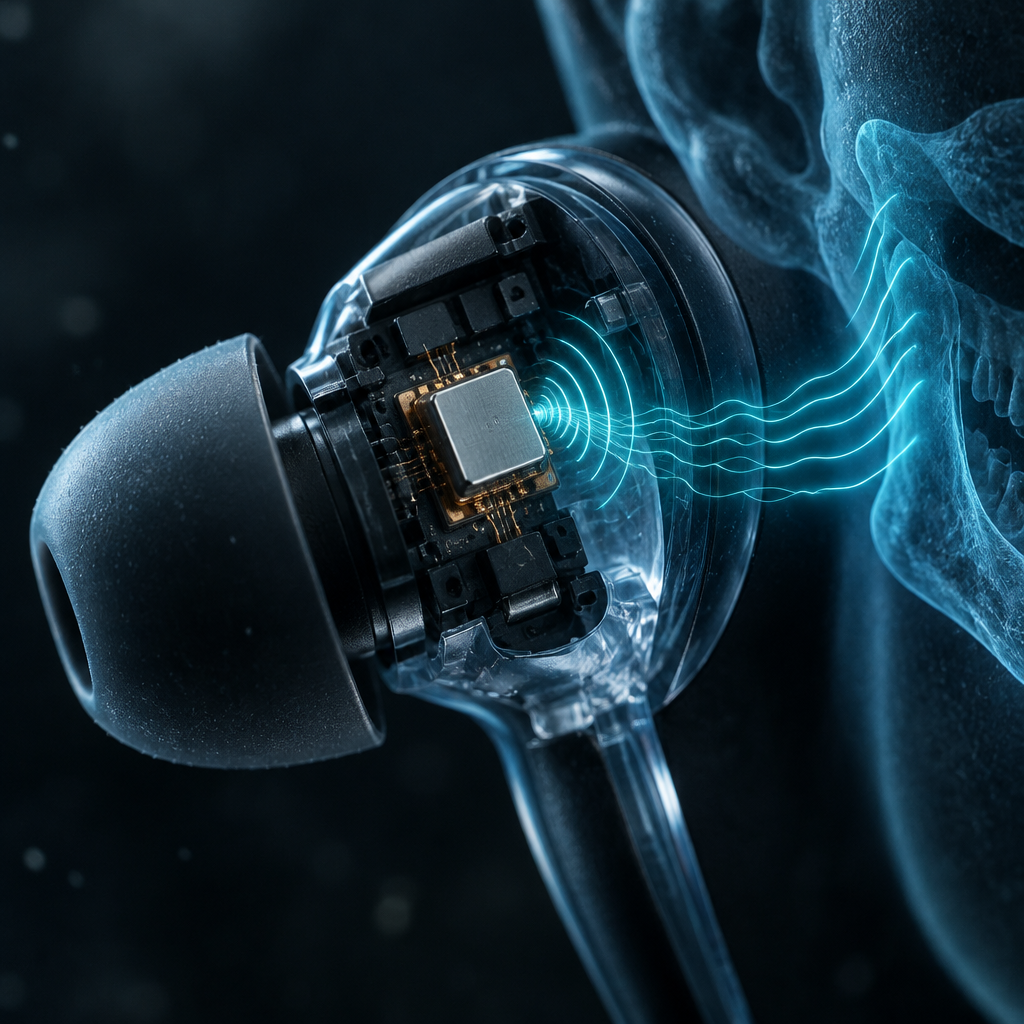
This is where translation earpieces gained their first real advantage. At CES 2026, Timekettle introduced what it calls next-generation bone conduction voice capture. Instead of relying solely on air-conducted sound picked up by an outward-facing microphone, the earpieces use a bone conduction sensor that detects vibrations through the user's skull when they speak. The body itself becomes the primary input channel. Background noise matters less because the sensor is listening to the speaker, not the room.
The implications extend well beyond restaurants. Construction sites, factory floors, outdoor markets, public transit terminals. Any environment where ambient noise would overwhelm a conventional microphone is now fair game. The bone conduction approach does not eliminate noise cancellation requirements entirely, but it shifts the signal-to-noise ratio dramatically in favor of the person wearing the earpieces.
SOTA: The Translation Engine Selector Nobody Sees
Here is something that separates serious translation hardware from a gimmick. No single AI model is best at every language pair. A model trained heavily on English-to-Mandarin might stumble with English-to-Arabic. A model optimized for European languages might produce clunky, literal translations when handling tonal Southeast Asian languages. The best translation for each conversation depends on which languages are involved, the direction of translation, the speaking style, and even the accent.
Timekettle's SOTA Translation Engine Selector tackles this head-on. Rather than committing to a single model, the system dynamically identifies the optimal translation engine for each language pair and conversational scenario in real time. The user never sees this happening. They just notice that translations feel faster and more natural, regardless of whether they are switching from French to Korean or from Spanish to German.
This is a fundamentally different architecture than what translation apps offer. When you use a smartphone translation app, you are locked into whatever model the app developer chose. If it performs poorly on a particular language pair, your only option is to try a different app. The earpiece approach bakes the switching logic into the firmware, invisible to the user but consequential to the result.
HybridComm 3.0: Where Audio Processing Meets Translation
Timekettle's HybridComm 3.0 architecture deserves attention because it addresses a bottleneck that plagued earlier translation earbuds. The problem was sequential. First, the device captured audio. Then it processed the audio. Then it sent data to the cloud. Then the cloud ran the translation model. Then the translated audio came back. Each step added latency, and latency is the enemy of natural conversation.
HybridComm 3.0 parallelizes much of this pipeline. Audio capture, noise reduction, speech recognition, and translation dispatch happen in overlapping stages rather than strict sequence. The result is latency that has dropped below two seconds for major language pairs in optimal conditions. That is not instantaneous, but it is fast enough for conversational use. You speak, there is a brief pause, and the translated audio plays. The other person responds, and the cycle repeats.
The W4 Pro, Timekettle's flagship model, supports 52 languages and 106 accents. More importantly, it handles bidirectional phone and video call translations. That means you can call someone who speaks a language you do not understand, and the earpieces translate both sides of the conversation in real time. For business users dealing with international clients, this eliminates the need to schedule a human interpreter for every call.
Offline Translation: The Frontier That Matters Most
Cloud-based translation is impressive until you lose your internet connection. Anyone who has traveled internationally knows the feeling. You step off a plane, your phone does not have a local SIM yet, the airport WiFi requires a captcha in a language you cannot read, and suddenly your translation device is a very expensive paperweight.
The W4 Pro addresses this with offline translation support for 13 language pairs across 8 major languages, including English to Spanish, Chinese, French, German, and Japanese. The offline mode is not as comprehensive as the cloud version. It handles fewer languages and occasionally produces less nuanced translations. But it works. In an airport, on a mountain trail, in a rural market, the earpieces keep functioning.
Timekettle's separate T1 handheld device pushes this further. It is being marketed as the world's first translation device equipped with an AI edge small model, meaning the translation engine runs locally on the device rather than in the cloud. This is a different approach entirely. Instead of downloading compressed translation data for offline use, the device runs a lightweight neural network on its own processor. The trade-off is that edge models are smaller and less capable than their cloud counterparts, but the independence from connectivity is a genuine advantage for frequent travelers.
The Competitive Landscape: Not Just Timekettle
Timekettle dominates the conversation, but the field is wider. iFlytek, the Chinese AI company, has been developing real-time translation earbuds that leverage its deep expertise in speech recognition and natural language processing. iFlytek's strength is in Asian language pairs, where its models often outperform Western alternatives in both accuracy and speed. For Mandarin-to-Cantonese, Mandarin-to-Japanese, or Mandarin-to-Korean translation, iFlytek's earpieces have shown measurable advantages.
Meanwhile, mainstream earbuds from Apple, Samsung, and Google are edging into translation territory. The AirPods Pro 3 and Galaxy Buds 4 Pro both offer translation features through their respective ecosystems. They are not dedicated translation devices, but they benefit from massive computational resources and tight integration with smartphone hardware. For casual users who need translation occasionally rather than daily, these general-purpose earbuds may suffice.
The question is whether dedicated translation hardware will survive the encroachment of general-purpose earbuds. The answer depends on how much the specialized features matter. Bone conduction voice capture, dynamic engine selection, and offline edge models are hard to replicate in a device optimized primarily for music playback and noise cancellation. The gap will narrow, but it will not close entirely. Not in 2026.
What Still Needs to Improve
Translation earpieces have not solved everything. Latency remains the most persistent issue. Even the best devices introduce a delay between speech and translated output that creates awkward pauses in fast-paced conversation. Two seconds is workable for a business meeting where formality provides natural breaks. It is less workable for casual social situations where conversation flows quickly and any pause feels unnatural.
Accuracy with regional accents and dialects is another frontier. Supporting 106 accents sounds impressive until you realize that regional dialects within a single language can vary as much as entirely different languages. A device that handles standard Arabic perfectly might struggle with Moroccan Arabic or Gulf Arabic. The SOTA engine selector helps by routing to the best model, but the models themselves still need improvement in dialect coverage.
Battery life is a practical concern that gets less attention than it deserves. Translation is computationally intensive. Running speech recognition, noise reduction, and translation models simultaneously drains power faster than listening to music. Most translation earbuds offer 5 to 7 hours of continuous use, which sounds adequate until you are on a 14-hour international flight and the earpieces die before you land.
Where This Is Headed
The trajectory is clear. Translation earpieces will get smaller, faster, and more independent from cloud infrastructure. Edge models will improve as on-device processors get more powerful. Latency will drop below one second within the next generation or two. Accent and dialect coverage will expand as training data grows. Battery efficiency will improve as chips designed specifically for AI inference replace general-purpose processors.
The more interesting question is what happens when translation earpieces become good enough that they are no longer a specialized device but a standard feature. If every pair of earbuds can translate 50 languages with sub-second latency, the barrier to cross-language communication drops to near zero. Business travel changes. Tourism changes. Immigration and integration change. The technology stops being a gadget and starts being infrastructure.
We are not there yet. But we are closer than most people realize. The earpieces available today are not perfect, but they work well enough to be useful in real situations. That is the threshold that separates a novelty from a tool. Translation earpieces crossed it in 2026.