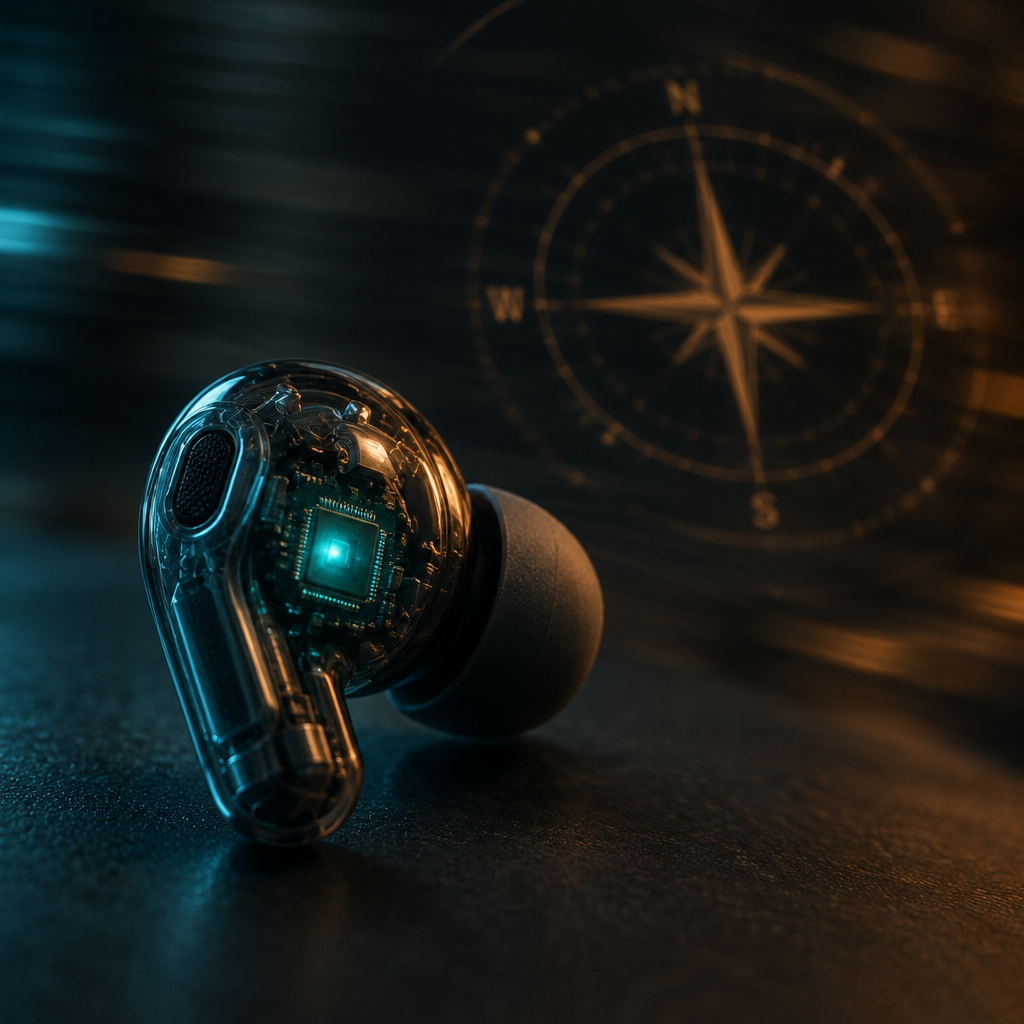
Active noise cancellation in earpieces has evolved from a marketing gimmick into a genuinely useful feature that separates $30 models from $200+ flagships. The difference isn't just "we added more mics." The real story is how those microphones, the drivers themselves, the signal processing pipeline, and the power budget all fit into a space smaller than your pinky fingernail, then coordinate with each other in real time. Understanding what's actually happening inside an earbud when it cancels noise reveals why some models sound perfect in quiet rooms but struggle on airplanes, and why others do the opposite.
The Basic Physics of Cancellation
Active noise cancellation works on a simple principle: if you can generate a sound wave that's inverted (180-degree phase shift) from the incoming noise, the two waves collapse and cancel each other out. In theory, this is elegant. In practice, it's messy. The incoming noise reaches your ear slightly delayed after bouncing off your ear canal walls, your skin, and the earbud housing itself. The cancellation signal generated by the earbud's speaker has to account for all of those reflections and delays. Get the timing wrong by even a few milliseconds, and instead of cancellation you get destructive interference that makes noise worse. Get it right and a noisy coffee shop becomes almost silent.
The challenge is that every human ear is shaped differently. The exact path that sound takes from outside the earbud to your eardrum depends on your ear canal geometry, your skin thickness, the density of your ear wax, and how deep the earbud sits. This is why even the best ANC earpieces sound better to some people than others. The algorithm is powerful, but physics doesn't care about power.
Feedforward vs. Feedback Sensing
The microphone setup is where earpieces diverge most dramatically from over-ear headphones. In large headphones, you can fit two separate microphones on the outside and one or two on the inside. In earpieces, you have maybe 1.5 millimeters to work with per side.
Feedforward ANC places a microphone on the outside of the earbud, facing outward. This mic picks up noise before it reaches your ear, sending that signal to the processor, which inverts it and pumps the anti-noise through the speaker. The advantage is obvious: the microphone hears the problem first, giving the DSP (digital signal processor) more time to react. The disadvantage is equally obvious: the outside mic also picks up wind, handling noise, and the sound of your own voice. If you're walking outside or talking while wearing your earbuds, the feedforward signal gets corrupted, and the algorithm has to decide whether it's noise to cancel or speech to preserve. Most earpieces handle this poorly.
Feedback ANC places the microphone inside the ear canal, measuring the actual noise reaching your eardrum. This is more accurate; the processor knows exactly what you're hearing and can calculate the perfect anti-noise to cancel it. But the feedback signal travels through the speaker and microphone back to itself, creating a feedback loop that can oscillate (howl) if not carefully controlled. The latency is also tighter; the processor only has a few milliseconds to measure noise, calculate cancellation, and output it, all before the next sound wave arrives. This puts hard constraints on processor speed and clock frequency, which drains battery.
Real earpieces in 2026 don't choose one or the other; they combine both. Sony's WH-CH720S uses feedforward on the outside, feedback on the inside. Sennheiser's Momentum True Wireless 4 goes further with dual feedforward mics on the outside plus a feedback mic on the inside, giving the algorithm more data to work with. Apple's AirPods Pro 2 uses a similar three-mic approach but keeps the specific architecture proprietary. The more microphones you add, the better the algorithm can distinguish between noise (to cancel) and speech (to preserve), but each mic adds size, power consumption, and latency.
Driver Architecture and Acoustics
The speaker (driver) that plays the anti-noise signal is not a separate component; it's the same dynamic driver that plays your music. This creates a fundamental constraint: the driver has to move fast enough to generate both bass frequencies (low-frequency hum from airplane engines, air conditioning units) and high-frequency anti-noise (whistle of the airplane cabin). Most earpiece drivers are 6mm to 8mm diameter with a moving magnet and voice coil suspended in a tiny air chamber. When ANC is active, the driver is essentially playing two tracks at once: the anti-noise signal and the incoming audio signal, mixed together.
This is where the driver architecture becomes critical. A driver with high sensitivity (loud output per milliwatt) is more efficient for ANC because it doesn't need as much amplifier power to generate the anti-noise signal. A driver with low distortion at high excursion (when it's moving a lot) is better because ANC demands rapid movement at multiple frequencies simultaneously. Some premium earpieces use multiple drivers per side; Samsung's Galaxy Buds 4 Pro uses a dual-driver setup with a tweeter (high frequencies) and a woofer (low frequencies), which separates the job of playing music from the job of canceling noise. This is rare in true wireless earpieces because of size constraints, but it works.
The air chamber around the driver also matters. Earpieces with sealed designs trap air, creating back pressure that stiffens the diaphragm and reduces movement. This is good for ANC because it reduces latency and allows faster response to rapid changes in noise. Earpieces with vented designs let air move more freely, reducing pressure and allowing the driver to move further, which helps with bass response but increases latency. Most earpieces in the $100-200 range use semi-sealed designs, a compromise.
The Signal Processing Pipeline
The real magic happens in the DSP. Once the microphones send their signals in, the processor has to: (1) identify which frequencies in the incoming signal are noise vs. music or speech, (2) calculate the inverted signal needed for each frequency, (3) account for the acoustic delay and phase shift caused by the earbud housing, (4) compensate for your ear canal shape (which the processor has to estimate from context), and (5) output the anti-noise signal in time for it to cancel the noise before it reaches your eardrum. All of this has to happen in real time, every few milliseconds, without draining the battery completely.
Older ANC algorithms (2020-2021 era) used fixed frequency-domain processing: they divided noise into bands (low, mid, high) and applied a fixed amount of anti-noise to each band. This worked fine for steady-state noise like airplane engine hum, but it couldn't adapt to sudden changes like someone slamming a door. Newer algorithms (2024-2026) add adaptive components. They monitor the incoming noise continuously and adjust the gain and phase of the anti-noise signal in real time. Some algorithms use machine learning trained on thousands of hours of environmental recordings to predict what kind of noise is coming and pre-emptively adjust. Bose's QuietComfort earpieces are known for this; they adapt better to variable noise environments than competitors.
The latency budget is tight. From the moment the outside microphone captures noise to the moment the anti-noise plays out of the speaker, the whole pipeline has to complete in 10-20 milliseconds. Slower processors add latency, which means the anti-noise arrives slightly after the original noise, defeating the purpose. This is why flagship ANC earpieces use custom-designed DSPs (like Apple's H2 chip or Sony's own processors) rather than generic Bluetooth chipsets.
Battery Trade-Offs
ANC is expensive. A typical earbud in low-power mode (music only, no ANC) drains about 20-30 milliamp-hours over six hours of playback. With ANC enabled, that jumps to 40-50 mAh over the same time. The microphones draw power continuously, the DSP runs at full clock, and the amplifier has to drive both music and anti-noise signals simultaneously. This is why most ANC earpieces claim 4-6 hours per charge with ANC on, versus 8-10 hours with it off.
Earpieces like the Sennheiser Momentum True Wireless 4 and Bose QuietComfort Earbuds II achieve better battery life by using lower-power microphones, more efficient DSPs, and clever algorithms that back off ANC intensity in lower-noise environments. They use adaptive power scaling: if you're in a library where noise is already low, the algorithm runs at reduced processing intensity, draining less power. If you move to a loud coffee shop, it ramps up.
Where ANC Breaks Down
Despite the sophistication, ANC in earpieces has clear limits. High-frequency noise above 3kHz is hard to cancel because the latency of the system becomes significant relative to the wavelength of the sound. An 8kHz tone has a wavelength of about 4 centimeters in air; if the microphone-to-speaker delay is more than a few milliseconds, the anti-noise and the original noise are no longer aligned. This is why all ANC earpieces struggle with keyboard clacking, high-pitched alarm tones, and bird chirping. They can't cancel what they can't predict.
Transient noise (sudden, unpredictable) is also difficult. If someone drops a glass behind you, the feedforward microphone might not have captured the beginning of that sound, and the feedback algorithm only sees the echo inside your ear canal. By the time the processor calculates anti-noise, the noise event is already mostly over. This is why humans still perceive sharp, sudden sounds as loud even with ANC on, but steady rumbling (airplanes, highway traffic) sounds nearly silent.
Wind noise is a serious problem for feedforward mics. Strong wind moving over the outside microphone creates a low-frequency roar that overwhelms the real ambient noise. Some earpieces try to solve this with foam windscreens, but you can't add much foam to an earbud without it falling out of your ear. Others use adaptive algorithms that detect and suppress wind noise, but these are still imperfect.
What's Coming in 2027-2028
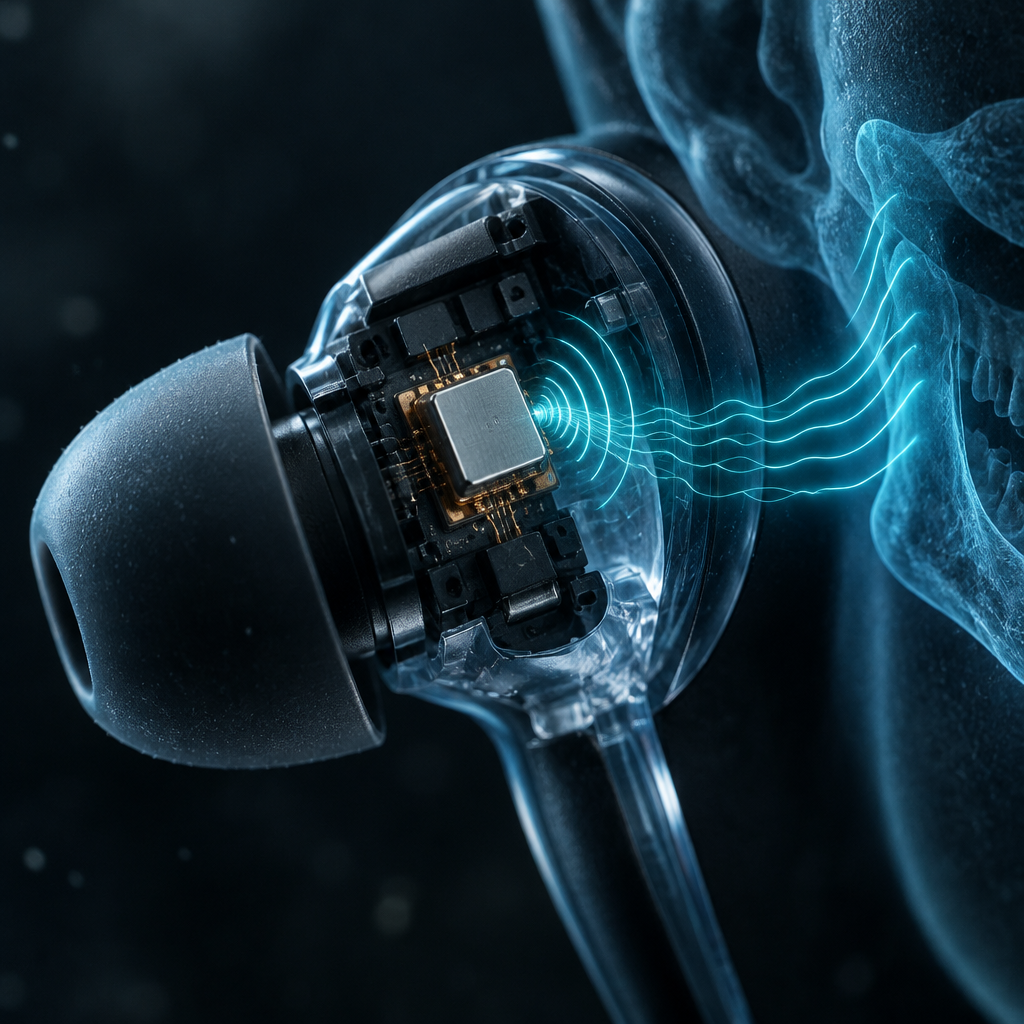
The next wave of ANC innovation centers on context awareness. Processors will use bone-conduction microphones mounted inside the earpiece to distinguish between noise reaching your ear from outside versus vibration from your own jaw and skull (your own voice, chewing, footsteps). This allows the algorithm to preserve your voice during calls while canceling everything else. Early implementations of this are coming to premium earpieces from Apple, Sony, and Bose.
Another frontier is AI-driven personalization. Instead of assuming every ear canal is similar, the processor will use machine learning to model your specific ear geometry based on the response of the feedback microphone during the first few hours of use. It will then customize the anti-noise signal for your unique ear. This is technically possible today but requires more processing power than current earbud processors can spare.
Finally, multi-stage cancellation is coming. Rather than generating one anti-noise signal, future earpieces will generate multiple anti-noise signals targeting different frequency bands and different acoustic paths simultaneously, using the space available to fit multiple small drivers per side. This is already possible in over-ear headphones; miniaturizing it to earpieces will take another two to three years.
What This Means for Buyers in 2026
If you spend your days in steady-noise environments (airplanes, trains, offices with HVAC), choose earpieces with strong feedforward ANC and adaptive algorithms. Bose and Sony lead here. If you spend time in variable or unpredictable environments (cafes, commutes, social settings), look for better feedback ANC and passive noise isolation. The AirPods Pro 2 and Sennheiser Momentum True Wireless 4 excel here because their algorithms are better at context switching.
Check the microphone count. More microphones mean more data for the algorithm to work with. Two or more feedforward mics plus at least one feedback mic is the baseline for good performance. Single-mic ANC is cheap but noticeably less effective.
Battery life matters. If a model claims 6 hours with ANC on, realistic expectation is 5.5 hours in noisy environments where the ANC is working hard. Check reviews for real-world battery tests, not marketing claims.
Finally, fit and isolation matter more than ANC. A well-fitting earbud with good passive noise sealing will do 70% of the work that ANC claims to do, without draining the battery. ANC is best thought of as the extra 20-30% that comes from active processing, not as a replacement for physical isolation.