The Announcement Nobody Explained Properly
Every two or three years the Bluetooth Special Interest Group drops a new spec, the trade press runs the same article about faster speeds and lower latency, and consumers buy the same headphones they were going to buy anyway because nothing in their daily listening experience actually changed. Bluetooth 5.0 was supposed to revolutionize wireless audio. Bluetooth 5.2 introduced LE Audio and Auracast and genuinely did change things, though it took three years for devices to support it. Bluetooth 5.3 and 5.4 were incremental enough that most people never noticed them ship.
So when the SIG began signaling the direction of what will eventually be called Bluetooth 7.0, the question worth asking is not what the specification contains. It's which part of it will actually matter to someone wearing headphones on a commuter train in 2027.
The answer, based on what the specification direction reveals, is channel sounding. Everything else is incremental. Channel sounding is not.
What Channel Sounding Actually Does
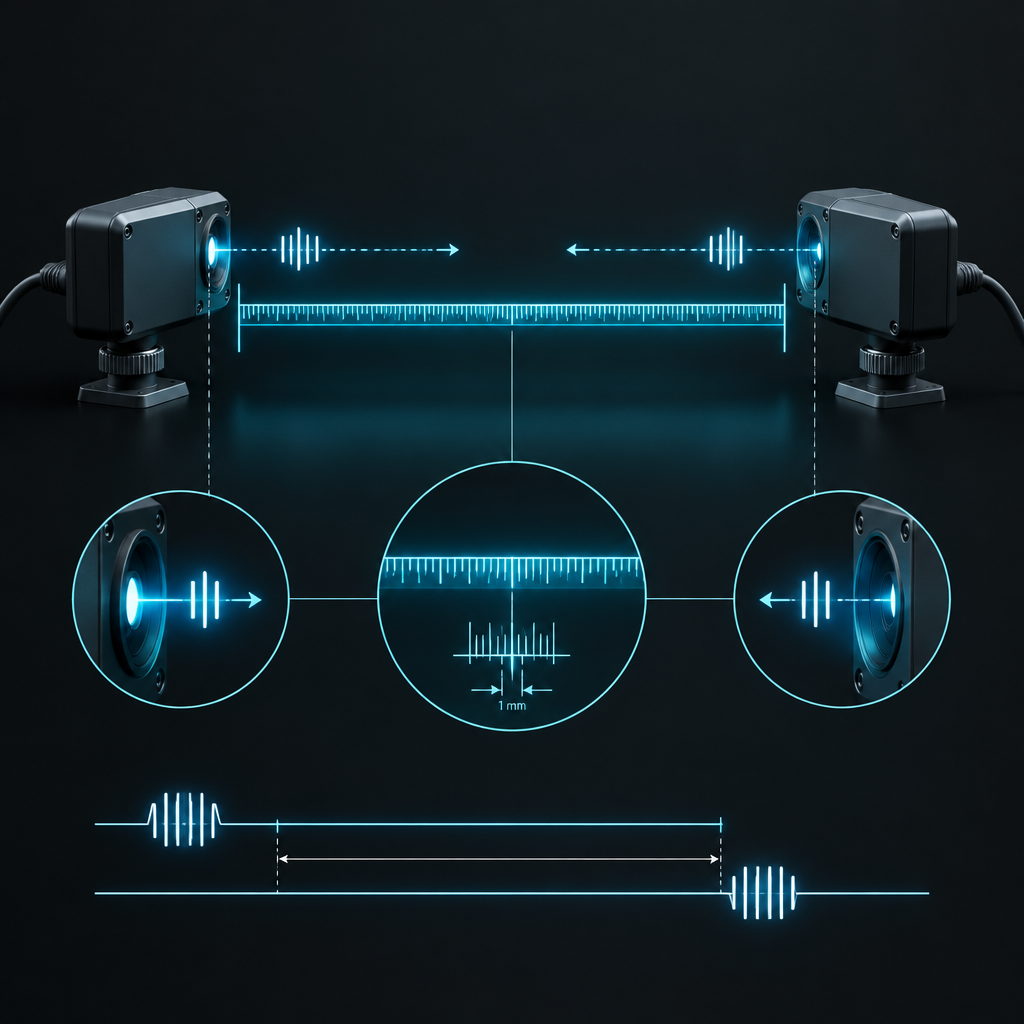
Bluetooth 6.0 introduced channel sounding , previously called High Accuracy Distance Measurement , as a feature. The basics: channel sounding uses phase-based ranging to measure the distance between two Bluetooth devices with centimeter-level accuracy. Not meter-level. Not half-meter. Centimeter.
That precision is a different category of capability than anything Bluetooth has offered before. The current generation of Bluetooth tracking devices , your AirTags, your Tile trackers, your Find My accessories , use received signal strength indication (RSSI) to estimate distance. RSSI is directionally useful and completely useless for precision. It tells you that your keys are "nearby." Channel sounding will tell you your keys are 2.3 meters to your left, behind the couch cushion, at a height of roughly 0.4 meters from the floor.
That's not a marginal improvement. It's a different product category wearing the same name.
Why Audio People Should Care About a Positioning Technology
Here's where it gets interesting and where most of the coverage stops short. Channel sounding's obvious application is finding lost objects. Less obvious: it fundamentally changes what spatial audio can be. Current head-tracking spatial audio , the kind in AirPods Pro, Sony's 360 Reality Audio implementation, Apple's Personalized Spatial Audio , uses the IMU sensors in the earbuds to track head rotation relative to a fixed virtual sound stage. It works reasonably well. It has a specific limitation that everyone who uses it daily eventually notices.

Apple AirPods Pro (2nd Generation)
The sound stage stays fixed in space regardless of where you physically move. Walk toward the TV and the virtual sound doesn't get louder as you approach because the system has no idea you moved. The head-tracking accounts for rotation. It doesn't account for translation , movement through space.
Channel sounding fixes the translation problem. When your earbuds know with centimeter accuracy where they are relative to your phone, your laptop, your television , the spatial audio implementation can place sounds in genuine three-dimensional space that remains accurate as you move through a room. Not just rotate in it. Move through it.
This is what the gaming headset industry has been trying to approximate with proprietary ultrasonic positioning systems for years. Bluetooth 7.0 builds it into the protocol layer, which means any device that implements it gets the capability without proprietary dongles or platform lock-in.
The Latency Number That Matters
Bluetooth audio latency has been the persistent complaint that audiophiles use to dismiss wireless entirely. They are not wrong that it exists. They are increasingly wrong that it matters for most use cases. Bluetooth 5.2's LE Audio LC3 codec reduced latency to roughly 20-40 milliseconds in well-implemented devices , below the 40ms threshold where most listeners can perceive audio-visual sync issues in video.
The direction toward 7.0 includes further latency reductions targeting sub-10ms in the isochronous channel implementation. Sub-10ms is effectively imperceptible. It is below the threshold where even the most latency-sensitive applications , live musical performance monitoring, competitive gaming , produce detectable sync issues. When Bluetooth audio achieves sub-10ms consistently, the last legitimate technical objection to wireless professional audio monitoring largely evaporates.
The reason this hasn't happened yet despite the spec supporting it: device implementation. The spec can specify 10ms. The chipset vendor has to implement it efficiently enough that it doesn't destroy battery life. The headphone manufacturer has to design the power management around it. The timeline from spec to device is consistently 18-24 months minimum for mainstream products. Expect sub-10ms devices in late 2027 from the early movers, mainstream by 2028.
Auracast at Scale: The Infrastructure Problem
Auracast broadcast audio , the feature introduced with LE Audio that allows a single Bluetooth transmitter to broadcast to an unlimited number of receivers simultaneously , has been commercially available since 2023 and has seen virtually no real-world deployment at scale. Airports were supposed to install it. Stadiums were supposed to install it. Movie theaters were supposed to offer it as an accessibility service. Almost none of them have.
The infrastructure problem is not technical. The technology works. The problem is that installing Auracast transmitters at a venue requires someone to decide to spend money on it, which requires someone to believe that enough of their visitors have Auracast-capable devices to justify the expense. The chicken-and-egg dynamic that has killed countless wireless technologies is operating in full force on Auracast right now.
Bluetooth 7.0's role in fixing this is indirect: as the installed base of LE Audio devices grows , every major earbuds and headphone release in 2025 and 2026 includes LE Audio support , the denominator of potential Auracast users grows. When a venue operator can reasonably assume that 30-40% of their audience is carrying Auracast-capable devices, the infrastructure investment calculation changes. That tipping point is probably 2026-2027 for major airports and stadium venues. It will feel sudden when it arrives because the underlying device install base will have been building quietly for three years.
What to Buy Right Now Given All of This
The practical question: does any of this change what you should buy today? Mostly no. Channel sounding at centimeter accuracy requires both transmitter and receiver to support Bluetooth 6.0 or later, and almost no consumer devices currently ship with full channel sounding implementation. The spatial audio applications described above are 18-24 months from the first serious consumer implementations.
What matters now is LE Audio support. If you're buying headphones or earbuds in 2026, LE Audio compatibility is the single most future-proofing feature you can prioritize. It enables Auracast (when venues catch up), it enables the improved multi-device connection management of LE Audio's coordinated sets, and it puts you in position to receive the channel sounding applications when devices begin shipping them.
Sony's WF-1000XM5 and the newer XM6, Apple's AirPods Pro 2 and later, Samsung's Galaxy Buds 3 Pro , all LE Audio capable. The mid-tier market is catching up fast; by the end of 2026, LE Audio will likely be standard at the $150+ price point the way aptX was standard at that price four years ago.
Buy for what exists today. Buy for LE Audio compatibility. Everything above it , channel sounding, sub-10ms latency, Auracast infrastructure , is real, it's coming, and it will matter. Just not yet on a timeline that should make you wait.