The Security Problem That Cars Have Always Had
Your key fob works because it broadcasts a unique signal when you press the button. The car receives the signal. The car unlocks. Simple. Also fundamentally insecure. Anyone with a radio receiver and a bit of interest can capture that signal, replay it, and open your car. The automotive industry has spent thirty years adding complexity to address this, rolling out rolling codes, encryption, challenge-response protocols. Each generation of anti-theft technology gets defeated within a year or two by people with sufficient motivation.
The shift to smartphone-based key systems was supposed to fix this by moving authentication to a device that already has encryption, biometric locks, and active computation. Your phone is exponentially harder to spoof than a fob. The problem: range. Your phone needs to be close enough to the car for authentication to work, but the phone and car need to verify that closeness without relying on signal strength alone, which is trivially spoofable.
Bluetooth 5.4 and earlier versions used received signal strength indication (RSSI) for distance estimation. RSSI measures how strong the signal is when it arrives. That measurement is completely dependent on how much power the transmitter used, what obstacles are in the way, what frequency the device is broadcasting on, what the ambient electromagnetic environment looks like. RSSI tells you nothing reliable about actual distance.
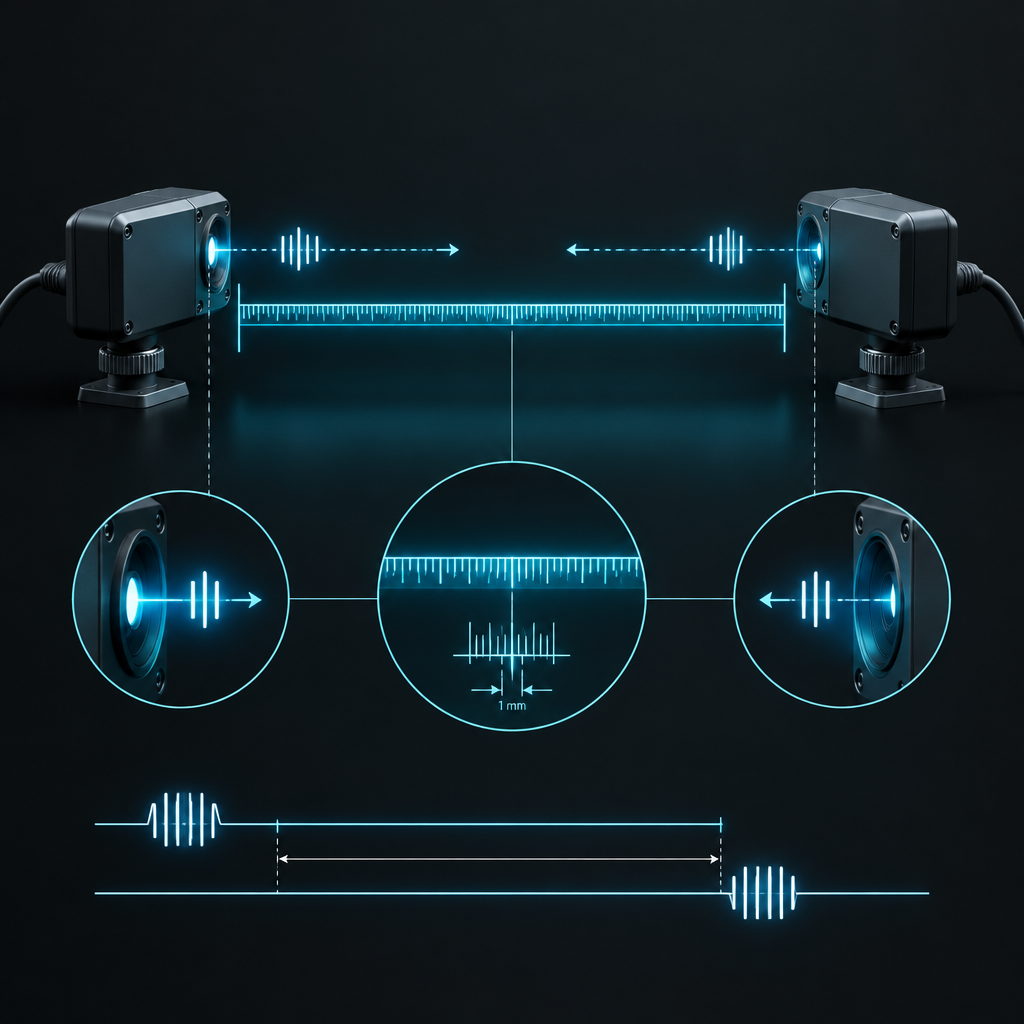
Bluetooth 6.0 introduces channel sounding, which measures distance using phase-based ranging instead. Phase-based ranging looks at the phase of the radio wave at the receiver. Because the phase of a radio wave is deterministic based on the distance traveled, measuring that phase gives you actual distance information independent of transmit power or environmental conditions.
What Channel Sounding Actually Does
Channel sounding works by transmitting a known sequence of data, measuring the phase relationship between what was sent and what arrived, and calculating distance based on the relationship between phase shift and frequency. In the presence of multipath reflection (the signal bouncing off walls or metal objects), the calculation gets more complex, but the underlying principle remains valid. The distance measurement is accurate to within a few centimeters in real-world environments.
Centimeter-level accuracy solves the phone-as-key problem directly. Your car can verify that your phone is actually next to the car and not somewhere across the parking lot with someone running a replay attack. The authentication happens, the distance verification happens in parallel, and the car unlocks only when both conditions are satisfied.
Qualcomm, NXP, and other chipset manufacturers have been shipping reference implementations since late 2024. The consumer applications started arriving in early 2026, concentrated initially in the automotive sector where the security requirements are clear and the use cases are obvious.
The Automotive Timeline
BMW is rolling out Phone-as-a-Key starting with 2027 model year vehicles using Bluetooth 6.0 channel sounding. Mercedes, Porsche, and Genesis are following similar timelines. The implementation is straightforward on the car side, because most modern vehicles already have Bluetooth radio hardware that can be updated to support 6.0 via firmware. The phone side is equally simple, because Bluetooth 6.0 is already standard on iPhone 16 and later, Samsung Galaxy S25 and later, and most flagship Android devices shipping in 2025 and beyond.
The critical timeline is not 2027. It is 2028, when secondary manufacturers and mass-market vehicles begin rolling out Phone-as-a-Key. By 2028, roughly 40-50% of cars on the road will be newer enough to support it. By 2030, it will be standard. The infrastructure is moving faster than most security technology adoption historically has moved.
This matters because it represents the first consumer-scale deployment of Bluetooth 6.0's flagship security feature. Everything else Bluetooth 6.0 offers is incremental. Channel sounding is transformational. Once the car industry proves it works at scale, other industries start asking questions.
Beyond Cars: What Comes Next
Smart locks in homes can use channel sounding to verify that the person unlocking the door is actually standing at the door and not somewhere else with spoofed credentials. Office access control can verify that badge holders are actually present in the building rather than relying on badge swipes that could be fraudulent. High-value IoT devices (think industrial equipment, expensive consumer electronics) can use centimeter-level distance verification as part of their authentication protocol.
The hearing aid and assistive listening space sees an application that is genuinely transformational. Hearing aid users need to pair their devices with their phones to control them. The current process requires proximity verification that relies on RSSI and is unreliable in crowded environments. Channel sounding fixes this. A hearing aid can verify that it is actually being controlled by the phone of the person wearing it, preventing interference, cross-talk, or accidental pairing with nearby devices. In a hearing aid setting, that matters acutely.
Workplace safety equipment can use channel sounding to verify that safety devices are actually with the workers they are supposed to be protecting. Industrial IoT can use it for equipment authentication where physical presence is a security requirement. The applications are not infinite, but they are numerous enough that channel sounding stops being a car-specific feature and becomes infrastructure.
The Generational Shift in Wireless Security
Bluetooth 5.4 and earlier versions attempted to build security on top of encrypted protocols. The assumption was that encryption would prevent spoofing and replay attacks. Bluetooth 6.0 abandons that assumption and adds cryptographic distance verification as a separate, mandatory layer. The two approaches are complementary, not redundant. Encryption protects the content of the communication. Distance verification protects the identity of the communicating devices.
This is the kind of architectural change that takes 3-5 years to penetrate consumer consciousness but represents a permanent shift in how wireless security works going forward. Once the industry normalizes the idea that secure wireless communication requires distance verification, the reverse becomes impossible. Every wireless protocol developed after this point will include some form of proximity verification as baseline security.
RFID, NFC, ultra-wideband, Wi-Fi. Each of these technologies has spent years trying to solve the distance verification problem independently. Bluetooth 6.0's channel sounding offers a unified solution that works across the entire Bluetooth ecosystem without requiring separate hardware investment.
What This Means for Headphones and Earbuds
Not much, in the immediate term. Consumer audio devices do not benefit from centimeter-level distance verification. Your AirPods do not care whether your phone is two meters away or twenty meters away, as long as the signal is strong enough to maintain the connection.
The longer-term implication is more subtle. As Bluetooth 6.0 chipsets become standard in all consumer devices, the implementation cost of channel sounding drops. The battery impact becomes negligible. The computational overhead becomes a rounding error. By 2028-2029, when Bluetooth 6.0 implementation is effectively mandatory for any device shipping at scale, channel sounding becomes a free feature that all devices include whether they need it or not.
At that point, audio devices might start using channel sounding for spatial audio applications. Your earbuds could know exactly where they are relative to your phone, your watch, your laptop, your car, your TV. Spatial audio that currently relies on head-tracking IMU sensors could be augmented with absolute position information. The audio rendering becomes more sophisticated. The implementation costs nothing because the hardware is already there.
That is a 2028-2030 conversation. For right now, channel sounding is a car security technology that happens to use Bluetooth. Understanding it as such, and understanding the implications of its roll-out, is the foundation for understanding how wireless security architecture is about to change.
The Actual Timeline You Should Care About
2026, right now: Early adopter vehicles from premium manufacturers. Initial deployment of Phone-as-a-Key using Bluetooth 6.0 channel sounding. Infrastructure proves concept viability. Industry starts evaluating other applications. Your BMW or Mercedes can probably do this by late 2027.
2027-2028: Volume manufacturers adopt. Ford, GM, Hyundai, Volkswagen roll out phone-based key systems. Consumer adoption accelerates as practical experience accumulates. The feature moves from cool novelty to expected baseline.
2028-2029: Secondary applications begin shipping. Smart locks, office access control, industrial IoT. Non-automotive deployment happens at scale. Consumers who do not own cars start encountering channel sounding in their daily lives.
2029-2030: Bluetooth 6.0 is completely standard. Channel sounding is ubiquitous. The question changes from does this work to what else can we build with this. By 2031, you will probably interact with channel sounding-based security multiple times per day without knowing it is happening.
Why You Should Pay Attention
This is not a story about phone-unlocked cars, which is a neat feature but not transformational. This is a story about the first shipping deployment of a security architecture that is about to become fundamental to how wireless devices work. Understanding what is happening now makes the next three years of wireless device development make sense.