The Announcement That Landed Like a Whisper
In early 2026, the hearing aid industry made a collective decision that fundamentally rewrote how hundreds of millions of people experience the world. No press conference. No keynote. No livestream. The Bluetooth SIG, working with Phonak, Widex, Oticon, Signia, and ReSound, simply announced that 50% of all new hearing aids would ship Auracast-compatible by 2026, climbing to 100% by 2030. The accessibility industry erupted. The consumer tech press barely noticed.
This is the hinge moment for hearing aids. For the first time, a person who is deaf or hard of hearing can walk into a museum, a theater, a church, or a sports bar and stream the audio directly to their hearing aids from the venue's Bluetooth broadcast without asking for special equipment or drawing attention to themselves. No telecoil necklaces. No FM receivers the size of a pager. No assistive listening system that broadcasts your participation to everyone around you. Just audio that arrives exactly where it should: in your ears.
Why Auracast Matters More Than the Gadget Headlines
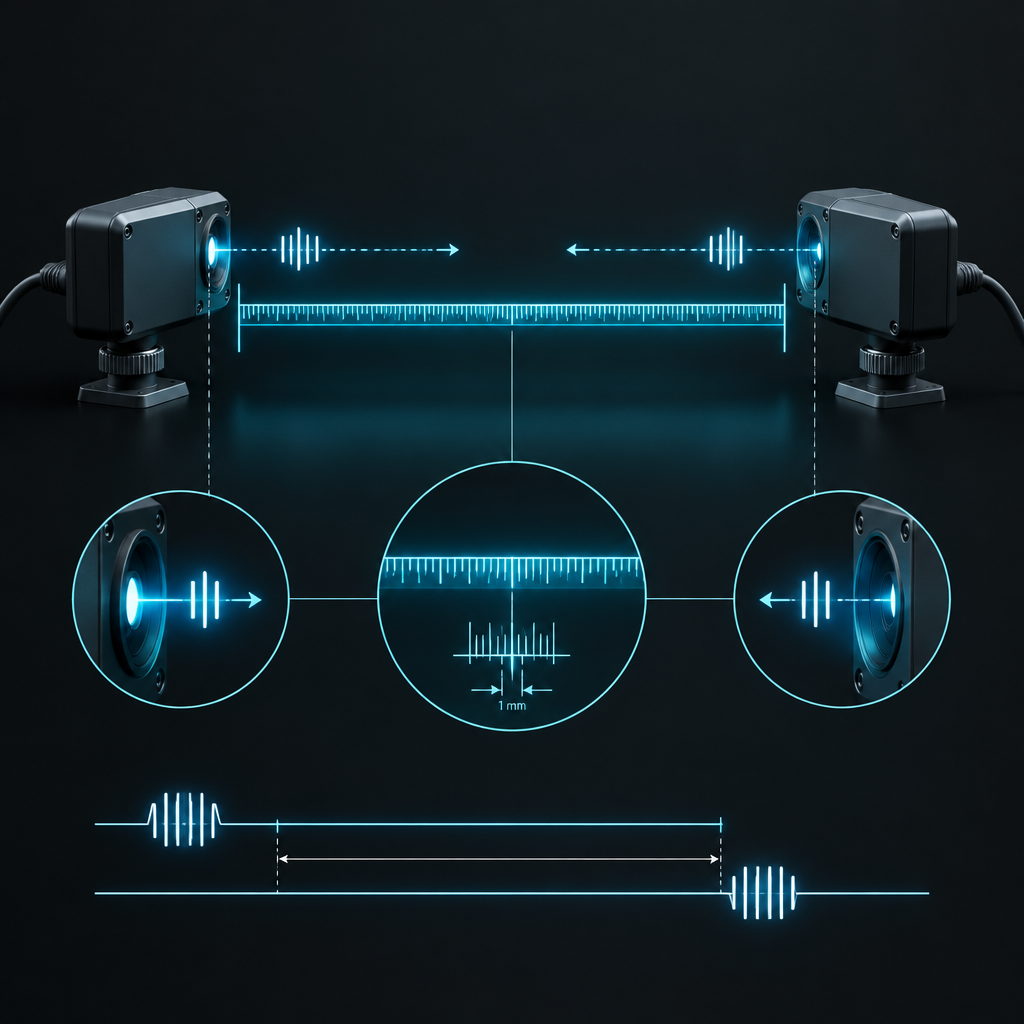
Auracast is Bluetooth LE Audio's broadcast capability. Think of it as a one-to-many audio stream instead of the one-to-one pairing your headphones do with your phone. A venue transmits audio once; hundreds of compatible devices in range receive it simultaneously. The technical achievement is real, but the social impact is enormous.
Hearing loss is a public health crisis that most people ignore until it affects them directly. Approximately 1.5 billion people worldwide have some degree of hearing loss. In the United States, that's roughly 430 million people, with about 48 million experiencing meaningful functional hearing loss. Roughly 10 million Americans wear hearing aids, which means 38 million people with disabling hearing loss choose not to seek treatment, often because of stigma, cost, or frustration with existing solutions.
Auracast doesn't solve cost. It doesn't solve stigma overnight. But it solves the experience problem, which is sometimes the largest barrier to adoption. A hearing aid user today, in 2026, can attend a lecture and actually hear the speaker clearly without fighting feedback, struggling with FM pairing sequences, or sitting in a designated "assistive listening area" that announces their presence. That changes whether someone with hearing loss decides to engage with the world or withdraw from it.
The LC3 Codec: The Technology That Made This Possible
Auracast works because of the LC3 codec, Bluetooth's Low Complexity Communication Codec. For 20 years, Bluetooth used SBC, or Subband Codec, which trades quality for simplicity and power efficiency. SBC compresses audio down to roughly 128-320 kilobits per second, which means speech becomes intelligible but music becomes a series of frequency sketches. Acceptable for phone calls. Rough for everything else.
LC3 changed the equation. The codec delivers excellent speech clarity and acceptable music quality at 64-160 kilobits per second, roughly half the data rate of SBC. More importantly, LC3 was designed from first principles to work over Bluetooth Low Energy, which means devices need only a fraction of the power consumption of traditional Bluetooth audio. A hearing aid that processes LC3 can run for weeks on a single charge, where a traditional Bluetooth hearing aid might run for days.
The codec achieves this through what audio engineers call "perceptual audio coding," which analyzes the limits of human hearing and compresses only the information humans can actually perceive. At 96 kilobits per second, LC3 delivers near-CD-quality speech. At 160 kilobits per second, it handles music with reasonable fidelity. This is not lossless audio like FLAC or WAV. It's pragmatic audio that works in the real world.
Hearing aid manufacturers embraced LC3 immediately because the power profile solved one of their core engineering problems. Hearing aids are powered by button-cell batteries the size of a small pill. Reducing power consumption from Bluetooth connectivity means longer battery life, which means fewer daily hassles for the user. You can design a hearing aid that lasts two weeks on a charge instead of three days, which translates to real adoption numbers.
From Lab Standards to Airport Loudspeakers
Auracast began as a technical specification in 2023. By 2025, the Bluetooth SIG had moved to actual deployment. Frankfurt Airport became the pilot site, broadcasting departure and arrival information directly to compatible hearing aids. Museums in London, Copenhagen, and New York began installing Auracast transmitters. A handful of churches experimented with broadcasting sermons. By mid-2026, the infrastructure was real enough that hearing aid manufacturers committed to the adoption timeline.
The infrastructure cost is low. A venue needs an Auracast transmitter, which is essentially a Bluetooth broadcast hub. The hardware costs $300 to $1,200 depending on coverage area and feature set. The software is usually a simple configuration interface connected to the venue's existing audio system. Unlike FM assistive listening systems, which require dedicated broadcast hardware, RF licensing, and maintenance personnel, Auracast is consumer-grade tech.
Adoption is accelerating faster than almost anyone expected. Public transit systems in Toronto and Copenhagen are deploying Auracast for announcements. The Vatican installed Auracast for papal events, which is a legitimacy signal that carries enormous cultural weight. Theme parks, concert halls, and sports venues are beginning rollouts. By 2027, the expectation is that Auracast will be as standard as WiFi in any public venue intended for tourists.
The Accessibility Multiplier Effect
What's interesting about Auracast is that it solves problems for people who aren't deaf or hard of hearing too. A person in a loud environment, like a bar or a nightclub, can stream just the conversation from a specific Bluetooth source without the ambient noise. A parent can listen to a child's school play through a transmitter while sitting in the back. Someone with auditory processing disorder can receive a clearer broadcast without the confusion of live reverb. Accessibility features often become mainstream features once the infrastructure exists.
The hearing aid industry is calling this the "hearing aid revolution," but that phrasing undersells what's actually happening. This is the culmination of 20 years of Bluetooth audio development, specifically the LC3 codec and LE Audio architecture, being deployed in a way that creates genuine behavioral change. A person with hearing loss can now participate in public life without modification to their behavior or additional equipment. The technology becomes invisible because it simply works.
The Remaining Friction Points
Auracast isn't a universal solution yet. Not all hearing aids are compatible; only 50% of new devices in 2026 support it, meaning millions of people with hearing loss won't have access for years. Hearing aids are expensive, typically $1,000 to $6,000 per pair, and most insurance plans cover them inadequately or not at all. The technology solves access but doesn't solve affordability or awareness.
There's also a temporal gap. Auracast requires venues to actively install and maintain the infrastructure. A small town church or local theater might not have a transmitter. A transit system might use an older announcement system that hasn't been updated. Rollout will be uneven, with major cities and well-funded institutions deploying first, smaller communities waiting years.
The cultural shift matters too. A hearing aid user has to be comfortable using Auracast in public, which requires visibility of the capability and confidence that it works. Marketing and awareness will determine how quickly adoption becomes mainstream behavior. Right now, many people with hearing loss don't know Auracast exists.
Why This Matters in 2026
Auracast represents a category shift in how accessibility technologies deploy. For 60 years, accessibility features were add-ons, special-case solutions, designed for the hearing impaired but not designed for general use. Auracast is different. The Bluetooth infrastructure is standard. The codec is efficient enough for any device. The use cases extend beyond hearing loss. The technology is becoming mainstream infrastructure first, with accessibility as a primary benefit rather than an afterthought.
By 2030, when 100% of hearing aids ship with Auracast compatibility, the question won't be whether a venue has Auracast; it will be why a venue doesn't. The network effects will compound. Venues install transmitters because hearing aid users demand it. Hearing aid users adopt the technology because venues have it. The infrastructure grows because both sides drive adoption. That's how accessibility becomes invisible, which is how you know it's actually working.
The revolution didn't start with an announcement. It started with a codec designed to work on next-to-nothing power. The fact that it's changing the world for 1.5 billion people with hearing loss is almost a side effect of getting the engineering right.